

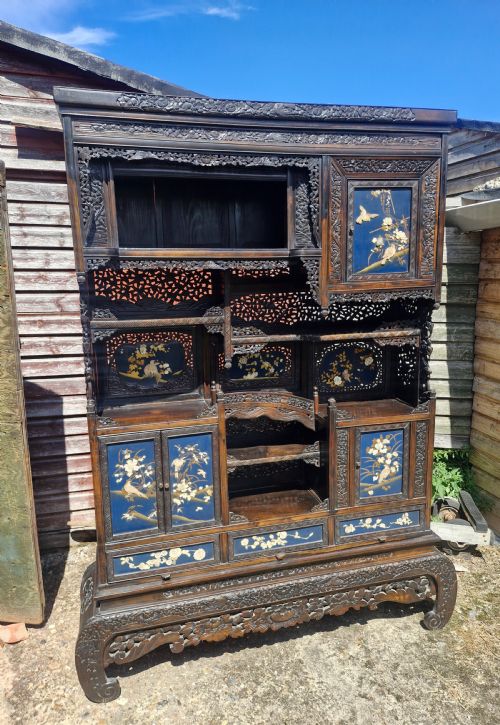


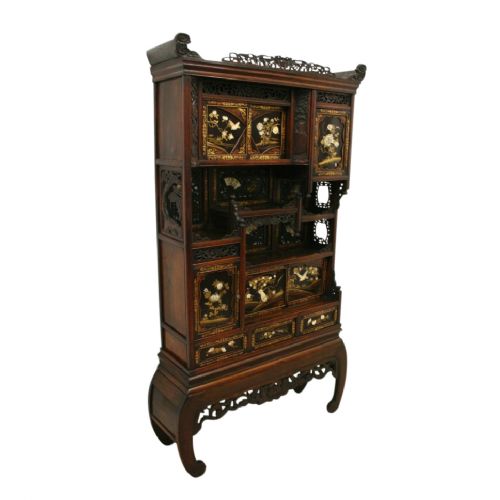
Japanese Meiji Shodana
Japanese Meiji shodana are intricate display cabinets designed to showcase treasures, bringing exquisite joinery and rich decorative detail into a room.
Japanese Meiji Shodana
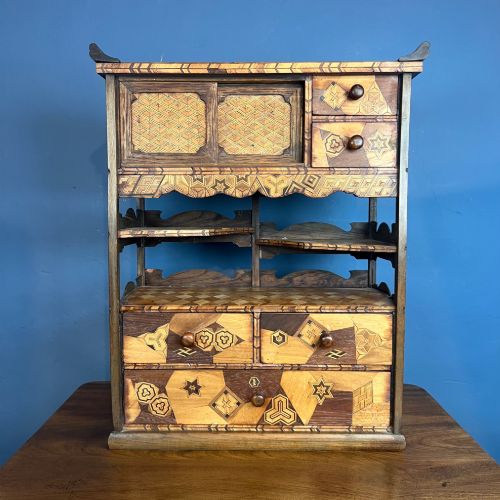
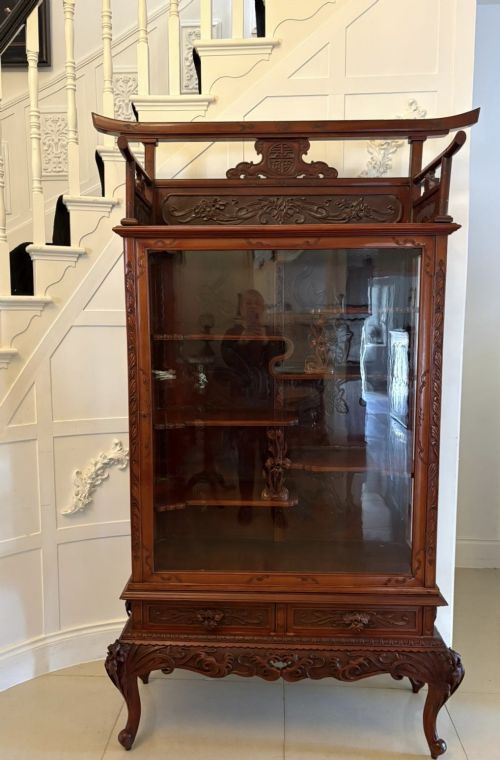
Japanese Meiji shodana are ornamental display cabinets and storage units designed for exhibiting small objects of art. These pieces emerge predominantly from the Meiji period, alongside related examples from the late nineteenth century and the Taisho era.
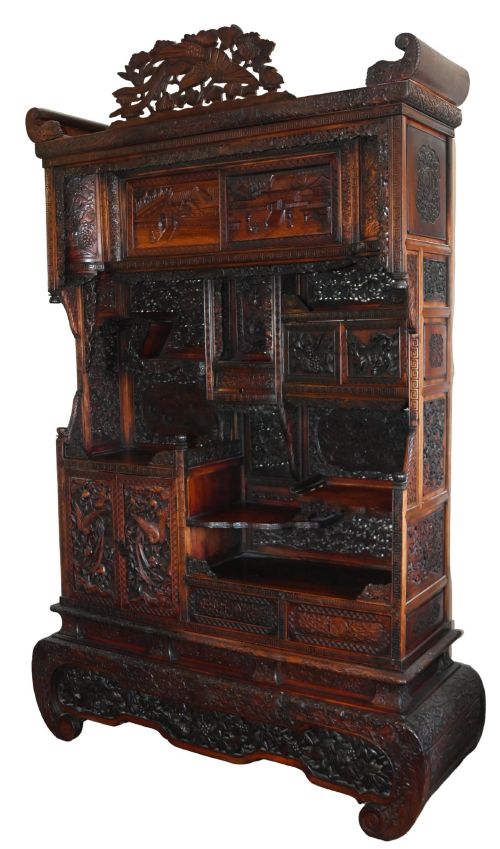
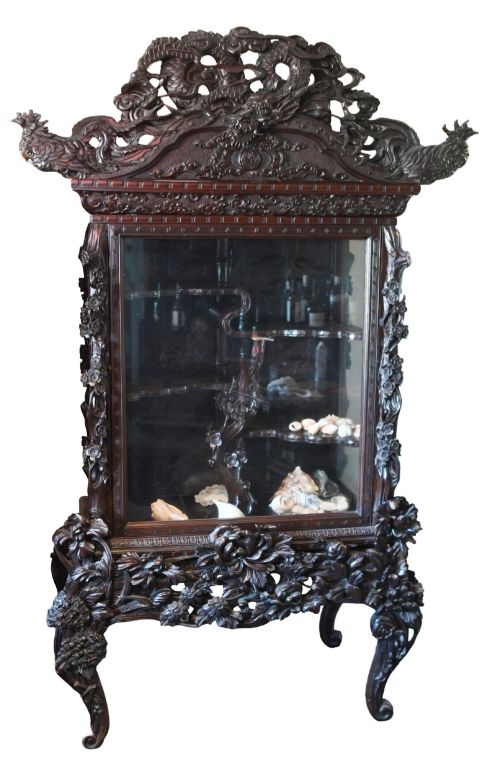
The forms span from compact tabletop display cabinets to large cabinet-on-stand structures. Buyers will most frequently encounter carved hardwood versions as well as lacquer pieces featuring tiered shelving and asymmetrical compartments.
Originating in Japan, these cabinets reflect a sophisticated tradition of interior display and woodworking. They serve as functional storage while providing a dramatic focal point for a room.
How they were made
Construction relies heavily on hardwood, mixed woods, and ebonised timber to form the structural framework and tiered shelving. Artisans shaped these materials into intricate cabinets using traditional joinery techniques.
Surface decoration incorporates red lacquer, detailed carving, and parquetry or marquetry patterns. Craftspeople inlaid mother-of-pearl and bone to create contrasting pictorial and geometric motifs across the panels and doors.
Japanese Meiji Shodana Retail Price Guide 2026
Typical asking prices for japanese meiji shodana among the pieces listed under this phrase on Sellingantiques today, from the lower quarter to the upper quarter. They describe what is for sale here now, not the wider market.
Every cabinet holds enough tiny shelves and secret compartments to misplace a collection of miniature teacups permanently.
What varies in quality
Quality rests upon the precision of the parquetry and the depth of the carved woodwork across the cabinet body. Finer examples display meticulous alignment in geometric wood patterns and crisply defined relief carving.
The sophistication of the surface decoration further distinguishes the work, particularly the finesse of mother-of-pearl and bone inlay against the lacquer or hardwood ground. Superior pieces maintain harmony between structural proportion and decorative density.
The Japanese Meiji Shodana Glossary
- Shodana
- A traditional Japanese display cabinet featuring asymmetrical shelving and compartments. These units were built for presenting art objects and curios.
- Meiji Period
- The era in Japanese history spanning from 1868 to 1912. Cabinets from this time often exhibit elaborate carving and mixed material decoration.
- Parquetry
- A geometric mosaic of wood pieces used for surface decoration. Artisans applied this technique to create patterned panels on cabinet doors and frames.
- Marquetry
- The art of applying pieces of veneer to a structure to form decorative designs. This method produces pictorial scenes on the exterior of storage pieces.
- Shibayama
- A style of Japanese decoration involving inlay of precious materials such as mother-of-pearl and bone. It creates high-relief pictorial surfaces on lacquer and wood.
Japanese Meiji Shodana: Frequently Asked Questions
What is a shodana used for?
A shodana is a traditional Japanese display cabinet designed to exhibit small decorative objects, ceramics, and scholarly treasures. The asymmetrical shelving allowed owners to arrange valued items for quiet contemplation.
Today, these cabinets function as focal points in a room for displaying small collections or standalone works of art while offering enclosed storage compartments.
How do I date a Japanese cabinet?
Dating relies on examining the construction methods, timber choices, and decorative styles characteristic of specific eras such as the Meiji or Taisho periods. Shifts from traditional hardwood carving to ebonised finishes often indicate the progression into the early twentieth century.
Observing the complexity of the lacquer work and inlay materials provides further clues to the manufacturing decade, aligning with documented stylistic shifts in Japanese export furniture.
Where should I place a shodana?
These cabinets suit rooms where their intricate carving and tiered shelving can be appreciated at close range, away from direct sunlight that might damage lacquer or inlays. Placing them against a neutral wall allows the complex wood tones and decorative panels to stand out.
Because many examples include delicate components like bone inlay or glass panels, choose a stable location with minimal vibration and consistent indoor humidity.
What is the difference between shodana and other cabinets?
Shodana are specifically distinguished by their tiered, asymmetrical arrangement of display shelves and small cupboards designed for ornamental exhibition. Unlike standard European storage cabinets, they prioritise visual variety and spatial rhythm over uniform symmetry.
They frequently incorporate specialised decorative techniques like parquetry, lacquer, and bone inlay that reflect traditional Japanese aesthetic values of the late nineteenth and early twentieth centuries.