




Oriental Covered Jars
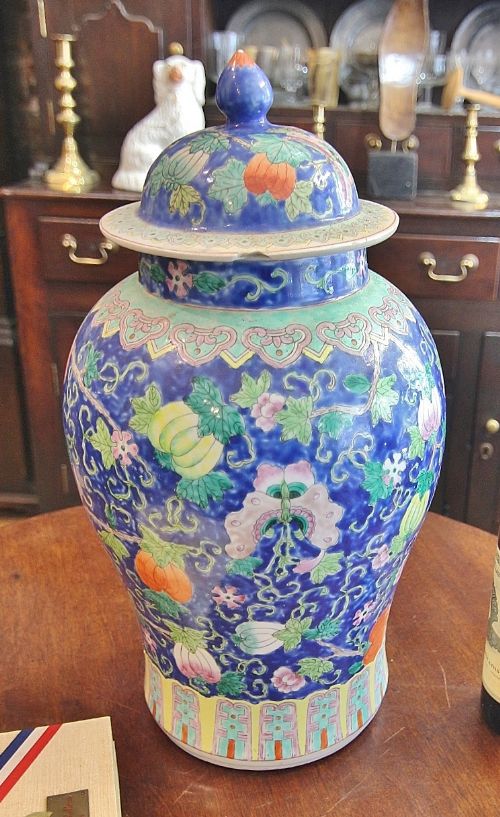
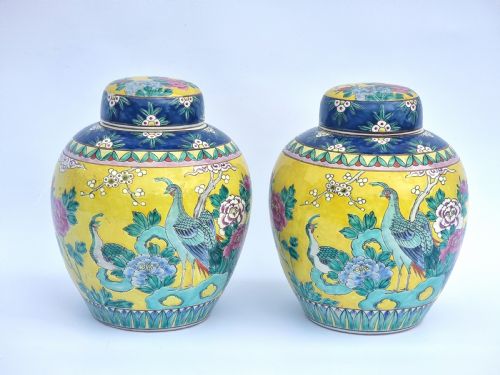
These oriental covered jars bring intricate hand-painted palettes and substantial forms to interiors, offering both decorative presence and historical depth.
Oriental Covered Jars
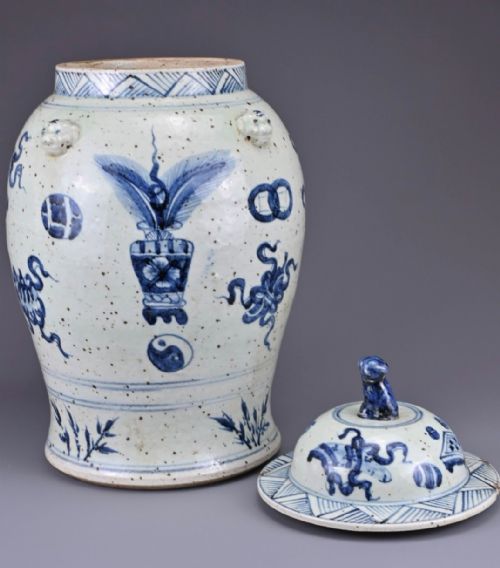
When you search for oriental covered jars, you encounter robust storage vessels and ornamental containers originating from East Asian kilns and workshops. The selection centres heavily on nineteenth-century Japanese Imari and Satsuma wares alongside Chinese blue and white porcelain and cloisonne examples.
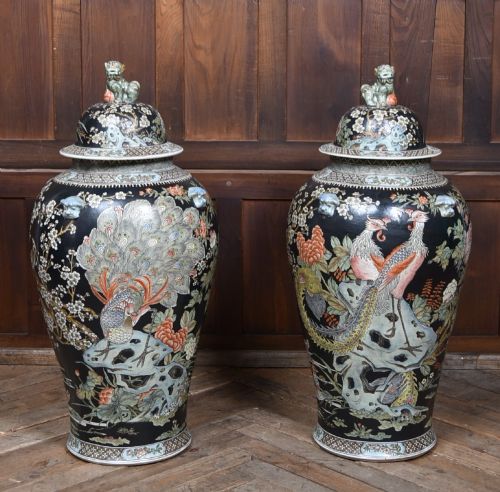
Forms range from compact ginger jars and tea caddies to monumental palace floor vases and baluster lidded vessels. Most pieces combine a substantial ceramic body with a matching fitted lid, designed originally for storage or display in domestic settings.
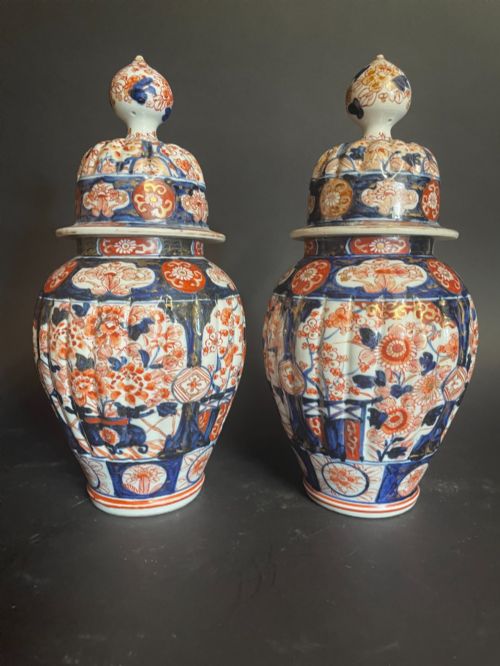
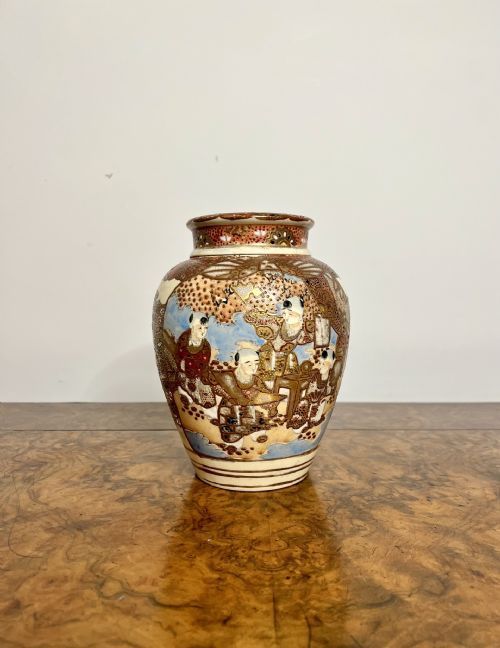
Chinese pieces frequently display traditional blue and white painting or crackle glazes, while Japanese items often present vibrant iron-red and cobalt Imari palettes or finely detailed Satsuma landscapes.
Distinctions in Quality
The standard of a piece rests upon the crispness of the hand-painted brushwork, the depth of the glaze, and the precision of the matching lid. Pieces displaying intricate detailing, well-preserved gilding, and signed artisan panels stand apart from mass-produced decorative wares.
Structural integrity of both the ceramic body and any associated metal mounts dictates the enduring value of these vessels. Balanced proportions in large baluster shapes and floor jars indicate superior ceramic throwing and kiln control.
Listings feature items spanning the seventeenth through the twentieth centuries, utilising porcelain, earthenware, copper, and brass.
Yamashu
The Oriental Covered Jars Glossary
- Imari
- A style of Japanese porcelain decorated in underglaze blue, iron-red, and gold, named after the port from which the wares were shipped. This palette remains one of the most recognizable traditions in East Asian ceramics.
- Satsuma
- Earthenware pottery originating from the Satsuma province in Japan, typically characterised by a ivory crackle-glaze and elaborate polychrome and gilt enamel decoration. These pieces often depict dense figural or landscape scenes.
- Cloisonne
- Enamelling technique where thin metal wires are soldered to a metal base to form compartments filled with vitreous paste, then fired and polished smooth. The resulting surface displays intricate geometric or pictorial patterns.
- Baluster
- A vase or jar form characterised by a rounded body that tapers toward the base and swells near the shoulder, supporting a short neck and lid. This silhouette provides a stable and visually balanced container.
- Ginger jar
- A ceramic vessel featuring a wide rounded body and a flat or domed cover, originally manufactured in China to store spices. These jars became popular decorative items across European and domestic interiors during the nineteenth century.
Oriental Covered Jars: Frequently Asked Questions
What were oriental covered jars used for?
These vessels served practical functions in Asian households, primarily storing dry goods, spices, tea, and valuable liquids. Over time, European and domestic collectors prized them as purely decorative centrepieces and mantel ornaments.
Larger floor jars and palace vases filled architectural corners and entryways, while smaller ginger jars sat upon tables and cabinets to display fine ceramic artistry.
How do you date nineteenth century Japanese jars?
Dating relies on stylistic markers, materials, and specific production periods such as the Meiji era or late nineteenth-century export standards. The presence of specific glaze formulations and kiln marks helps establish a precise timeframe.
Comparing brushwork techniques against documented pieces from the same era confirms whether a jar belongs to the early, mid, or late nineteenth century.
How should you display lidded jars safely?
Place heavy ceramic and cloisonne vessels on stable, level surfaces away from high-traffic walkways to prevent accidental impacts. Ensure that detached lids rest securely within their collars or display them beside the main body.
Keep pieces out of direct sunlight to protect delicate enamel colours and gold leaf accents from fading over prolonged periods.
What is the difference between Imari and Satsuma?
Imari wares consist of hard porcelain decorated with distinct underglaze blue, vibrant iron-red, and gold highlights. They offer a smooth, resonant ceramic body with bold geometric and floral motifs.
Satsuma pieces utilise an earthenware body covered in a fine crackle-glaze, painted with densely populated narrative scenes and intricate gold detailing. Satsuma items feel softer and heavier due to the porous nature of the earthenware.