


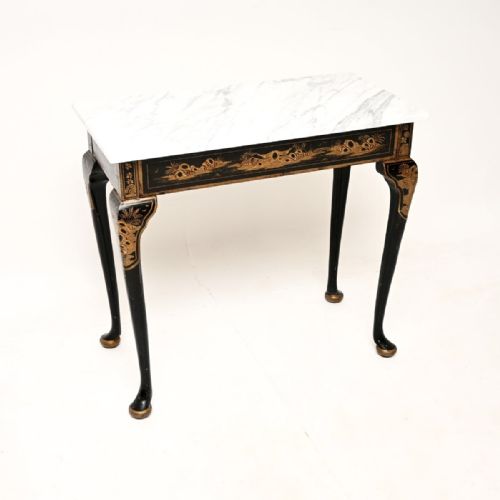
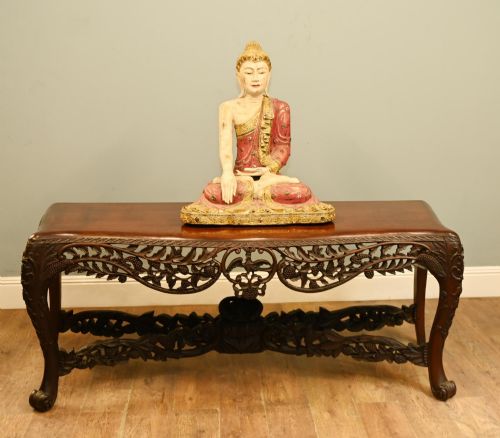
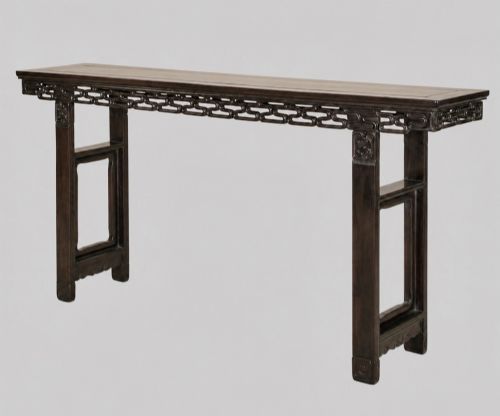
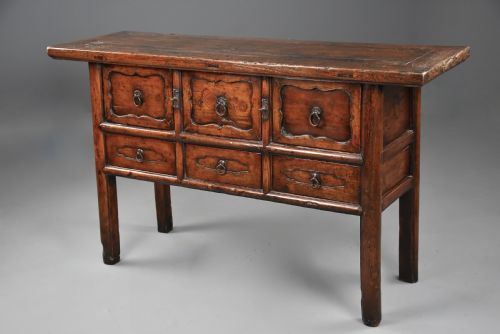
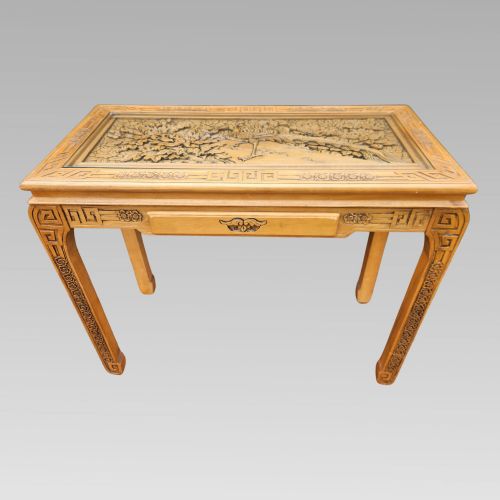
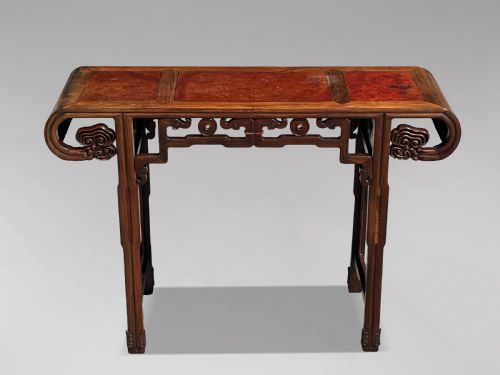


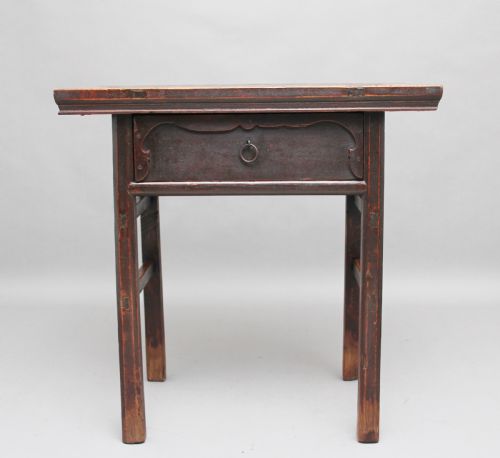

Oriental Console Table
An oriental console table brings architectural presence and rich surface grain into a room, spanning Qing Dynasty altar forms to nineteenth-century lacquered pieces.
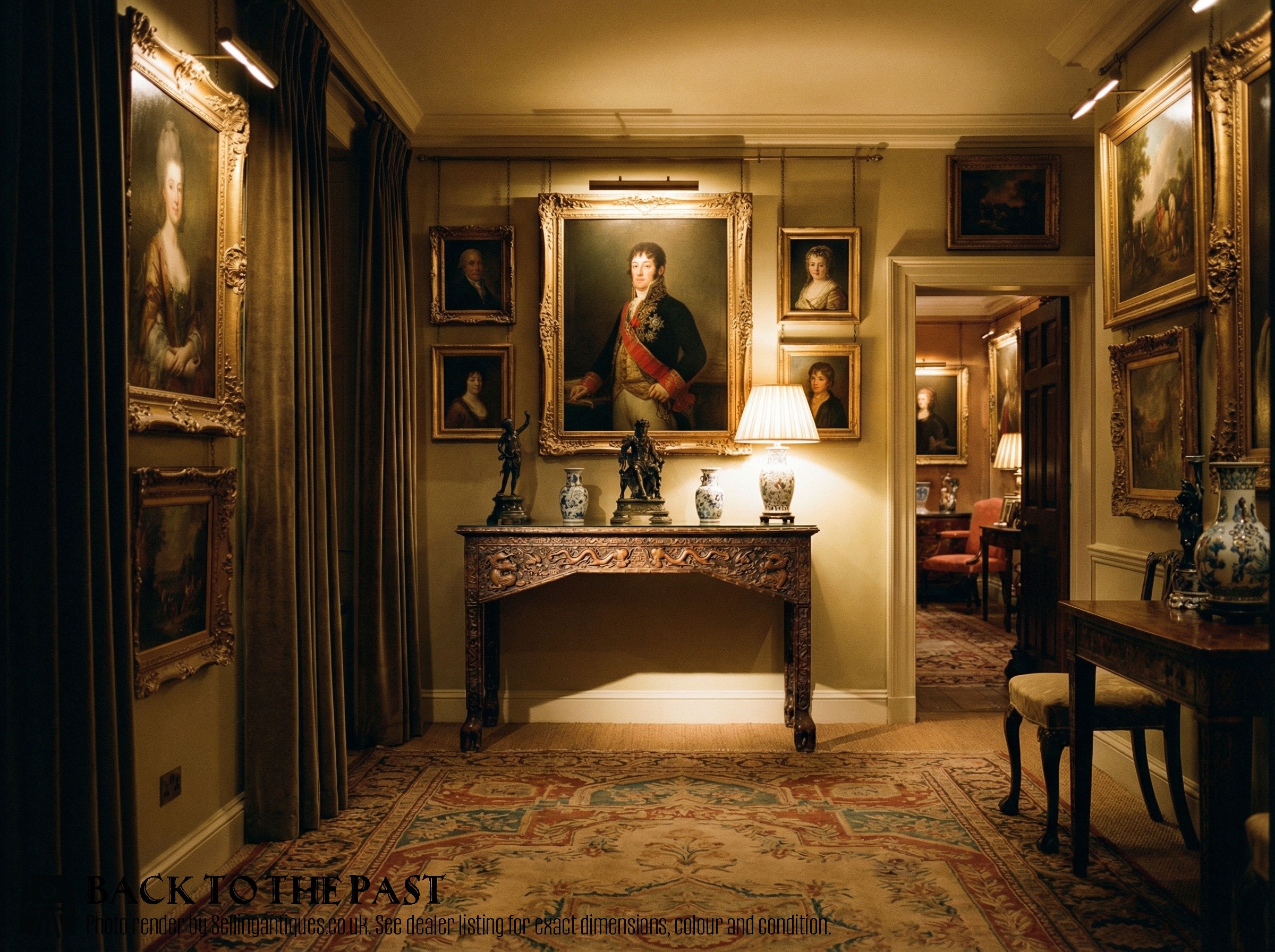
Oriental Console Table
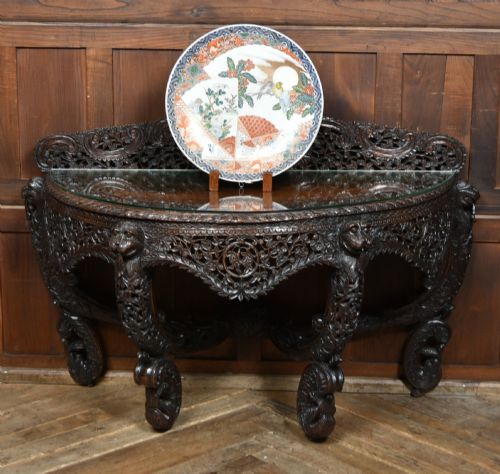
When you search for an oriental console table, you are looking at substantial timber furniture designed primarily for wall placement, often taking the form of traditional altar tables with distinctive upturned flange ends. These items emerge from the Qing Dynasty and nineteenth-century periods, capturing traditional Chinese forms adapted for domestic halls and reception rooms.
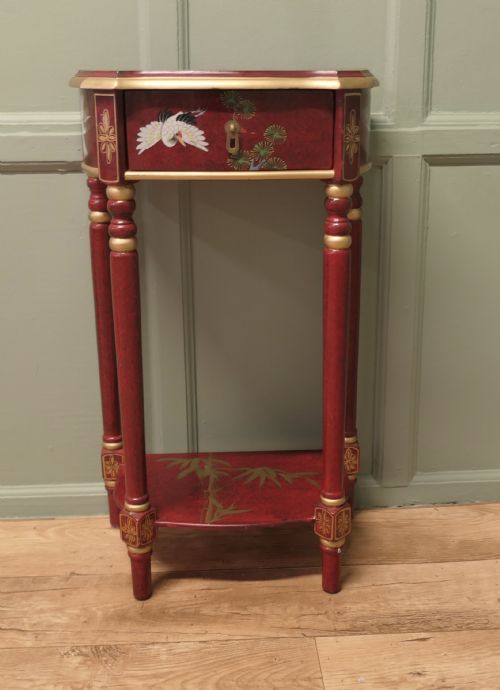
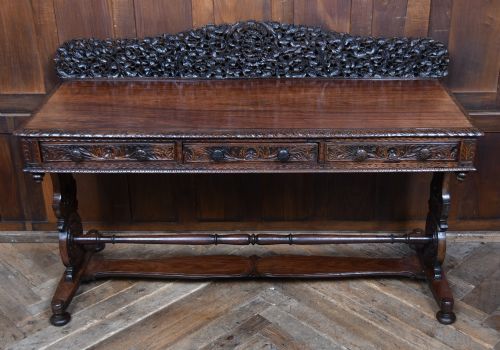
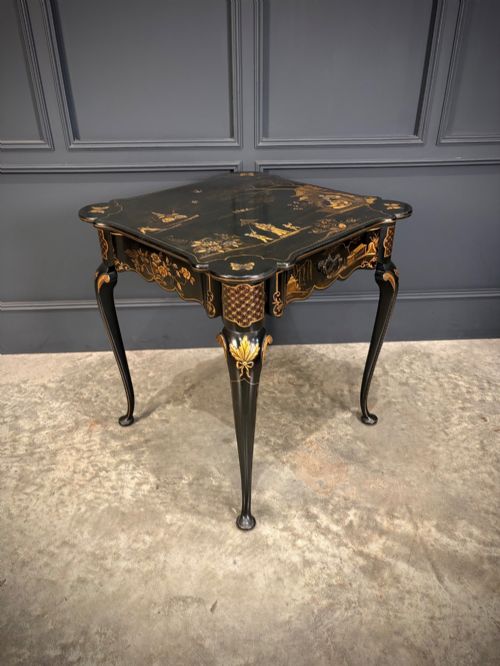
The pieces you are most likely to meet on this page include nineteenth-century hardwood altar tables and carved console tables alongside lacquered sideboards. They frequently feature clean linear frames, mortise and tenon joinery, and occasional half-moon bamboo configurations or long hall table formats.
Originating largely from Chinese traditions, these tables function as versatile display surfaces that ground a room with deep timber tones, aged lacquer finishes, and centuries of cabinetmaking heritage.
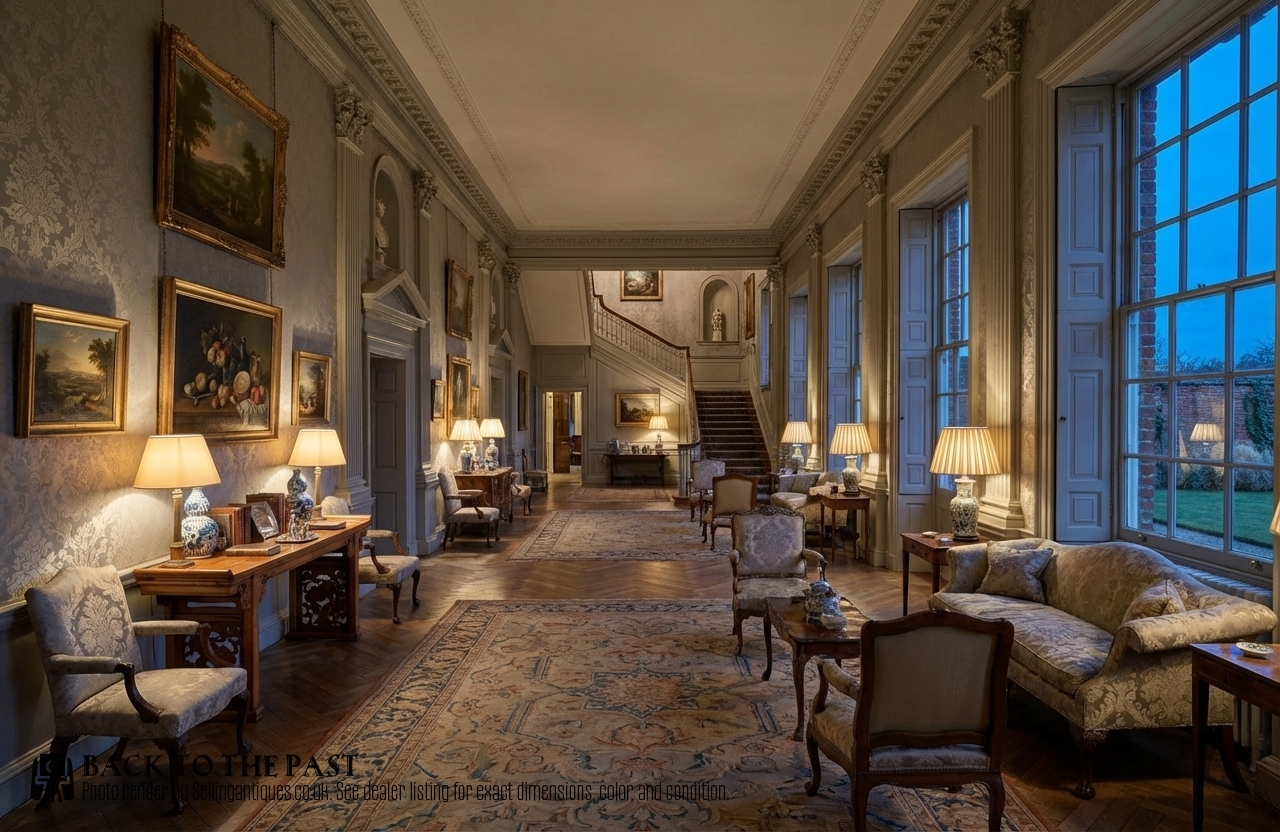
How They Were Made
Cabinetmakers constructed these tables using dense oriental hardwoods, elm, pine, and timber frameworks finished with traditional lacquer and fitted with brass hardware. The structural integrity relies on precise joinery rather than metal fasteners, allowing the timber to expand and contract naturally over decades.
Surfaces received multiple coats of lacquer or careful polishing to highlight the natural grain of the hardwood, while specific items incorporated hand-carved detailing along the aprons and legs. Glass tops appear on certain variants to protect the aged timber surfaces during daily use.
Oriental Console Table Retail Price Guide 2026
Typical asking prices for oriental console table among the pieces listed under this phrase on Sellingantiques today, from the lower quarter to the upper quarter. They describe what is for sale here now, not the wider market.
Some tables retain tiny traces of temple dust trapped in their carved aprons, having witnessed centuries of domestic life before arriving here.
What Varies in Quality
Quality rests in the density and selection of the timber, the crispness of the hand-carved details along the aprons, and the depth of the original lacquer finish. Tables retaining their early patination and structural rigidity stand apart from examples with heavily restored or replaced elements.
The sophistication of the joinery and the harmonious proportions of the flange ends and legs distinguish high-grade altar tables from more utilitarian nineteenth-century regional pieces.
The Oriental Console Table Glossary
- Altar table
- A traditional Chinese table featuring a rectangular top, often with upturned flange ends, originally designed for ceremonial use in temples or domestic halls. These forms translate into striking console furniture for modern interiors.
- Qing Dynasty
- The final imperial dynasty of China, spanning from sixteen-forty-four to nineteen-twelve, known for sophisticated hardwood furniture traditions. Pieces from this era display refined proportions and expert joinery.
- Lacquered wood
- Timber coated with multiple layers of resin derived from tree sap, producing a durable, lustrous surface. This technique protects the underlying wood while providing a deep, reflective finish.
- Flange
- The raised upturned ends found on the short sides of traditional altar table tops. This architectural detail prevents ritual objects from sliding off and defines the silhouette of the piece.
- Hardwood
- Dense, durable timber harvested from broad-leaved deciduous trees, highly prized by traditional Asian cabinetmakers. It provides exceptional structural strength and takes a fine polish.
Oriental Console Table: Frequently Asked Questions
What is an oriental console table?
An oriental console table is a narrow timber furnishing rooted in traditional Chinese design, often adapted from temple altar tables or constructed during the nineteenth century. These pieces feature characteristic rectangular tops, linear frames, and occasionally upturned flange ends.
They serve as striking focal points in hallways and living spaces, offering practical surface area while introducing rich historical character and dense hardwood grains to an interior.
How were these tables used originally?
Many of these forms originated as altar tables placed against walls in Chinese homes or temples to hold ceremonial objects, ancestral tablets, or decorative vases. Their elevated stature and narrow proportions suited perimeter placement.
Over time, cabinetmakers adapted these designs for broader domestic use as hall tables and sideboards, where families displayed prized possessions and welcomed guests at the entrance of a residence.
How do I style a console table?
Living with these tables involves placing them against a flat wall in a hallway, dining room, or living area to anchor the space. Their strong architectural lines complement both contemporary minimalist rooms and eclectic interiors.
Keep the surface styling balanced by pairing the aged timber or lacquer finish with simple ceramics or lamps, allowing the historical presence of the woodwork to remain the central focus.
How can I tell the period?
Determining the age involves examining the construction methods, such as traditional mortise and tenon joinery, alongside the wear patterns on the timber and lacquer. Nineteenth-century examples display distinct patination and regional craftsmanship.
Comparing the specific proportions, hardware details, and wood species against documented Qing Dynasty or nineteenth-century stylistic conventions helps clarify the era of manufacture.