


Oriental Cloisonne Wall Dish
Oriental cloisonne wall dish selections bring heavy metal and brilliant coloured enamel panels into rooms that need depth and traditional pattern.

Oriental Cloisonne Wall Dish
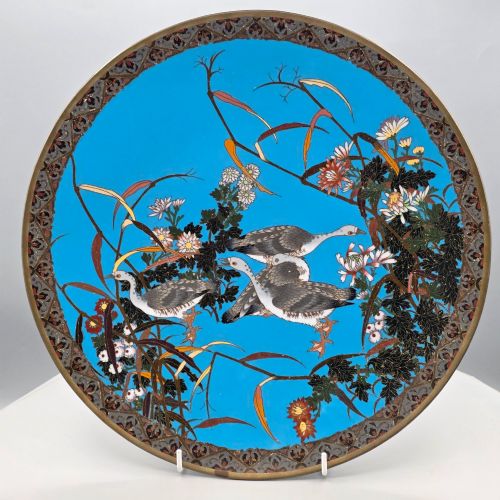
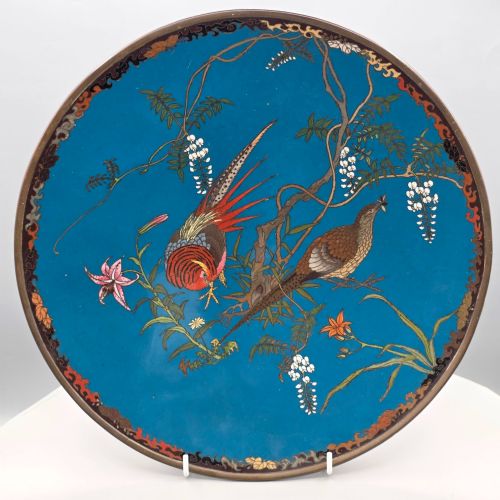
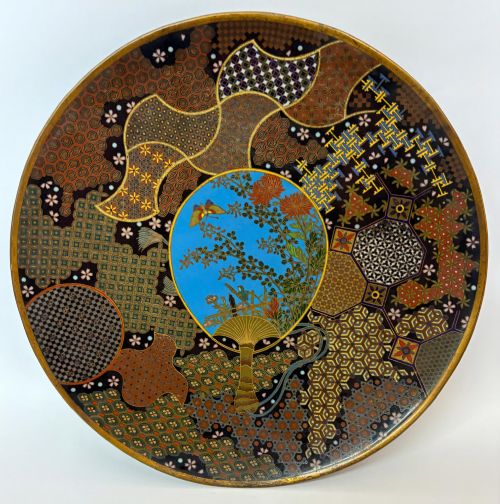
An oriental cloisonne wall dish is a large decorative plate or charger designed for display rather than dining. When you search for this phrase, you encounter heavy chargers, medium plates, and large plaques produced in Japan and China across the eighteenth, nineteenth, and early twentieth centuries.
The objects most frequently met on this page originate from the Meiji and late Edo periods of Japan, alongside nineteenth-century Qing Dynasty examples. Their forms include wide decorative chargers, trays, and display plaques measuring from modest diameters up to fifty centimetres.
How they were made
Artisans formed these vessels using a base of copper, brass, or bronze, shaping the metal into heavy plates and chargers. They then soldered fine brass or copper wire onto the surface to map out intricate pictorial cells and geometric patterns.
Vitreous enamel paste was packed into these wire compartments before the piece underwent high-temperature firing. After cooling, the surface was ground and polished until the metal wire rims and colourful enamel fields sat flush.
Materials documented across these physical examples include copper, brass, bronze, wood, and vitreous enamel.
What varies in quality
Quality rests in the precision and complexity of the wirework celling. Earlier Edo period pieces and high-grade Meiji examples display microscopic fineness in the wire outlines, whereas simpler plates rely on bolder, thicker divisions.
The depth of the enamel palette and the ambition of the subject matter separate standard decorative plates from masterworks. Dynamic depictions of leaping koi, dragons, and specific birds demonstrate superior technical control over flat floral fills.
The Oriental Cloisonne Wall Dish Glossary
- Cloisonne
- An enamelling technique where metal wire forms raised partitions on a metal base to hold coloured glass paste. The vessel is fired and polished to create a smooth, patterned surface.
- Charger
- A large ornamental plate intended for display on a wall, cabinet, or sideboard rather than for serving food. These items provide a wide canvas for complex pictorial enamel work.
- Meiji Period
- A span of Japanese history lasting from 1868 to 1912 noted for a massive output of refined metalwork and decorative arts exported to Western markets.
- Edo Period
- The era of Japanese history spanning from 1603 to 1867 preceding the Meiji administration. Pieces from the late years of this period show exceptional scale and technical ambition.
- Qing Dynasty
- The final imperial dynasty of China, lasting from 1644 to 1912. Enamel work from this tradition often shares display space with Japanese output.
Oriental Cloisonne Wall Dish: Frequently Asked Questions
How do I hang a heavy charger safely?
Heavy metal and enamel chargers require robust, adjustable spring-clip hangers that distribute the weight evenly around the rim without slipping. Ensure the wall fixing engages directly into masonry or a solid stud rather than relying on standard plasterboard plugs.
Position the display away from direct sunlight and strong heat sources to protect the stability of the fired glass enamel over decades of display.
Were these dishes made for dining?
These pieces were built strictly for ornamental display in domestic interiors, utilising thick metal foundations and delicate surface wires that would bend or scratch under cutlery use. Their substantial weight and flat bases suit vertical wall mounting or resting upright on sturdy plate stands.
Historical examples served as grand decorative statements in reception rooms, drawing upon traditional motifs like dragons, flora, and fauna.
How do I tell Meiji period pieces apart from Edo ones?
Edo period items often present massive proportions, sometimes reaching fifty centimetres, paired with dense, weighty copper bodies and deep, restrained colour palettes. Meiji production frequently brought tighter wirework and brighter, more varied chemical enamels.
Examining the reverse of the plate often reveals signature plaques or specific finishing patinations characteristic of late nineteenth-century export workshops.
What is the best way to clean cloisonne enamel?
Dust the surface regularly with a soft, dry microfibre cloth to prevent particulate buildup in the recessed wire channels. Avoid liquid cleaners, chemical polishes, or water immersion, as moisture can infiltrate minute gaps between the metal wire and the enamel.
If stubborn grime settles into the polished face, use a barely damp cloth followed immediately by thorough drying with a lint-free towel.