


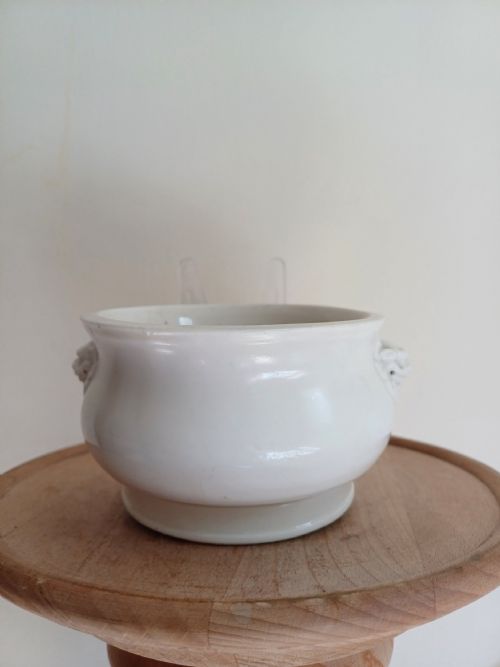

Oriental Ceramic Censer
An oriental ceramic censer brings aromatic smoke and centuries of kiln mastery into a room, offering both quiet ritual and sculptural presence.

Oriental Ceramic Censer
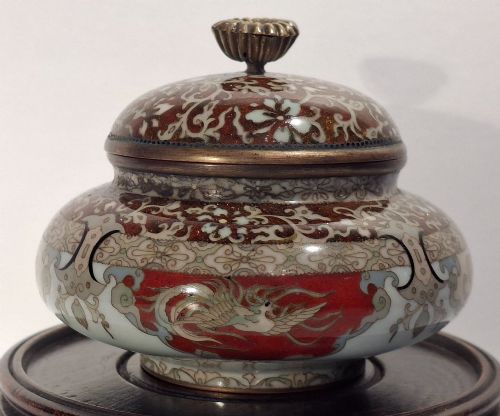
An oriental ceramic censer serves as a vessel for burning incense, taking forms such as lidded koro, tripod bowls, and figurative vessels. These pieces emerge from long traditions in China and Japan, spanning the Ming and Qing dynasties alongside the Edo, Meiji, and Taisho periods.
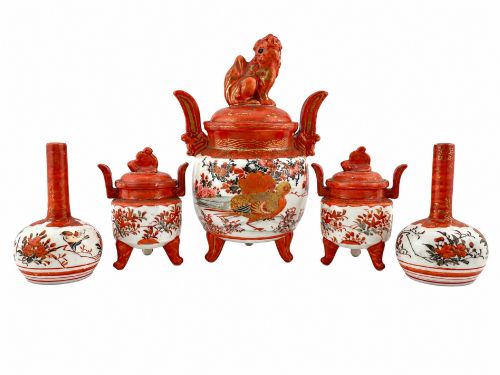
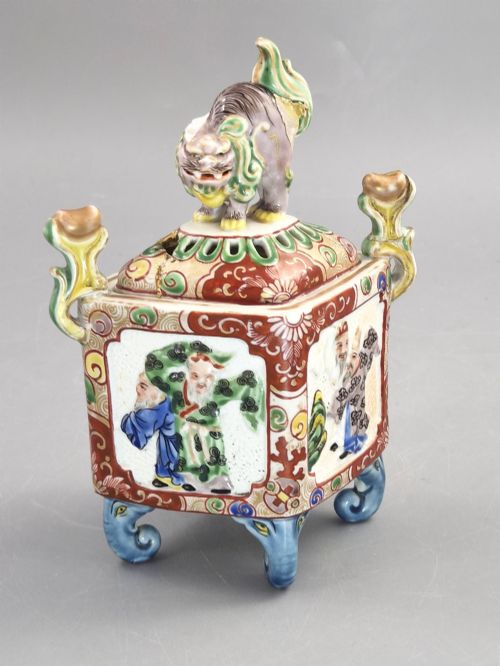
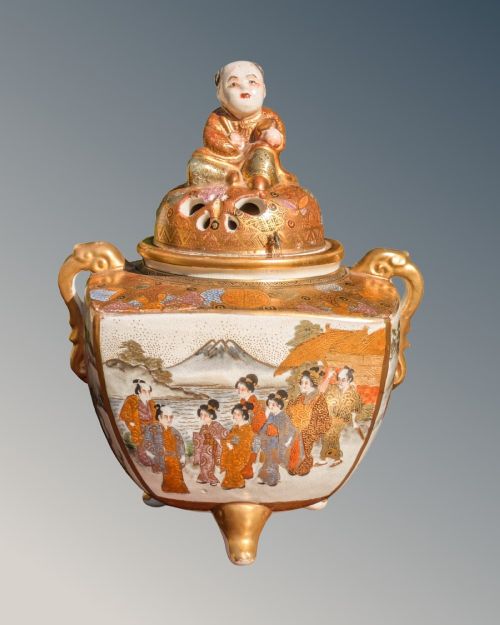
Japanese examples frequently appear as Kutani, Satsuma, Imari, and Hirado porcelain or earthenware, often featuring sculptural handles like elephant heads or finials shaped as Shi-Shi lions and Karashishi. Chinese pieces range from early Blanc de chine to Famille Rose earthenware and mark-bearing Qing dynasty porcelain.
Most items encountered on this page date from the nineteenth century, reflecting the intricate output of the Meiji period and late Qing dynasty. Collectors also find occasional eighteenth-century Imari tripod bowls and seventeenth-century Blanc de chine vessels among the selection.
How they were made
Potters shaped these censers from porcelain and earthenware, employing techniques such as reticulation, moulding, and wheel-throwing to achieve intricate walls and sculptural bodies. Cobalt underglaze provided deep blue decoration beneath the clear glaze on many pieces.
Makers applied enamel paints, gilt, gold leaf, and surface gilding to enrich the designs after the initial firing. Sculpted elements like dragons, laughing boys, and treasure ships were hand-modelled and applied before glazing and final kiln firing.
Listings feature porcelain and earthenware bodies decorated with enamel, cobalt underglaze, and gold leaf.
What varies in quality
The refinement of the modelling dictates much of the distinction, separating stiffly cast forms from lively, deeply undercut sculptures like dragons and Shi-Shi lions. Precision in the application of enamel and gold leaf reveals the hand of a more accomplished artisan.
Clarity of the glaze and the crispness of cobalt underglaze details demonstrate superior kiln control. The presence of specialised marks and the harmonious integration of lids, finials, and feet elevate the standing of an individual piece.
Kotobuki-do
The Oriental Ceramic Censer Glossary
- Koro
- A traditional Japanese incense burner, usually featuring a body, pierced cover, and small feet. These vessels are central to Japanese ceramic arts.
- Imari
- A style of Japanese porcelain decorated in underglaze blue, iron red, and gold. It originated in Arita and gained international renown.
- Satsuma
- A type of earthenware from Japan with a ivory-crackled glaze, typically decorated with polychrome enamels and gilding. Pieces often depict complex figurative scenes.
- Kutani
- Japanese coloured porcelain and pottery known for vibrant enamel palettes and intricate designs. Kutani wares frequently incorporate bold reds, greens, and gold.
- Blanc de chine
- A Chinese white porcelain made at Dehua, prized for its ivory tone and smooth glaze. This ware dates back to the Ming dynasty and earlier.
- Reticulated
- Openwork decoration cut into the clay before firing. This technique creates delicate lattice patterns that allow smoke or light to filter through.
Oriental Ceramic Censer: Frequently Asked Questions
How do I use an oriental ceramic censer?
Place aromatic resins, woods, or incense cones inside the bowl portion of the vessel. The smoke drifts gently through the pierced covers or openwork sections.
Ensure the censer rests on a heat-resistant surface to protect furniture. Many collectors simply display these pieces as sculptural art without burning incense.
What is the difference between a koro and a censer?
A koro is simply the specific Japanese term for an incense burner, typically equipped with a lid and small support feet. Oriental ceramic censer is a broader term encompassing both Japanese koro and Chinese incense vessels.
Both forms served traditional ceremonial or domestic fragrance roles. Their construction methods and decorative styles reflect their specific regional origins.
How do I date a Meiji period censer?
Examine the materials, glazes, and stylistic markers typical of the late nineteenth and early twentieth centuries in Japan. Meiji examples often combine complex Satsuma or Kutani enamels with elaborate gilded motifs.
Look for specific signatures or factory marks on the base where present. Comparative analysis of forms like Shi-Shi finials helps narrow the decade of production.
Are Chinese and Japanese censers displayed differently?
Both traditions suit placement on mantelpieces, side tables, or within dedicated display cabinets where their glaze and form can be appreciated. Chinese Blanc de chine pieces often highlight minimalist sculptural purity.
Japanese Imari and Satsuma censers offer vibrant colour palettes that draw the eye across a room. Pairing them with wooden stands enhances their traditional presentation.