
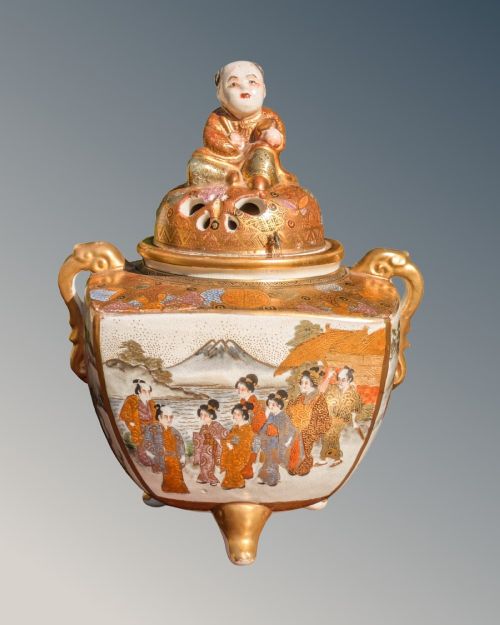


Japanese Tripod Incense Vessel
These japanese tripod incense vessel examples bring centuries of bronze, satsuma, and imari artistry straight into your home.
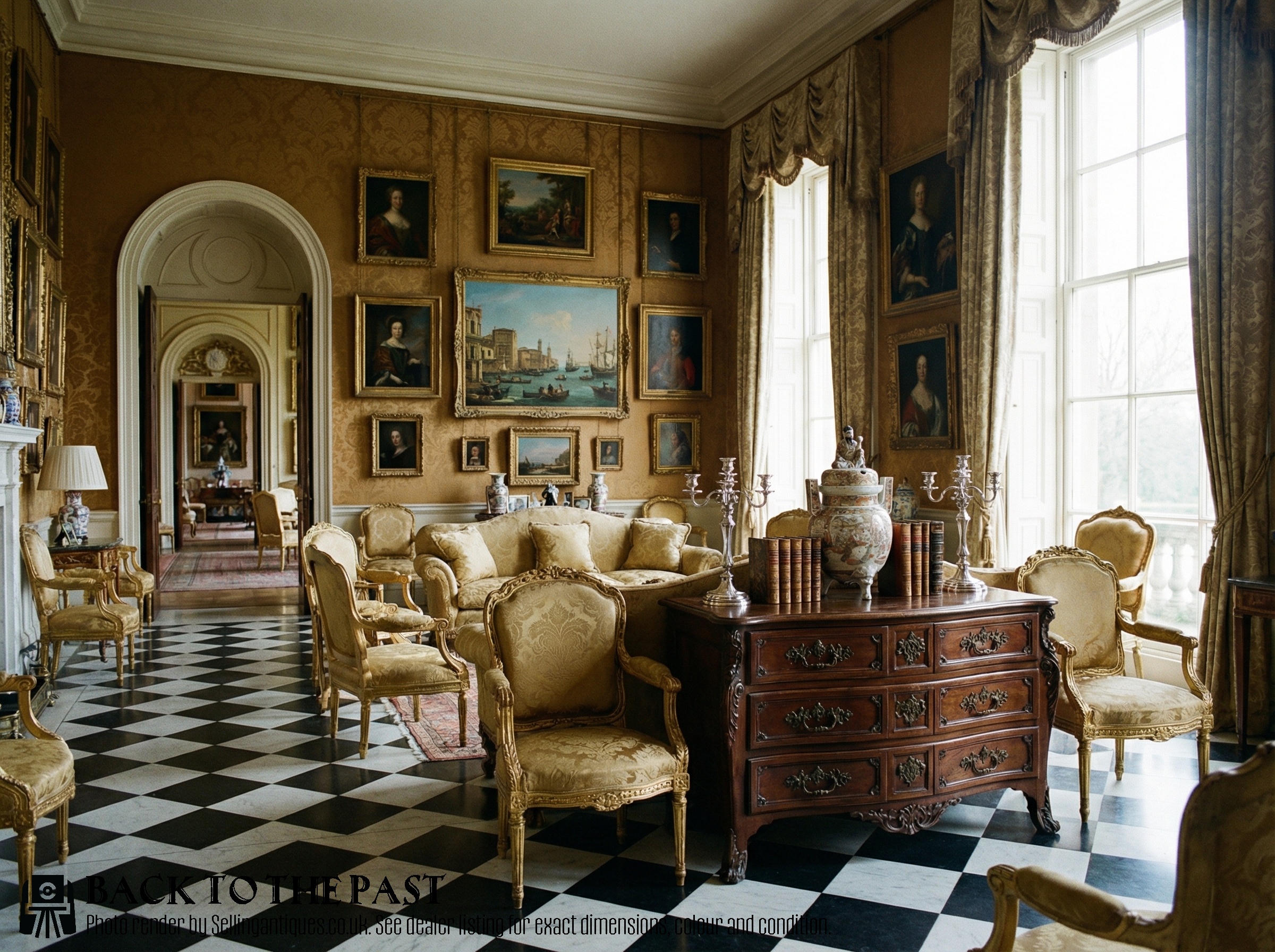
Japanese Tripod Incense Vessel
When you search for a japanese tripod incense vessel, you encounter decorative koro, censers, and lidded vessels designed to hold aromatic materials. The items on this page span the 19th century, the Edwardian era, and the Victorian period.
You are most likely to meet pieces shaped during the Meiji period and the Edo era, alongside Japanese Imari porcelain and Satsuma earthenware forms. These vessels often feature three supporting feet, standing firm upon a surface while holding their covers securely in place.
The assortment includes large lidded koro and censer bowls, sometimes accompanied by ornamental creatures such as Shi-Shi lions or dragons. Alongside porcelain and earthenware, you will find robust bronze and brass creations enriched with cloisonne, gilding, and gold leaf.
How they were made
The makers of these vessels utilised durable metals like bronze and brass, frequently pairing them with intricate cloisonne enamel work and delicate silver detailing. Casting techniques allowed artisans to shape sturdy three-footed bases and model fierce dragons or protective lions upon the lids.
For ceramic variations, workshops shaped fine earthenware and porcelain, decorating the surfaces with classic Japanese Imari patterns and Satsuma glazes. Artisans applied rich gilding and gold leaf highlights to accentuate the moulded contours and painted scenes.
Listings feature 19th century, Edwardian, and Victorian periods, alongside materials like bronze, Satsuma earthenware, and Imari porcelain.
What varies in quality
In ceramic koro, the depth of the palette and the delicacy of the gilding set the finer pieces apart. Superior items exhibit balanced proportions across the tripod legs and the main body, ensuring the cover rests harmoniously on the vessel.
The Japanese Tripod Incense Vessel Glossary
- Satsuma
- A type of Japanese earthenware featuring a crackle glaze and ornate polychrome enamel paintings, often enriched with gold. It became widely produced for export during the 19th century.
- Imari
- A style of Japanese porcelain decorated in underglaze blue and overglaze red, gold, and green. This ware is known for its bold and colourful geometric and floral patterns.
- Cloisonne
- An enamelwork technique where thin metal wires are soldered to a metal base to create compartments, which are then filled with coloured paste and fired. It produces vibrant patterns across bronze and brass surfaces.
- Shi-Shi
- A mythical guardian lion or dog often depicted in Japanese art. Sculpted versions frequently serve as finials on the covers of incense vessels.
Japanese Tripod Incense Vessel: Frequently Asked Questions
What is a koro?
A koro is a traditional Japanese incense burner designed with a body, a supporting base or legs, and a removable cover. These vessels were used historically for burning aromatic woods and resins during ceremonies or quiet contemplation.
Today, they function primarily as decorative objects of art. Collectors appreciate them for their intricate metalwork, enamel designs, or painted porcelain surfaces.
How do I date a bronze censer?
Dating a bronze censer involves examining the casting quality, the style of any applied ornamentation, and the characteristics of the metal surface. Pieces from the Meiji period often display exceptional sculptural detail on dragons or lions.
Historical markers such as Victorian or Edwardian import stamps can also help place a piece in time. Comparing the vessel's proportions to known period examples clarifies its era of manufacture.
Where were Satsuma vessels made?
Satsuma ware originated in Satsuma Province on the southern island of Kyushu in Japan. While early pieces were dark and rustic, later creations adopted a characteristic ivory-coloured crackle glaze.
During the Meiji period, production expanded to urban centres like Kyoto and Tokyo to satisfy overseas demand. These export pieces featured elaborate hand-painted designs enriched with gold leaf.
Can I still burn incense inside them?
While these vessels were originally made to burn incense, many collectors choose to display them as sculptural works of art. Using them for burning modern sticks or cones requires caution to protect the historic interior surfaces.
If you do choose to burn incense, ensure the vessel is placed on a heat-resistant mat. Clean any ash gently to preserve the original bronze, brass, or ceramic finish.