


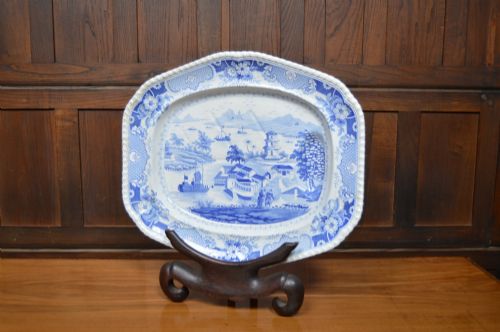

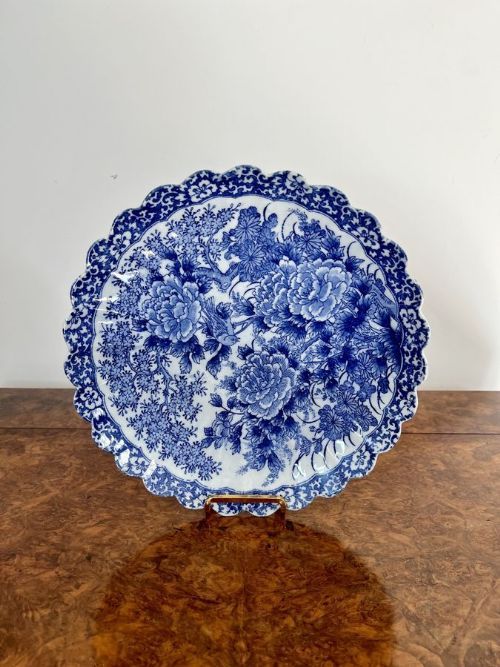

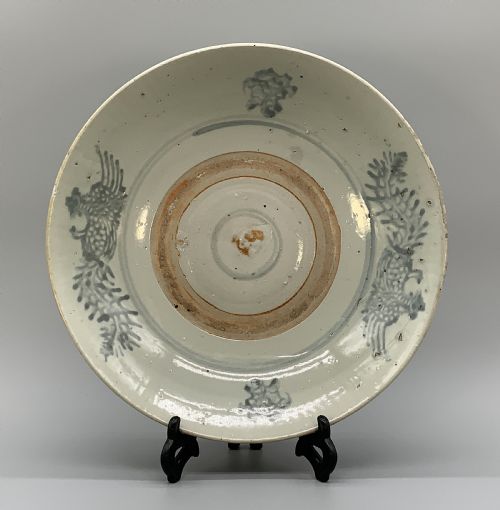
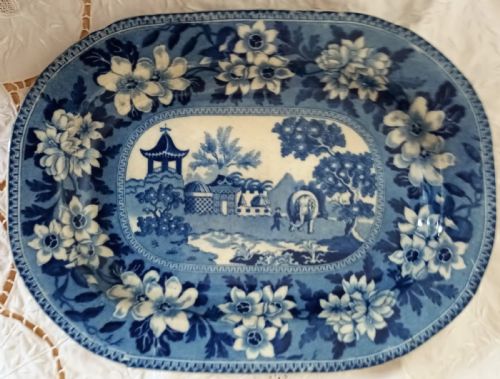


Oriental Blue White Charger
An oriental blue white charger is a broad, striking display dish carrying cobalt designs, prized by collectors for its scale and historical depth.
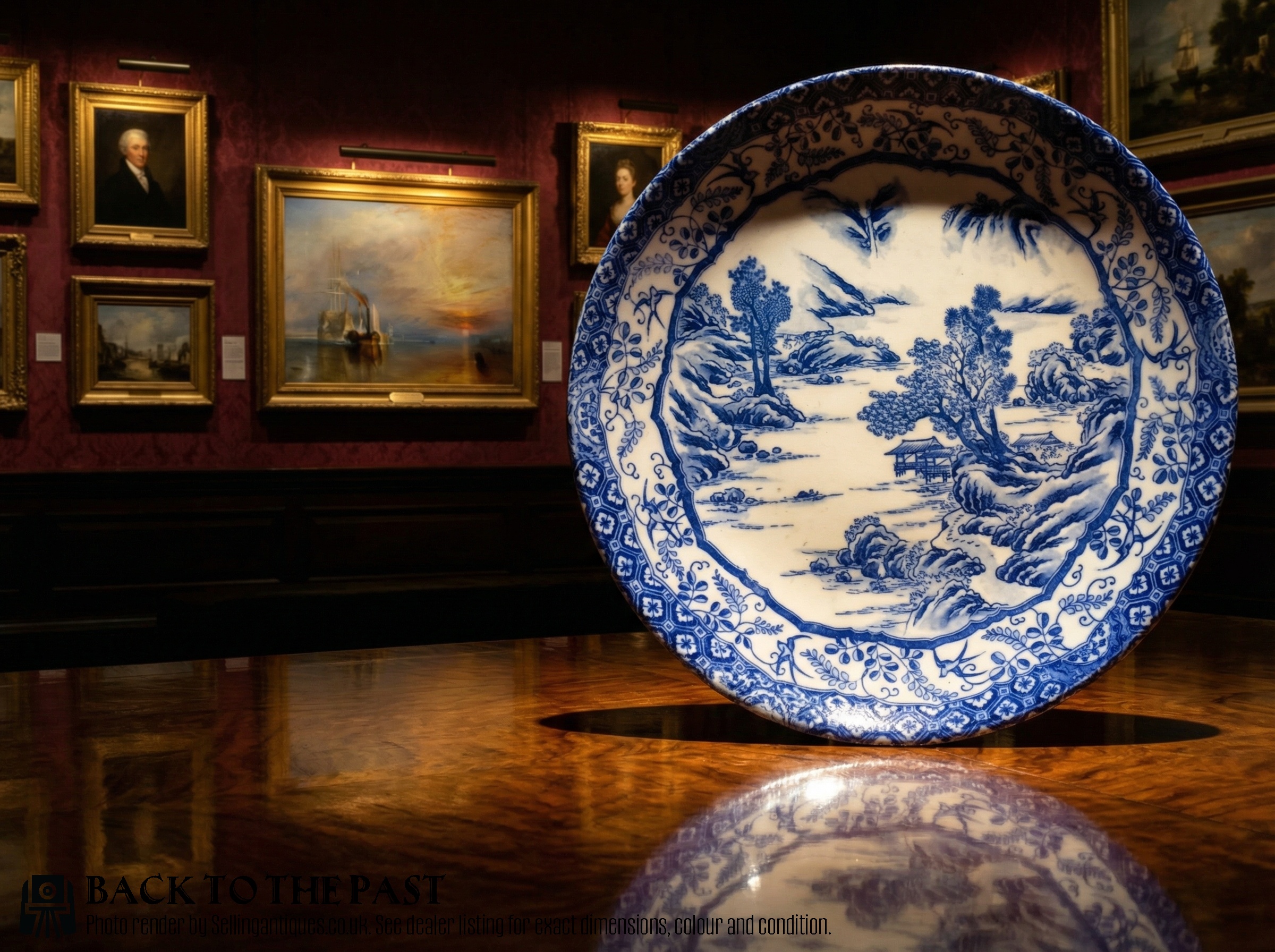
Oriental Blue White Charger
When searching for an oriental blue white charger, a buyer encounters large serving platters, shallow bowls and decorative plates produced across several centuries in East Asia and Britain.
The selections on this page span the Ming, Qing and Meiji periods, alongside Victorian English transferware interpretations.
Japanese Arita and Imari wares appear frequently, sitting alongside Chinese porcelain chargers from the Kangxi and later dynasties.
Materials and construction
Potters painted cobalt pigment directly onto porcelain or earthenware bodies before applying a clear glaze and firing at high temperatures.
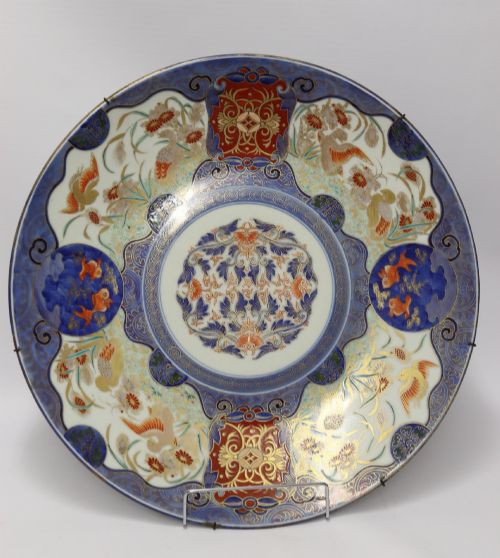
Certain pieces incorporate enamel and gold leaf applied over the glaze, particularly within Japanese Imari traditions.
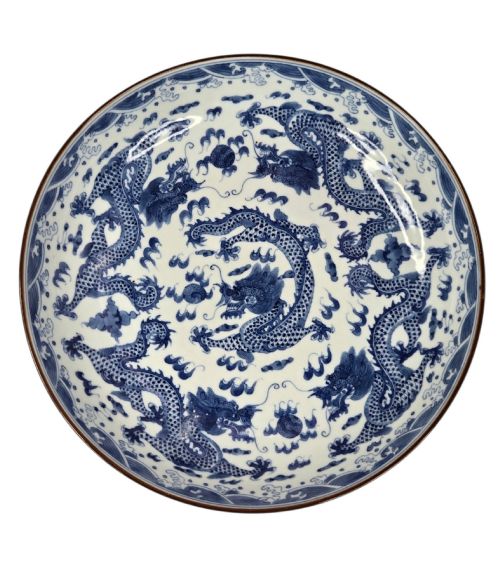
Moulding, hand-painting and transfer printing all served to create the intricate floral, dragon and landscape motifs seen across these pieces.
Oriental Blue White Charger Retail Price Guide 2026
Typical asking prices for oriental blue white charger among the pieces listed under this phrase on Sellingantiques today, from the lower quarter to the upper quarter. They describe what is for sale here now, not the wider market.
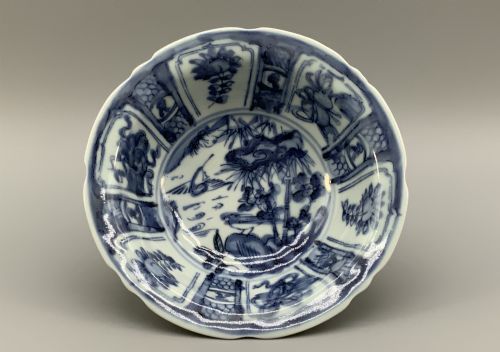
The object types on this page include serving platters, lobed bowls and scalloped edge plates alongside traditional chargers.
Determinants of quality
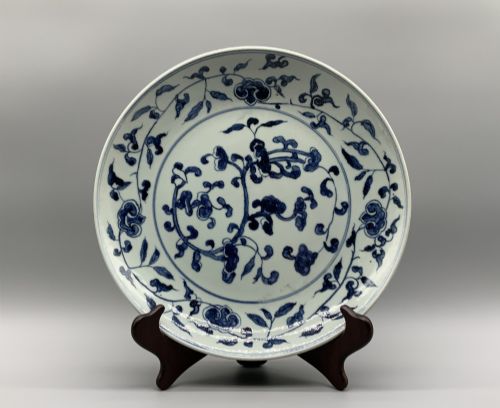
The crispness of the cobalt underglaze painting distinguishes standard production items from masterworks executed with fluid brushwork and deep tonal variation.
Structural stability and the preservation of hand-painted details or gilt highlights across large porcelain surfaces dictate the standing of individual chargers.
Precision in the potting, evident in balanced rims and stable bases during firing, separates superior early examples from later wares.
John Rogers and Son·J W R
The Oriental Blue White Charger Glossary
- Charger
- A large decorative plate or serving platter typically exceeding thirty centimetres in diameter. These wide vessels were designed for display on sideboards or large tables.
- Cobalt Underglaze
- A blue pigment applied to pottery before glazing and firing. This metallic oxide withstands high temperatures without losing its intense colour.
- Imari
- A style of Japanese porcelain featuring blue underglaze and red, gold and green overglaze enamel. Production centred on the port of Imari for export.
- Arita
- The Japanese town where porcelain production originated in the seventeenth century. Arita kilns produced fine blue and white wares for domestic and international markets.
- Transferware
- Pottery decorated by applying a printed design from an engraved copper plate onto the ceramic surface. This technique enabled mass production in nineteenth-century England.
- Swatow Ware
- A category of Chinese export porcelain produced during the late Ming dynasty. These robust chargers typically display vigorous brushwork in cobalt blue.
Oriental Blue White Charger: Frequently Asked Questions
How were oriental blue white chargers used?
These large vessels served primarily as display pieces on sideboards or dining tables rather than for everyday dining. Their substantial diameter allowed workshops to showcase complex pictorial and floral compositions.
Over centuries, collectors also mounted them on walls or placed them in specialised display stands to protect their glazed surfaces.
How do I tell Chinese from Japanese chargers?
Chinese pieces often feature cobalt painting with distinct underglaze tones, depicting dragons, lotus motifs or Kangxi period designs. Japanese Arita and Imari wares frequently incorporate characteristic iron red and gold enamel highlights alongside the blue.
Examining the foot ring, potting style and specific floral borders helps confirm the likely origin of each charger.
What is the difference between Kangxi and Meiji periods?
The Kangxi period falls within the Qing dynasty during the seventeenth and early eighteenth centuries, known for fine porcelain bodies and vibrant cobalt pigments. The Meiji period covers late nineteenth to early twentieth-century Japan, yielding hand-painted porcelain and Imari plates.
Understanding these distinct eras helps date the physical materials and painting styles found on the plates.
Are these chargers safe to clean with water?
Glazed porcelain and pottery withstand gentle cleaning with lukewarm water and mild soap, provided there is no fragile overglaze enamel or gold leaf. Care must be taken around old chips or hairline fractures.
Submerging antique earthenware for extended periods should be avoided to protect the porous ceramic body beneath the glaze.
How do I display a large charger safely?
Displaying a heavy porcelain charger requires a sturdy, adjustable wall bracket or a dedicated desktop plate stand designed to support significant weight. Placing the stand on a stable surface prevents accidental tipping.
Keeping the piece away from direct sunlight and high-traffic edges ensures the glaze and any delicate enamel details remain protected.