

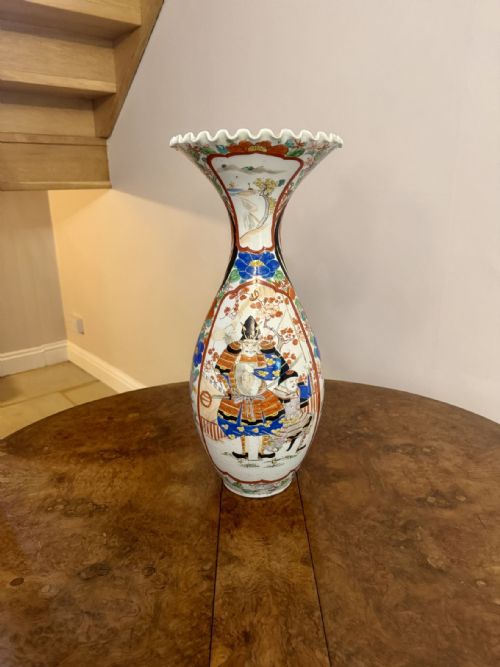
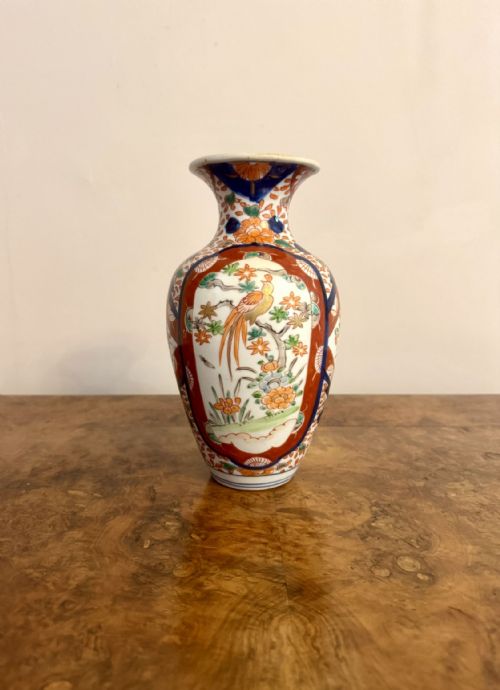


Orange Imari Urn
These orange imari urn pieces bring rich palettes and striking forms to a room, offering collectors a bold anchor for traditional interiors.
Orange Imari Urn
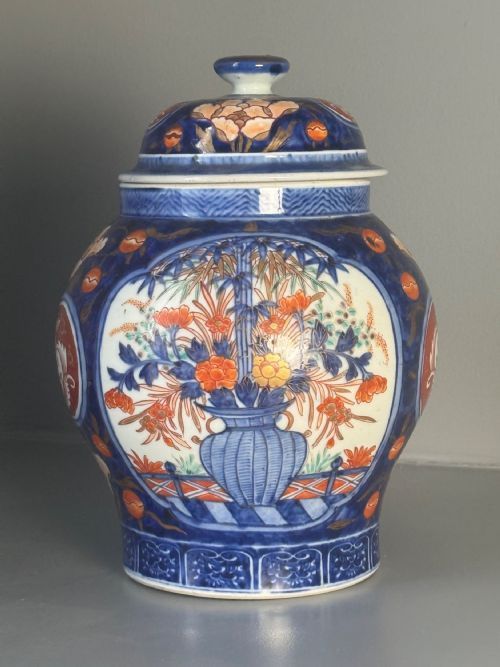
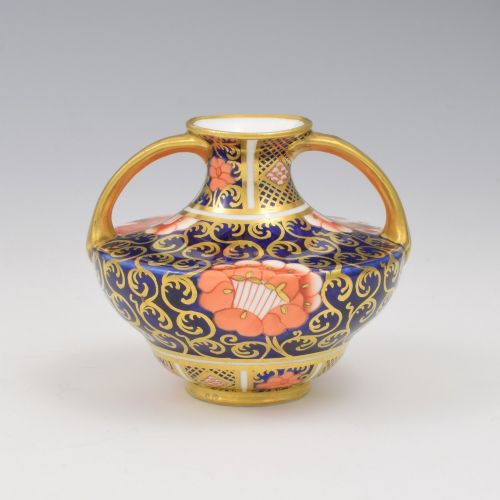
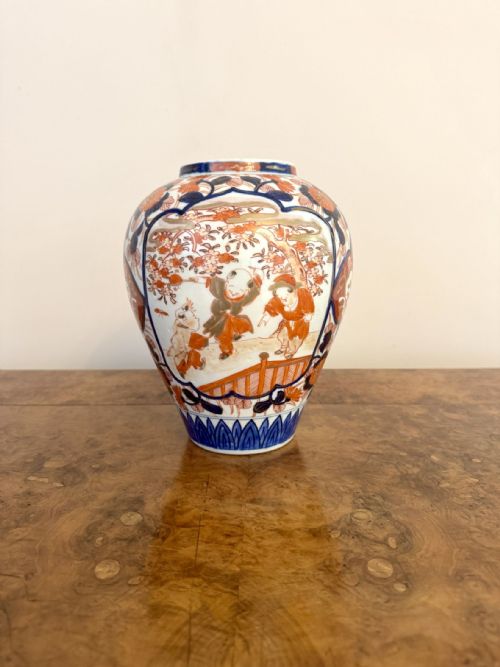
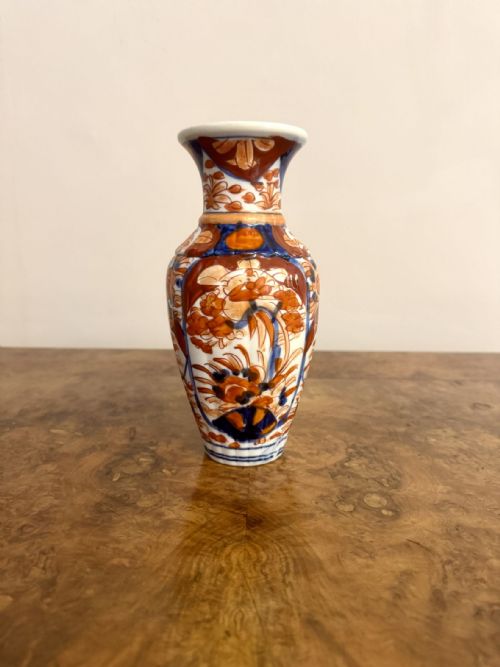
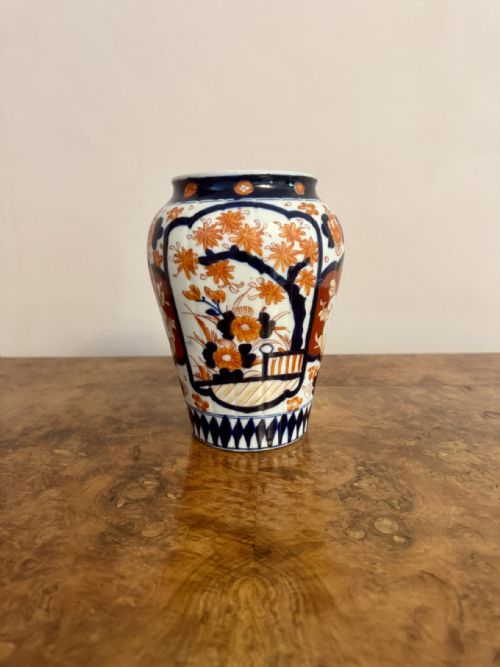
An orange imari urn brings together distinct forms like covered ginger jars, double gourd vessels, and twin handled vases that collectors seek for display. The pieces on this page stem primarily from Japanese Meiji period production alongside British interpretations from the Georgian and Victorian eras.
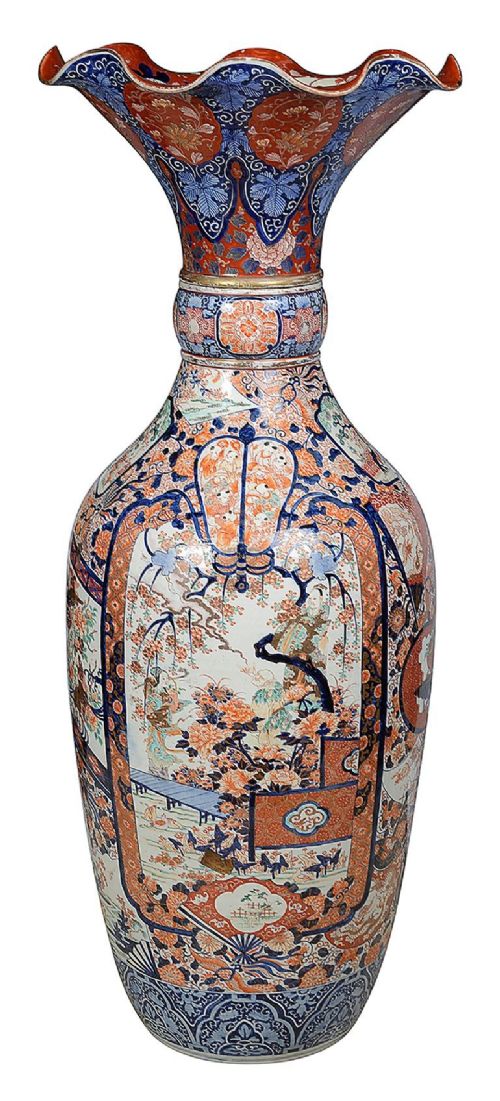
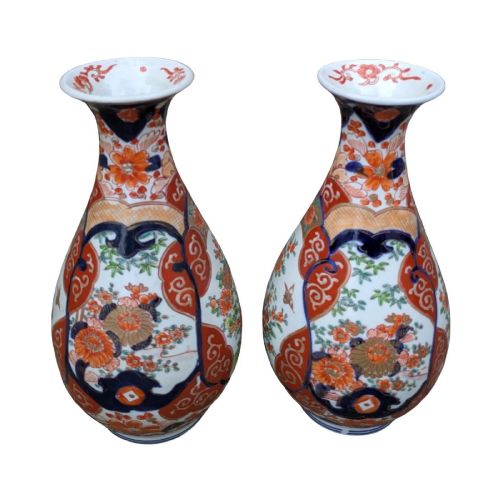
Makers shaped these items into large floor standing vases, octagonal baluster shapes, and smaller cabinet pieces that served decorative and functional roles. The selection spans straightforward single vessels through to matched pairs and larger garnitures of three.
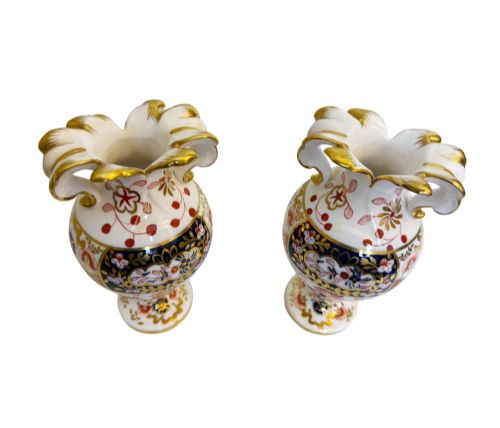
Originating from both Japanese kilns and English factories such as Spode, Chamberlain Worcester, and Royal Crown Derby, these objects demonstrate how diverse makers adopted the distinctive aesthetic. Buyers encounter everything from miniature porcelain vessels to substantial floor standing examples.
How They Were Made
Potters built these vessels using ceramic, porcelain, and ironstone bodies, forming them into shapes like baluster vases and lidded jars. Workers applied glaze to the clay surface before firing, creating a vitreous base ready for detailed hand painting.
Artisans applied iron-red enamel alongside cobalt blue pigment and gold leaf highlights to achieve the characteristic imari look. Gilding and enamel work received secondary firings to fuse the decoration permanently to the glazed ceramic body.
Some double gourd vases mimic traditional medicine gourds, believed historically to ward off evil spirits.
What Varies in Quality
The refinement of the hand painted enamel and the precision of the gilding set superior examples apart from standard production. Artisans who maintained strict control over colour saturation and brushwork created pieces with sharper detail and greater visual depth.
Completeness and scale also govern the hierarchy, as matched pairs, garnitures, and large lidded floor vases demand higher skill in both firing and decoration. Preservation of the original enamel and gold leaf without rubbing preserves the integrity of the design.
Spode·Royal Crown Derby·Chamberlain Worcester·Flight Barr And Barr
The Orange Imari Urn Glossary
- Imari
- A style of Japanese porcelain decorated in underglaze blue, iron-red, and gold. This aesthetic heavily influenced both Japanese export workshops and European factories.
- Garniture
- A set of three or more matching vases or jars designed to sit together on a mantelpiece or sideboard. These matched groups represent coordinated studio work.
- Baluster
- A vase shape with a rounded body that tapers toward the base and swells near the lower portion. This classic silhouette provides stability for large decorative vessels.
- Ironstone
- A type of heavy, durable ceramic developed in the nineteenth century as a tougher alternative to porcelain. Factories utilised it for robust utilitarian and decorative vessels.
Orange Imari Urn: Frequently Asked Questions
How do I spot a reproduction?
Examine the weight, glaze consistency, and the application of the enamel colours under magnification. Older pieces show subtle hand-painting variations rather than uniform mechanical dotting.
Check the base for wear patterns consistent with age and look for traditional potting marks typical of nineteenth-century kilns.
Where were these urns made?
The pieces originate primarily from Japanese kilns during the Meiji period as well as notable British porcelain factories. English potteries closely imitated the Japanese aesthetic during the Georgian and Victorian eras.
Each region utilised distinct clay bodies and firing methods while adhering to the signature colour palette.
How should I display them?
Place larger floor vases in corners or entryways where their height and bulk command the space safely. Smaller jars and twin-handled vessels suit mantelpieces, sideboards, or enclosed cabinets.
Keep them away from direct sunlight to protect the enamel colours and delicate gold leaf highlights over time.
What defines a garniture?
A garniture consists of a matched set of three or more vases or jars designed to be displayed together as a unified decorative scheme. These sets balanced mantelpieces and large furniture surfaces in formal rooms.
Finding a complete set intact remains a primary goal for many dedicated collectors.