
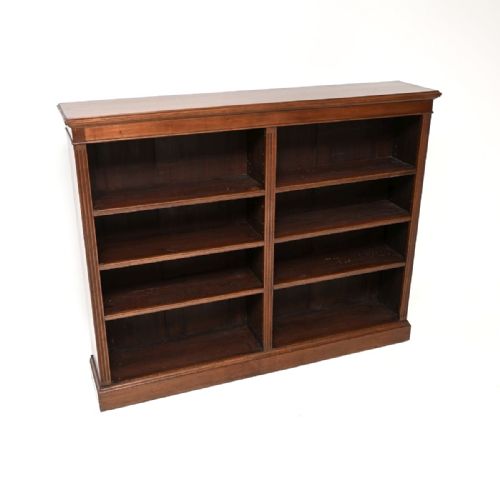
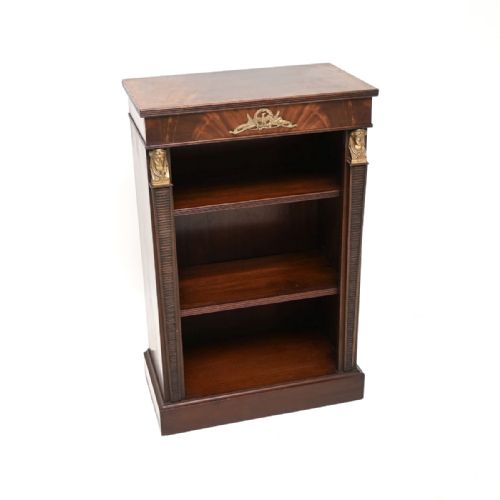
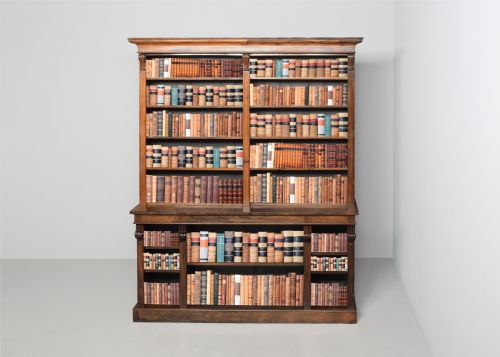
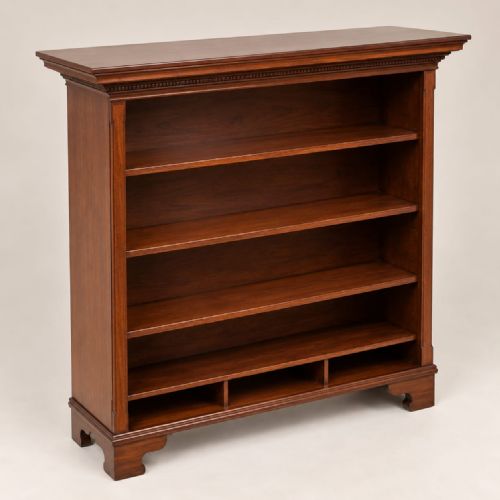
Open Shelving Unit Wood
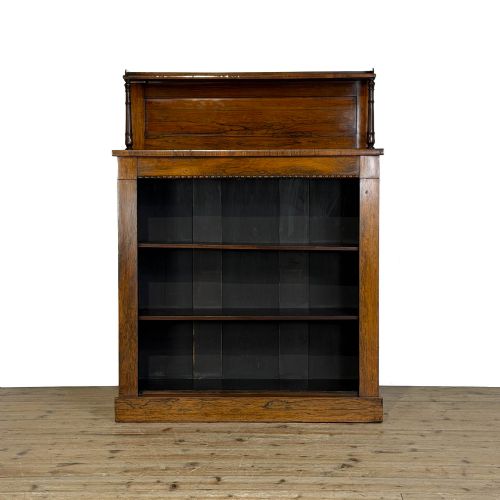
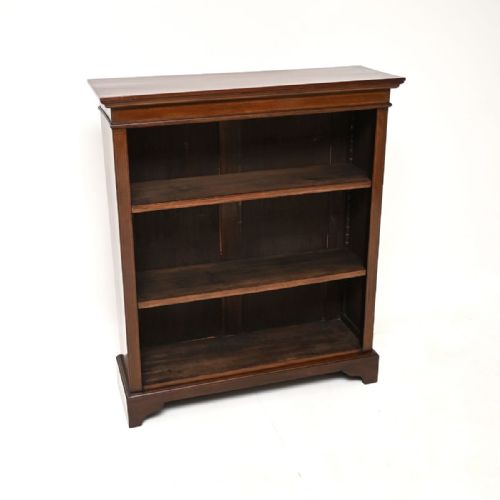
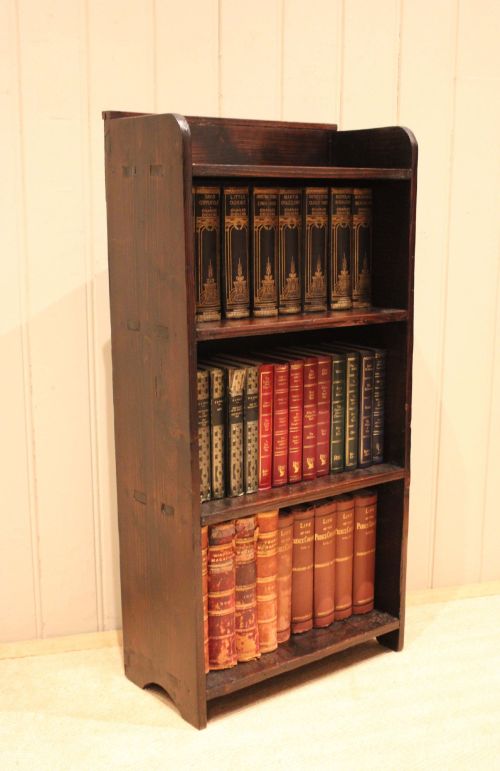
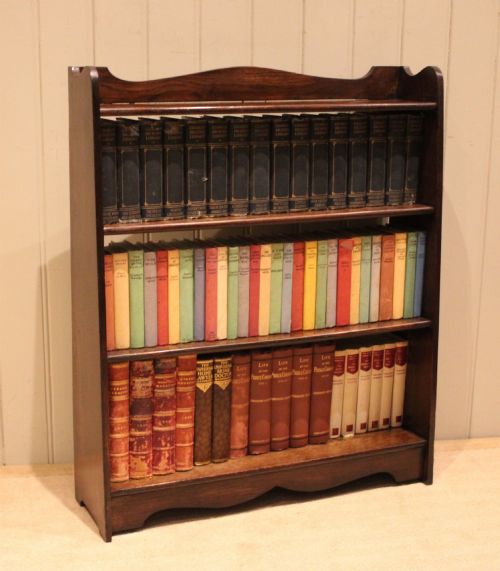
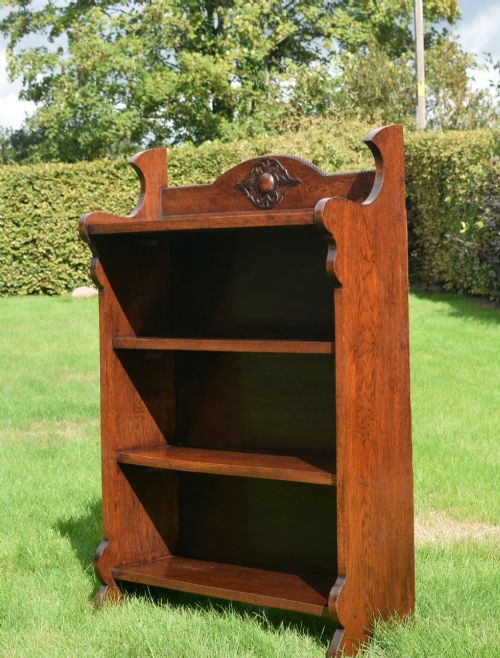
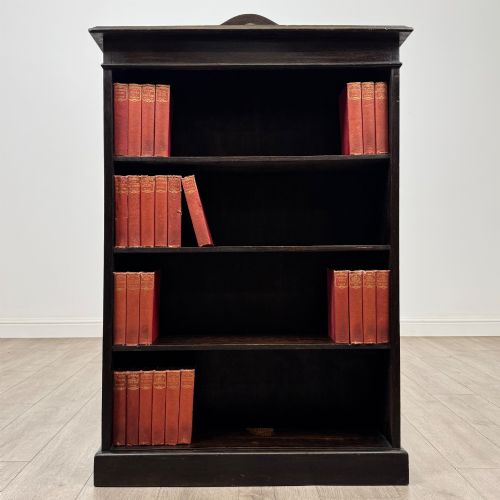
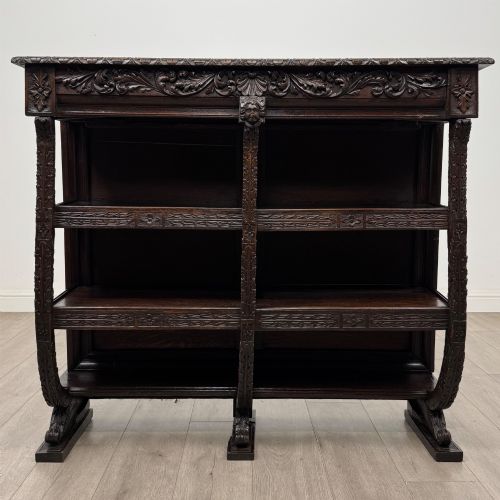
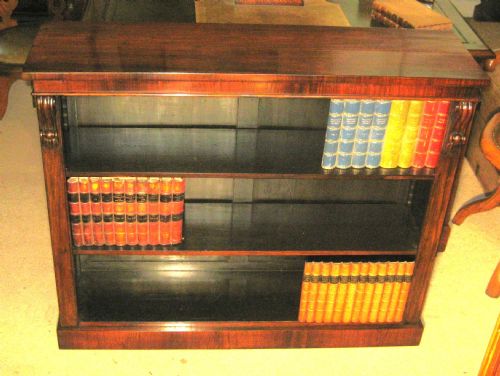
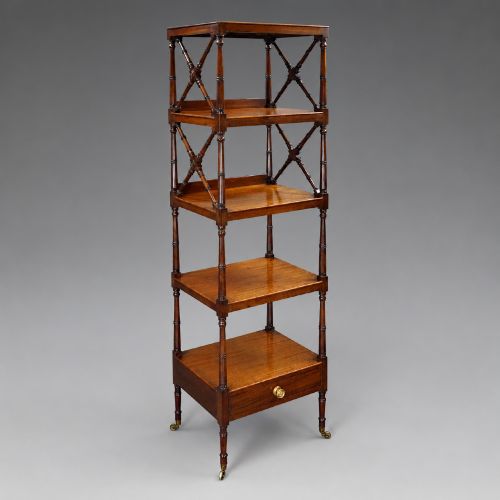
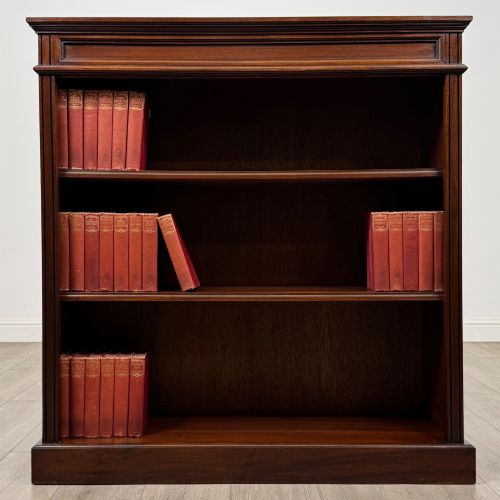
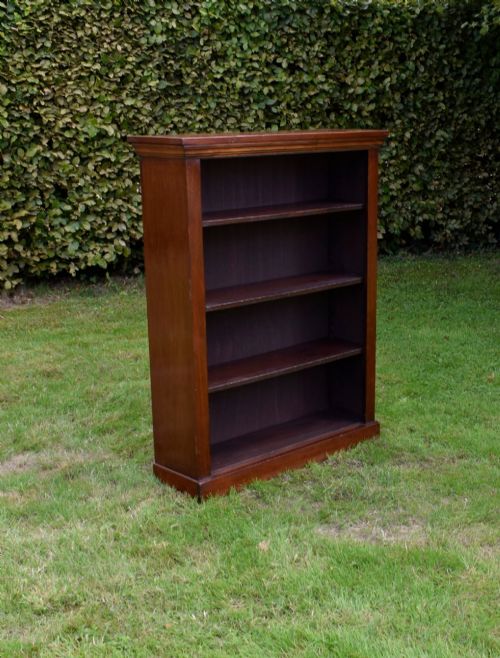
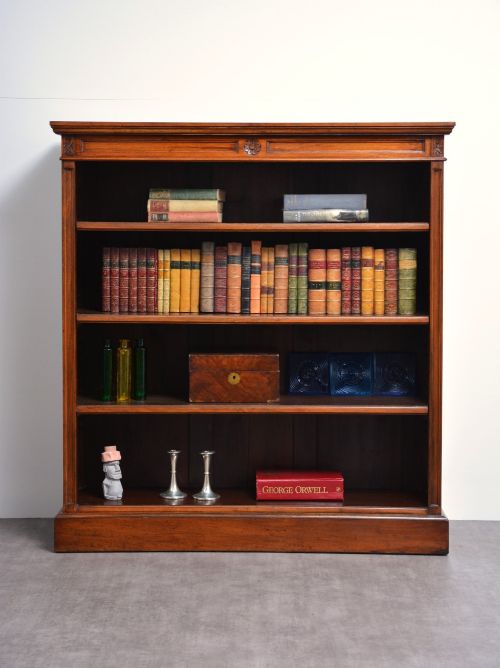
These open shelving unit wood pieces display timber grains and open tiers for books and display.
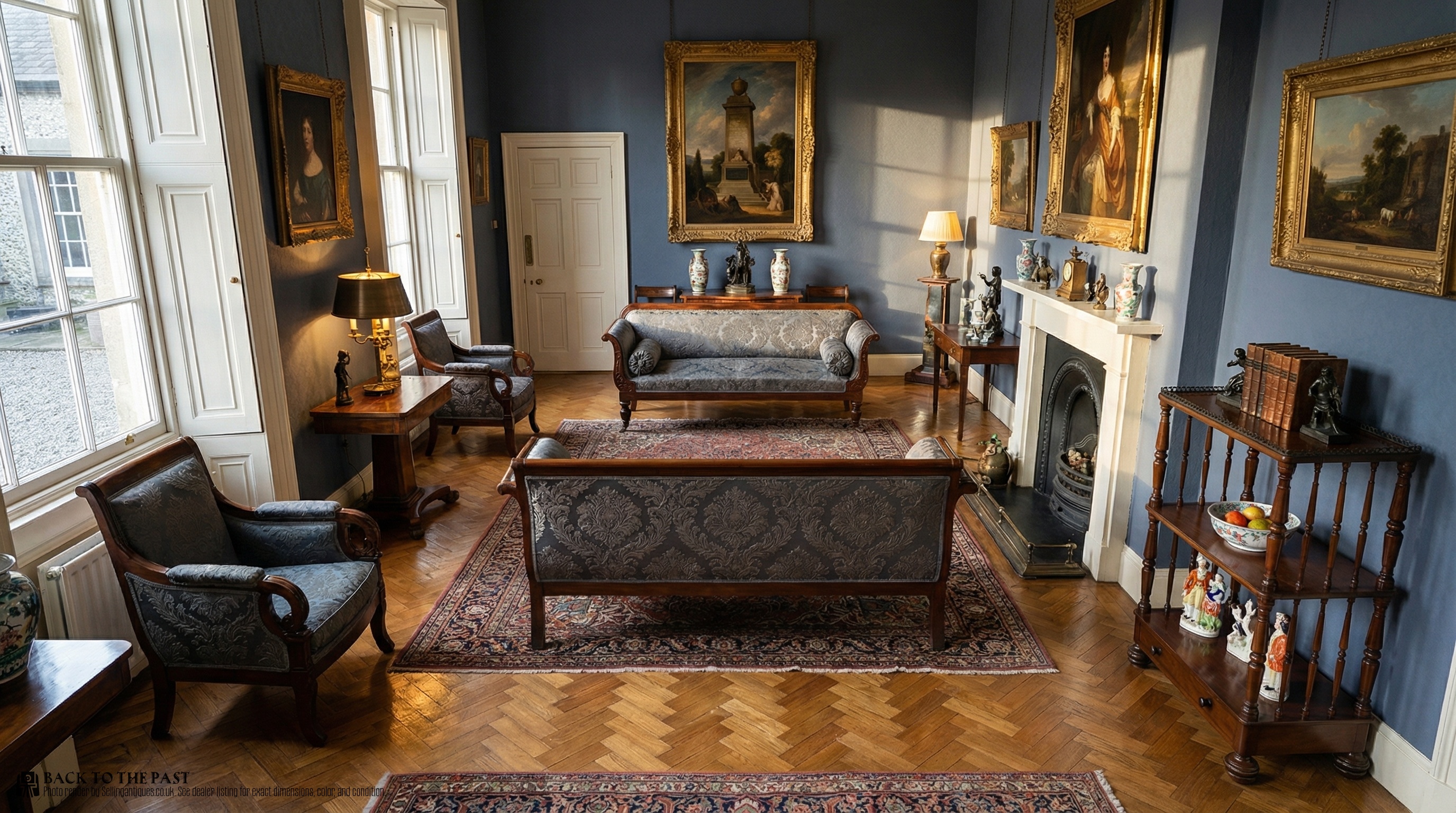
Open Shelving Unit Wood
An open shelving unit wood search brings up bookcases, whatnots, etageres, and wall shelves designed to hold books and display objects without enclosing them behind doors. Buyers encounter these primarily in Victorian and Edwardian iterations alongside 19th-century and early 20th-century examples.
The most common formats on this page are freestanding mahogany, oak, and rosewood bookcases featuring fixed or adjustable shelves. Pieces range from slim or low dwarf variants to large library bookcases and stepped configurations.
Originating across the 19th and early 20th centuries, these items include specialised regional forms such as Anglo-Indian padauk shelves and French library bookcases. Styles span from Victorian and Edwardian to Regency, William IV, Neoclassical Empire, and Art Deco.
Materials and construction methods
Cabinetmakers utilised hardwoods such as mahogany, oak, rosewood, walnut, and pine, occasionally incorporating brass and ormolu mounts or decorative inlays. Timber selection dictated the structural integrity and visual weight of each piece.
Construction involved solid wood planks and veneered surfaces, with carved details, beaded edges, and stepped profiles shaping the design. Many bookcases incorporated adjustable shelf mechanisms supported by wooden racks or brass studs.
Listings feature oak, mahogany, rosewood, walnut, pine, and teak alongside brass and ormolu across the 19th and early 20th centuries.
Distinctions in quality
Quality rests in the choice of timber and the precision of the cabinetwork, from figured mahogany and rosewood veneers to solid carved oak. Finer examples display crisper carved ornaments, well-fitted adjustable shelving systems, and balanced proportions.
The integration of secondary materials like brass hardware and ormolu details separates standard utility furniture from more ambitious cabinetmaking. Design ambition also marks the range, distinguishing simple rustic or dwarf shelves from breakfront library bookcases and waterfall etageres.
The Open Shelving Unit Wood Glossary
- Bookcase
- A piece of furniture with horizontal shelves for storing books. Many examples on this page leave the front entirely open.
- Whatnot
- A multi-tiered open piece of furniture used for displaying ornaments and small objects. These often feature slender upright supports.
- Waterfall bookcase
- A set of open shelves where each tier steps back progressively from the one below it. This creates a cascading silhouette popular in the Regency period.
- Dwarf bookcase
- A low open bookcase designed to sit beneath window height. These frequently incorporate adjustable shelves.
- Breakfront
- A piece of furniture where the central section projects forward from the flanking wings. This architectural arrangement adds depth to large library bookcases.
- Etagere
- A set of open shelves for display, similar in function to a whatnot. The form relies on tiered platforms held by vertical posts.
Open Shelving Unit Wood: Frequently Asked Questions
What is an open shelving unit wood used for?
These pieces serve primarily to store books and display decorative objects in domestic settings. The lack of doors provides immediate access to the contents.
Larger library bookcases hold substantial volumes, while smaller whatnots and wall shelves accommodate ornaments and smaller collections.
How do I identify a Victorian open bookcase?
Victorian examples typically feature dense timbers like mahogany, rosewood, or carved oak. They often display robust proportions and ornamental carving.
Many period pieces include adjustable shelves supported by wooden racks or brass mechanisms to accommodate varying book heights.
Are the shelves adjustable on these bookcases?
Many of the bookcases listed feature adjustable shelves, though others have fixed tiers. Cabinetmakers utilised wooden support strips or brass stud tracks to allow vertical movement.
Checking the interior sides of the bookcase reveals the mechanism used to alter shelf heights.
How do I care for antique wooden shelving?
Maintain wooden surfaces by keeping them away from direct sunlight and steady heat sources that dry out timber. Regular dusting with a soft, dry cloth preserves the polished finish.
Apply appropriate wax polish sparingly to nourish hardwoods like mahogany, oak, and walnut without building up sticky residue.