

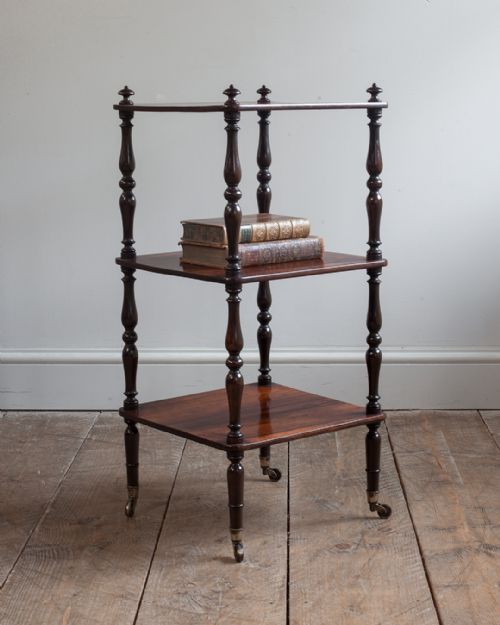
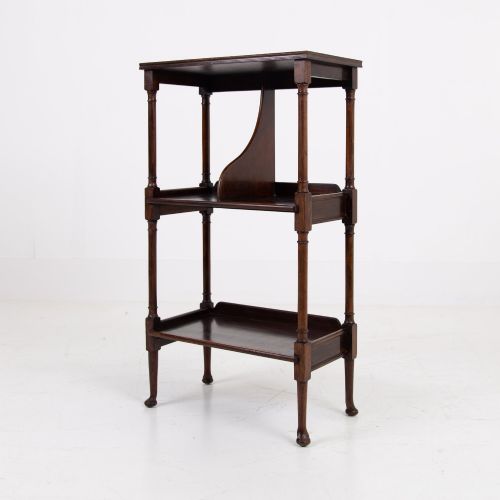
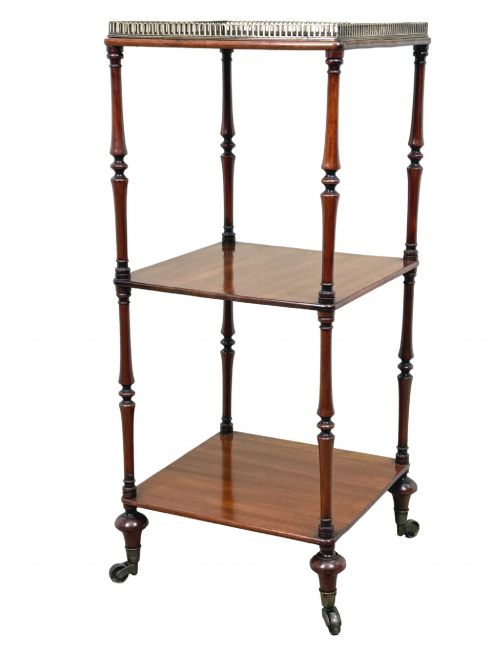


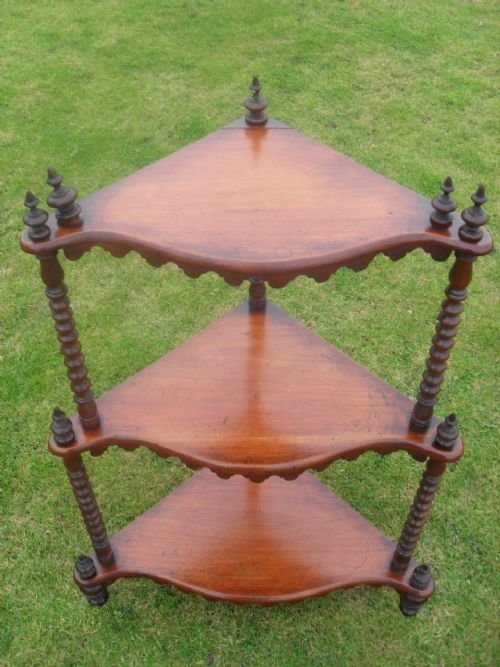


Mahogany Three Tier Whatnot
A mahogany three tier whatnot is a tiered open display stand built for practical storage and display across Georgian, Regency, and Victorian rooms.
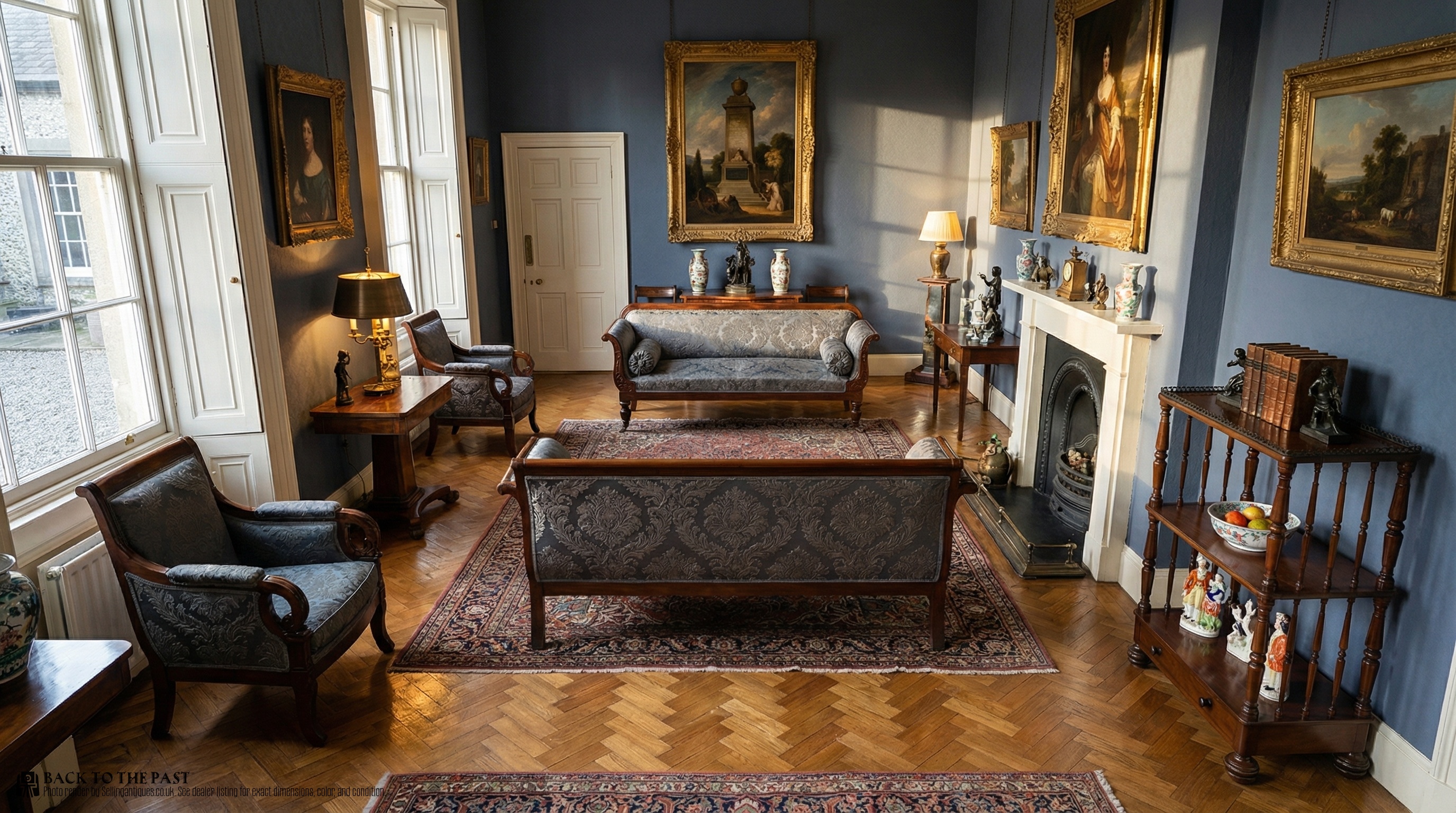
Mahogany Three Tier Whatnot
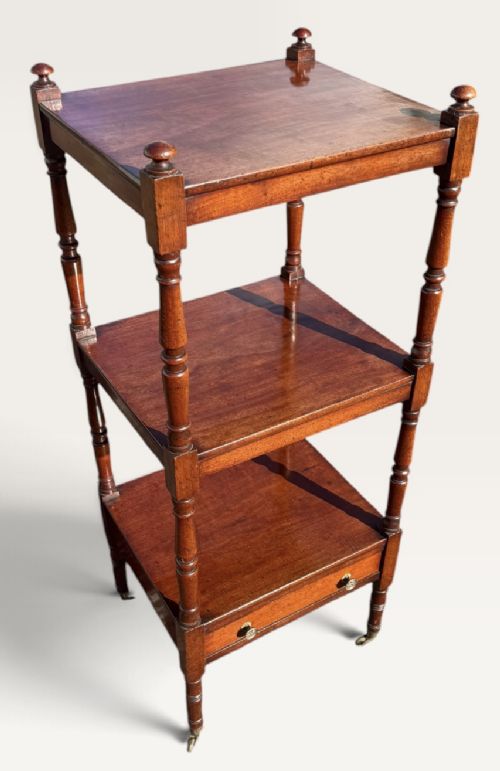
When you search for a mahogany three tier whatnot, you are looking at open-shelved display pieces designed to hold books, china, and ornaments. These tiered stands appear across Georgian, Regency, William IV, and Victorian periods, often taking corner or rectangular forms.
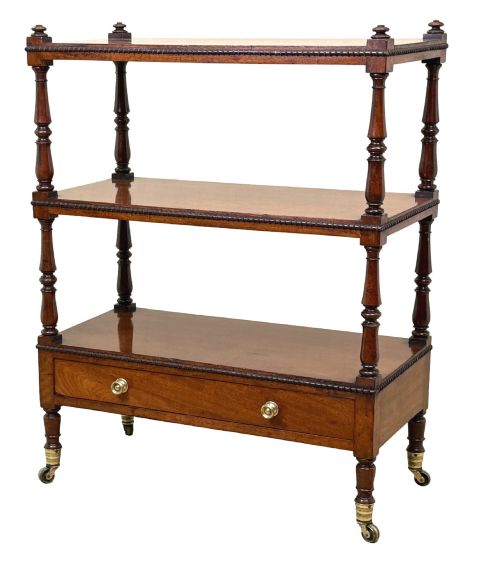
The versions most common on this page span the nineteenth century and the Edwardian era, utilising three stacked tiers supported by slender uprights or columns. Many examples include small drawers or galleried edges to keep objects secure on each level.
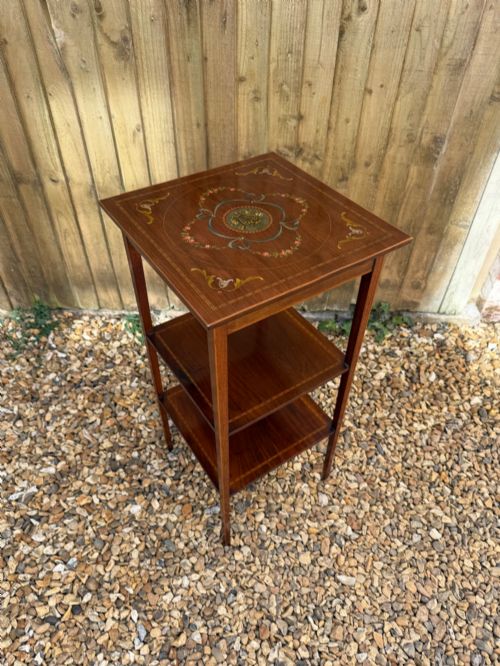
Makers produced these pieces as etageres, bedside tables, and dumb waiters, adapting the multi-tiered format for sitting rooms, bedrooms, and dining spaces. Their open construction allows light to pass through while providing vertical surface area in compact footprints.
How they were made
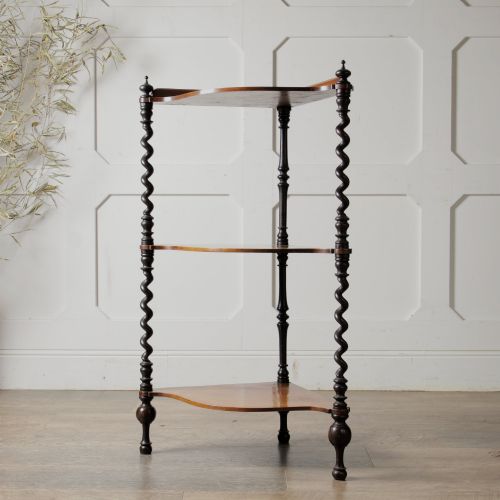
Cabinetmakers built these pieces primarily from solid mahogany and mahogany veneers, sometimes incorporating secondary timbers like rosewood or walnut for contrast. Uprights frequently took turned forms, including barley twist columns and delicate spindle supports.
Detailing often included boxwood inlay, ebonised wood highlights, and painted decoration, alongside functional brass castors on the feet for mobility. Marble tops and galleried rails appeared on specific examples to add durability and a finished appearance to the upper tier.
Mahogany Three Tier Whatnot Retail Price Guide 2026
Typical asking prices for mahogany three tier whatnot among the pieces listed under this phrase on Sellingantiques today, from the lower quarter to the upper quarter. They describe what is for sale here now, not the wider market.
Listings feature mahogany alongside rosewood, walnut, and painted finishes, with periods spanning from Georgian craftsmanship through Edwardian revival pieces.
What varies in quality
The refinement of the turning on the upright supports and the crispness of any inlay or carved detail set finer examples apart from simpler utility pieces. Timber selection also matters, as figured mahogany with rich grain patterns elevates the presence of a three-tier stand.
Structural rigidity across all three tiers indicates careful joinery and stable construction, ensuring the piece bears weight without leaning. Original hardware, such as brass castors and small drawer pulls, preserves the integrity of the original design.
Gillows
The Mahogany Three Tier Whatnot Glossary
- Whatnot
- An open set of freestanding shelves designed for displaying ornaments, books, or small objects. These pieces became popular during the Georgian period and remained staples through the Victorian era.
- Etagere
- A French term for a piece of furniture consisting of a set of open shelves for displaying small articles. They share similarities with whatnots and serve the same multi-tiered display function.
- Dumb waiter
- A tiered stand traditionally placed beside a dining table to hold food, plates, or silver without requiring servant attendance. Several examples in these listings feature this form.
- Barley twist
- A type of turning that resembles a spiralling rope, frequently used for the upright columns supporting the tiers. This decorative joinery technique appears on several Victorian pieces.
- Gallery
- A raised wooden or brass rail running along the edge of a shelf to prevent items from sliding off. These galleries often feature pierced or spindled openwork designs.
Mahogany Three Tier Whatnot: Frequently Asked Questions
What rooms were mahogany three tiers used in?
These tiered stands served multiple purposes across different household spaces, appearing in drawing rooms for ornaments and books. They also functioned as bedside night stands or dining room servers.
The open shelving design allowed owners to utilise vertical corners and wall spaces without blocking light in smaller rooms.
How do I tell a Georgian piece from a Victorian one?
Georgian and early Regency examples generally display restrained proportions, fine mahogany grains, and understated turned supports. Victorian pieces often introduce heavier timbers, carved mouldings, and ebonised details.
Examining the turning style and the construction of any drawers helps establish the likely period of manufacture.
Can these stands support heavy books?
While sturdy, most three-tier stands were designed for lighter decorative objects, porcelain, and select volumes rather than heavy reference libraries. The slender uprights and stacked shelf construction prioritize elegant display over heavy weight-bearing.
Distributing weight evenly across the shelves helps protect the antique joints and upright supports.
What is the difference between a whatnot and an etagere?
The terms are frequently used interchangeably in historical and modern descriptions for multi-tiered open shelving furniture. Etagere leans toward French-influenced decorative display pieces, while whatnot covers the broader English tradition.
Both forms rely on stacked platforms supported by columns to provide accessible open storage.