

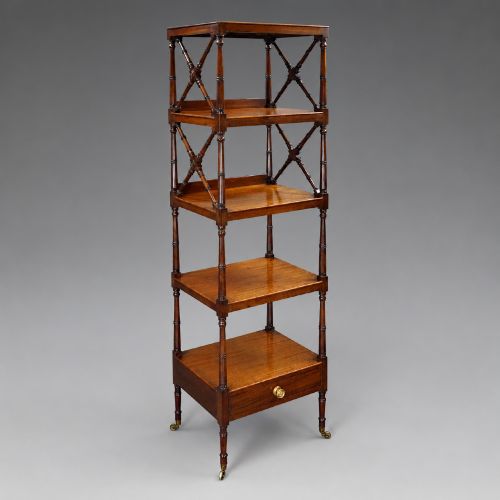
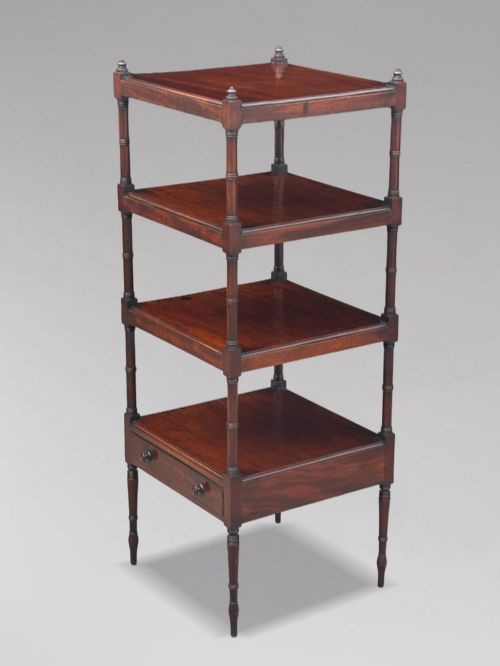
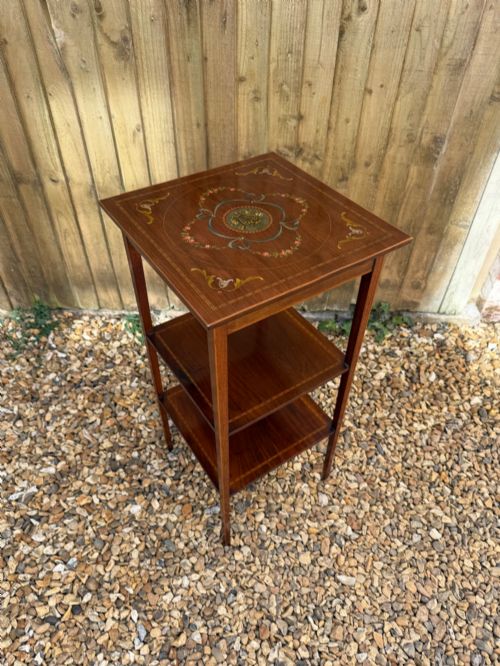
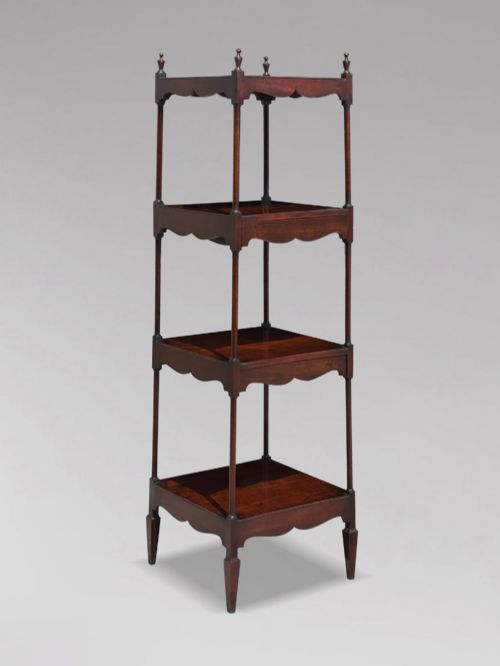
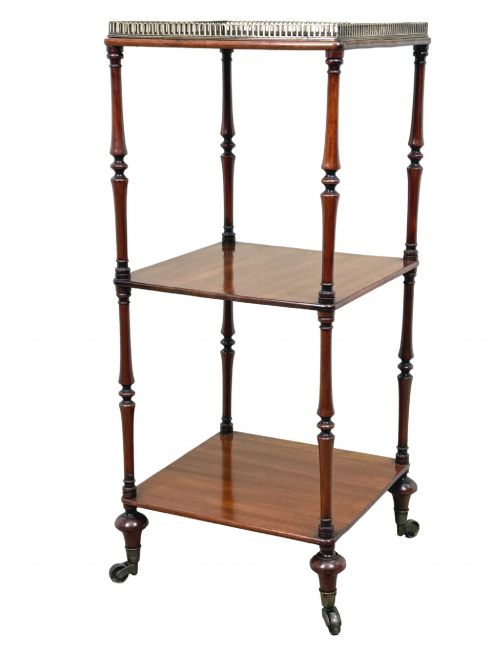


Georgian Mahogany Whatnot Stand
A georgian mahogany whatnot stand brings tiered display space to a room, offering open shelving crafted from rich timber during the eighteenth and nineteenth centuries.
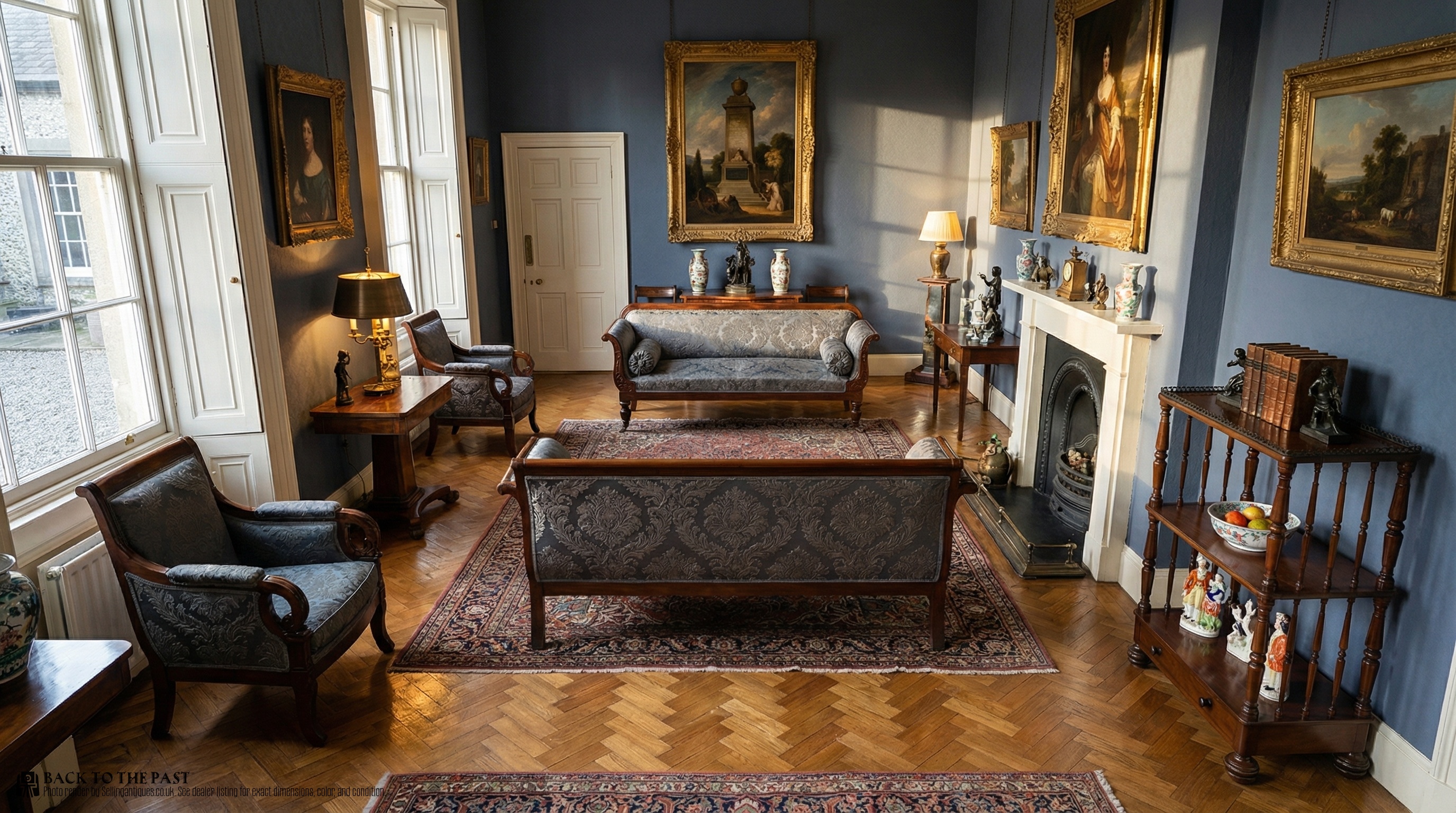
Georgian Mahogany Whatnot Stand
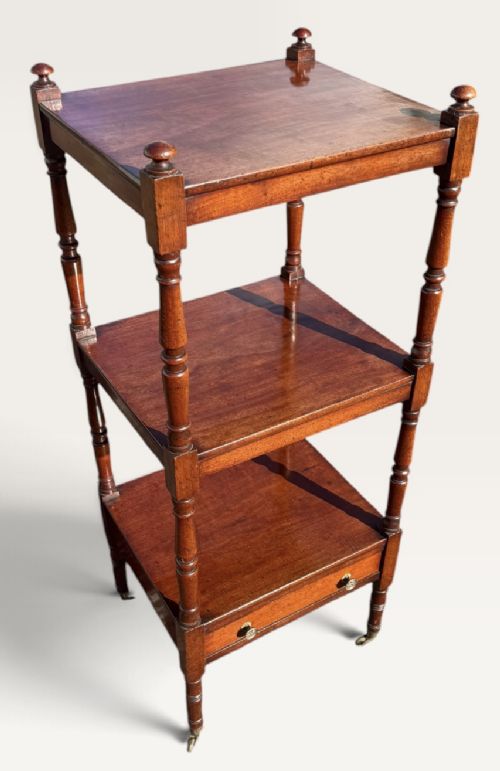
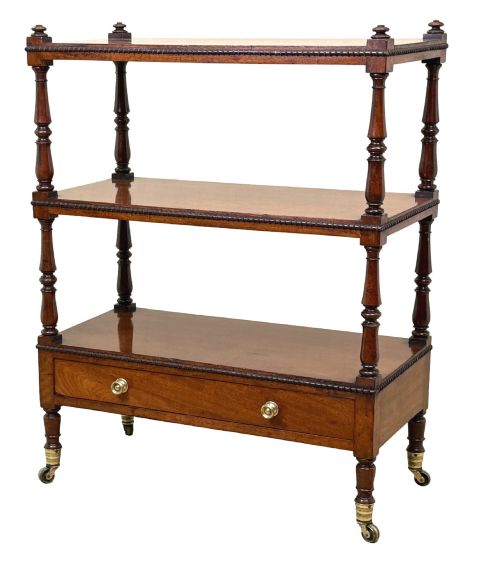
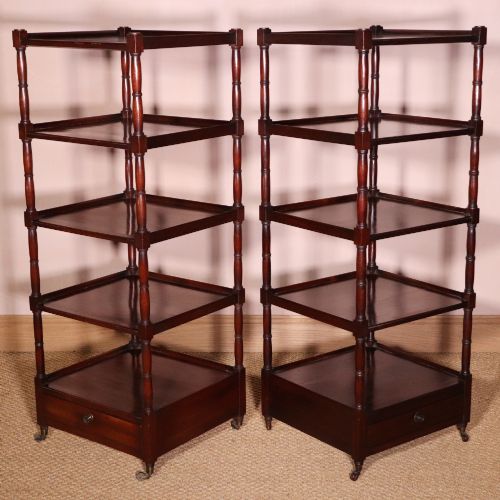
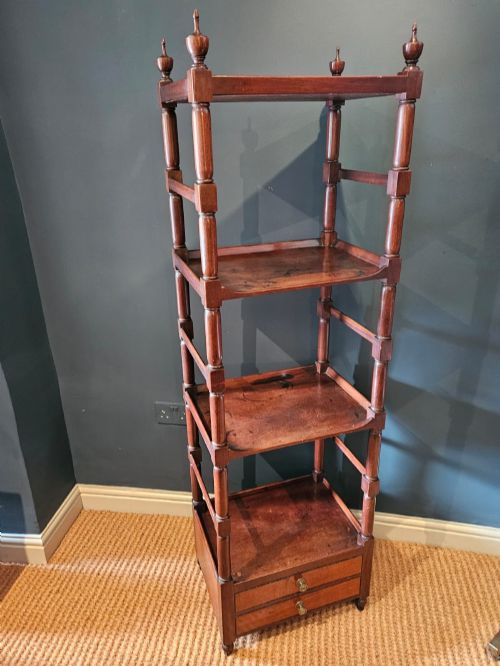
A georgian mahogany whatnot stand is a piece of multi-tiered open shelving designed for display and utility, frequently taking the form of tiered tables, bookcases, music stands, and etageres. These items appear across periods including the Georgian era, Regency, George III, George IV, and Victorian times, as well as later revivals.
The pieces on this page range from compact two-tier tables and bedside night stands to tall four-tier bookcases and tapering A-frame units. Some incorporate specific functional variations such as music stands, dumb waiters, tea tables, canterbury designs, and cupboards built into the lower tiers.
What varies in quality
Quality in a georgian mahogany whatnot stand rests on the selection of timber grain, the crispness of any boxwood inlay, and the elegance of the proportions, particularly in compact or tapering forms. Pieces attributed to specific workshops such as Gillows demonstrate finer detailing in the turning and assembly.
The structural integrity of the tiers and the integration of functional elements like drawers, cupboards, or music stands distinguish standard utility items from exceptionally fine examples of the period.
Georgian Mahogany Whatnot Stand Retail Price Guide 2026
Typical asking prices for georgian mahogany whatnot stand among the pieces listed under this phrase on Sellingantiques today, from the lower quarter to the upper quarter. They describe what is for sale here now, not the wider market.
Some nineteenth-century makers thoughtfully built cupboards right into the bottom tier of an open shelf unit.
Gillows
The Georgian Mahogany Whatnot Stand Glossary
- Whatnot
- An open set of tiered shelves used for books, ornaments, or display, originating in the eighteenth century.
- Etagere
- A piece of furniture consisting of a series of open shelves for displaying small objects, synonymous with many whatnot designs.
- Canterbury
- A low stand with partitioned vertical sections, primarily used for holding sheet music or books.
- Dumb waiter
- A tiered stand or movable table used for serving food or holding tableware, occasionally combined with whatnot forms.
Georgian Mahogany Whatnot Stand: Frequently Asked Questions
What is a georgian mahogany whatnot stand?
A georgian mahogany whatnot stand is an open shelving unit with multiple tiers designed for display, books, or holding small objects.
These pieces were produced primarily during the eighteenth and nineteenth centuries in forms ranging from simple three-tier open stands to music stands and corner units.
How were these stands used originally?
Original uses varied widely depending on the specific form, including displaying porcelain, holding books, or serving as bedside night stands.
Music stands and dumb waiter variations served specific functional roles for holding scores or assisting with dining and tea service.
How do I style a whatnot stand at home?
These open shelves suit living rooms, studies, or bedrooms where tiered display space is needed without heavy cabinetry.
Their compact scale allows them to fit easily into corners or beside seating while keeping the floor plan open.
How do I tell different periods apart?
Dating relies on stylistic markers associated with periods like George III, Regency, and George IV, alongside material details.
Proportions, turning styles, and additions such as boxwood inlay or brass fittings help identify whether a piece dates to the Georgian era or a later revival.