





Regency Period Whatnot Shelf
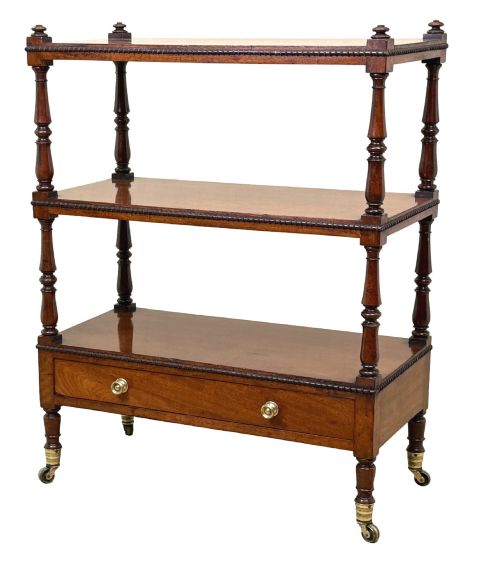
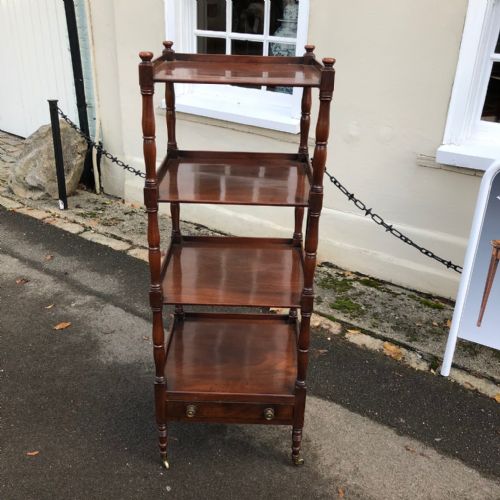
These regency period whatnot shelf items are tiered open display pieces prized for holding books and ornaments.
Regency Period Whatnot Shelf
A regency period whatnot shelf is a multi-tiered open furniture piece designed for display and storage in the principal rooms of a house. When you search for a regency period whatnot shelf, you encounter tiered open shelving units, etageres, bookcases, and occasional tables dating from the Regency, George IV, and William IV eras.
The pieces appearing on this page span the 19th Century and include specific forms such as three-tier what-nots, end tables, buffets, and display stands. Most examples follow the aesthetic of the Regency period, offering practical tiered surfaces supported by upright columns or turned supports.
Materials and construction
Cabinetmakers constructed these shelves using dense hardwoods such as mahogany and rosewood, alongside occasional examples in burr walnut, walnut, and oak. These timbers provided the structural strength needed to support multiple stacked tiers without sagging.
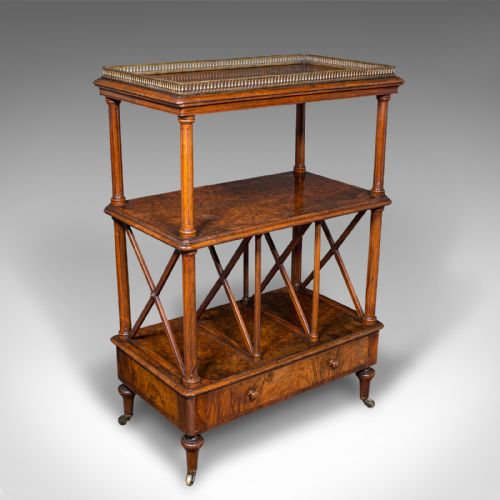
Many pieces incorporate decorative metal elements, utilising brass for casters or gallery rails and ormolu for mountings. The joinery relies on traditional cabinet-making techniques appropriate for multi-tiered etageres and open bookcases.
Regency Period Whatnot Shelf Retail Price Guide 2026
Typical asking prices for regency period whatnot shelf among the pieces listed under this phrase on Sellingantiques today, from the lower quarter to the upper quarter. They describe what is for sale here now, not the wider market.
Listings feature pieces spanning the Regency, George IV, and William IV styles within the wider nineteenth century.
Judging quality in a whatnot shelf
Quality in these tiered pieces depends heavily upon the selection of timber veneers and the richness of the natural wood colour. Highly figured rosewood or burr walnut displays greater depth of grain than plain mahogany or oak.
Fine construction is evident in the crispness of turned supports, the integration of brass fittings, and the overall proportion of the tiers. Pieces associated with notable workshops demonstrate superior finishing and refined detailing.
Gillows
The Regency Period Whatnot Shelf Glossary
- Regency
- A British stylistic period dating from the early nineteenth century. It encompasses the official Regency and the broader reigns of George IV and William IV.
- Etagere
- A piece of furniture consisting of a set of open shelves for displaying small objects or ornaments. It shares a similar form to the standard whatnot.
- Ormolu
- Gilt bronze ornamentation applied to furniture. This decorative technique appears on finer Regency pieces.
- Canterbury
- A low stand with partitioned vertical sections, frequently combined with whatnot tiers for holding sheet music or books.
- Buffet
- A side table or tiered serving piece used for displaying plate or serving food. Some examples overlap in form with the multi-tiered whatnot.
Regency Period Whatnot Shelf: Frequently Asked Questions
What is a regency period whatnot shelf used for?
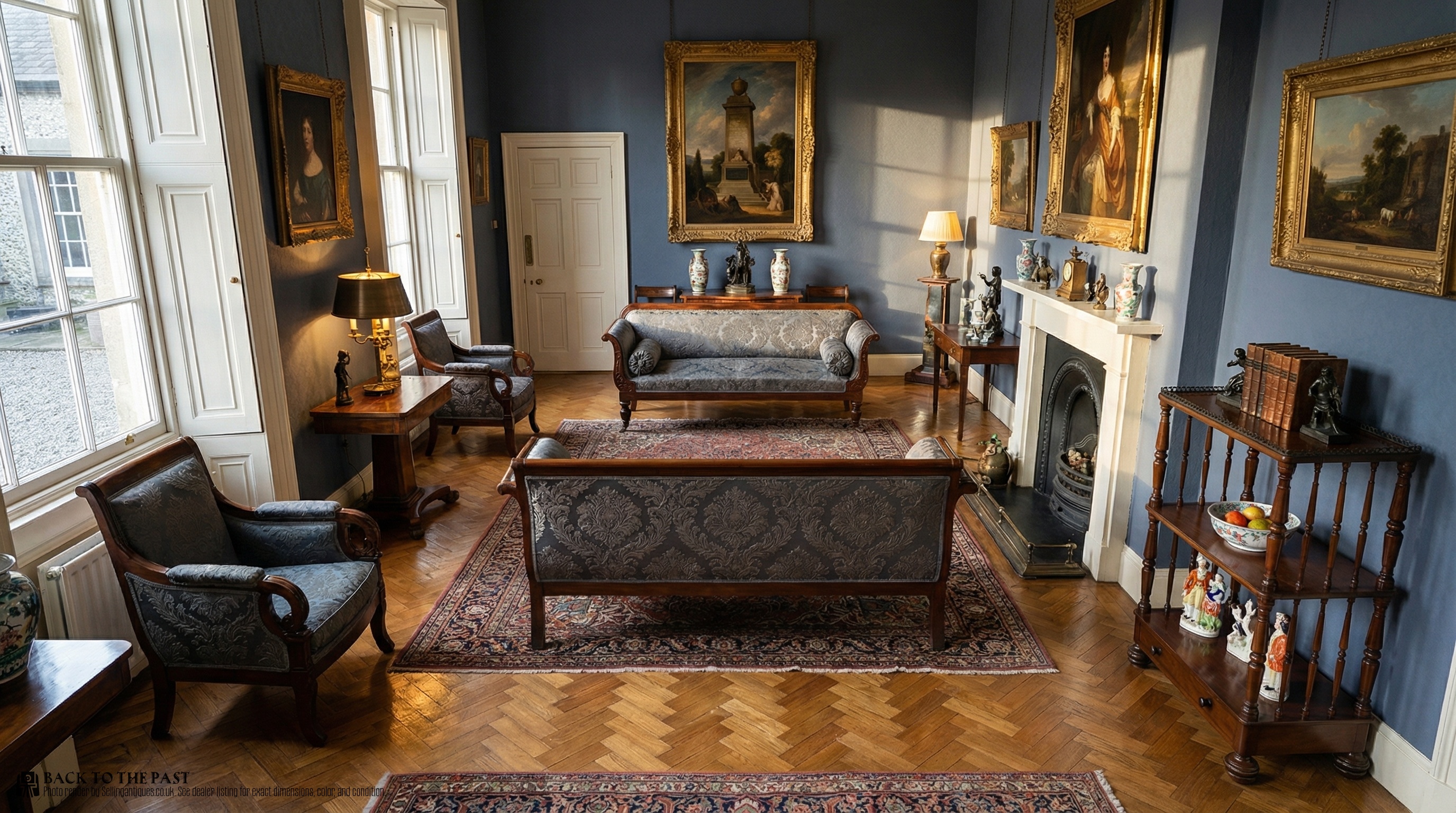
These tiered pieces were designed to hold books, ceramics, and ornaments in principal reception rooms. Their open shelves allowed owners to display collections conveniently.
Over time, their utility adapted to domestic needs, serving as end tables, small bookcases, or display stands within the home.
How do I identify a Regency period piece?
Look for characteristic design elements of the early nineteenth century, including specific timber choices like rosewood and mahogany. Proportions tend to be neat and architectural.
Stylistic markers align with the Regency, George IV, and William IV eras, often featuring turned columns and brass details.
Are these shelves sturdy enough for heavy books?
These tiered units were built by nineteenth-century cabinetmakers using dense hardwoods designed to bear weight across multiple levels. Their structural integrity depends on the original joinery.
While suitable for everyday display and moderate volumes, very heavy modern loads require careful consideration of the tier supports.
What is the difference between a whatnot and an etagere?
The terms are often used interchangeably in antique descriptions to denote multi-tiered open shelving units. Both forms serve the primary purpose of display.
Minor variations in regional terminology or specific construction details separate individual examples, but their functional design remains largely identical.