

Open Shelf Side Table
An open shelf side table provides practical display surface while keeping rooms feeling light.
Open Shelf Side Table
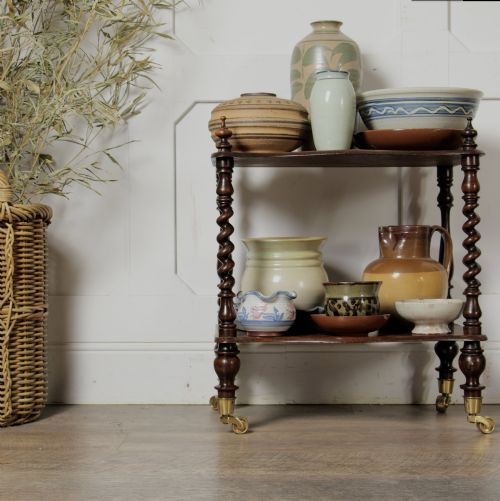
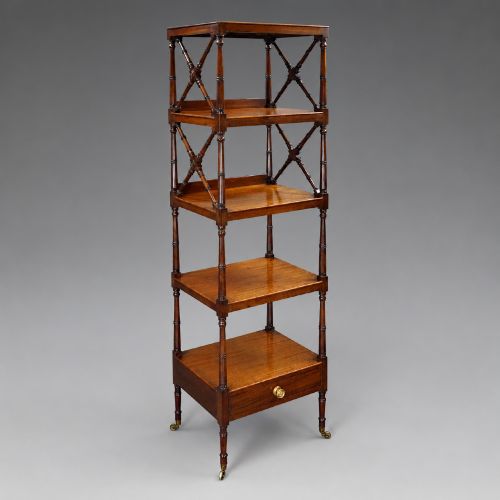
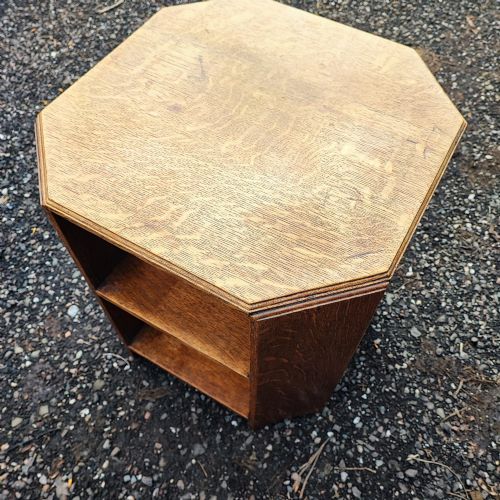
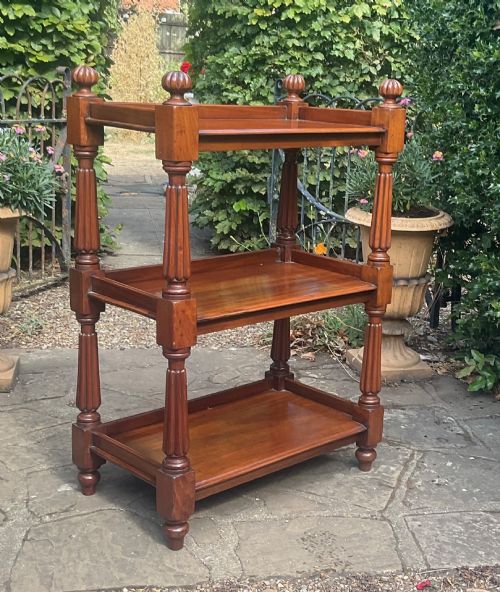
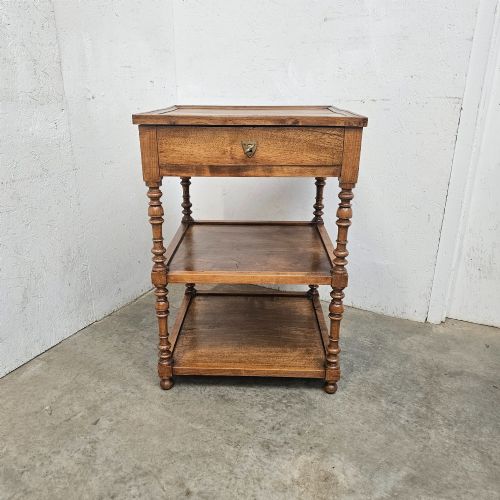
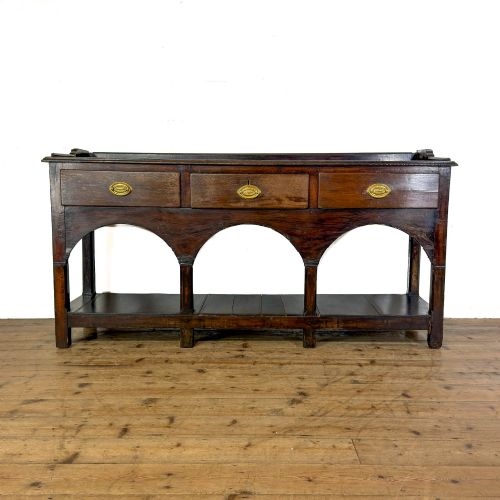
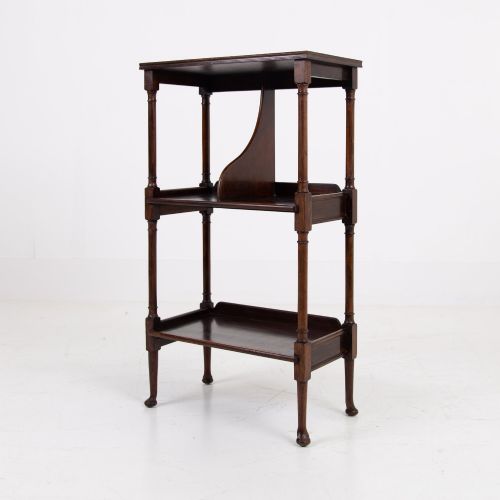
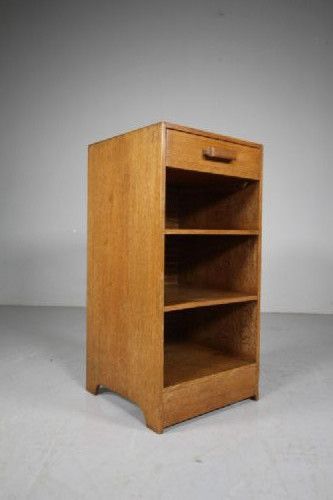
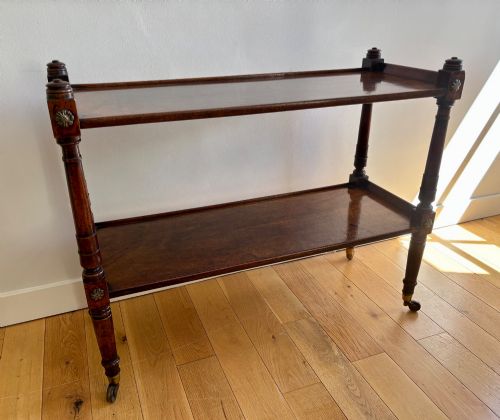
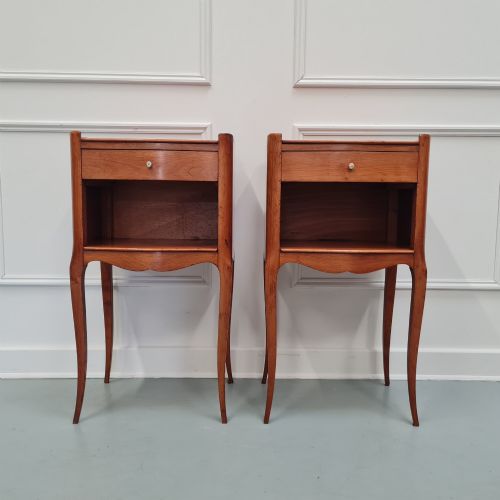
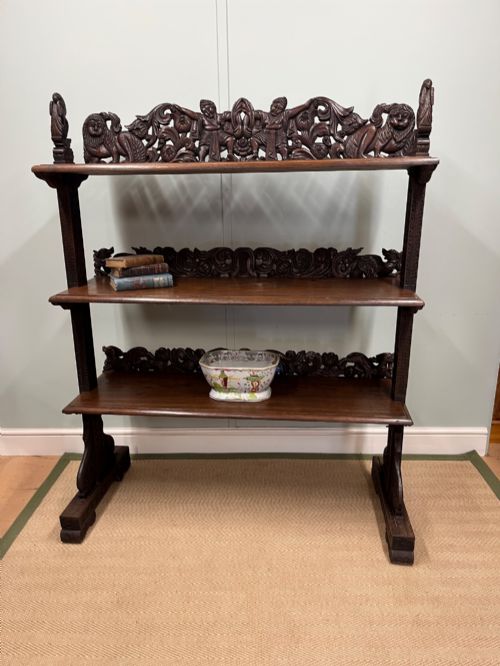
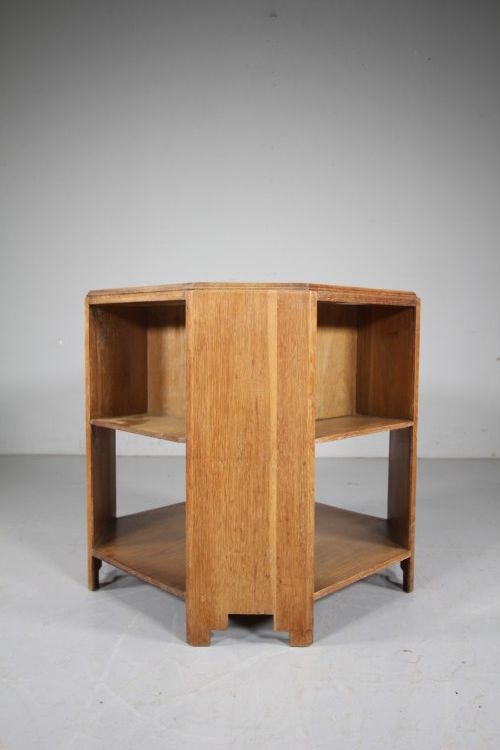
When you search for an open shelf side table, you encounter tiered pieces designed for display and storage, ranging from Victorian whatnots and étagères to 1930s oak book tables. These multi-level pieces offer accessible surfaces for books and decorative objects rather than enclosed storage.
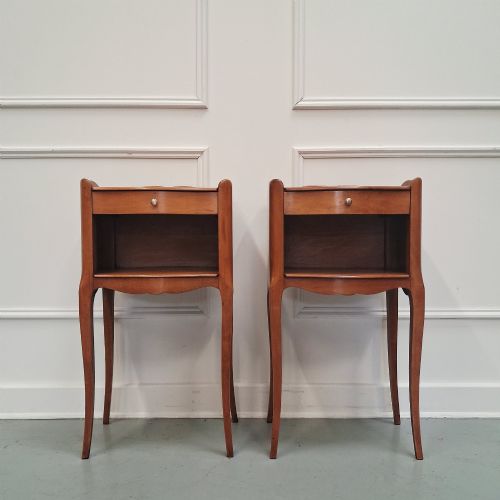
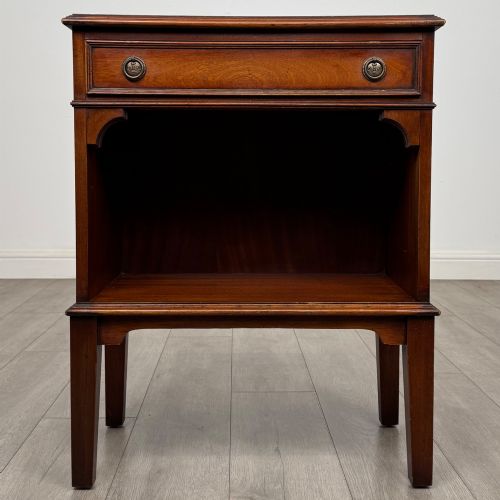
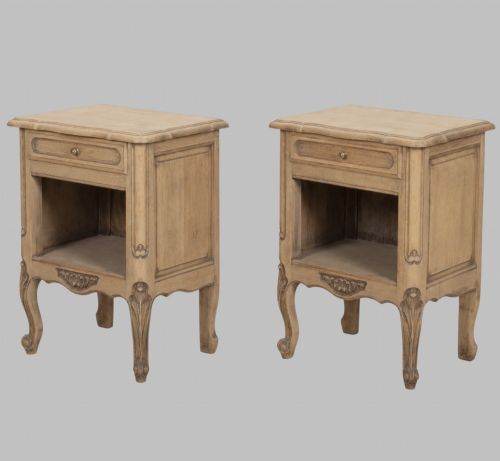
The selections span the nineteenth century through the 1930s, including styles from Georgian and Regency revivals to Art Deco. You meet items functioning as bedside tables, lamp stands, and tiered buffets, often constructed with multiple open tiers.
Mahogany, oak, and walnut dominate the forms, supplemented by exotic timbers such as rosewood, partridge wood, and birdseye maple. Brass mounts and marble tops appear frequently across French and English examples.
How they were made
Cabinet makers utilised dense hardwoods like mahogany, walnut, and oak to construct the main frames and tiered shelves of these tables. Timbers were often selected for distinctive grain patterns, including figured walnut and burr walnut.
Turning and joinery methods created structural uprights, barley twist columns, and tiered supports fitted with brass castors. Surface enrichment involved marble inserts, brass mounts, and fine inlay work.
Listings feature woods including mahogany, oak, walnut, rosewood, burr walnut, glass, and marble across multiple periods.
What varies in quality
The standard of timber selection and the precision of the joinery dictate the distinction between standard production items and finer cabinet work. Superior pieces display carefully matched veneers and thoughtful proportions across multiple tiers.
The integration of secondary materials, such as heavy marble slabs, cast brass mounts, and original castors, elevates the construction standard. Fine detail work in turned uprights and decorative inlays separates workshop pieces from simpler utility tables.
Heals·KRIEGER of Paris
The Open Shelf Side Table Glossary
- Étagère
- A piece of furniture consisting of a set of open shelves for displaying small objects or ornaments. These tiered stands developed in France during the eighteenth century.
- Whatnot
- An open set of shelves used for books, ornaments, or writing materials. It became popular in British homes during the nineteenth century.
- Buffet
- A low sideboard or tiered shelving unit used for serving or display. Examples from the mid nineteenth century often feature multiple open tiers.
- Barley twist
- A type of decorative turning resembling a twisted rope used on table legs and supports. This form appears frequently on Victorian stands.
- Birdseye maple
- Timber featuring tiny circular markings that resemble birds eyes. Cabinet makers prized this wood for decorative furniture surfaces.
Open Shelf Side Table: Frequently Asked Questions
What is an open shelf side table?
An open shelf side table is a piece of furniture featuring multiple tiers for storage and display without enclosed cabinet doors.
These versatile stands function as bedside tables, lamp stands, and small bookcases across various historical periods.
How do you style a tiered whatnot?
A tiered whatnot suits living rooms and bedrooms as a display surface for books, ceramics, and lamps.
Keep heavier objects on the lower shelves to maintain visual balance and physical stability.
Are marble top tables practical?
Marble top tables provide a durable, heat-resistant surface suitable for holding drinks, lamps, and decorative accessories.
French and English makers frequently paired marble inserts with mahogany, walnut, and cherry wood frames.
How do I identify a Victorian whatnot?
Victorian whatnots typically feature multiple open tiers supported by turned columns, barley twist legs, or brass mounts.
They often appear in mahogany, walnut, or rosewood, sometimes fitted with original castors.