

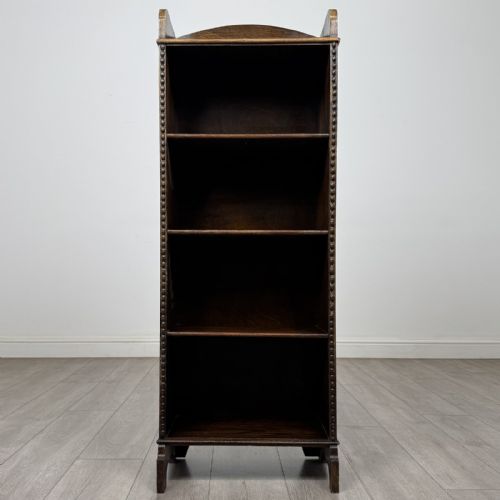
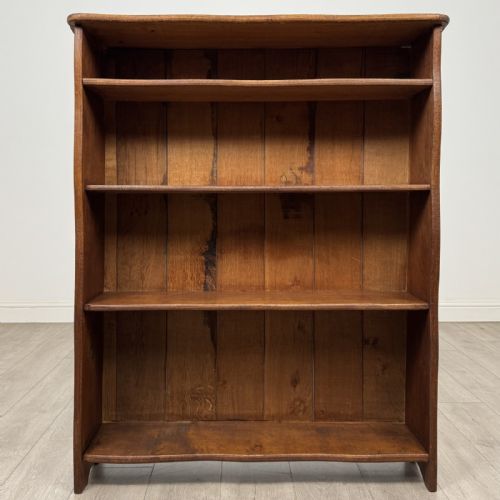
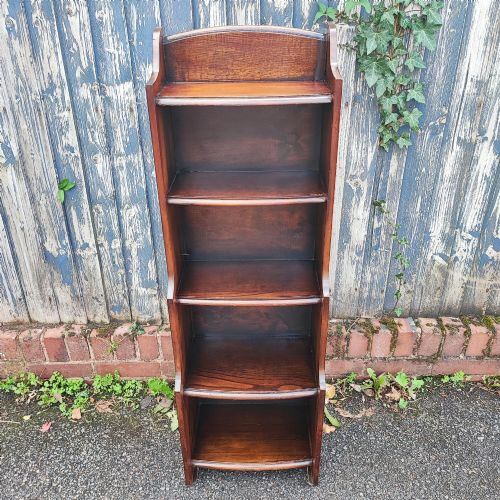
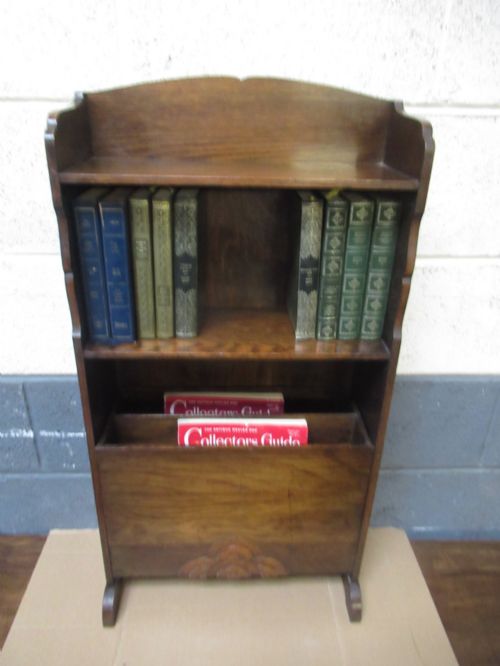
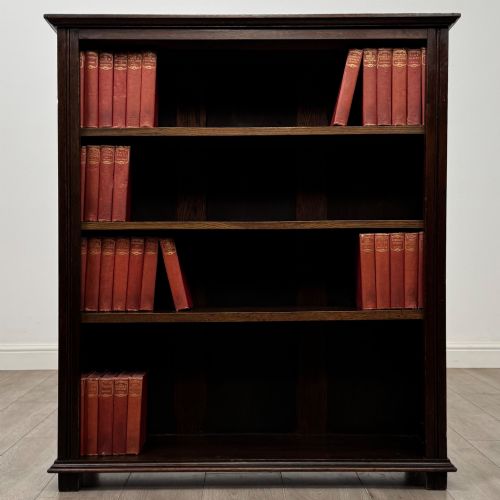
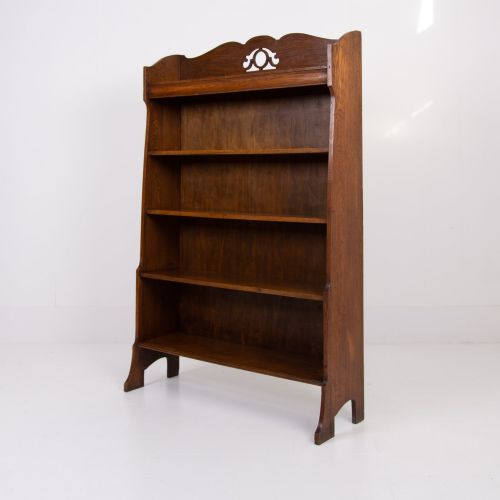
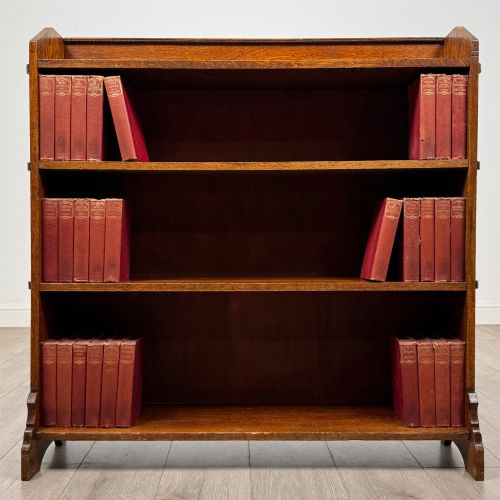
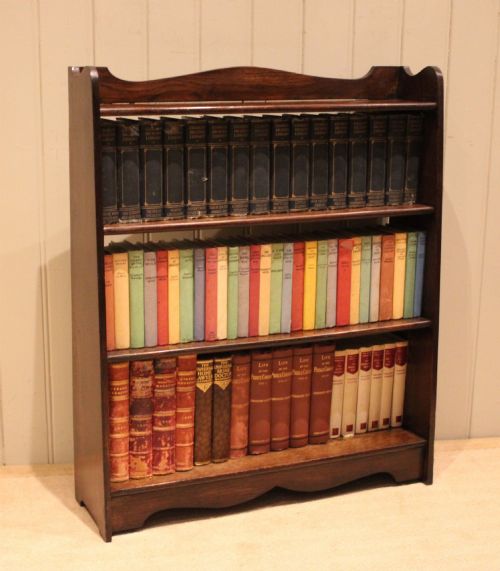
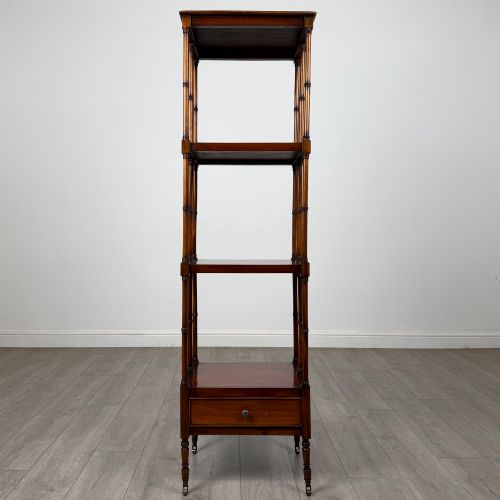
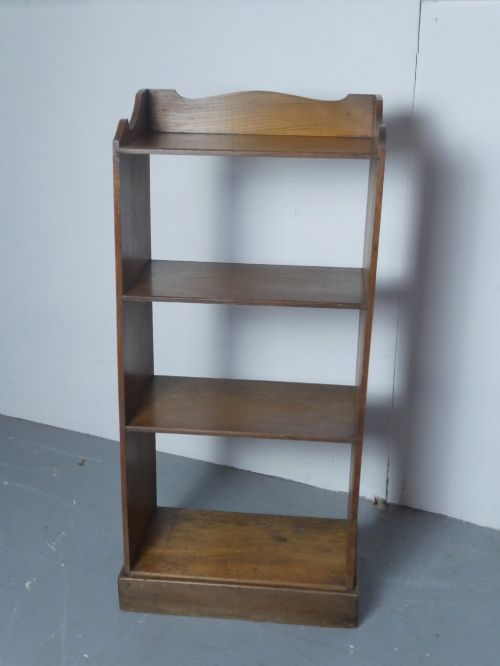
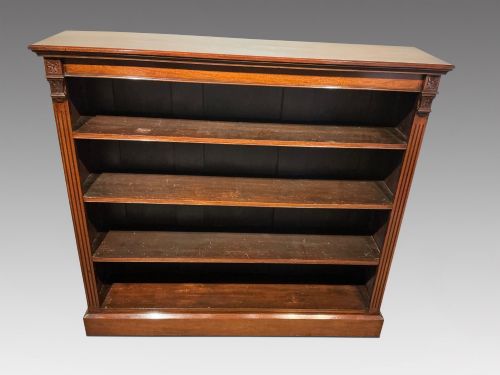
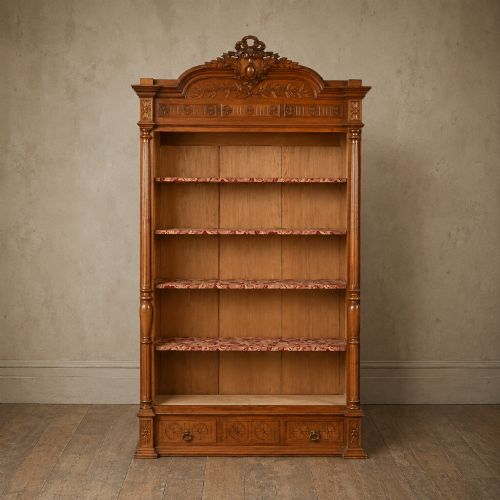

Freestanding Wooden Bookcase
A freestanding wooden bookcase organises a room with timber shelves that stand alone without wall support.
Freestanding Wooden Bookcase
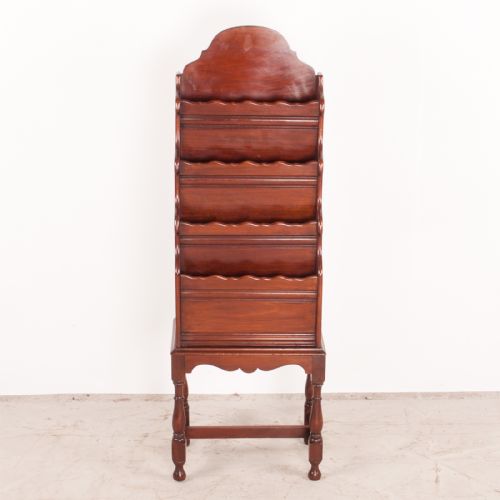
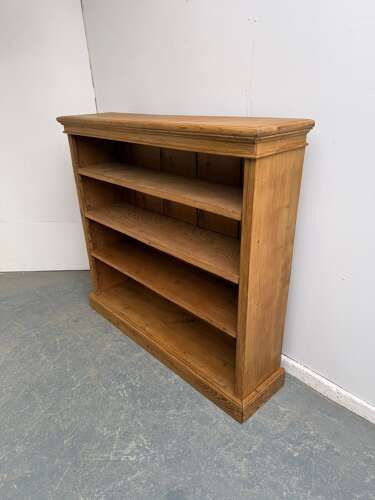
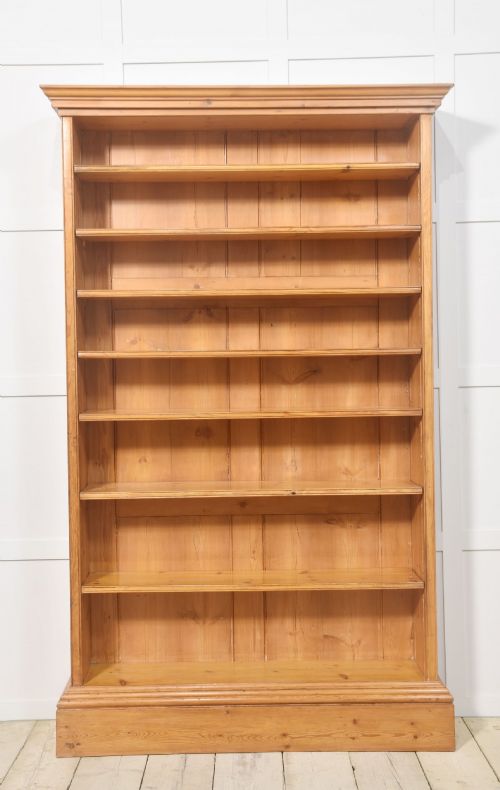
A freestanding wooden bookcase provides accessible open shelving designed to stand independently in a room. The examples found here span forms such as open bookcases, revolving bookcases, and magazine racks.
Most pieces date from the Victorian and Edwardian periods, alongside nineteenth-century and early twentieth-century examples. Oak and mahogany appear frequently alongside pine, walnut, and padauk.
Buyers encounter standing open bookcases, waterfall designs, and lawyer book troughs. These items serve libraries, studies, and living spaces for everyday book storage.
Construction and materials
Cabinetmakers constructed these pieces using solid timbers like oak, mahogany, and pine, frequently selecting figured veneers such as burr walnut and flame mahogany for visual depth. Brass fittings provide functional accents on adjustable shelves and revolving mechanisms.
Joinery methods include traditional framing and panel construction, complemented by carved details, mouldings, and decorative cut-outs seen in Arts and Crafts examples. Waxed and polished surface treatments protect the timber while highlighting natural grain patterns.
Freestanding Wooden Bookcase Retail Price Guide 2026
Typical asking prices for freestanding wooden bookcase among the pieces listed under this phrase on Sellingantiques today, from the lower quarter to the upper quarter. They describe what is for sale here now, not the wider market.
Assessing quality
Quality rests on the selection of timber and the precision of the construction, where solid hardwoods and carefully matched veneers distinguish finer pieces from simpler pine builds. The presence of adjustable shelving systems and robust rotating mechanisms adds functional merit.
Refinement shows in the crispness of mouldings, carved details, and inlay work. Pieces that retain a rich, deep finish and sturdy structural integrity represent the upper tier of the range.
The Freestanding Wooden Bookcase Glossary
- Open bookcase
- A shelving unit without doors that provides unhindered access to books from the front. This form dominates the selection.
- Revolving bookcase
- A low or table-height shelving unit mounted on a rotating pivot base. Users can spin the structure to access books from all sides.
- Whatnot
- A multi-tiered piece of freestanding furniture designed for displaying books and decorative objects. These often feature slender upright supports.
- Waterfall bookcase
- A tiered shelving unit where each upper shelf is shallower than the one below, creating a stepped profile.
- Breakfront
- A cabinet or bookcase design where the central section projects forward from the flanking wings. This creates architectural depth.
Freestanding Wooden Bookcase: Frequently Asked Questions
What is a freestanding wooden bookcase?
A freestanding wooden bookcase is a self-supporting unit made from timber that requires no wall attachment to remain upright. It holds books on open or shelved tiers.
These pieces sit directly on the floor in rooms, providing movable storage that can be repositioned as needed.
How do I clean a wooden bookcase?
Cleaning requires a soft dry cloth to remove dust from the timber surfaces and shelves. Avoid using harsh chemical sprays that strip historic finishes.
Applying a traditional beeswax polish occasionally helps nourish older woods like oak and mahogany, maintaining their natural lustre.
Where should I place my bookcase?
Place the bookcase against an interior wall or position it away from direct sunlight and heat sources. Timber reacts to extreme temperature changes by expanding or contracting.
Freestanding models allow you to use them as room dividers if the back is finished or panelled.
How do I identify an Edwardian bookcase?
Edwardian bookcases date from the early twentieth century and often feature lighter timbers, simpler lines, or subtle inlaid details. They frequently appear in oak and mahogany.
Compare the construction style and secondary woods to standard Victorian formats to distinguish the period.