
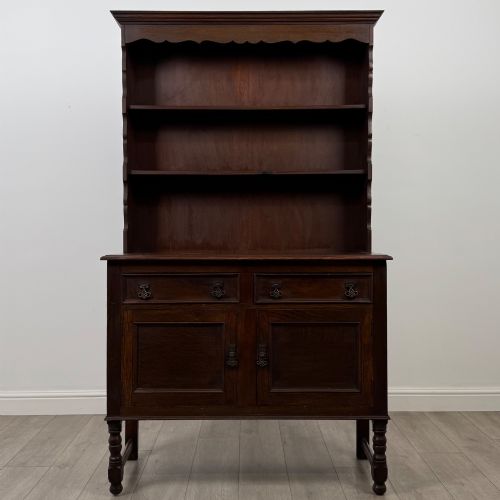
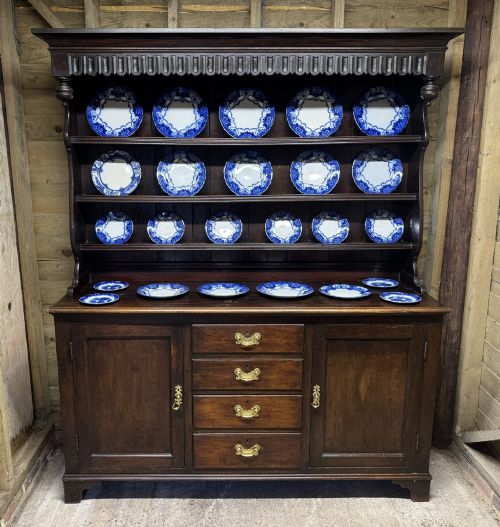
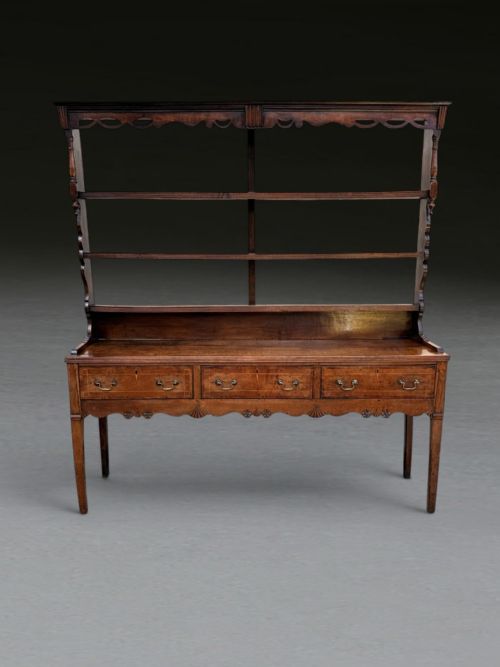
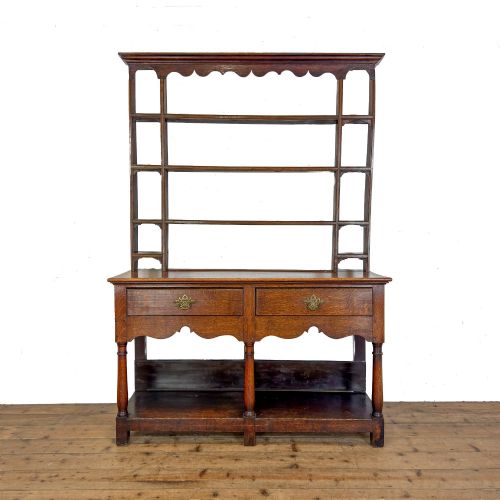
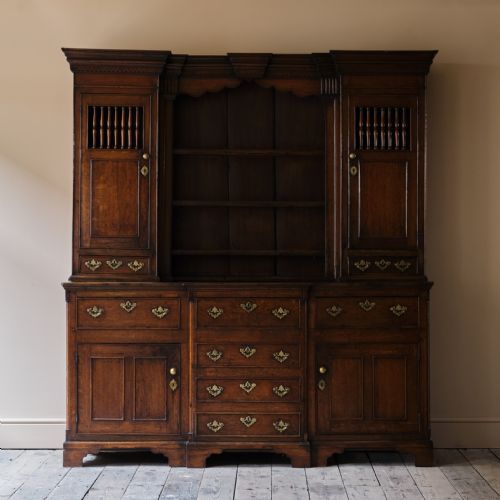
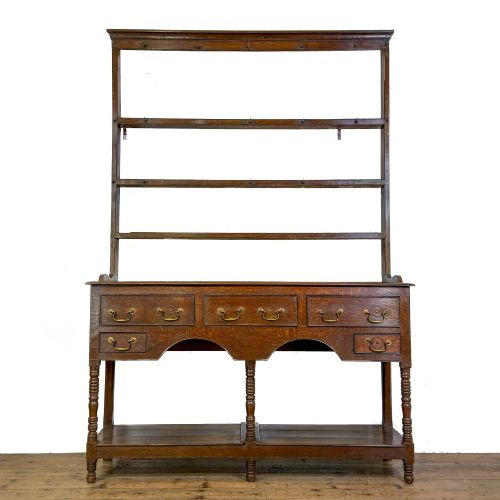
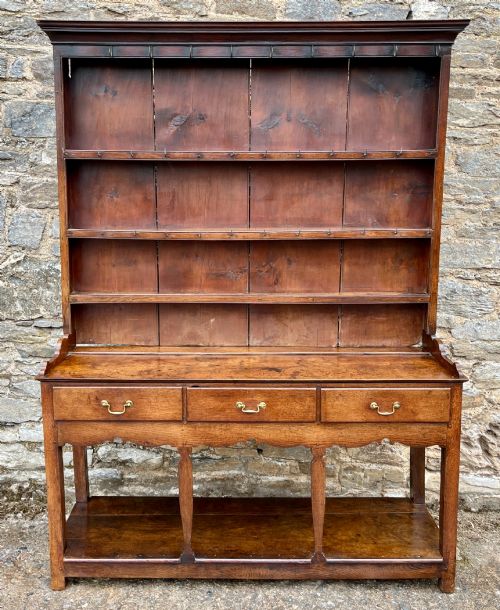
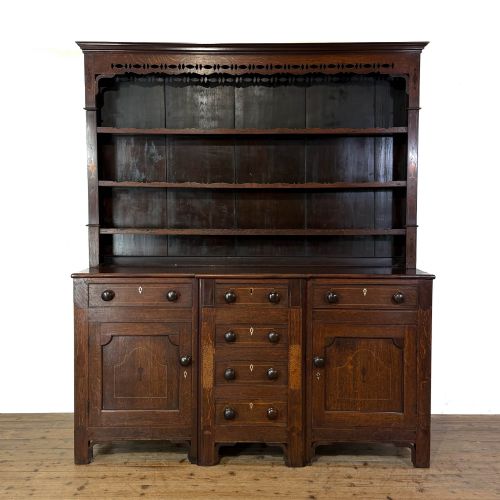


Open Rack Sideboard
An open rack sideboard stands ready to hold your pottery and display family silver with traditional utility.
Open Rack Sideboard
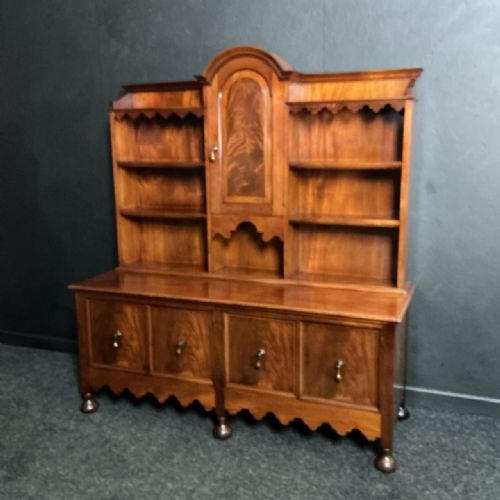
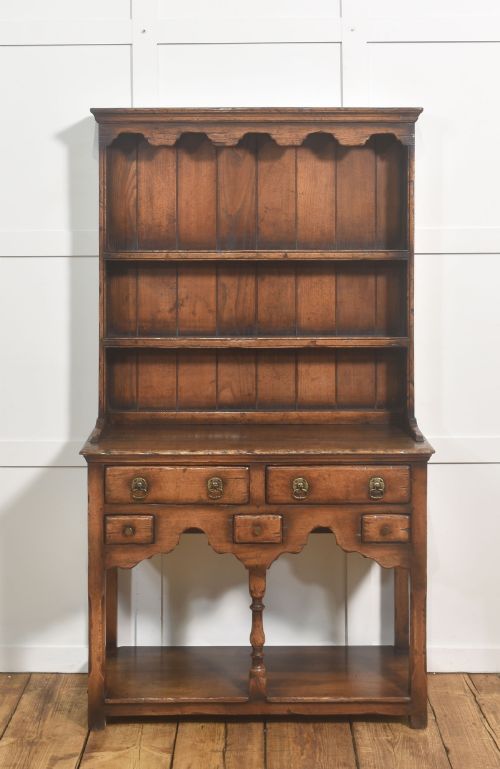
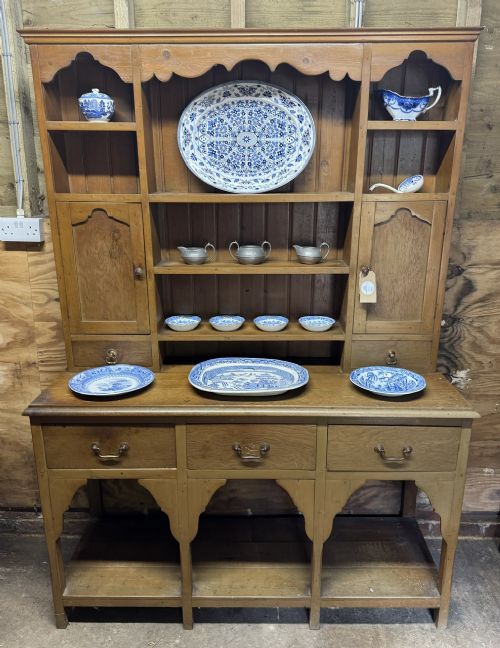
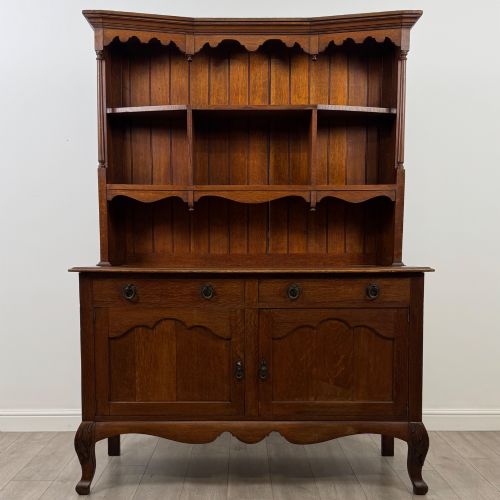
An open rack sideboard combines a lower base with drawers or cupboards and an upper open shelf structure designed for displaying plates and serving dishes. These pieces emerge primarily from regional British traditions, particularly Welsh and English country workshops.
Most examples found here date from the eighteenth and nineteenth centuries, spanning Georgian, Victorian, and Edwardian periods. Oak forms the primary structural timber, often supplemented by pine, elm, and mahogany in regional variations.
The layout typically includes a plate rack fixed securely above the main surface, which acts as a practical workstation or serving area. Buyers encounter various regional sub-types, such as potboard bases and bread and cheese cupboards.
How they were made
Local cabinetmakers constructed these pieces using native timbers like solid oak, elm, and pine, joined with traditional mortise and tenon joints. Backboards generally consist of vertically mounted planks secured by handmade iron nails or wooden pegs.
Surfaces receive simple finishes, often retaining original paint or wax patination built up through generations of domestic use. Plate racks attach via integrated uprights, supporting multiple grooved shelves designed to hold plates upright without slipping.
What varies in quality
The integrity of the timber and the retention of original surface patination distinguish finer examples from altered ones. Pieces retaining their original open racks and unblemished potboard bases hold greater historical weight.
Proportion and regional carpentry details dictate overall success, as vernacular items range from heavy provincial forms to refined Georgian country pieces. The subtlety of drawer mouldings and the authenticity of brass or wooden hardware complete the assessment.
The Open Rack Sideboard Glossary
- Potboard
- A low open shelf situated near the floor between the lower legs of a dresser. This platform traditionally stored heavy pots and metalware.
- Plate rack
- The upper tiered shelving unit attached to the back of the dresser. Grooves cut into the wood allow ceramic plates to rest securely on edge.
- Bread and cheese cupboard
- A specialised regional storage section featuring pierced splines or ventilation slats. These compartments kept dairy and dried foods fresh in domestic kitchens.
- Vernacular
- Furniture built by local tradesmen using regional materials and traditional styles rather than academic architectural patterns. These pieces reflect the specific needs of country households.
Open Rack Sideboard: Frequently Asked Questions
What is an open rack sideboard used for?
These pieces serve primarily as functional storage and display furniture for dining rooms and kitchens. The upper shelves hold ceramic plates and platters while the lower section provides surface space and drawer storage.
Historically, they organised the working heart of the home, keeping everyday utensils within easy reach. Today, they function well for displaying collections of antique pottery and storing table linen.
How do I date an open rack sideboard?
Dating relies on examining the timber species, construction methods, and hardware style. Eighteenth-century examples often display pegged joinery, hand-sawn board widths, and native oak or elm construction.
Victorian and Edwardian versions introduce machine-sawn elements, softer pine timbers, and different handle designs. Regional characteristics also help narrow down the period of manufacture.
Are these pieces made of solid wood?
Most traditional examples use solid native timbers throughout their construction, including oak, pine, elm, and mahogany. Cabinetmakers selected these heavy woods to support the weight of stacked ceramics and daily kitchen use.
Secondary woods like pine occasionally appear on internal drawer linings or backboards. This solid construction contributes to the survival of these pieces across centuries.
How do I care for an antique oak dresser?
Maintain the wood by applying a neutral beeswax polish periodically to nourish the dry surface. Avoid placing the piece in direct sunlight or near heat sources that might cause the timber to split.
Dust the plate rack and lower surfaces gently with a dry, soft cloth. Preserving the original patination requires avoiding harsh modern chemical cleaners.