
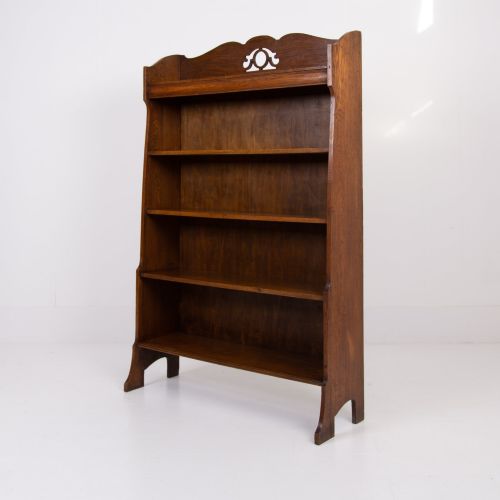
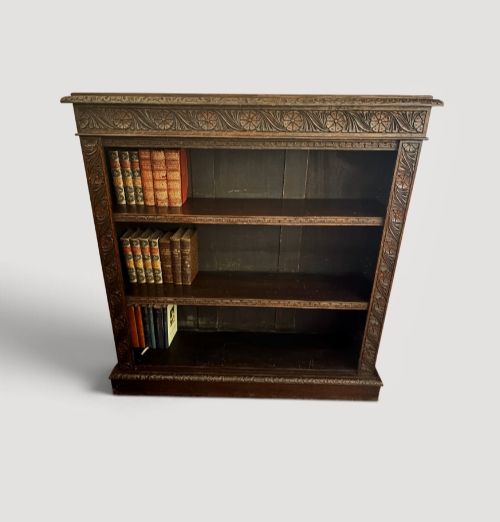
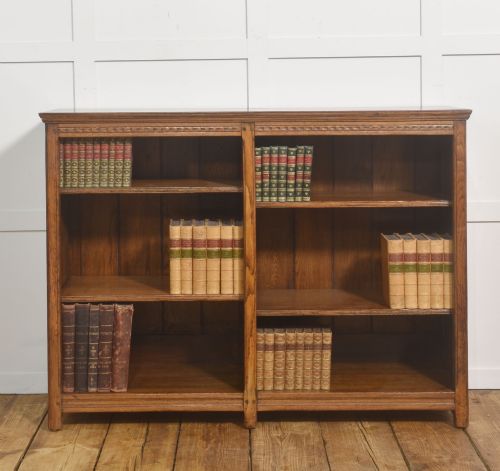
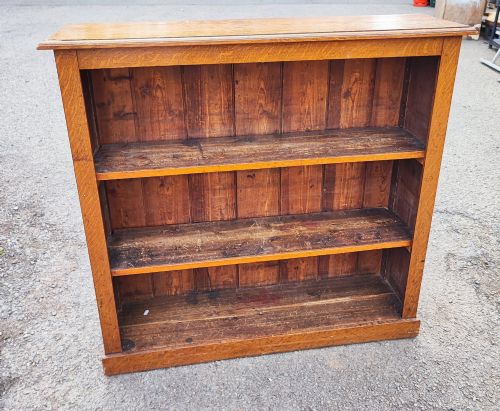
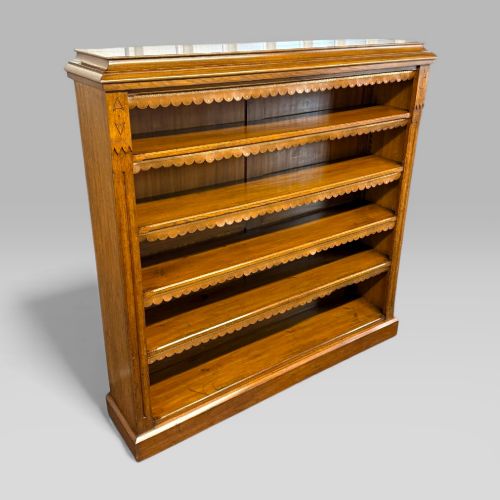
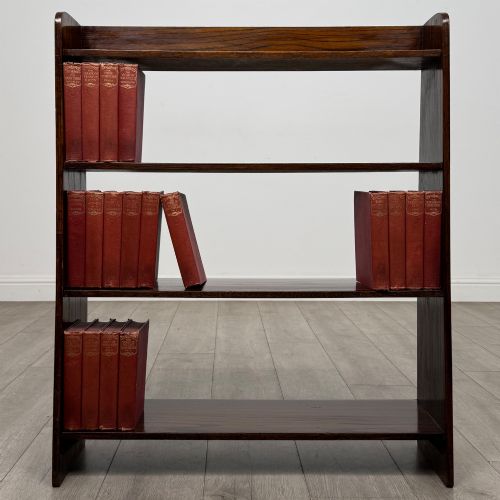
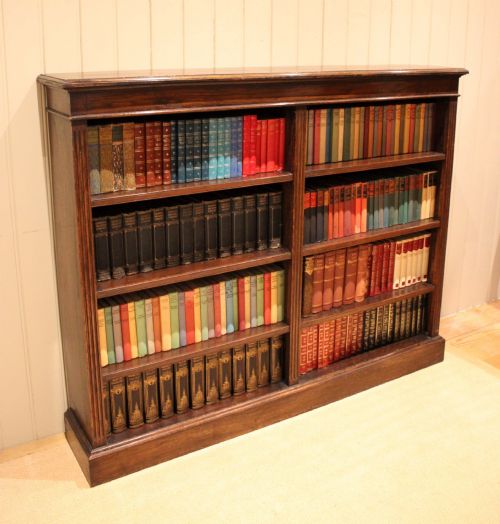
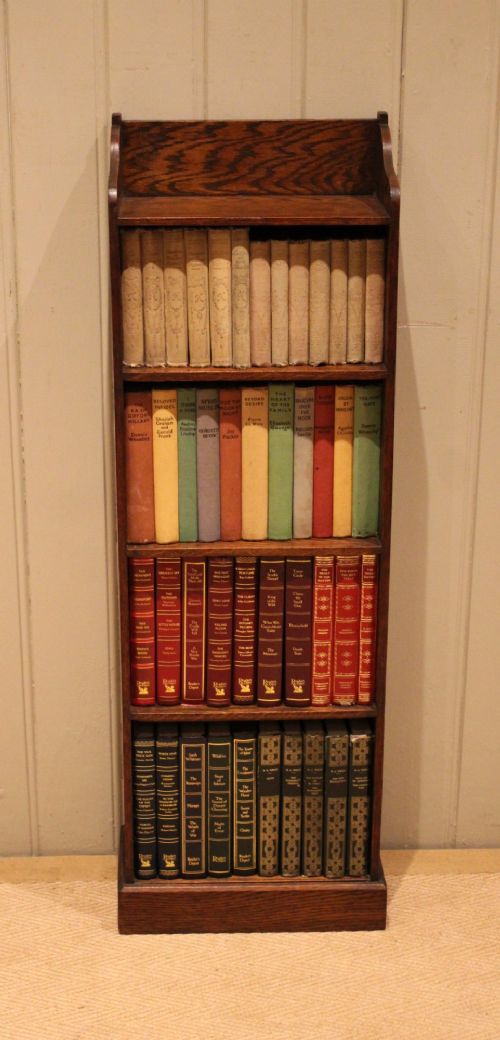
Open Oak Bookshelf
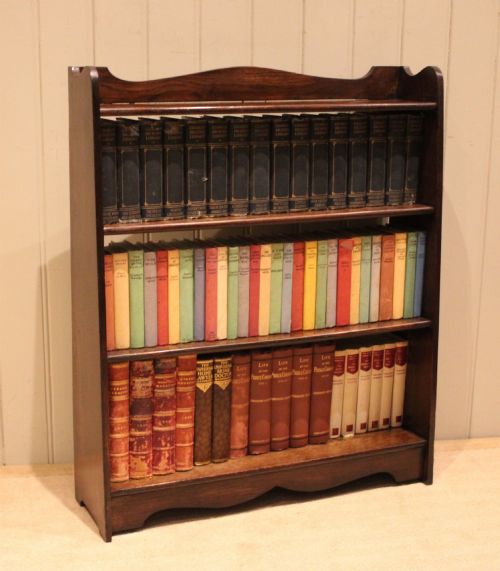
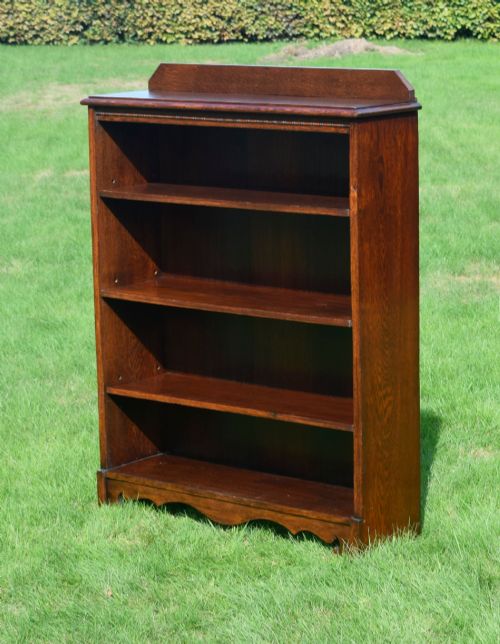
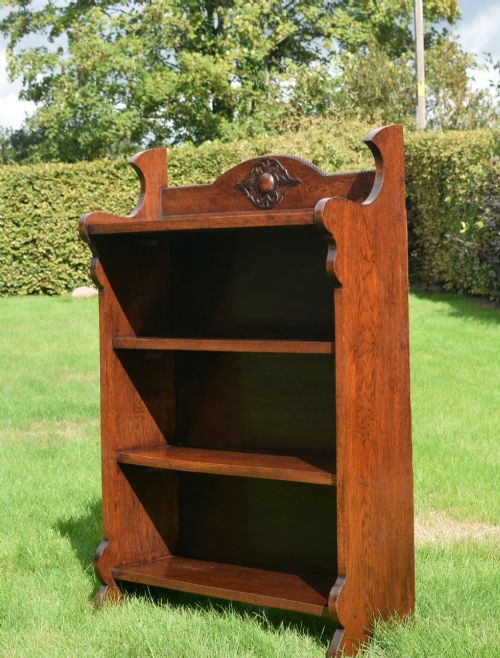
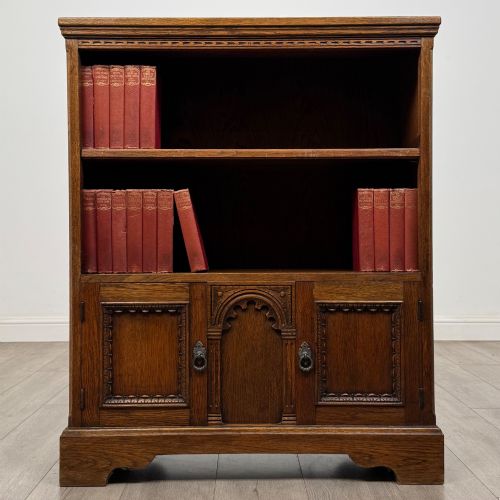
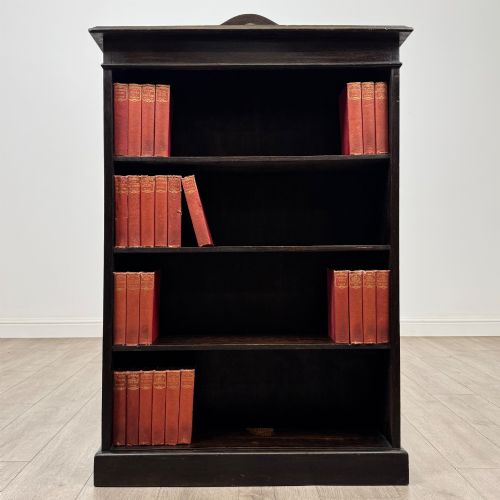
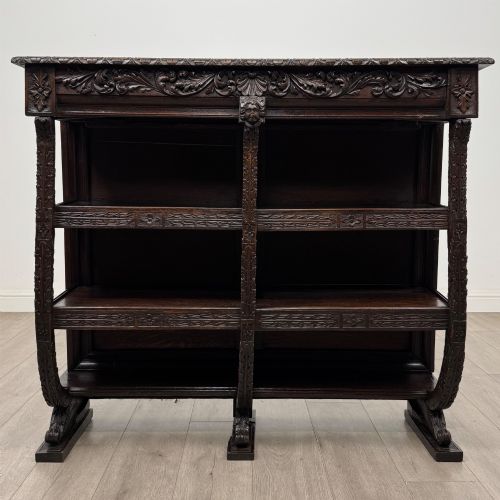
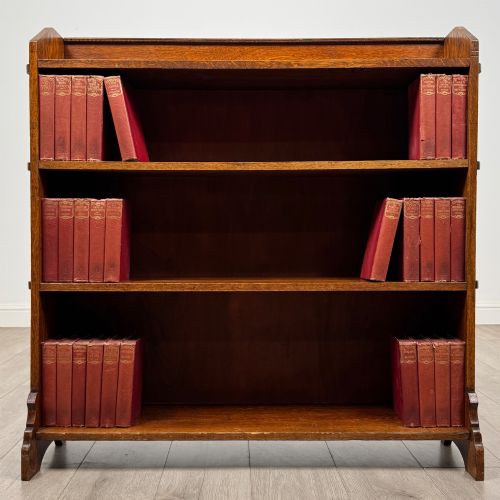
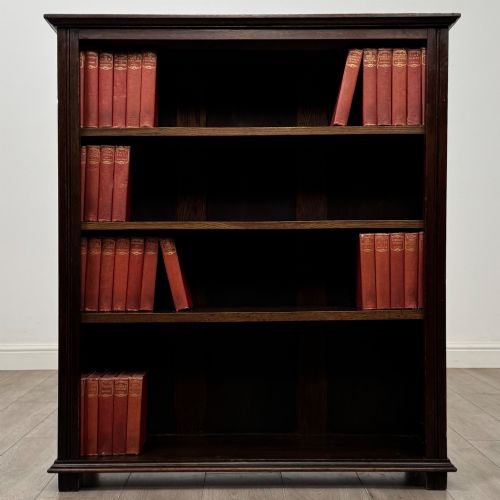
An open oak bookshelf brings sturdy timber and practical tiered storage directly to your room.
The open oak bookshelf
An open oak bookshelf provides accessible shelving for volumes and display, appearing across Victorian, Edwardian, and later periods. These pieces span strict utilitarian workshop items to domestic furniture with Arts and Crafts or industrial influences.
The most common examples on this page are Edwardian and Victorian designs, frequently built from solid English oak or golden oak. They range from compact standing open bookshelf cabinets to taller adjustable configurations.
Materials and construction
Makers built these pieces using solid oak, sometimes incorporating iron or brass for structural support and hardware. Timber selection varied from pale English oak to richer golden tones depending on the workshop and period.
Construction methods include adjustable shelving systems that allowed owners to alter shelf heights for different book sizes. Joinery focuses on straightforward utility, whether finished with simple edge moulding or robust uprights.
Retail Price Guide 2026
Typical UK retail prices for open oak bookshelf, calculated from the Sellingantiques database of over a million retail prices indexed since 2003. This retail price guide relies exclusively on Sellingantiques data; no external sources or auction records are used, so the figures do not describe the wider market.
Listings feature pieces spanning the Victorian, Edwardian, Arts and Crafts, and industrial styles, constructed primarily in oak with brass and iron.
Assessing quality
Quality rests in the thickness of the oak boards and the structural integrity of the uprights and shelves. Substantial timber prevents sagging under heavy volumes, distinguishing sturdier workshop builds from lighter domestic alternatives.
Refinement shows in the harmony of proportions, the grain selection in the golden oak, and the precision of adjustable shelf mechanisms. Simpler industrial or Arts and Crafts pieces rely on honest construction rather than applied decoration.
Waring and Gillows
The Open Oak Bookshelf Glossary
- Adjustable bookcase
- A shelving unit equipped with a mechanism to alter the vertical spacing between shelves. This feature accommodates books of varying heights.
- Arts and Crafts
- A design movement prioritising traditional craftsmanship and visible construction over mass production. Pieces from this style emphasise honest materials like solid oak.
- Golden oak
- A specific light to medium honey tone found in oak furniture, particularly popular during the late nineteenth and early twentieth centuries. It highlights the natural grain of the timber.
- Standing open bookshelf
- A vertical storage cabinet without doors, designed to stand directly on the floor. It offers immediate access to its contents.
Frequently Asked Questions
What periods do these bookcases cover?
The pieces span from the late nineteenth century through the Edwardian era and into the nineteen thirties. Victorian examples sit alongside Edwardian, Arts and Crafts, and industrial styles.
Dates recorded in the archive reach back to eighteen eighty, with several pieces originating around nineteen hundred.
Are the shelves adjustable?
Many examples feature adjustable shelves designed to hold books of different heights. This mechanism allowed Victorian and Edwardian owners to customise the interior space.
Not every piece includes this function, as simpler standing open bookshelves often use fixed partitions.
What materials are used?
Solid oak forms the primary material across every piece, occasionally paired with brass or iron details. Timbers range from standard English oak to lighter golden oak finishes.
Construction relies entirely on sturdy wood rather than veneered substitutes.
How do I style an open bookshelf?
An open oak bookshelf functions effectively in studies, living rooms, and hallways for storing collections and displaying decorative objects. The visible timber grain adds warmth to an interior.
Items remain easily accessible due to the doorless design.