
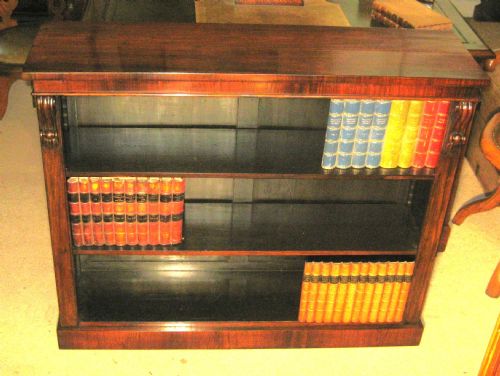
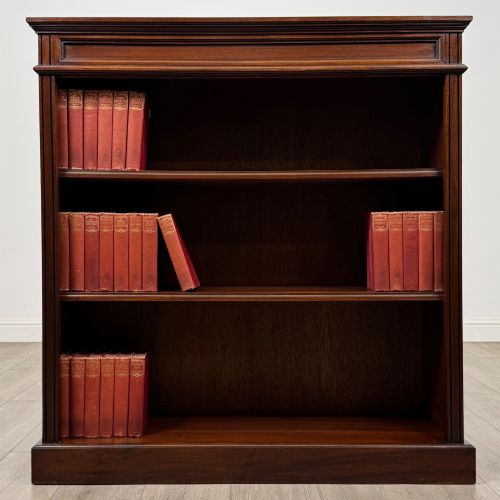
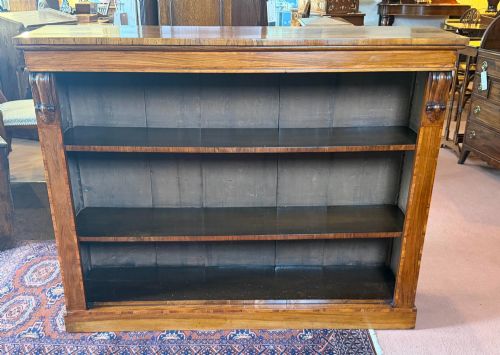
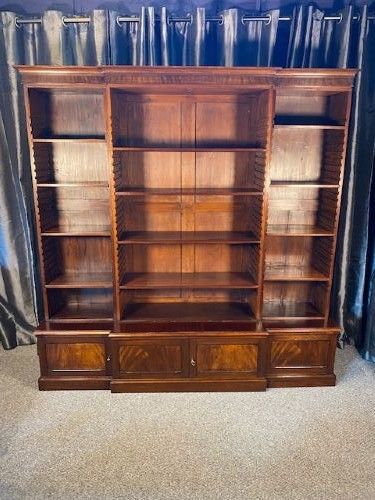
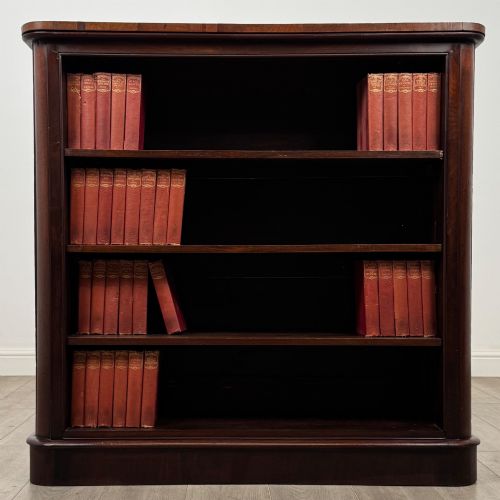
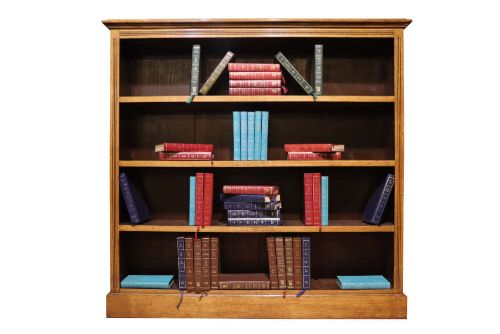
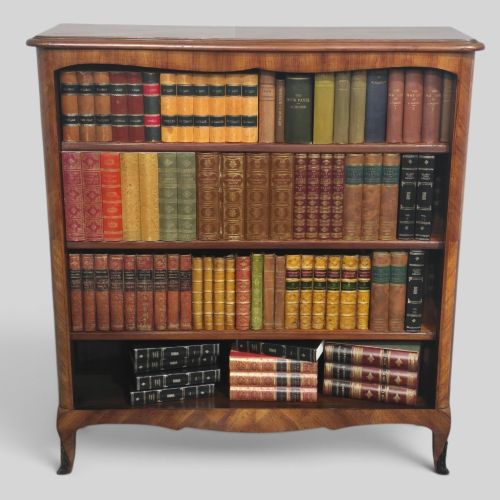
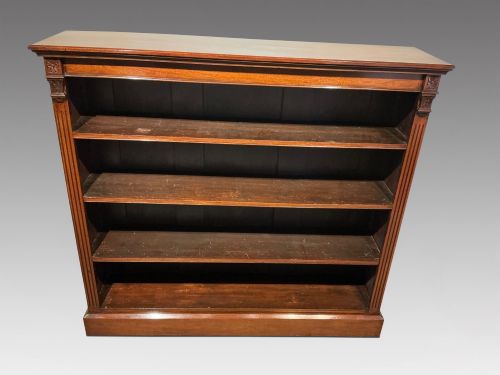
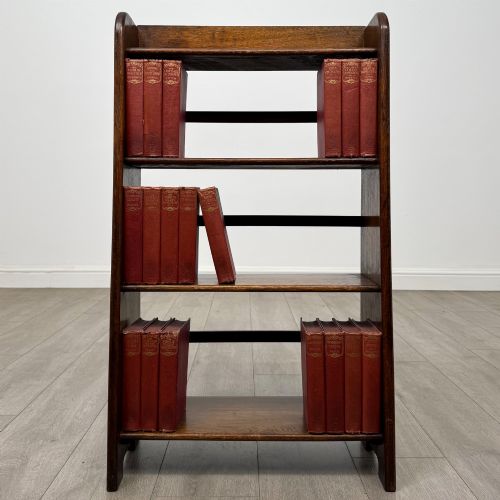
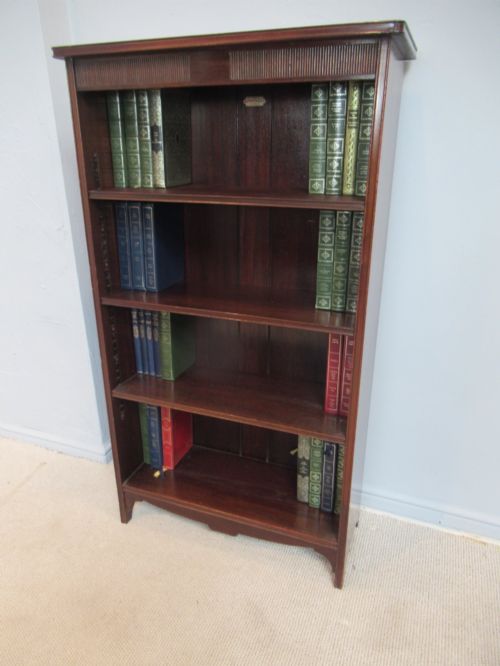
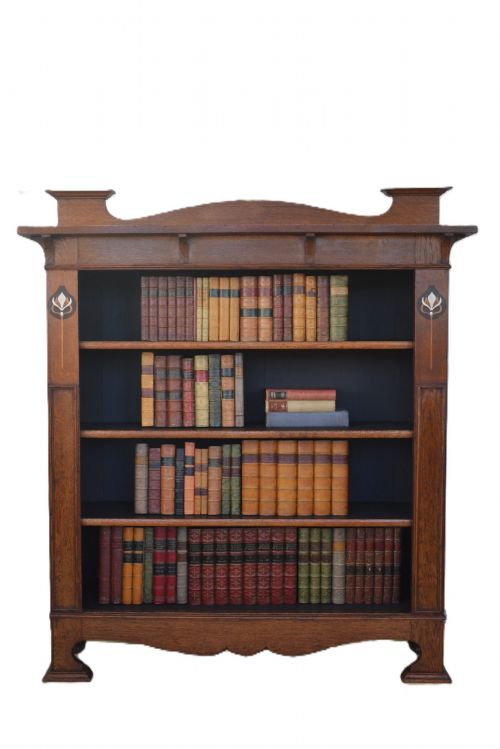
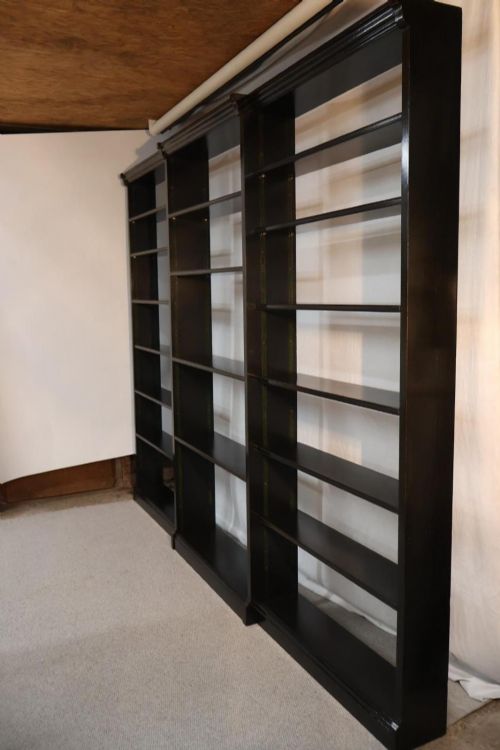


Open Face Bookcase
An open face bookcase provides immediate, accessible shelving for a room while displaying bindings and objects with unfettered elegance.
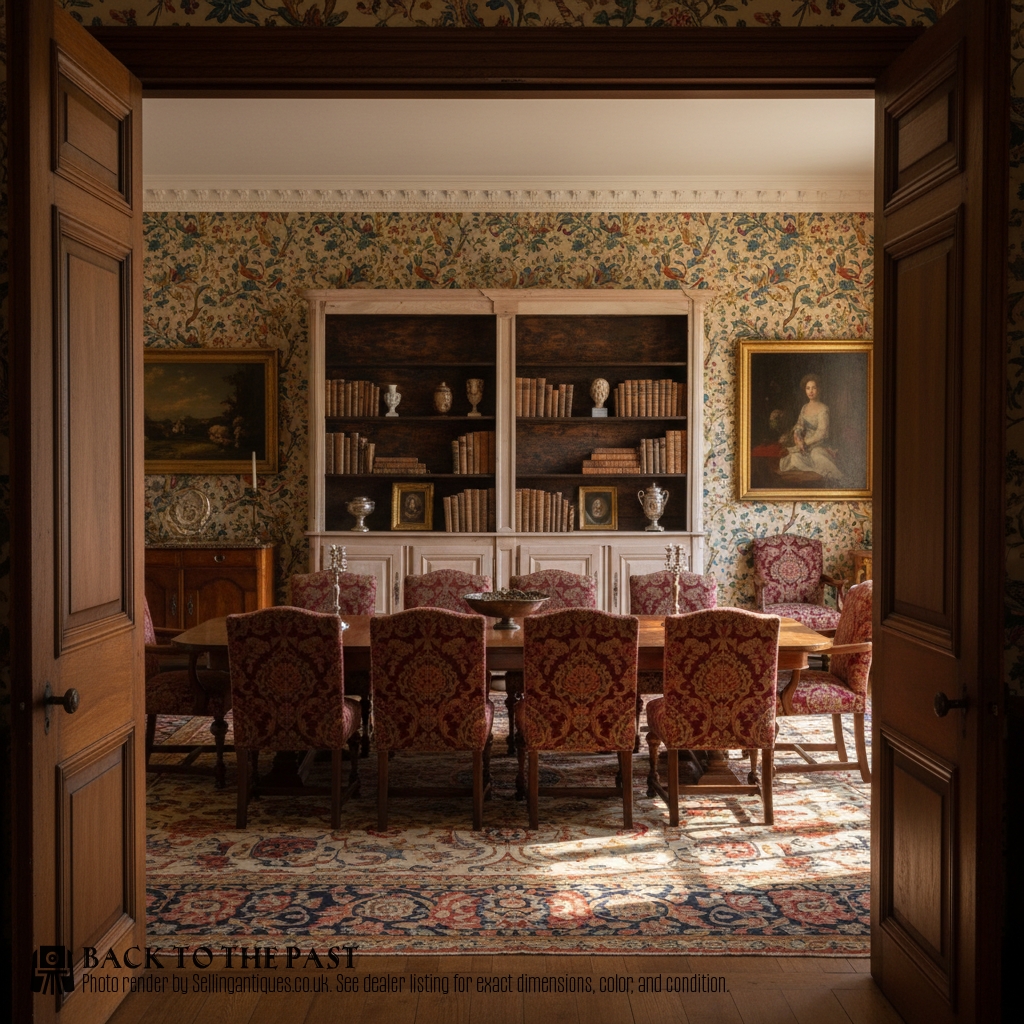
Open Face Bookcase
An open face bookcase offers direct access to volumes without the barrier of glazed or solid doors. You encounter these storage pieces across the nineteenth and early twentieth centuries, spanning periods from Victorian and Edwardian eras back to Regency and Georgian designs.
Mahogany and oak dominate the forms on this page, alongside rosewood, walnut, and ebonised wood. Pieces range from neat, compact proportions to large breakfront library bookcases, some featuring height-adjustable shelves.
The aesthetic travels from straightforward Arts and Crafts solid oak to French Louis XV style influences and ebonised brass mounted pieces. These items serve libraries, studies, and reception rooms with straightforward utility.
Materials and Construction
Cabinet makers utilised dense hardwoods including mahogany, oak, walnut, and rosewood, often applying flame mahogany veneer to primary surfaces. Timber frames were constructed with sturdy joinery to support heavy rows of books.
Metal elements such as brass appear in mounts and shelf adjustment mechanisms, while ebonised wood finishes provide a dark, uniform surface. Carved detailing and decorative veneers define the decorative execution of finer library examples.
Open Face Bookcase Retail Price Guide 2026
Typical asking prices for open face bookcase among the pieces listed under this phrase on Sellingantiques today, from the lower quarter to the upper quarter. They describe what is for sale here now, not the wider market.
Listings feature woods including mahogany, oak, rosewood, walnut, and birdseye maple across the nineteenth and early twentieth centuries.
Factors of Quality
The refinement of the timber selection and veneer figure sets apart standard utility furniture from sophisticated examples designed for formal libraries. Rich grain patterns in rosewood, birdseye maple, or flame mahogany elevate the visual impact of the piece.
The sophistication of the joinery and hardware, such as integrated brass mounts and finely carved mouldings, distinguishes superior workshops. Practical additions like height-adjustable shelving demonstrate thoughtful design intended for functional libraries.
Waring and Gillows·Sir Charles Barry
The Open Face Bookcase Glossary
- Breakfront
- A cabinet design where the central section projects forward from the flanking wings. This architectural arrangement creates depth and visual rhythm in larger library pieces.
- Ebonised
- Wood treated with a dark stain or finish to imitate ebony. This technique was favoured for dramatic contrast in nineteenth-century cabinet work.
- Flame mahogany veneer
- A thin slice of mahogany timber cut from the fork of the tree where the branch meets the trunk. The resulting swirling grain creates a distinctive flame-like pattern.
- Adjustable shelves
- Shelves fitted with moveable supports that allow the internal height to be altered. This practical mechanism accommodates volumes of varying sizes.
- Rosewood
- A heavy, dense tropical timber prized for its deep colour and dark grain figuring. It appears frequently in nineteenth-century cabinet making.
Open Face Bookcase: Frequently Asked Questions
What is an open face bookcase?
An open face bookcase is a freestanding shelving unit designed without doors, allowing direct access to books and objects.
These pieces range from compact Edwardian oak items to large Victorian breakfront library bookcases.
How do I date an antique bookcase?
Dating relies on identifying the prevailing timber choices, construction techniques, and stylistic vocabulary of the period. For instance, ebonised finishes and heavy brass mounts often point towards nineteenth-century tastes.
Examining the internal construction and shelf support systems provides further clues regarding the era of manufacture.
Where should I place a bookcase?
These bookcases suit studies, libraries, and living rooms where easy access to books is desired. Their open fronts make them ideal for displaying collections within reach.
Ensure they are positioned away from direct sunlight and severe temperature fluctuations to protect the timber.
Are shelves usually adjustable?
Many examples feature height-adjustable shelves, allowing the interior layout to be adapted for different book sizes. This practical arrangement was common in libraries.
Simpler or earlier pieces may feature fixed shelving integrated directly into the carcass.