



Opaque Twist Glass Vessel
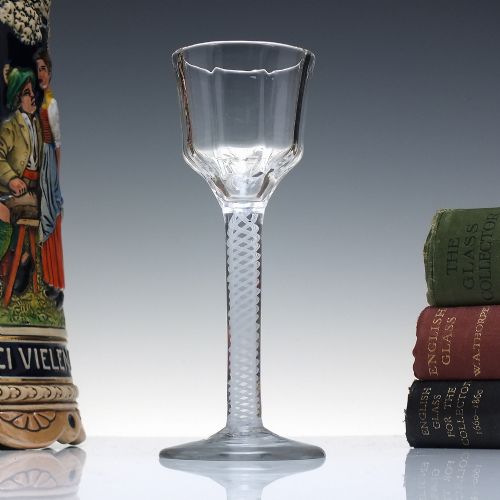
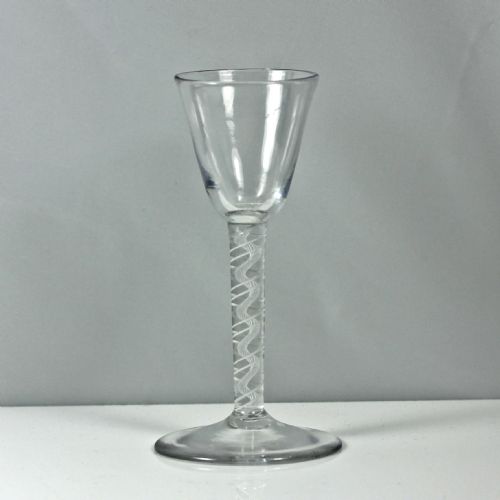
An opaque twist glass vessel is a drinking glass with an intricate white or coloured enamel thread sealed inside the stem, prized for its tactile beauty.
Opaque Twist Glass Vessel
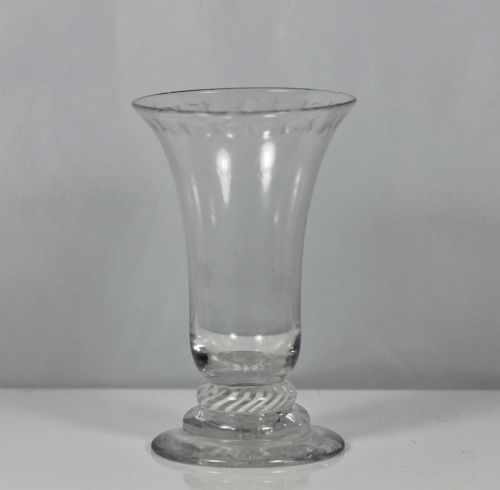
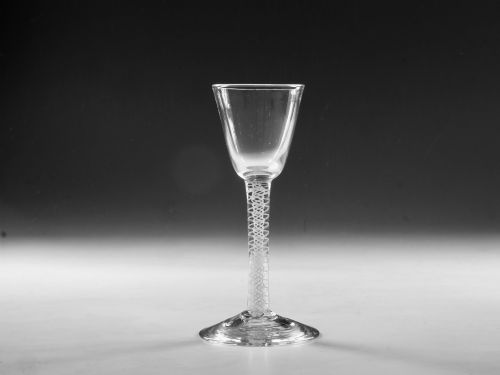
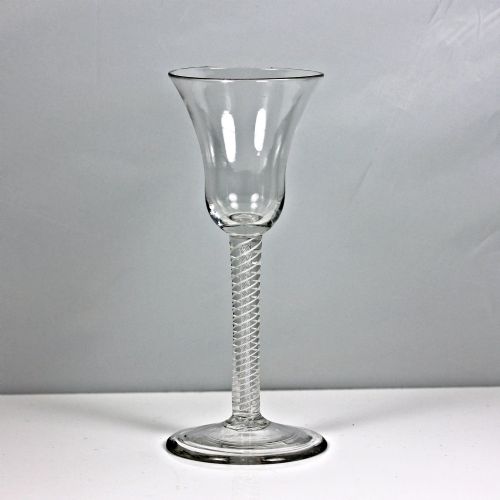
An opaque twist glass vessel is typically encountered here as an 18th century Georgian wine glass, representing a specific milestone in British glassmaking. These drinking vessels feature slender stems enclosing fine white or coloured enamel threads rather than the earlier air bubbles.
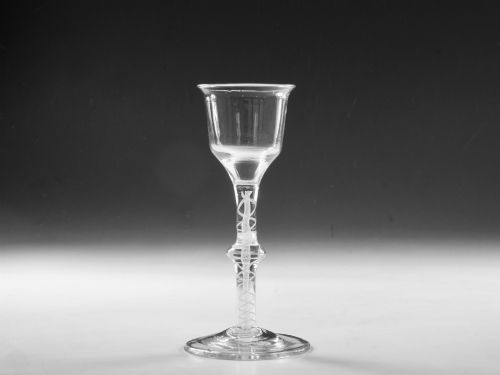
The forms span straightforward wine glasses and larger goblets, frequently shaped with bell bowls, ogee bowls, and occasionally decorated with double knops or full ribbing. Every piece originates from the Georgian era of the 18th century, specifically clustered around the middle decades of that period.
Collectors seeking an opaque twist glass vessel will find English examples dating from approximately 1755 to 1765. These items reflect the domestic dining habits of the Georgian period, serving wine at the table before glass production methods evolved further.
How they were made
The manufacture of an opaque twist glass vessel relies on lead glass or lead crystal glass, which provides the clarity and weight characteristic of 18th century English tableware. Molten white enamel or opaque enamel is incorporated into the stem to form the decorative twist before the final piece is shaped.
Glassmakers formed the internal threads by drawing and twisting the glass canes while hot, producing either single series or double series configurations. Composite stems and corkscrew twists further demonstrate the technical skill employed by Georgian craftsmen to manipulate clear glass and enamel simultaneously.
All listed pieces are confined to the 18th century Georgian period, utilising lead crystal glass and enamel to form single and double series twists.
What varies in quality
The distinction between an ordinary example and a superior opaque twist glass vessel lies in the complexity of the internal stem formation. Double series twists and composite stems demonstrate greater technical ambition than simpler single series designs.
Proportion and bowl shape also influence the standing of a piece within the Georgian range, particularly where forms include a bell bowl, an ogee bowl, or structural knops. The clarity of the lead crystal and the crispness of the enamel threads determine the visual impact of the stem.
The Opaque Twist Glass Vessel Glossary
- Opaque twist
- A glass stem containing internal threads of white or coloured enamel. This technique succeeded air twist stems during the 18th century.
- Single series
- A stem twist containing only one set of enamel threads, often spun around a central air bubble or column. This represents a foundational design among Georgian wine glasses.
- Double series
- A stem incorporating two distinct sets of enamel twists operating in opposite directions. This construction demands greater dexterity from the glassmaker.
- Ogee bowl
- A drinking vessel bowl with an "S" curve profile, curving outward at the rim and inward at the base. It is frequently paired with ribbed moulding on Georgian glassware.
- Bell bowl
- A deep, flared bowl resembling an inverted bell shape. This form is typical of mid-18th century English wine glasses.
- Composite stem
- A stem combining different construction methods, such as an opaque twist section joined with an air twist or plain knop section. These represent more elaborate Georgian manufacturing techniques.
Opaque Twist Glass Vessel: Frequently Asked Questions
What is an opaque twist glass?
An opaque twist glass is an 18th century English drinking vessel featuring white or coloured enamel threads enclosed within the clear lead crystal stem.
These pieces were produced during the Georgian period and served as fashionable tableware for dining and social occasions.
How old are these wine glasses?
The pieces available originate from the Georgian era, specifically dating from the mid-18th century around 1755 to 1765.
English glassmakers of this period developed the intricate enamel twist techniques that define these drinking vessels.
How should I display my glass?
These drinking vessels benefit from stable placement in well-lit cabinets where light can pass through the clear lead crystal and highlight the internal enamel threads.
Direct sunlight and crowded shelving should be avoided to protect the 18th century material from accidental knocks.