


Opaque Glass Vase
An opaque glass vase brings solid colour and hand-painted detail to a mantelpiece, offering rich nineteenth-century and early twentieth-century character.
Opaque Glass Vase
An opaque glass vase takes several forms across this selection, spanning simple bulb vessels, posy holders, and grand mantel lustres. Buyers searching for an opaque glass vase encounter pieces shaped by Victorian tastes and later Art Deco geometric designs.
The material ranges from white and pale blue opaline glass to Peachblow and Bohemian wares. English, French, and Czech origins appear frequently alongside neoclassical and Victorian aesthetic movement styles.
How they were made
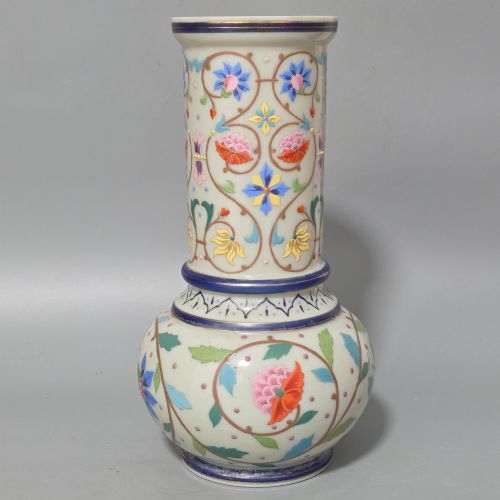
Makers utilised glass as the primary body, applying enamel paints to create floral motifs and classical scenes directly onto the surface. Gilding and gold leaf often highlight rims and decorative panels.
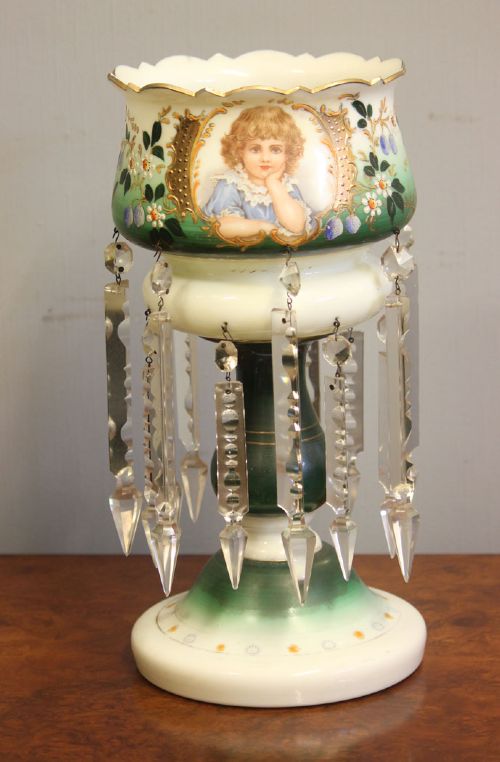
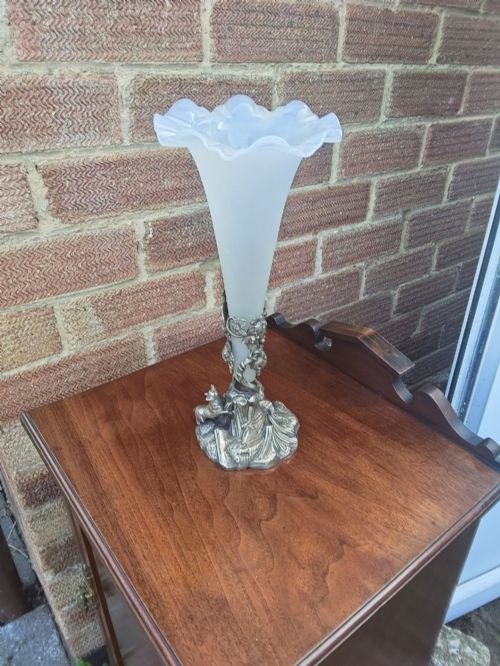
Certain pieces integrate white metal mounts, while others incorporate hanging crystal prisms in the form of mantel lustres. Techniques range from free-blown forms to moulded Czech production.
Listings span from c.1850 Victorian opaline pieces to c.1930 Czech Art Deco geometric designs, featuring enamel, gold leaf, and white metal.
What varies in quality
The standard of hand-painted enamel work dictates the refinement of the piece, separating simple floral decorations from intricate classical scenes. Crisp detail in gilding and the precision of applied gold leaf also define the upper tier.
Design complexity marks the distinction between standard decorative vessels and substantial works by noted makers. The crispness of moulded or blown glass shapes alters the visual weight of the object.
Thomas Webb·George Tye·Richardson
The Opaque Glass Vase Glossary
- Opaline glass
- A type of semi-opaque glass with a delicate pastel or white tone, popular during the nineteenth century. It provides a smooth ground for enamel painting.
- Mantel lustre
- A decorative vase fitted with a ring of hanging crystal prisms designed to reflect candlelight. They frequently appear in matched pairs on nineteenth-century fireplaces.
- Peachblow
- A shaded art glass technique transitioning from peach to cream or white tones, developed during the late nineteenth century. Bohemian and Victorian makers utilised this finish.
- Enamel
- Opaque vitreous pigment fired onto the glass surface to build colourful decorative scenes and floral sprays. It sits slightly raised above the glass body.
Opaque Glass Vase: Frequently Asked Questions
How do I clean an opaque glass vase?
Wipe the exterior gently with a soft, dry cloth to protect delicate enamel and gold leaf details.
Avoid submerging pieces with metallic mounts or painted surfaces in water.
Were these vases used for fresh flowers?
Smaller posy and bulb vessels held water for cut blooms on Victorian tables.
Larger mantel lustres and decorative vases served primarily as ornamental chimney piece displays.
How do I date an opaque glass vase?
Examine the colour palette, painting style, and structural form to place the piece within Victorian, mid-nineteenth-century, or later Art Deco periods.
Signatures or registry marks, where present, help narrow the date of manufacture.
What is the difference between opaline and opaque glass?
Opaline specifically refers to the translucent, pastel-tinted glass favoured in mid-nineteenth-century French and English decorative arts.
Opaque glass covers a broader category that includes solid-coloured and layered Bohemian wares.