

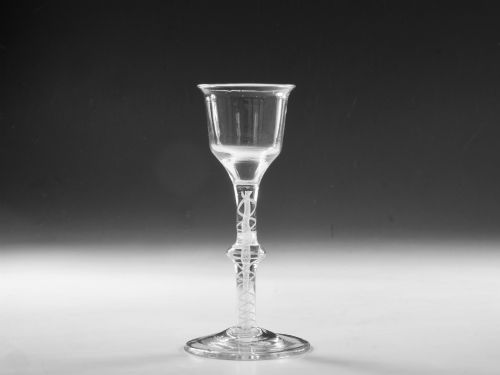

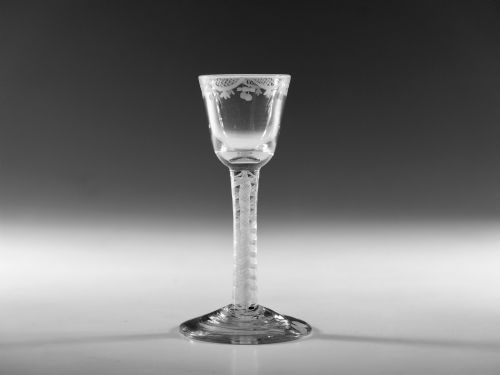


Opaque Cotton Twist
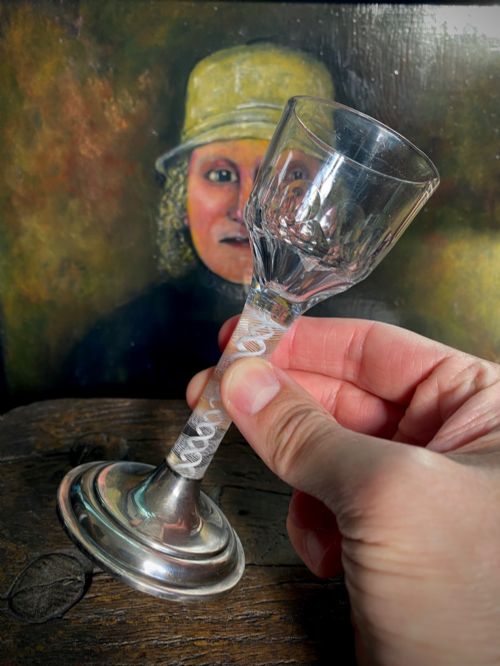
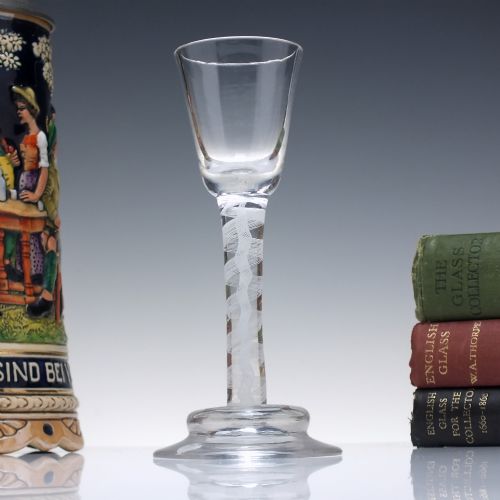
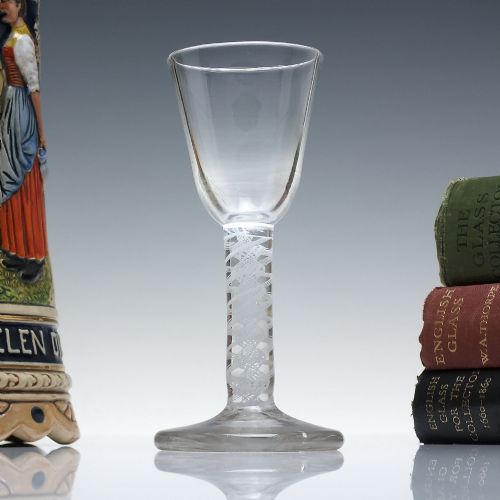
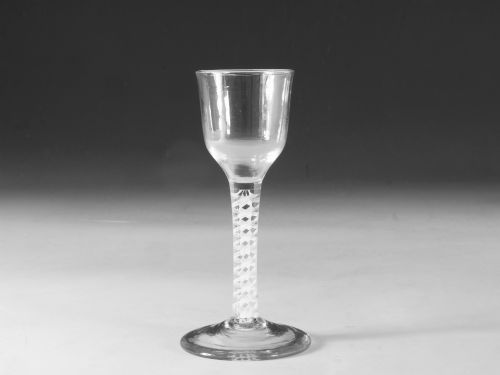
Opaque cotton twist glasses are 18th-century drinking vessels featuring delicate white enamel threads enclosed within lead glass stems, prized by collectors for their intricate optical charm.
Opaque Cotton Twist
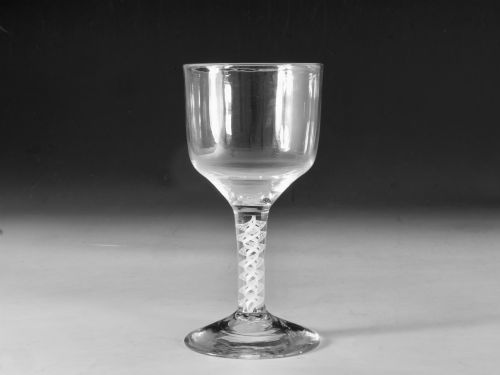
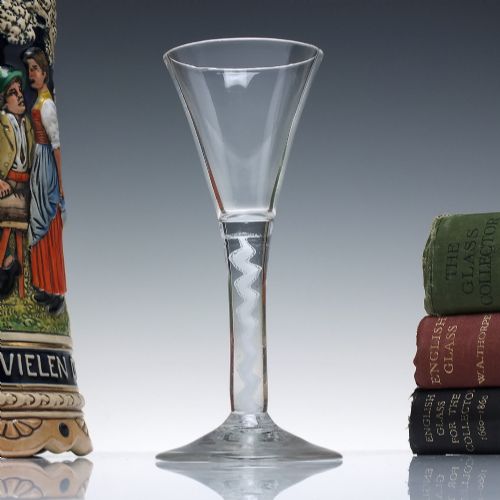
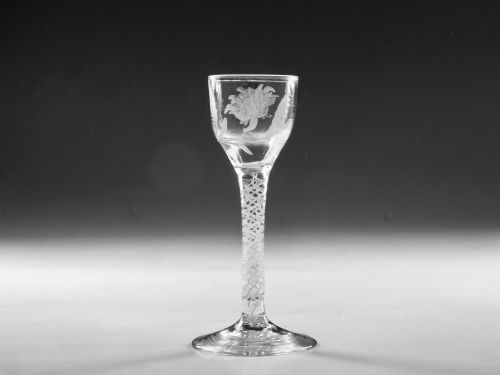
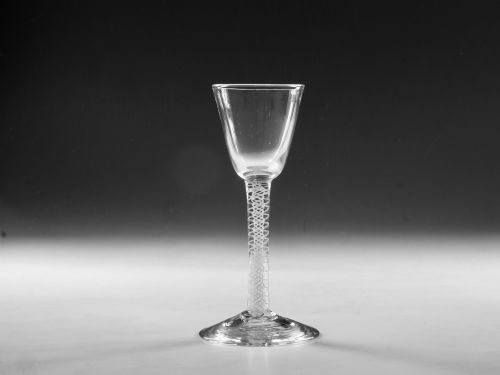
When you search for opaque cotton twist, you are looking at 18th-century English glassware created during the Georgian period. These pieces comprise wine glasses, wine goblets, champagne glasses, and sweetmeat glasses, all defined by their characteristic stems.
The version you are most likely to meet on this page is the Georgian wine glass, typically dated between 1760 and 1770. These drinking glasses combine straightforward conical or bell bowls with stems enclosing fine white enamel twists.
Occasional variations appear alongside the standard wine glass form, including examples with specialised bases such as a firing foot or a replacement silver foot. Some pieces take the form of larger goblets or shallower sweetmeat vessels rather than standard drinking glasses.
How they were made
The manufacture of these stems relies on lead glass and lead crystal glass, which provide the clear, heavy medium necessary to encase the interior decoration. Molten glass is manipulated around white enamel or opaque enamel threads to form the twisting internal pattern before the vessel is shaped.
Makers shaped the bowls separately from the stems and feet, applying heat to join the component parts together into a cohesive drinking glass. Specialised bases like helmet feet or thick firing feet required additional manipulation at the pontil during the final stages of forming.
Opaque Cotton Twist Retail Price Guide 2026
Typical asking prices for opaque cotton twist among the pieces listed under this phrase on Sellingantiques today, from the lower quarter to the upper quarter. They describe what is for sale here now, not the wider market.
Listings show these drinking glasses exclusively across the 18th Century and Georgian periods, utilising lead glass, enamel, and silver.
What varies in quality
The complexity and tightness of the internal enamel threads dictate much of the visual character across these stems. Single or double series twists demand greater precision from the glasshouse worker to maintain a regular, uninterrupted helical path through the lead crystal.
The overall proportion between the bowl, stem, and foot influences the visual balance of the object. Alterations, such as a replacement silver foot fitted to an 18th-century bowl and stem, represent significant interventions that alter the original integrity of the glassware.
The Opaque Cotton Twist Glossary
- Opaque cotton twist
- A stem form containing fine white enamel threads resembling cotton, drawn into a spiral inside clear lead glass. This technique gained popularity in English glasshouses during the Georgian era.
- Lead crystal glass
- A heavy, clear glass containing lead oxide that increases brilliance and refractive index. It serves as the primary material for housing the opaque enamel threads in these stems.
- Firing foot
- A thickened glass base designed to withstand the heat of being set down firmly on a table. This sturdy form is frequently encountered on 18th-century drinking glasses.
- Helmet foot
- A specialised pedestal base shaped with an outward-flaring contour reminiscent of historical headwear. It provides a distinct profile to mid-18th-century wine glasses.
- Sweetmeat glass
- A specialised vessel with a wide, shallow bowl intended for serving small confections or nuts. These pieces often share the stem characteristics of contemporary wine glasses.
Opaque Cotton Twist: Frequently Asked Questions
What is an opaque cotton twist glass?
An opaque cotton twist glass is an 18th-century English drinking vessel featuring a clear lead glass stem enclosing fine white enamel threads. These threads are manipulated into spiral patterns during the blowing process.
They date primarily from the Georgian period and remain highly sought after by collectors of antique English glassware.
Were these glasses used for wine?
Yes, the primary function of these vessels was serving wine at the table during the Georgian era. Their capacity and bowl shapes correspond to the drinking habits of the 18th century.
Alongside standard wine glasses, similar stem formations were utilised for champagne glasses, larger goblets, and sweetmeat glasses designed for confectioneries.
What is a double series twist?
A double series twist incorporates two distinct sets of internal elements within the stem, often combining an opaque white enamel twist with air bubbles or multiple enamel threads.
This method requires advanced glassmaking skill to execute cleanly, resulting in a dense and visually intricate pattern encased inside the clear lead crystal.