



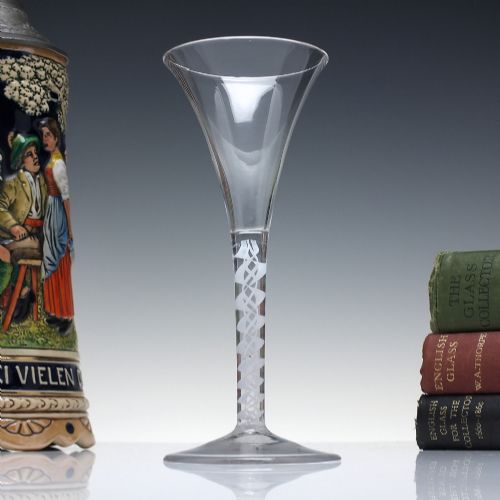
Georgian Twist Stem Glass
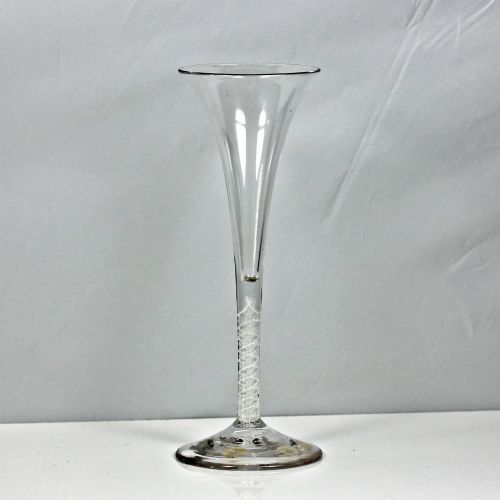
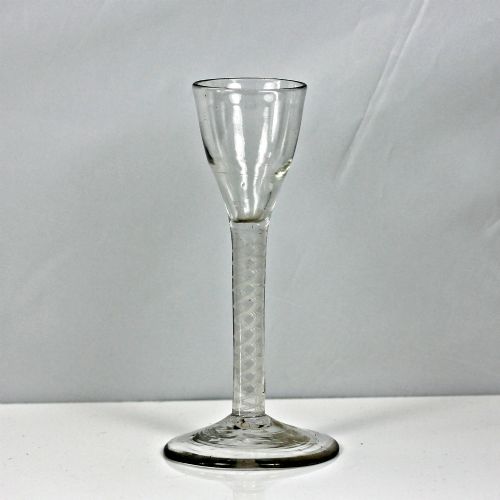
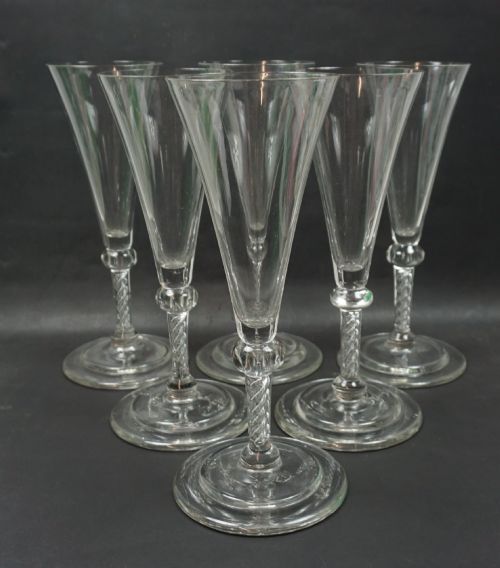
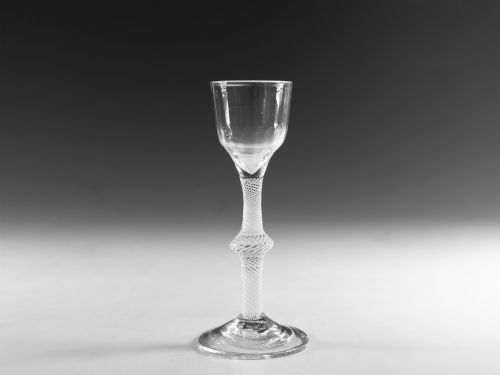
A georgian twist stem glass brings eighteenth-century drinking vessels to your table with intricate optical threads pulled through the lead crystal.
Georgian Twist Stem Glass
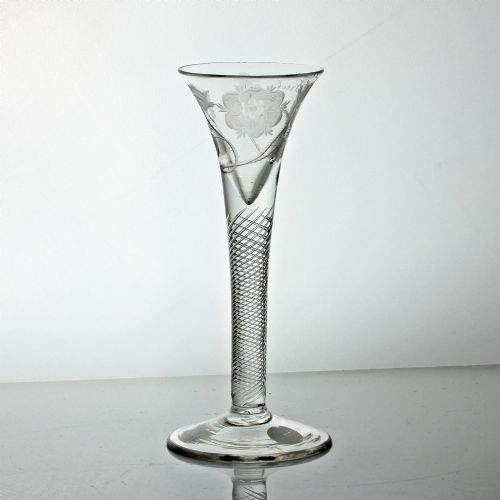
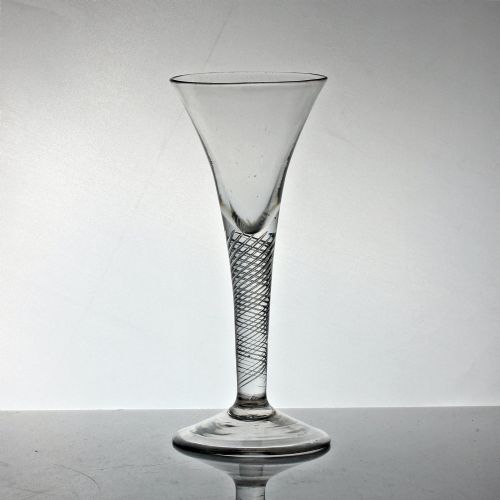
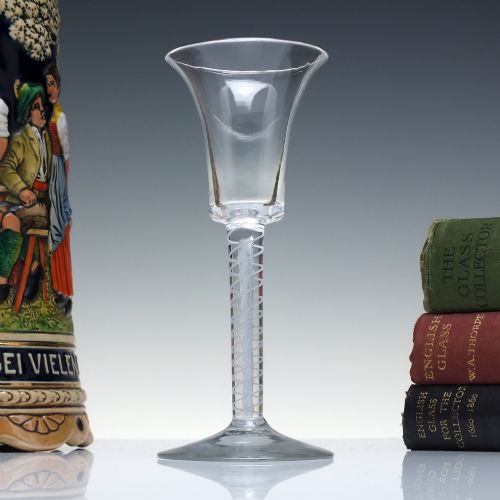
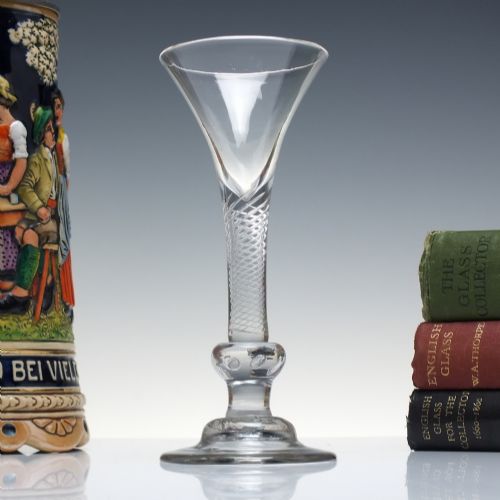
A georgian twist stem glass is primarily a wine glass, ale glass, or champagne flute dating from the eighteenth century, shaped with a drawn trumpet, ogee, or flared bucket bowl above a slender cylindrical stem. The examples you encounter most often on this page belong to the Georgian period, executed in clear lead glass or flint glass.
Beyond standard wine vessels, the form extends to sweetmeat glasses, cordials, and small oil lamps featuring air twists, opaque white enamel rods, or combined twist variations. Most pieces display the typical hallmarks of eighteenth-century glasshouse production, including pontil marks on the underside of the foot.
Materials and construction
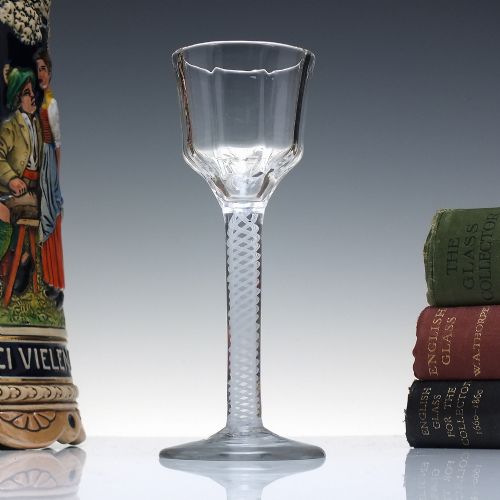
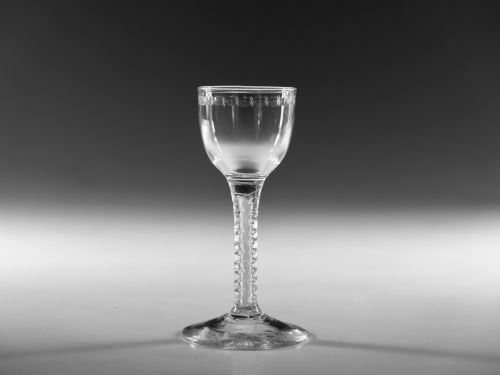
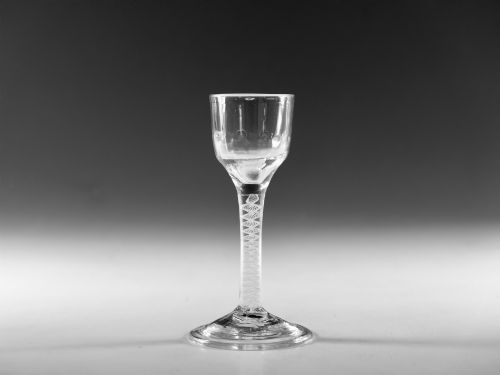
Glassmakers created air twist stems by trapping tiny bubbles within a molten gather of lead glass or flint glass before drawing and twisting the metal to stretch the cavities into fine threads. Opaque twists relied instead on incorporating rods of white enamel inside the clear glass gather prior to manipulation.
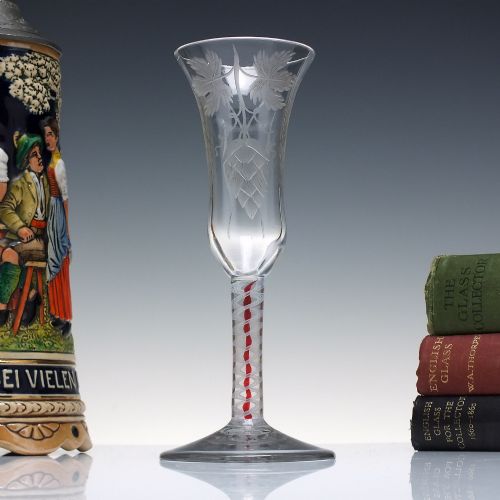
Complex forms combined multiple techniques, joining air or opaque threads with knops, collars, or incised stems above domed or folded feet. The metal itself was heavy lead glass, prized for its clarity, weight, and capacity to hold sharp optical details without clouding.
Available forms span wine glasses, ale glasses, champagne flutes, cordials, sweetmeat glasses, and small oil lamps.
What determines quality
Quality rests on the precision and complexity of the internal twist, distinguishing a simple single-series thread from dense multi-spiral configurations or triple-knop variations. The clarity of the lead crystal and the balance between the bowl, stem, and foot dictate visual success.
Engraving adds a distinct tier of execution, where floral motifs, Jacobite symbols, or hunting scenes cut into the bowl elevate the piece beyond plain vessels. Foot formation also matters, with domed or folded feet representing finer glasshouse standards than flat, plain bases.
The Georgian Twist Stem Glass Glossary
- Air twist
- A stem containing elongated spiral air bubbles trapped within the clear glass. These threads run through the length of the stem to create a shimmering optical effect.
- Opaque twist
- A stem incorporating solid white enamel glass rods pulled into spiral threads. These contrasting lines stand out sharply against the clear lead crystal.
- Ogee bowl
- A bell-shaped drinking vessel with an 'S'-profile curve that pinches in before flaring outward at the rim. This form appears frequently on eighteenth-century wine and ale glasses.
- Pontil mark
- A rough scar left on the base of the glass where the punty rod was snapped off after finishing. Its presence confirms traditional hand-blown manufacturing methods.
- Sweetmeat glass
- A wide, shallow bowl on a stem intended for preserves, nuts, or confectionery rather than liquid. They share the same twist stem styles as contemporary wine glasses.
Georgian Twist Stem Glass: Frequently Asked Questions
Are these glasses safe for drinking?
You can safely use eighteenth-century glasses for wine, ale, or special toasts provided you handle them with care. The lead glass used in the Georgian period is stable for food and beverage contact during normal use.
Keep in mind that older glasses have delicate walls and thin rims compared to modern glassware. Hand wash them carefully and avoid clinking the rims together during toasts.
What is a Jacobite glass?
Jacobite glasses are political artefacts engraved with secret symbols supporting the exiled Stuart claimants to the British throne. Common motifs include the rose and oak leaves, which signaled allegiance during the eighteenth century.
These pieces were used by sympathizers to toast the king over the water in covert gatherings. Today they command significant interest due to their historical associations.
How can I tell an air twist from an opaque twist?
An air twist contains trapped pockets of air stretched into fine spiral channels that catch the light transparently. An opaque twist uses solid white enamel glass rods embedded directly into the clear metal.
If you inspect the stem closely under good light, air threads appear translucent like tiny glass canals, whereas opaque threads show a solid chalk-white colour throughout.