




18th Century Opaque Twist
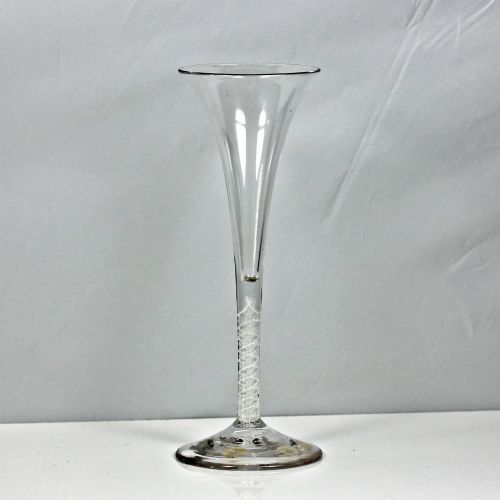
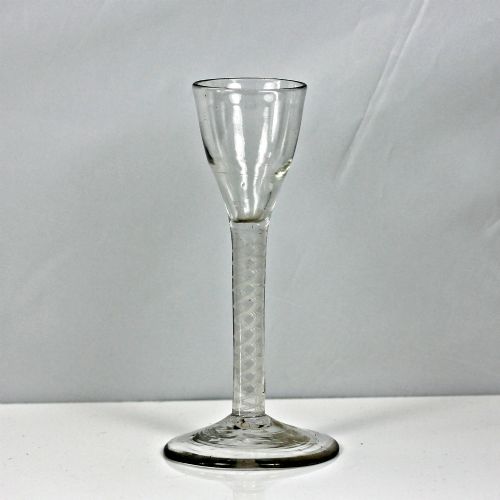
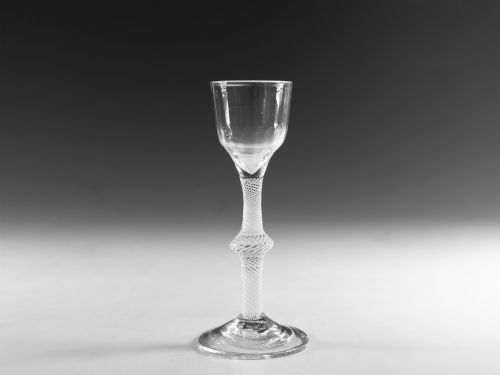
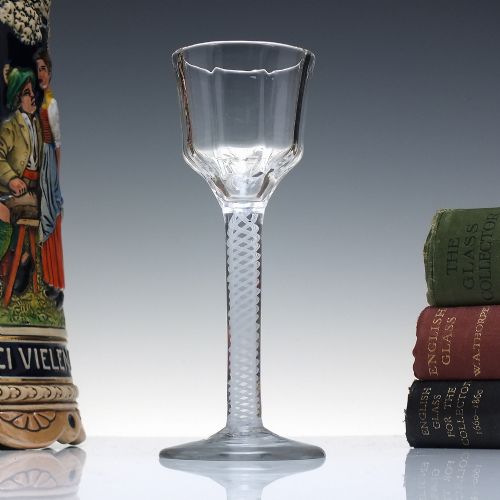
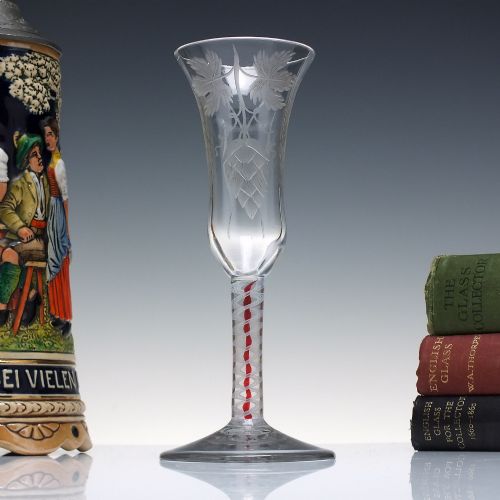
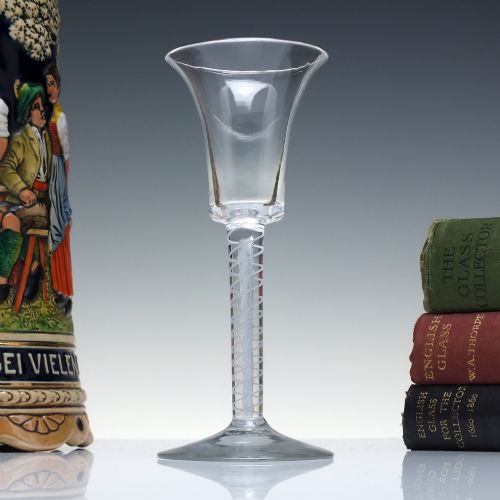
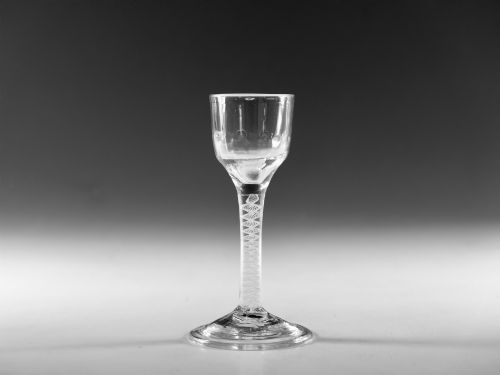
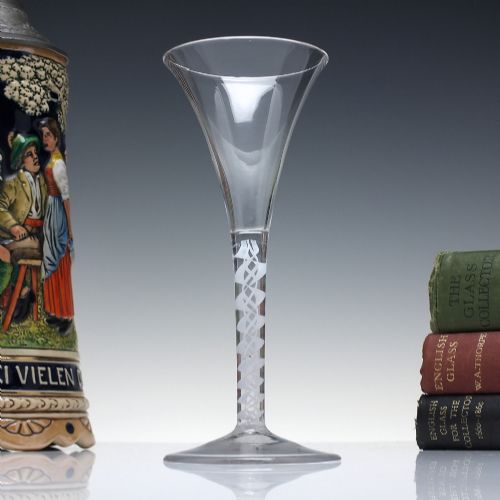
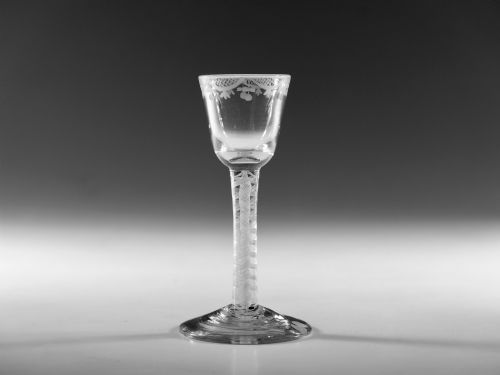
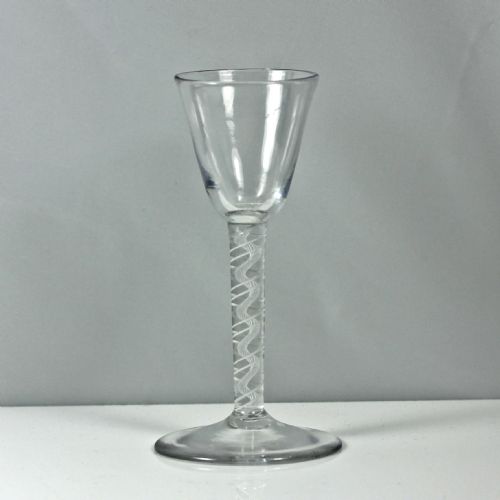
When buying an 18th century opaque twist, you acquire a Georgian drinking vessel defined by white enamel threads spun inside clear lead glass stems.
18th Century Opaque Twist
An 18th century opaque twist is a Georgian drinking vessel, most commonly found as a wine glass, ale glass, or cordial glass from the middle decades of the seventeen-fifties and sixties.
These pieces bring together clear lead glass bowls and intricately drawn stems containing opaque white enamel rods, alongside occasional variations with red colour twists or mixed twist elements.
Buyers encounter distinct bowl forms such as ogee, trumpet, bucket, and flared shapes, often supported by plain conical, terraced, or folded feet.
How they were made
Glassmakers utilised lead glass and flint glass to form the bowl and foot, melting the raw materials in furnaces before blowing the vessel to shape.
The characteristic stems were created by incorporating white enamel threads inside the glass, then twisting the molten mass as it was drawn out to form single series, double series, or multi-spiral patterns.
Additional decorative techniques included flute-moulding, ribbing, and nut-moulding on the bowls, as well as applying knops and corkscrew configurations to the stems.
Listings feature lead glass and flint glass combined with white enamel to create single, double, and multi-spiral twists.
What varies in quality
The clarity and weight of the lead crystal set the foundation for a piece, with superior examples showing brilliant transparency and substantial handling weight.
The precision and complexity of the enamel twist determine much of the visual merit, where tight, uniform spirals command greater appreciation than uneven or crowded threads.
The proportion between the bowl, stem, and foot dictates the overall elegance, alongside the presence of desirable additions like multiple knops or engraved decoration.
The 18th Century Opaque Twist Glossary
- Opaque twist
- A stem containing white enamel glass rods drawn into spiral patterns. This technique replaced earlier air twist designs during the mid-eighteenth century.
- Single series
- A stem configuration containing one set of opaque enamel threads twisted around a central axis. These often appear alongside more complex multi-spiral arrangements.
- Double series
- A stem featuring two distinct sets of opaque enamel twists, frequently combining an outer spiral band with an inner core of threads.
- Ogee bowl
- An architectural profile curving inward at the rim and outward near the base. This form frequently appears on Georgian drinking glasses.
- Knop
- A decorative swelling or bulge formed upon the stem of a glass. Pieces may incorporate single, double, triple, or quadruple knops.
18th Century Opaque Twist: Frequently Asked Questions
How do I identify an opaque twist glass?
Examine the stem for solid white enamel threads enclosed within clear glass rather than hollow air channels. These opaque white filaments typically form precise spiral twists running from the base of the bowl to the foot.
The metal itself should show the weight and brilliance typical of mid-eighteenth-century lead glass. Look for manufacturing traits such as pontil marks on the underside of the foot and period-correct bowl proportions.
What is the difference between single and double series?
A single series stem contains one distinct set of twisted enamel threads within the clear glass column. These often present a cleaner, simpler internal pattern.
Double series stems incorporate two separate sets of twisted elements, such as an outer cable surrounding an inner spiral of fine threads. This dual construction creates a denser and more visually complex stem.
Were these glasses used for wine only?
While wine glasses form the largest category of surviving pieces, makers produced these vessels for various beverages. Ale glasses feature taller, narrower bowls suited to carbonated drinks, while cordial glasses have smaller bowls for potent spirits.
Collectors also encounter champagne flutes, dram glasses, and sweetmeat glasses designed for specific table duties during Georgian dining.