


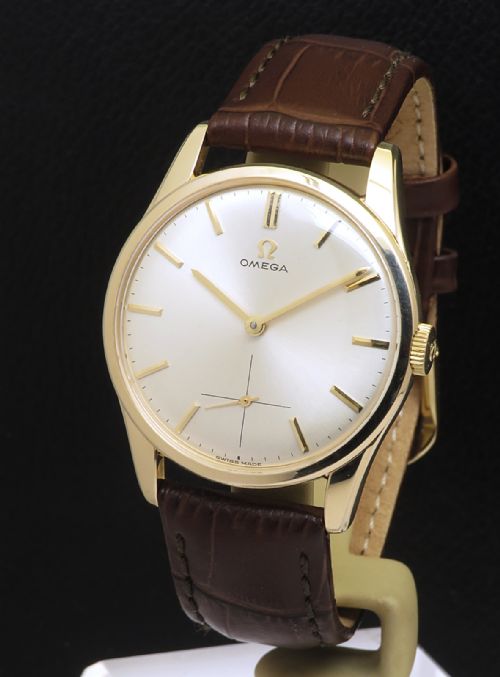

Omega Manual Wind
When you search for an omega manual wind, you find mechanical timepieces driven by hand-wound calibres across several decades.
Omega Manual Wind
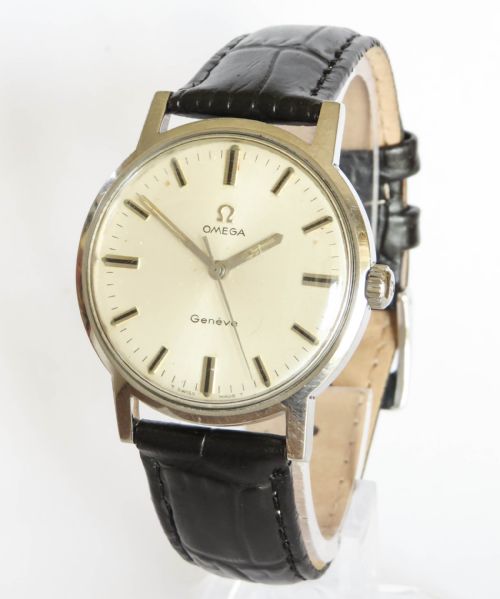
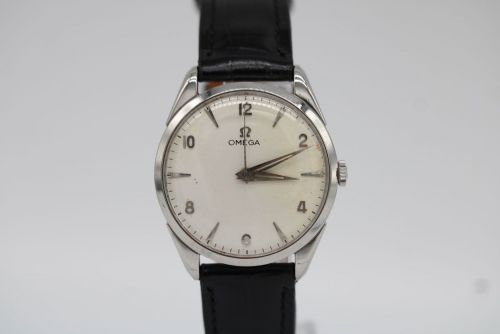
An omega manual wind search brings up wristwatches and pocket watches spanning from the Edwardian era through the 1970s. The selection includes dress watches, military-style pieces, chronographs, and robust Seamaster models driven by hand-wound movements.
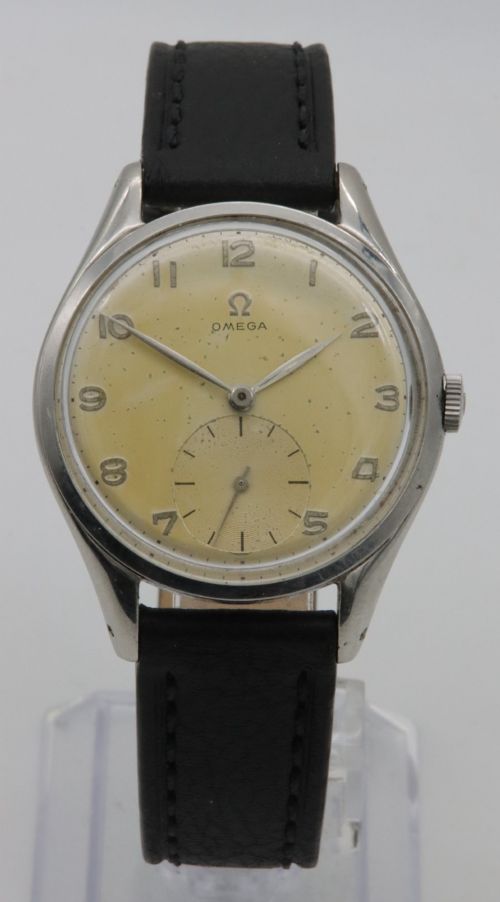
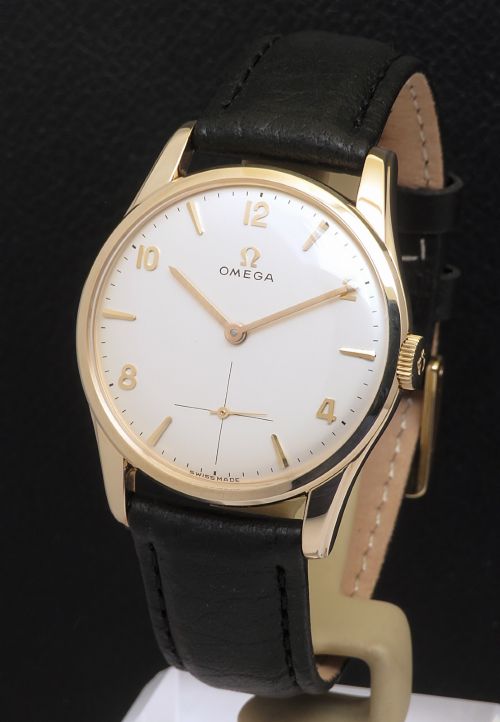
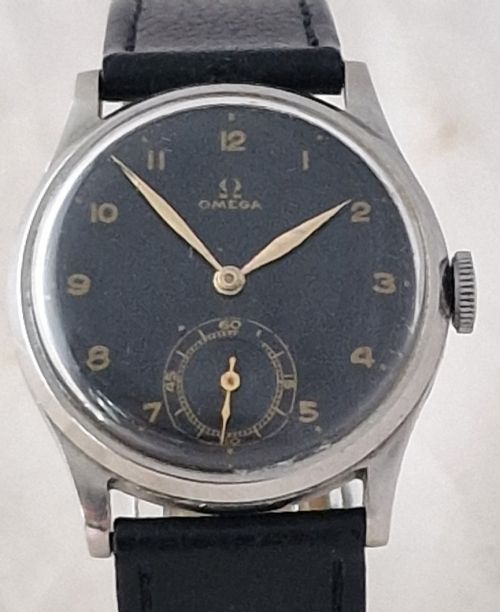
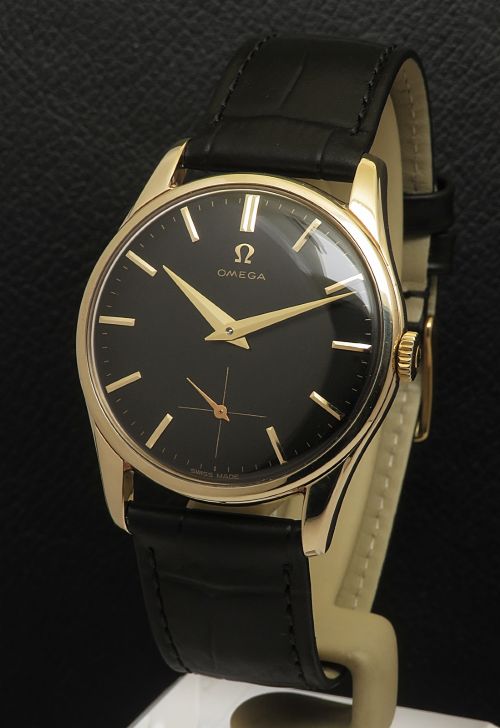
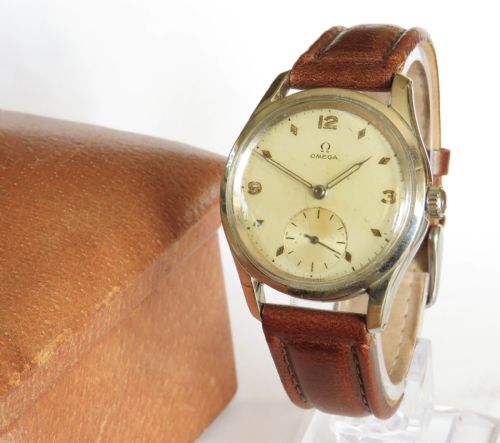
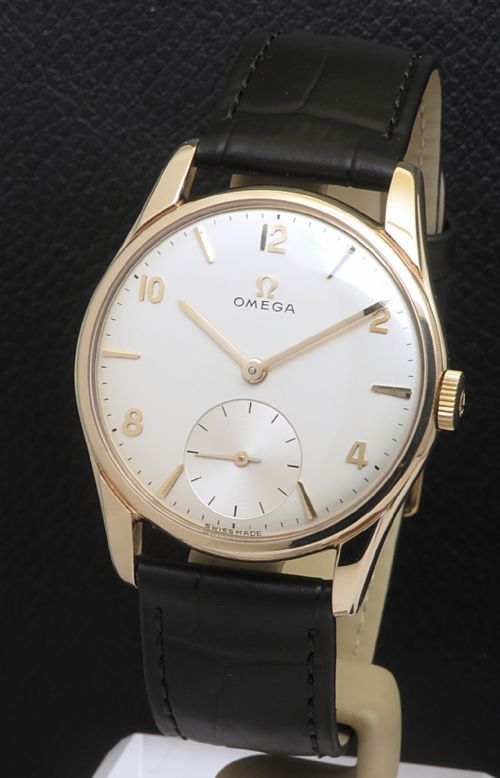
You are most likely to encounter mid-century stainless steel and gold wristwatches from the 1950s and 1960s. These pieces often feature classic circular cases, subsidiary seconds dials or central sweep seconds, and designated calibres such as the 266, 267, 268, and 601.
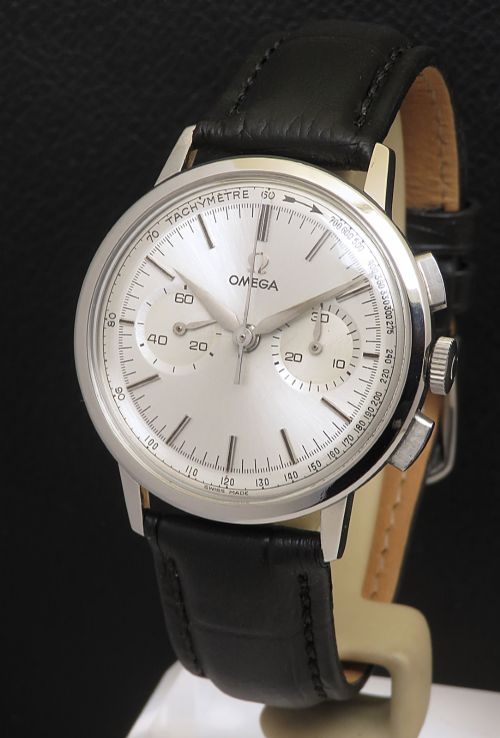
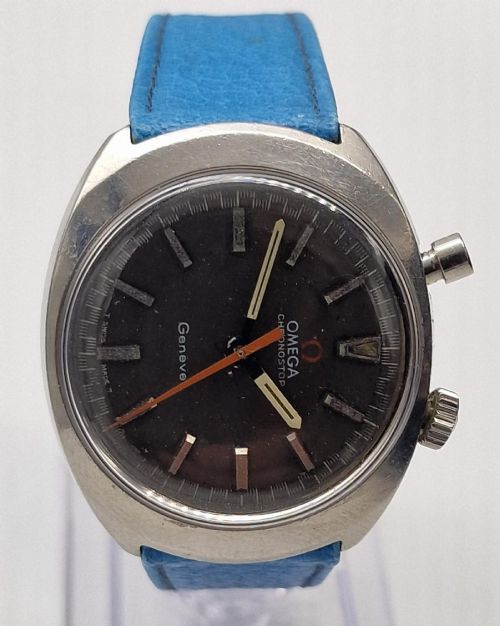
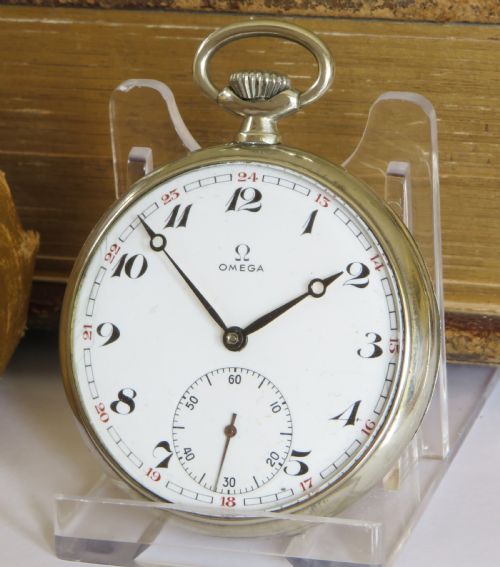
The assortment also encompasses pocket watches alongside specialist designs like the Chronostop and split-second rattrapante. These variations demonstrate the broad application of manual winding mechanisms across everyday wear and precision instruments.
Materials and construction
Cases are formed from stainless steel, gold plate, and solid 9ct or 18ct yellow gold, sometimes paired with specific housings like Dennison cases. Dials utilise enamel, sunburst finishes, or distinct layouts including explorer and military configurations, protected by acrylic, acrylic glass, or glass crystals.
The internal mechanics rely on manual wind movements, ranging from early calibres like the 30T2 to later variations including the 269, 600, and 611. These mechanical calibres require daily hand-winding via the crown to tension the mainspring and drive the gear train.
Some models feature a split-second rattrapante function, allowing two hands to time separate events simultaneously before one snaps back to catch up.
Distinctions in quality
Quality differences rest upon the grade of materials and the complexity of the movement. Solid gold cases and specialised chronograph or split-second mechanisms sit at the upper end of the scale, whereas standard gold-plated or steel dress models form the everyday tier.
The degree of original preservation also shapes the standing of a piece. Examples retaining factory dials, matching boxes, and documented restoration work command greater attention than those with altered or heavily weathered components.
The Omega Manual Wind Glossary
- Manual wind
- A mechanical watch movement powered by manually turning the crown to wind the mainspring, requiring no battery or automatic rotor.
- Calibre
- The specific manufacturer's designation for a particular watch movement design and size. It identifies the internal mechanics and layout of the calibre.
- Jumbo
- A term used by collectors to describe wristwatches with larger-than-average case diameters for their era, typically measuring 35mm or above.
- Subsidiary seconds
- A small secondary dial, usually positioned at the six o'clock mark, that tracks the seconds independently from the central hour and minute hands.
- Explorer dial
- A dial layout featuring distinctive arabic numerals at the major hour markers, historically designed for high legibility.
Omega Manual Wind: Frequently Asked Questions
How do I wind a manual wind watch?
You wind the watch by turning the crown clockwise between your thumb and forefinger until you feel a gentle resistance. Stop turning immediately when you feel this resistance to avoid over-winding and damaging the mainspring.
It is best to wind the watch at the same time each day, ideally in the morning, to maintain a consistent tension for accurate timekeeping throughout the day.
How can I tell the production decade?
You can often determine the production period by examining the movement calibre number, case style, and any serial numbers engraved inside the case back or on the movement itself. Records link specific calibre families, such as the 30T2 or the 260 series, to particular decades of manufacture.
Design cues like dial typography, case dimensions, and logo styles also provide clear indicators, as mid-century models differ visibly from 1940s utility pieces or 1970s modern designs.
Were these watches waterproof?
Most vintage dress watches offered limited resistance to moisture and dust, relying on press-fit case backs and standard crowns. They were not built for submersion or rigorous aquatic activities.
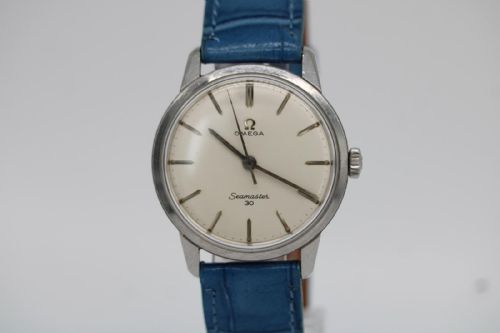
Models designated as Seamaster featured improved sealing gaskets and threaded case backs designed to withstand moisture better, though contemporary vintage pieces require updated seals to maintain any water resistance.