


Old Sheffield Plate Bucket
An old sheffield plate bucket brings a rich, historic lustre to the dining table, fusing copper and silver in a way that modern plating simply cannot replicate.
Old Sheffield Plate Bucket
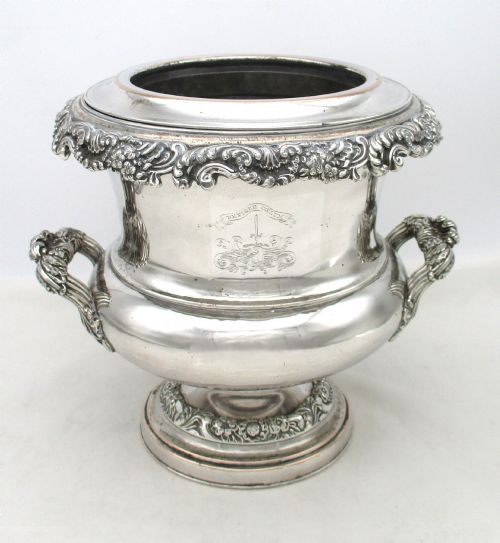
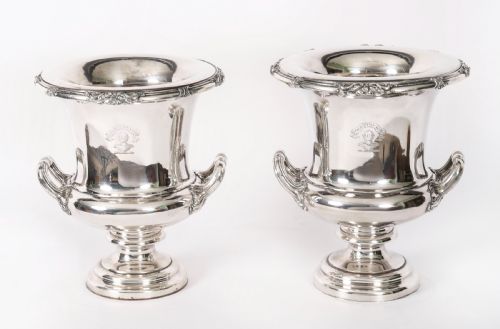
When you search for an old sheffield plate bucket, you are looking at substantial vessels designed to chill wine or hold ice during formal dining. These pieces take the form of wine coolers and ice buckets, often shaped as classical campana urns.
The examples you will most frequently encounter span the late eighteenth century through to the nineteenth century, covering the Georgian, Regency, and William IV periods. They frequently appear in matched pairs or individual serving forms, often bearing engraved coats of arms or crests.
Originating primarily from workshops in Sheffield, these vessels reflect the aesthetic standards of Georgian and Regency dining culture. A buyer exploring this category wants a centrepiece that holds authentic period character rather than a later reproduction.
Construction and materials
An old sheffield plate bucket is made by fusing a thin sheet of silver to a thicker copper core, a technique developed in the eighteenth century before electroplating existed. This fusion creates a robust metallic body where the base metal occasionally shows through wear at the high points.
Makers shaped these laminated sheets into campana and urn silhouettes, often embellishing the rims and handles with applied silver wire or cast mounts. The structural integrity relies on heavy copper forming, which gives each vessel a distinct heft and durability.
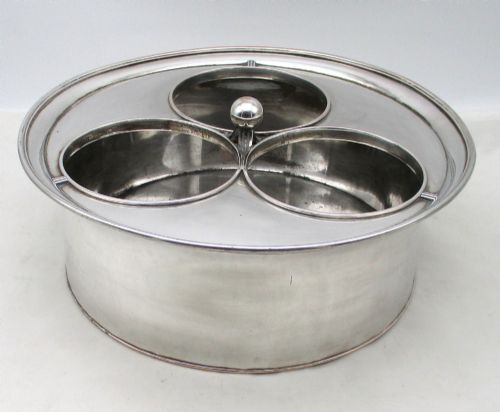
Object forms found within this selection focus primarily on wine coolers and ice buckets designed with campana profiles.
Judging quality and execution
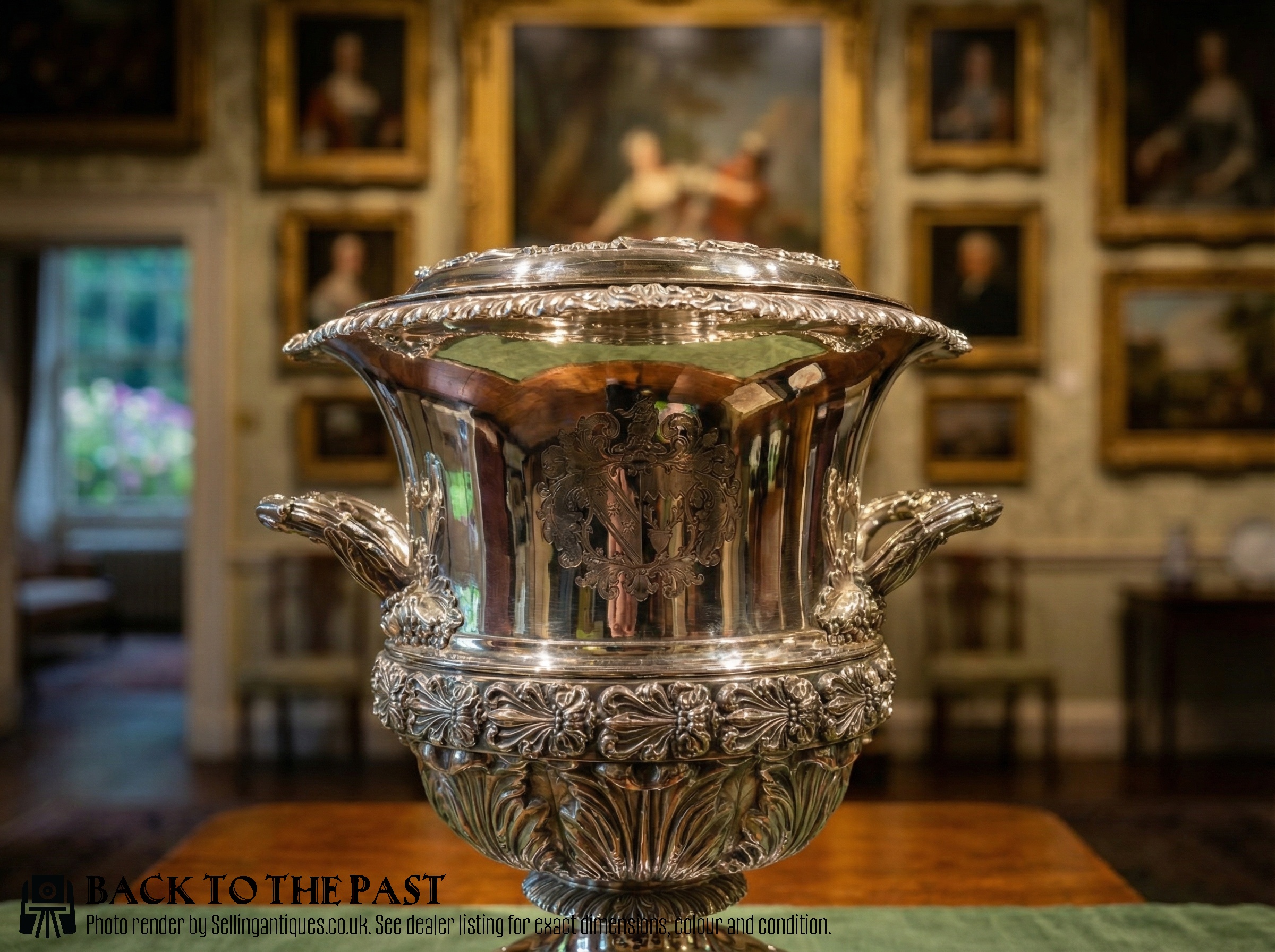
The standard of an old sheffield plate bucket rests largely on the crispness of its cast mounts and the subtlety of its hand-engraved armorial bearings. Superior examples maintain deep, legible crests and retain harmonious proportions across handles and rims.
Quality also shows in how gracefully the silver layer wears over the underlying copper core, revealing a warm tonal contrast rather than raw base metal. The weight of the vessel and the precision of the soldering on campana bodies further distinguish finer workshop output.
Matthew Boulton & Co
The Old Sheffield Plate Bucket Glossary
- Old Sheffield Plate
- A composite material formed by fusing silver to a copper ingot, created before the invention of electroplating. This technique produces a warm, rich surface quality.
- Campana
- A bell-shaped vessel profile commonly used for classical wine coolers and urns during the Georgian and Regency eras. It provides a stable, elegant silhouette for the dining table.
- Regency
- A British design period spanning the early nineteenth century, characterised by classical Greco-Roman motifs and restrained, monumental forms. Pieces from this era often feature bold handle mounts.
- Coat of Arms
- A heraldic design engraved onto the body of silver and plated items to denote family lineage. These personal marks add documentary depth to antique hollowware.
Old Sheffield Plate Bucket: Frequently Asked Questions
What is an old sheffield plate bucket?
An old sheffield plate bucket is a historical vessel created to cool wine or hold ice at the dining table, produced by fusing silver and copper together.
These pieces typically date from the Georgian and Regency eras, showcasing the distinctive weight and layered metallic character of early fusion plating.
How do I care for old sheffield plate?
Care requires gentle cleaning with a soft cloth and non-abrasive silver polish to preserve the thin exterior silver layer over the copper core.
Avoiding harsh dips ensures the historical surface and any engraved crests remain intact for generations of continued use.
How can I date an old sheffield plate bucket?
Dating relies on stylistic clues such as the campana silhouette, the form of the handles, and whether the construction methods align with Georgian or Regency design.
Engraved coats of arms and the presence of fused copper edges also help narrow down the period of manufacture.
Why do I see copper showing through?
The copper core naturally reveals itself beneath the silver layer over decades of polishing and gentle handling.
This telegraphing of the base metal is a hallmark of authentic old sheffield plate rather than a modern electroplated finish.