
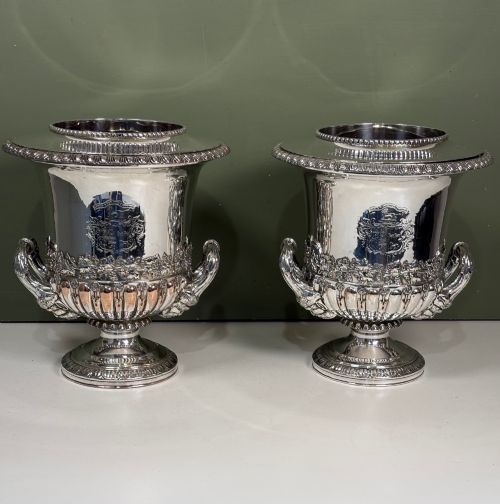


Engraved Silver Champagne Urn
An engraved silver champagne urn brings weight and ceremony to the table, and these pieces offer substantial metalwork for cooling wine in grand style.
Engraved Silver Champagne Urn
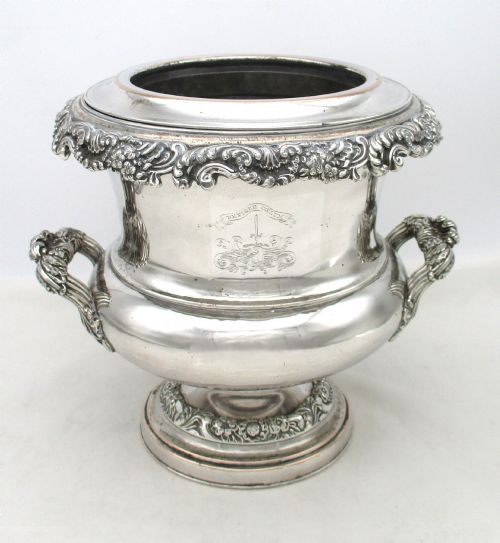
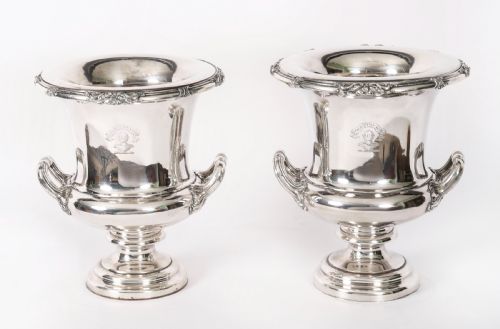
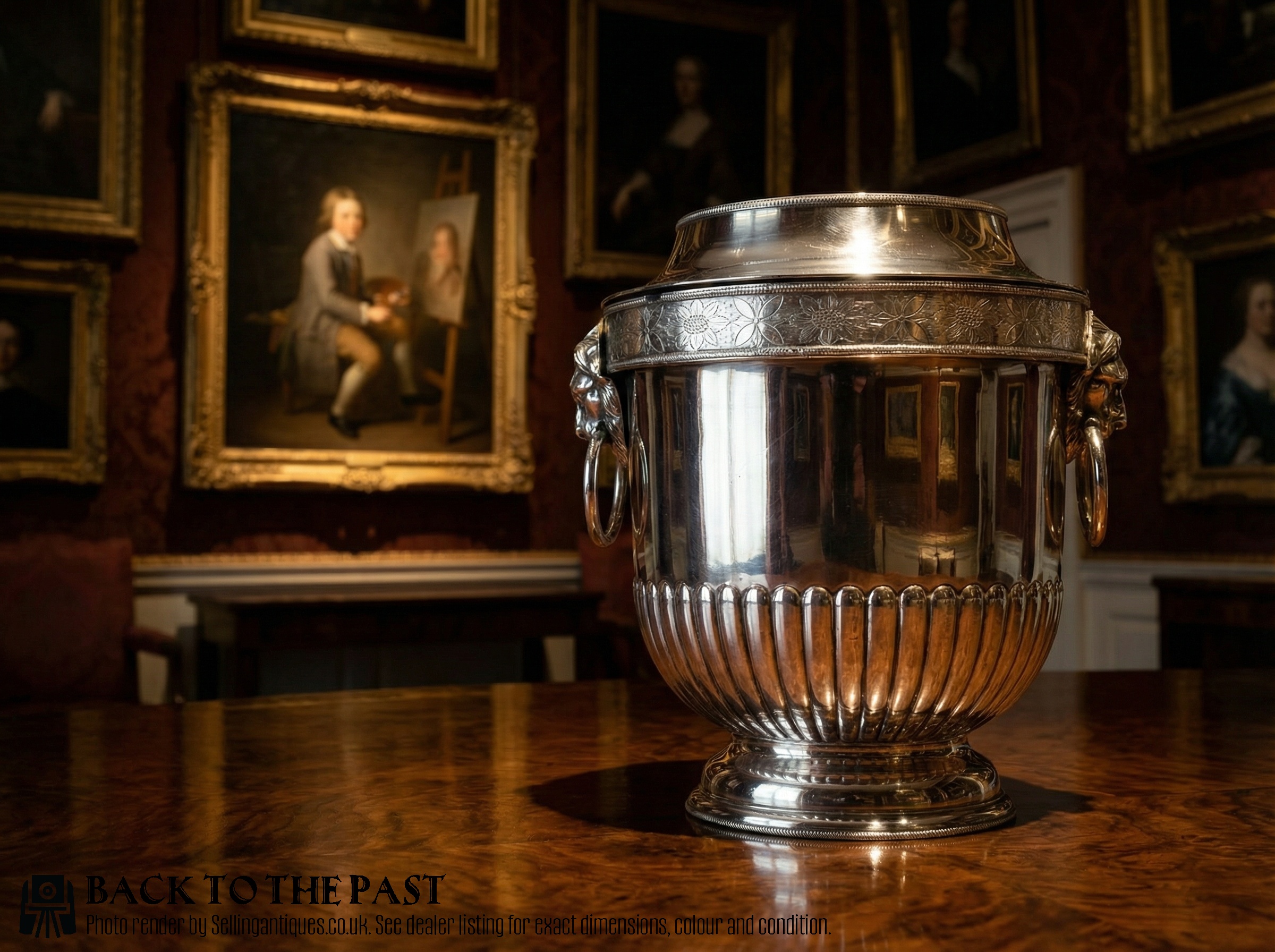
When you search for an engraved silver champagne urn, you encounter substantial vessels designed to chill bottles in ice for formal dining. The items on this page span the eighteenth, nineteenth, and early twentieth centuries, reflecting changing tastes in hospitality from the Georgian period through the Victorian era and into the 1930s. The forms appear under various historical designations, including wine coolers, ice buckets, and twin-handled vessels.
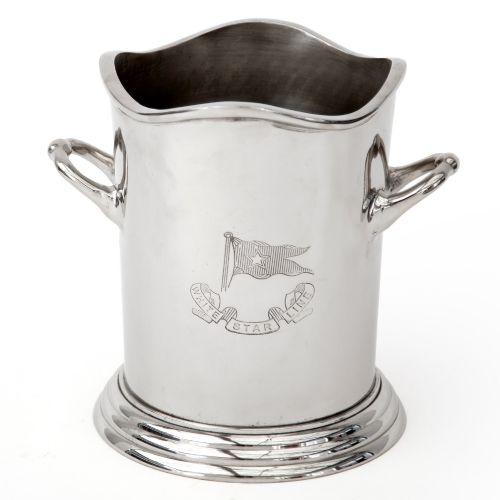
The material composition varies across the selection, featuring solid silver alongside Old Sheffield Plate, standard silver plate, electroplated nickel silver, and copper. Certain examples carry armorial crests, monograms, or specific maritime and military inscriptions, such as White Star Line or regimental associations. These markings connect individual pieces to specific historic contexts and prestigious commissions.
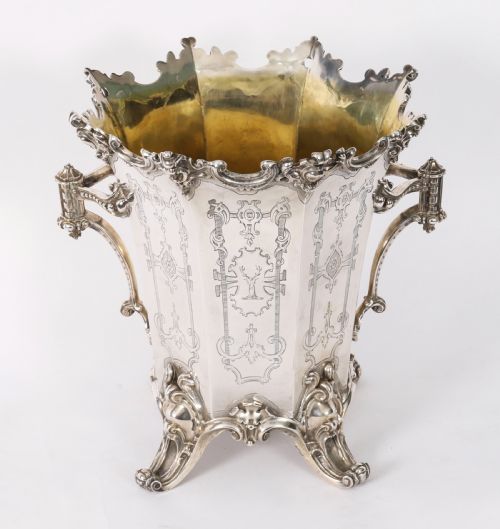
Stylistic shifts trace a clear path from restrained neoclassical Regency lines through to exuberant Victorian rococo revival forms. Makers utilise traditional vessel shapes featuring handles, pedestal bases, and chased or engraved decorative borders. Each specimen demonstrates the physical heft and functional capacity required for heavy domestic or institutional service.
How they were made
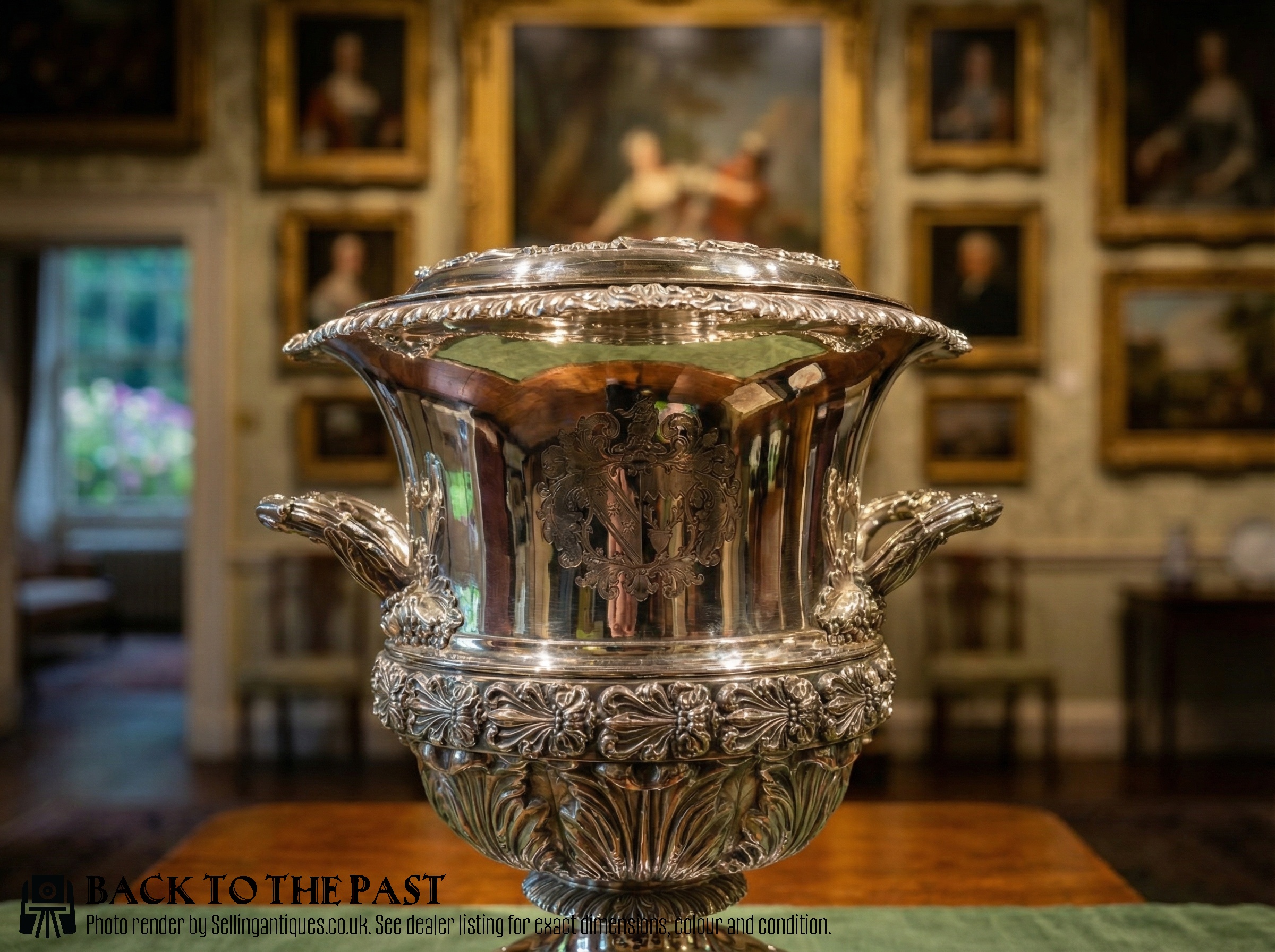
Makers produced these vessels using combinations of silver, copper, and specialised plating techniques suited to the period. Early pieces often employ Old Sheffield Plate, fusing a thin sheet of sterling silver to a thicker copper core by heat and pressure. Later nineteenth-century examples frequently utilise electroplating over a nickel silver or base metal foundation, streamlining production while maintaining a bright metallic surface.
Workers shaped the bodies through hammering, spinning, or casting, then applied decorative elements by hand or with mechanical assistance. Engraving and chasing required steady skill to cut crests, foliage, or inscriptions into the metal without compromising the underlying plate. Handles and feet were typically cast separately and soldered or riveted securely to the main body.
One cooler on the page once chilled wine aboard White Star Line vessels, proving that passengers in the early twentieth century took their vintage quite seriously.
What varies in quality
Quality rests primarily in the crispness of the chasing, the weight of the underlying metal, and the preservation of the original surface plating. Pieces displaying deep, hand-cut armorial engraving and well-defined cast handles demonstrate superior workmanship compared to lighter, mechanically stamped alternatives. The harmonious proportion of the vessel body to its decorative mounts also distinguishes finer studio output from standard commercial production.
The condition of the metal surface influences desirability, particularly where copper telegraphing shows through worn silver plating. Surviving maker marks, clear hallmarks, and documented provenance from notable firms or historic liners add discernible authority to a piece. Original liners and internal drip pans, when present, indicate a complete and well-preserved survival.
Elkington, Mason & Co·Elkington·Matthew Boulton & Co
The Engraved Silver Champagne Urn Glossary
- Old Sheffield Plate
- An early composite material formed by fusing silver to a copper ingot before rolling them into sheets. This technique predates modern electroplating and leaves a characteristic visible copper edge on seams.
- Electroplated Nickel Silver
- A base alloy of copper, nickel, and zinc coated with a thin layer of pure silver using an electrical current. This process became the dominant method of silver production during the Victorian period.
- Chasing
- A metalworking technique where a craftsman pushes and depresses the surface with hammers and punches to create raised decorative designs. It differs from engraving because no metal is removed during the process.
- Regency
- A British design period spanning the early nineteenth century defined by neoclassical restraint, clean architectural lines, and classical motifs. Pieces from this era often draw direct inspiration from ancient Greek and Roman forms.
- Rococo Revival
- A mid-nineteenth-century decorative style marked by asymmetric scrollwork, naturalistic floral motifs, and dramatic sculptural relief. This aesthetic dominated Victorian dining silver and heavy hollowware.
Engraved Silver Champagne Urn: Frequently Asked Questions
How do I clean an old silver plated champagne urn?
Use a soft cloth and a specialised silver cream designed for plated items, applying gentle pressure to avoid wearing through the thin silver layer to the base metal beneath. Rinse thoroughly with warm water and dry immediately with a lint-free cloth to maintain the shine.
Avoid abrasive dips or harsh chemical cleaners, particularly on pieces with engraved crests or worn Old Sheffield Plate where the underlying copper might become exposed. Regular, gentle dusting preserves the historic patina far better than aggressive chemical polishing.
What is the difference between Old Sheffield Plate and silver plate?
Old Sheffield Plate involves physically fusing a sheet of solid silver to a copper block through heat and rolling, creating a durable composite material with a characteristic weight. Items produced this way often reveal thin lines of copper along exposed edges.
Standard silver plate utilises an electrochemical bath to deposit a thin layer of silver over a base metal alloy, a method introduced during the nineteenth century. This later technique allowed manufacturers to produce uniform surfaces more rapidly.
How can I tell a Regency wine cooler from a Victorian one?
Regency coolers generally feature clean neoclassical lines, symmetrical handles, and restrained classical motifs inspired by ancient antiquity. They rely on proportion and subtle fluting rather than heavy ornamentation.
Victorian pieces often display the exuberant curves of the rococo revival, featuring heavy scrollwork, deep chased foliage, and prominent cast mounts. The overall silhouette tends to be rounder and more heavily embellished than earlier Georgian or Regency examples.