
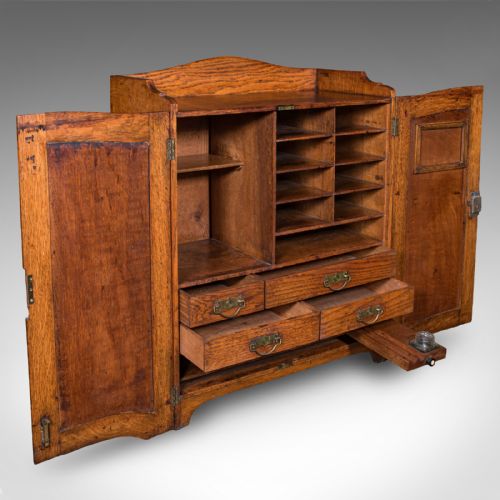


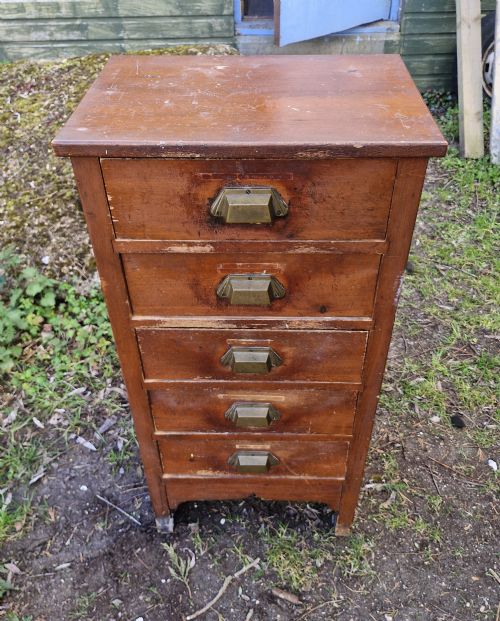


Office Stationery Cabinet
An office stationery cabinet organises your desk with period craftsmanship, bringing timber storage to daily papers.
Office Stationery Cabinet
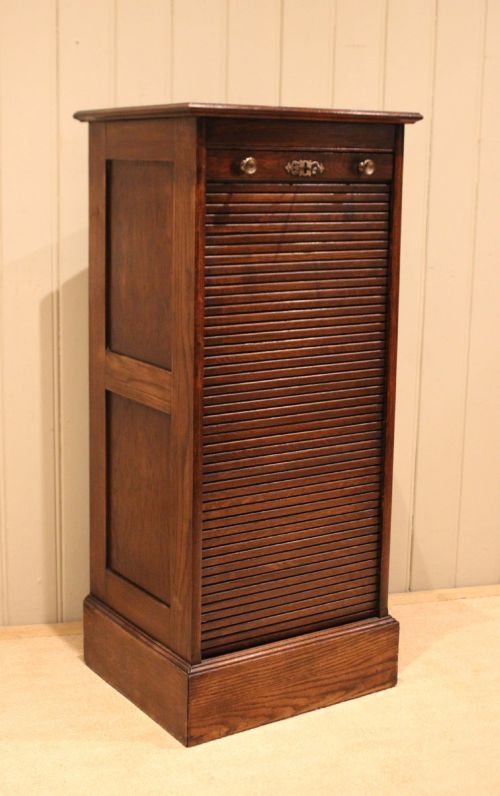
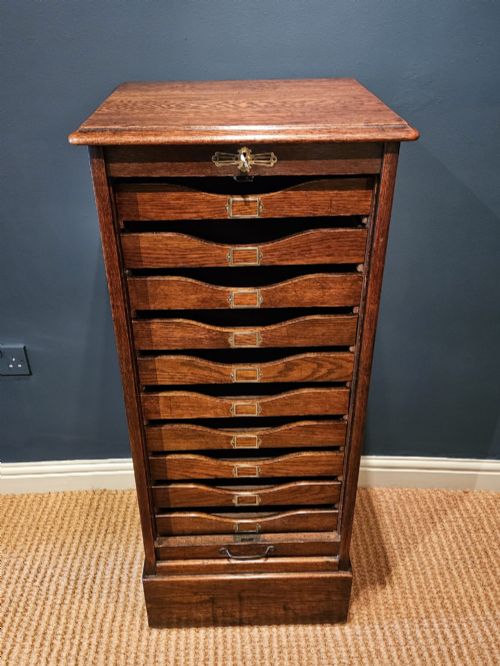
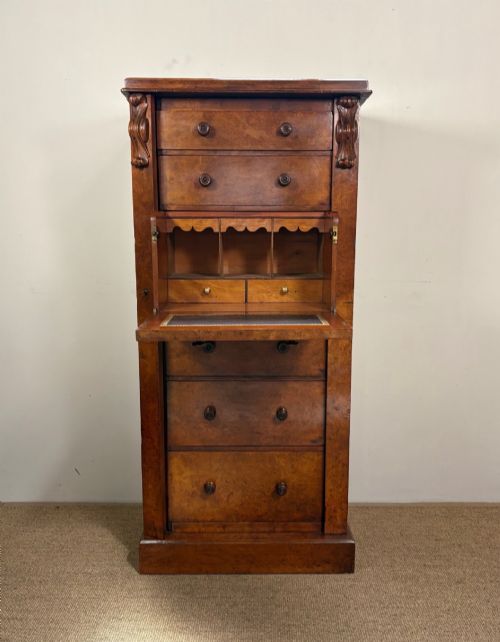
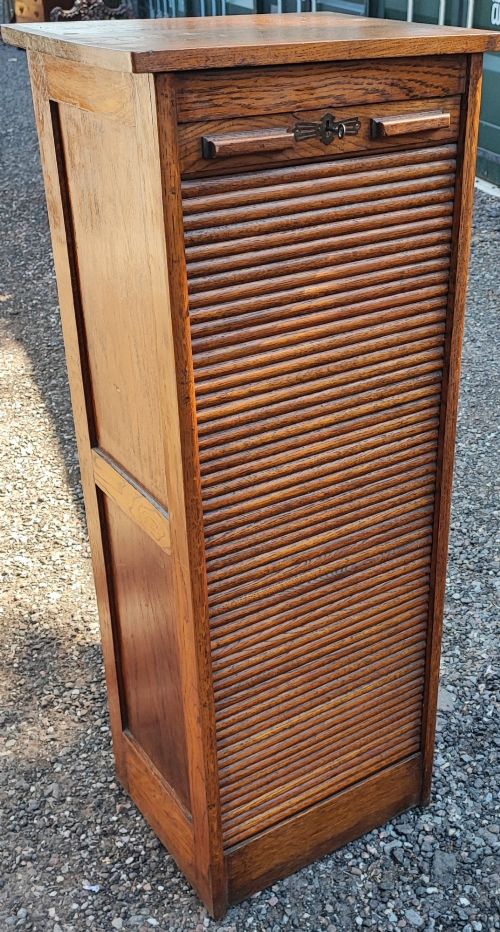
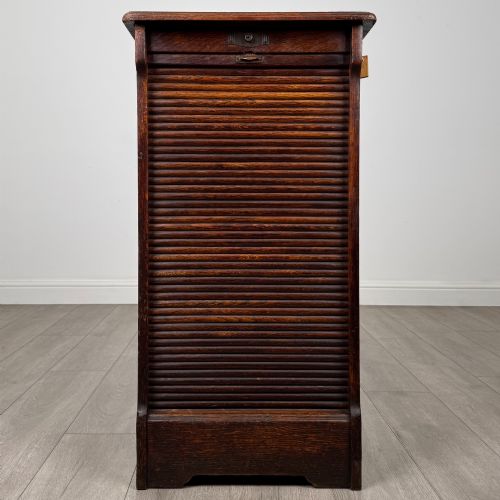
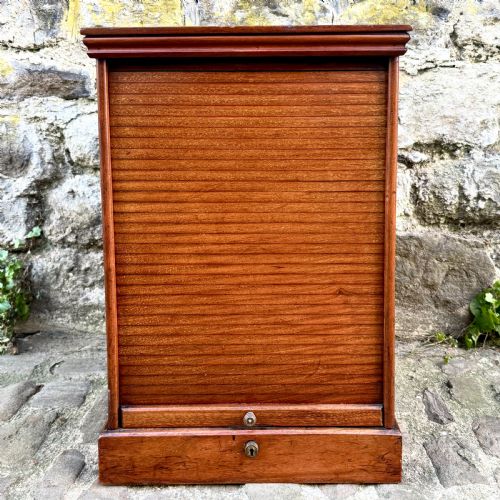
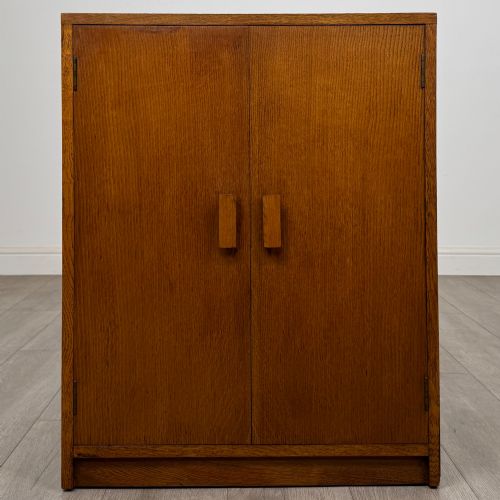
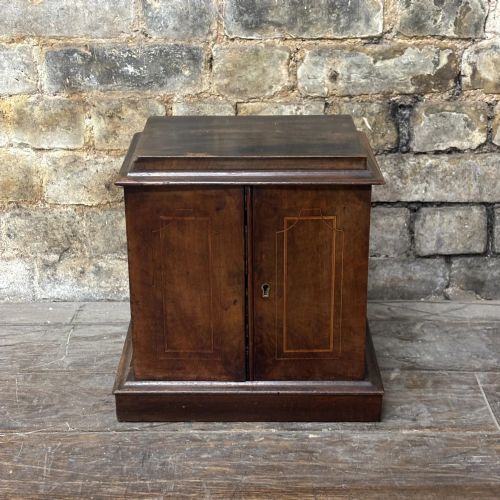
An office stationery cabinet is a practical piece of workspace furniture designed to hold papers, files, and writing materials. When you search for an office stationery cabinet, you encounter various forms including tambour front filing cabinets, Davenport desks, and fitted cupboards.
The pieces listed here span the Victorian, Edwardian, and Regency periods, stretching from the mid nineteenth century into the twentieth century. Oak and mahogany dominate the selection, accompanied by walnut, burr walnut, rosewood, pine, and brass hardware.
You are most likely to meet Edwardian oak tambour front filing cabinets or Victorian Davenport desks on this page. These examples show how offices and writing rooms housed documents before modern steel furniture took over.
How they were made
Cabinet makers utilised solid timbers such as oak, mahogany, and walnut, often applying burr walnut veneers to decorative surfaces. Construction methods included dovetailed drawer boxes and slatted tambour fronts that rolled smoothly on canvas backings.
Metal components played a structural and decorative role, with brass handles, hinges, and fitted locks securing the contents. Leather inserts also appeared on writing surfaces and pull out desks, stitched to match the tone of the wood.
Materials documented across the inventory include oak, mahogany, walnut, burr walnut, rosewood, pine, brass, leather, and canvas.
What varies in quality
The standard of timber selection and complexity of internal fittings determine the calibre of each piece. Simple pine storage differs significantly from burr walnut inlaid freestanding Davenports or fitted mahogany campaign desks.
The smoothness of mechanical actions, such as tambour shutters and pop up compartments, separates standard utility items from finer workshop production. Original brass hardware and fitted leather surfaces further elevate the integrity of the cabinet.
The Office Stationery Cabinet Glossary
- Tambour
- A flexible shutter made of narrow strips of wood glued to canvas, allowing a cabinet door to slide around a curved track. This mechanism conceals filing compartments efficiently in tight spaces.
- Davenport
- A compact desk featuring a sloping writing surface above a pedestal of drawers. It typically incorporates a stationery compartment on top and side drawers accessed from a seated position.
- Cartonnier
- A freestanding cabinet fitted with multiple horizontal compartments or pigeon holes designed for sorting papers. French examples often combine mahogany framing with leather details.
- Wellington chest
- A tall, narrow chest of drawers secured by a locking side stile that fastens over the drawer edges. This design originated in the nineteenth century to protect sensitive documents.
- Campaign desk
- Portable furniture built for travel, featuring recessed brass handles and sturdy timber construction. These pieces disassembled or folded for transport during military campaigns.
Office Stationery Cabinet: Frequently Asked Questions
What is a tambour front cabinet?
A tambour front cabinet uses a slatted wooden door that slides along a track to conceal internal shelves or filing slots. This design saves space because the door rolls away rather than swinging outward into the room.
Such cabinets appeared frequently in early twentieth century offices to manage growing quantities of paperwork and correspondence.
How do I use a Davenport desk?
A Davenport desk provides a slanted writing surface lined with leather above a pedestal of side drawers. The upper section often lifts or slides forward to reveal small pigeon holes and inkwell spaces.
These desks suit contemporary living spaces as compact writing stations that double as small drawer chests.
What woods were used for office cabinets?
Cabinet makers relied primarily on oak and mahogany for durability in working environments. Walnut, burr walnut, and rosewood appeared on more decorative pieces intended for private libraries or domestic studies.
Pine served for utilitarian carcases or secondary drawer linings, while brass provided structural hardware.