


Brown Oak File Storage
Brown oak file storage delivers practical workspace organisation through sturdy timber cabinets designed to house documents and papers.
Brown Oak File Storage
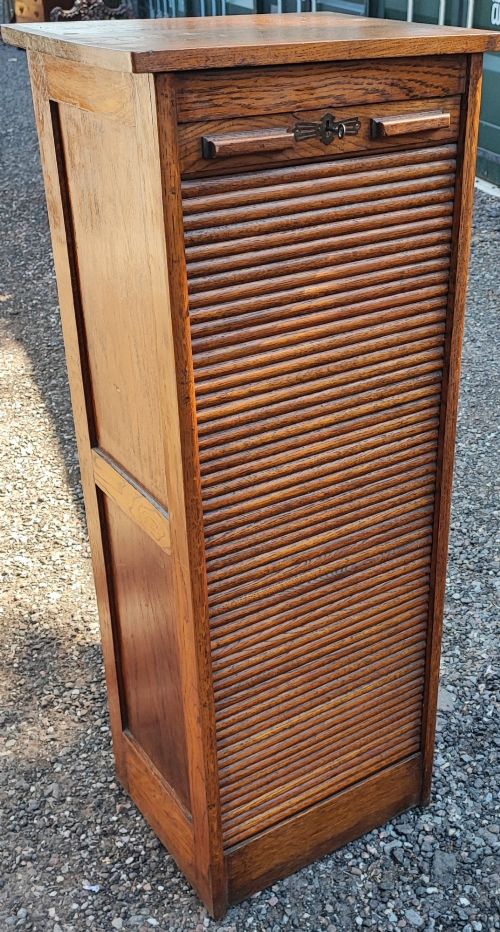
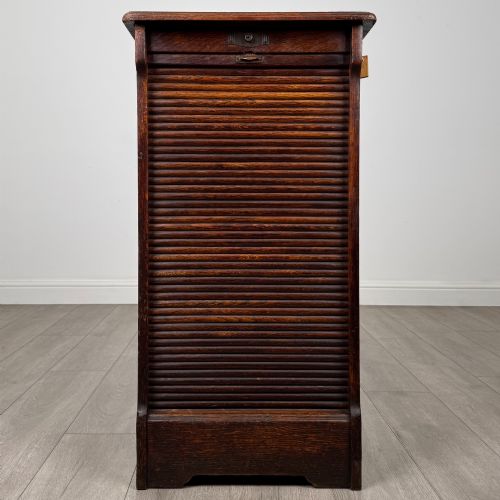
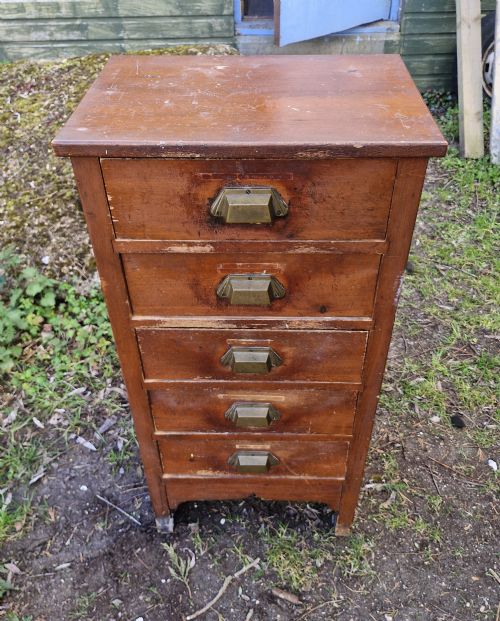
When you search for brown oak file storage, you encounter functional office furniture originating from the nineteenth century through to the nineteen thirties. These pieces encompass filing cabinets, music cabinets, banks of drawers and desktop drawers designed for sorting papers.
The version you are most likely to meet on this page is the Edwardian or nineteen twenties tambour front office filing cabinet, constructed from solid timber with slatted rolling shutters. Other common forms include multi-drawer office furniture and specialised letter files featuring patent locking systems.
Originating from periods such as the Edwardian era, nineteen tens, nineteen twenties, and nineteen thirties, these items reflect commercial and domestic workspace history. Styles range from Late Victorian and Edwardian to Art Deco and industrial utility.
How they were made
These items are constructed primarily from oak timber, selected for its durability and prominent grain pattern. Metal and pine appear as secondary materials within internal framing and drawer construction.
Hardware elements such as handles utilise brass, adding functional detail to the drawer fronts and doors. Canvas components also appear within the material record for specialised storage mechanisms.
Early patent file cabinets occasionally retain forgotten archival scraps wedged behind drawers, offering a tiny glimpse into Edwardian correspondence habits.
What varies in quality
The distinction between standard utility items and finer examples rests upon the execution of mechanism and timber selection. Tambour doors that glide smoothly within their tracks demonstrate superior original craftsmanship compared to stiff or sticking slats.
Hardware integration also separates pieces, where original period brass handles and patent filing mechanisms indicate higher grade manufacture. The choice of quarter-sawn oak with prominent medullary rays elevates the visual presence of the timber.
The Brown Oak File Storage Glossary
- Tambour
- A flexible shutter door formed of narrow wooden slats glued to canvas backing. This mechanism allows the door to slide around a curved track to conceal the interior shelves or drawers.
- Bank of drawers
- A multi-drawer cabinetry unit designed for systematic document sorting. These configurations range from compact desktop variants to tall office storage blocks.
- Quarter-sawn oak
- Timber cut radially across the growth rings rather than tangentially. This method produces durable boards marked by distinctive silvery flecks known as medullary rays.
- Patent letter file
- A specialised filing mechanism incorporating spring-loaded clips or index systems protected by a commercial patent. These internal fittings allowed rapid sorting of correspondence.
Brown Oak File Storage: Frequently Asked Questions
What is a tambour front filing cabinet?
A tambour front cabinet utilises a flexible rolling shutter door made of wooden slats that slides along side grooves to open and close.
This clever mechanism conceals the interior filing space without requiring clearance for swinging doors in tight office environments.
How do I date an oak filing cabinet?
Dating relies on examining the construction methods, hardware styles, and patent markings stamped onto internal metal components.
Pieces range from late nineteenth century Victorian designs to nineteen thirties industrial utility models, each showing distinct manufacturing details.
Were these cabinets meant for offices or homes?
These storage pieces served both commercial offices and domestic studies for organising sheet music, letters, and business documents.
Compact desktop drawers and music filing cabinets suited domestic spaces, while tall multi-drawer units equipped professional workplaces.
How do I care for antique oak storage?
Maintain the timber by keeping the cabinet away from direct heat sources and sudden humidity changes that affect sliding mechanisms.
Apply occasional traditional wax polish to nourish the oak grain and protect the surface from daily wear.