
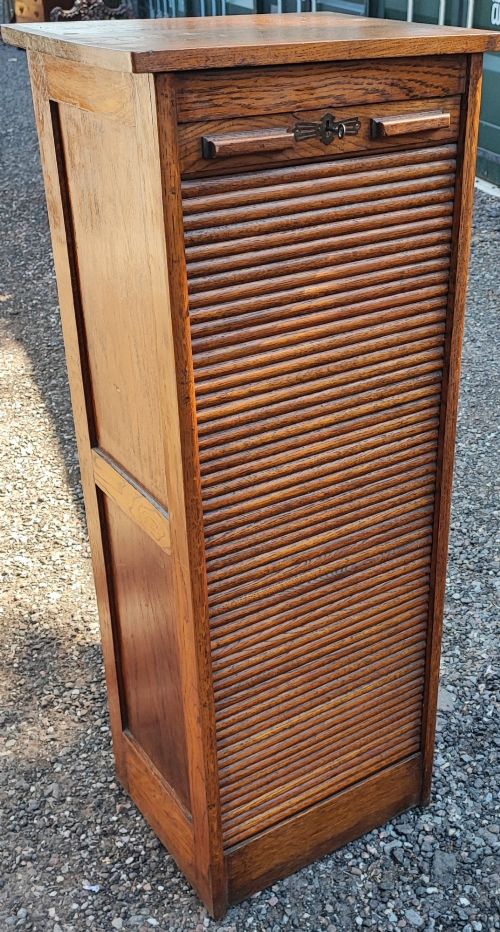
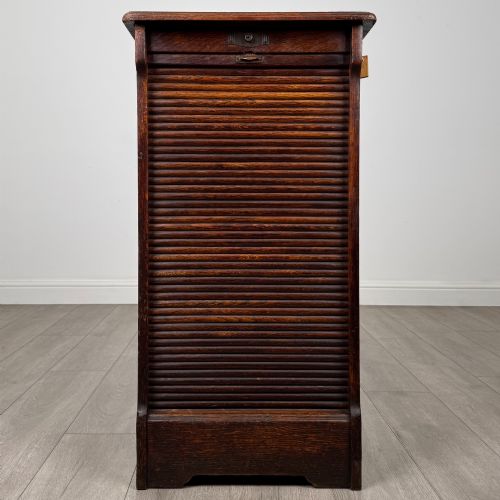
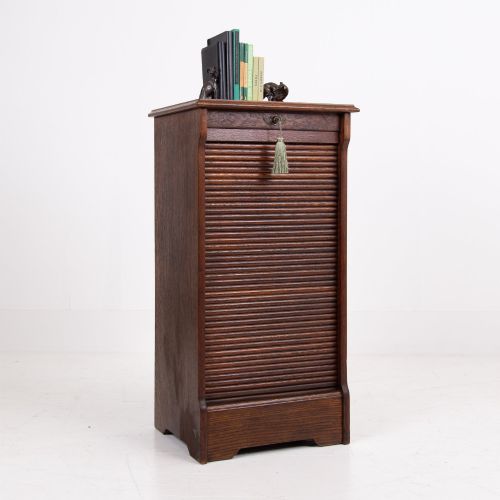
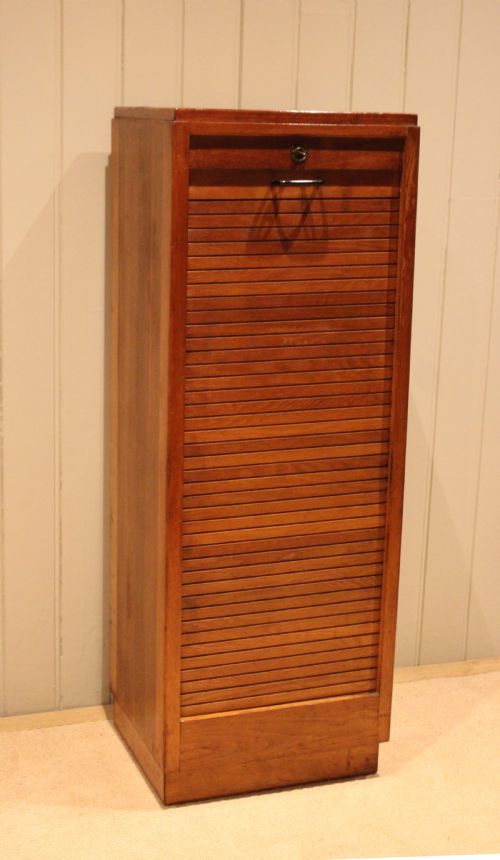
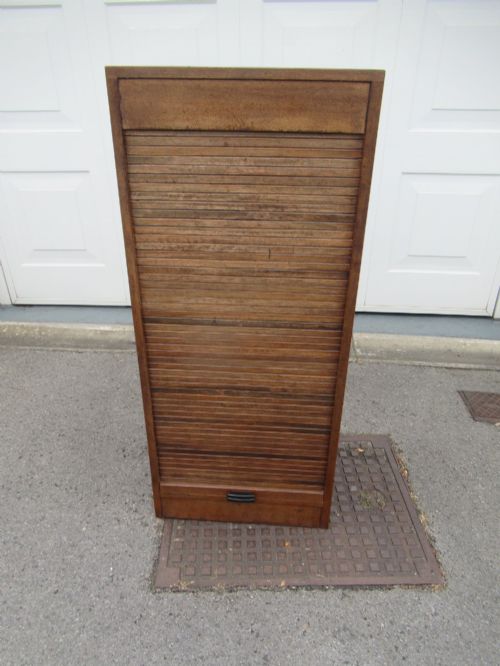


Edwardian Tambour Office Storage
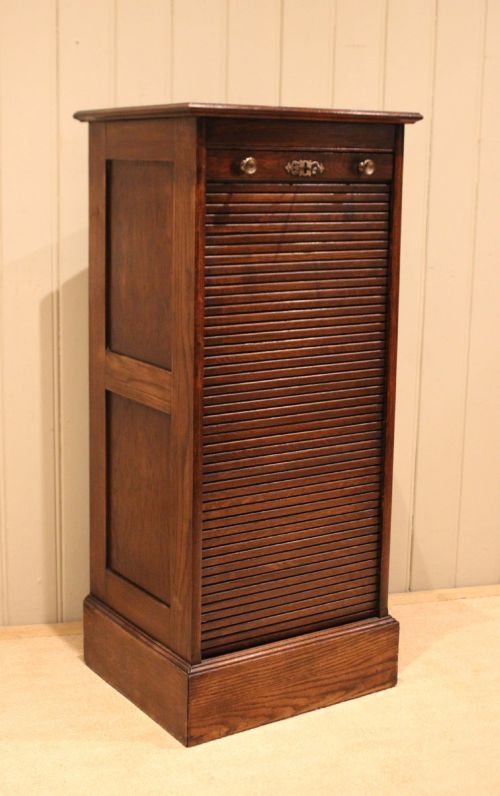
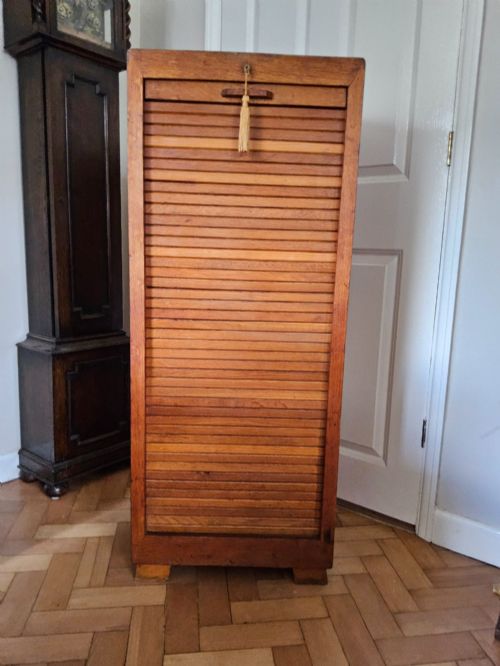
Edwardian tambour office storage pieces are clever filing cabinets with slatted wooden doors that slide away smoothly to keep documents tidy.
Edwardian Tambour Office Storage
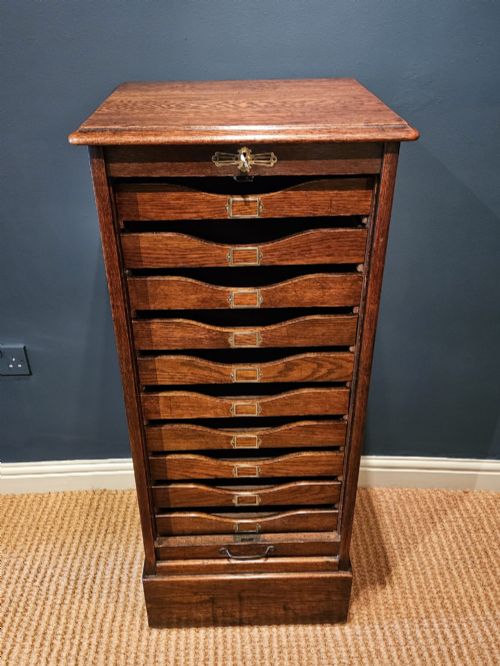
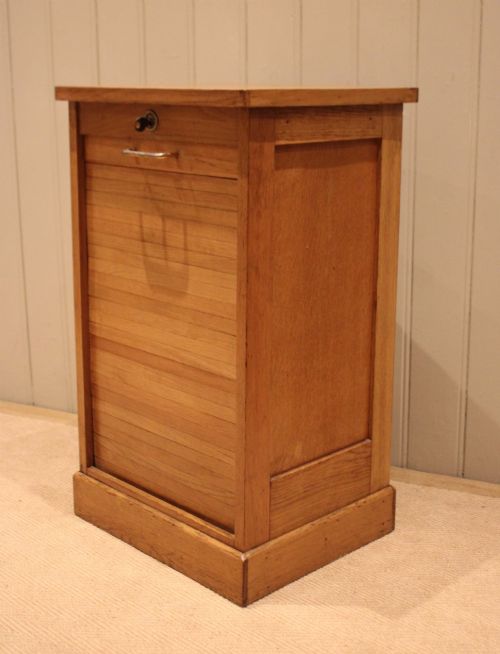
When you search for edwardian tambour office storage, you are looking at practical filing cabinets designed for workspace organisation. These items range from single tambour front filing cabinets to double tambour front office filing cabinets.
The version you are most likely to meet on this page is an oak tambour filing cabinet dating from the Edwardian period or early twentieth century. Cabinets appear in various dimensions, including small proportioned light oak filing cabinet examples as well as darker finishes.
The objects function primarily as office storage, utilising flexible wooden slats running in tracks to conceal interior compartments. Alongside oak, forms emerge in mahogany and pine, reflecting the commercial requirements of the early twentieth century.
How they were made
Makers constructed these cabinets predominantly from solid oak and mahogany, with occasional use of pine and internal canvas or metal components. Brass hardware frequently appears on handles and label holders, completing the commercial aesthetic.
The defining mechanical feature is the tambour door, formed from narrow wooden strips glued to a flexible canvas backing that guides the curtain around a curved track. This technique allowed doors to slide neatly into the body of the cabinet without swinging outward into restricted office space.
Materials recorded across the inventory include oak, mahogany, pine, brass, steel and canvas.
What varies in quality
Quality in these office storage pieces rests largely on the precision of the tambour mechanism and the grade of timber selected. Fine examples exhibit smooth, effortless travel of the slatted door along its track without binding or sagging.
The choice of primary wood also distinguishes the build, with dense dark oak or finely figured mahogany representing a higher standard than utility pine versions. Superior construction shows in tight joints, intact internal dividers and original brass fittings.
The Edwardian Tambour Office Storage Glossary
- Tambour
- A flexible door made of narrow wood strips attached to canvas backing. This design allows the door to slide around a curved track into the cabinet recess.
- Filing cabinet
- An office furniture form designed for organising documents vertically or horizontally. Interior compartments typically hold folders or papers.
- Edwardian
- A stylistic period spanning the reign of King Edward VII and extending into the early twentieth century. Furniture from this era often combines functional utility with traditional cabinetmaking.
- Brass
- A copper and zinc alloy utilised for handles, key escutcheons and label holders. It provides durable metalwork with a warm metallic tone.
Edwardian Tambour Office Storage: Frequently Asked Questions
What is a tambour office cabinet?
A tambour office cabinet is a piece of workspace furniture featuring a slatted sliding door that retracts into the sides of the casing. This design saves floor space by eliminating traditional swinging doors.
Such cabinets were widely used in early twentieth-century offices for sorting and storing correspondence, ledgers and files.
How do tambour doors work?
Tambour doors consist of individual vertical wooden slats glued to a flexible canvas or fabric backing. This assembly runs within recessed grooves cut into the frame of the cabinet.
When pushed, the curtain of slats follows the curved track around the side of the interior, keeping the mechanism concealed and operational.
What woods were used for these cabinets?
Makers most frequently used oak for these office cabinets, appearing in both dark and light finishes. Mahogany and pine also occur across surviving examples.
Internal components sometimes incorporate metal or canvas alongside the primary timber structure.
How do I date an office cabinet?
Dating relies on stylistic markers, construction methods and materials typical of the Edwardian era and early twentieth century. Hardware such as brass label holders and pulls also offers clues to the period.
Most pieces in this category originate from between nineteen hundred and nineteen forty.