




Octagonal Walnut Coffee Table
These octagonal walnut coffee table designs bring geometric form and rich timber grain to a room, spanning periods from Victorian to Art Deco.
Octagonal Walnut Coffee Table
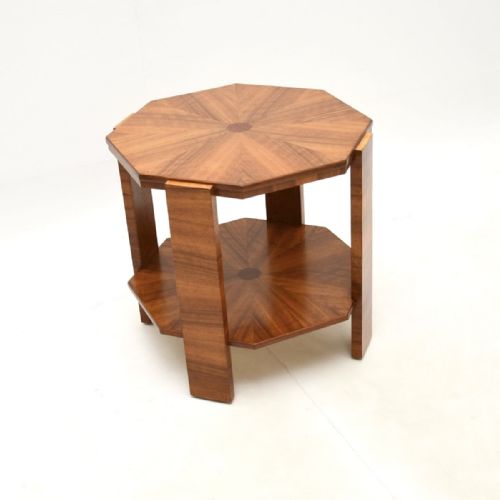
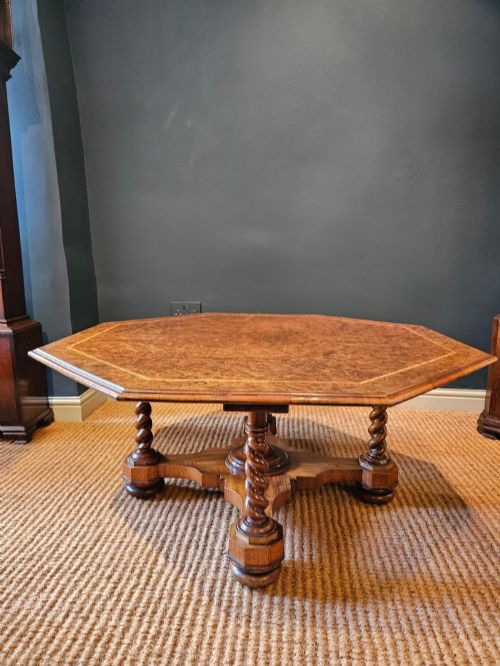
An octagonal walnut coffee table provides a distinctive multi-sided surface that breaks away from conventional rectangular or circular layouts. These pieces range from Victorian examples to Art Deco creations, featuring prominently in walnut and burr walnut.
The selection on this page frequently draws upon styles such as Art Deco, Victorian, Moorish Revival, Sorrento Ware, and Anglo-Indian. Buyers will encounter forms spanning occasional tables, side tables, and dedicated coffee tables.
Originating across different decades from the nineteenth century through to the 1930s, these tables showcase varied regional craftsmanship. The eight-sided geometry remains a unifying element across diverse cultural design traditions.
Materials and Construction
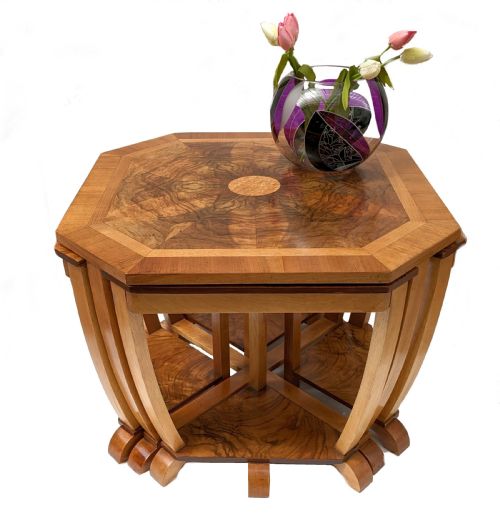
Makers utilised solid walnut and walnut veneer, often selecting burr walnut for its complex, swirling grain patterns. Surfaces frequently incorporate decorative inlay work utilising mother-of-pearl, bone, boxwood, and satinwood.
Regional workshops employed distinct techniques, from European marquetry and Sorrento inlay to intricate Moorish and Anglo-Indian carving. Veneering required considerable skill to curve walnut and burr walnut smoothly across eight-sided frames.
Listings feature walnut, burr walnut, mother-of-pearl, bone, boxwood, and satinwood across Victorian, Art Deco, and Moorish Revival styles.
Assessing Quality and Craftsmanship
Superior examples demonstrate meticulous alignment of the wood grain across the eight panels of the top. The choice of timber heavily influences the character, with highly figured burr walnut commanding particular attention.
The precision of inlaid elements, such as boxwood, satinwood, bone, or mother-of-pearl, distinguishes finer decorative pieces. Structural integrity in the joints and the stability of the pedestal or leg assembly determine long-term durability.
The Octagonal Walnut Coffee Table Glossary
- Burr Walnut
- A specialised wood cut from a tree growth or burl, yielding intricate and highly prized swirling grain patterns. It is frequently utilised for the primary surfaces of high-end tables.
- Sorrento Ware
- Wooden marquetry and inlaid work originating from the Italian town of Sorrento. Pieces often feature intricate geometric or floral designs constructed from various contrasting woods.
- Moorish Revival
- An architectural and decorative style popular in the nineteenth and early twentieth centuries. It incorporates complex geometric wood carving, often enhanced with bone or mother-of-pearl inlay.
- Veneer
- A thin layer of superior walnut applied over a secondary timber base. This technique allows makers to display striking grain figures without relying entirely on solid scarce woods.
- Occasional Table
- A versatile, light table designed for intermittent use in a principal room. Many pieces catalogued under this term function readily as coffee tables in modern settings.
Octagonal Walnut Coffee Table: Frequently Asked Questions
How do I clean a walnut surface?
Dust the table regularly with a soft, dry cloth to prevent accumulation of particles in the grain. Avoid chemical sprays and abrasive polishes that can damage the polish or veneer.
Apply a microcrystalline wax periodically to nourish the walnut timber and maintain its natural lustre. Keep the table away from direct sunlight and heat sources to prevent the wood from drying out or warping.
Are these tables sturdy enough for daily use?
Most octagonal tables were built to withstand regular domestic demands as occasional or side furniture. The eight-sided design distributes weight evenly across the central pedestal or leg structure.
Care should be taken with heavy items and moisture, using coasters to protect the delicate walnut veneer and inlaid surfaces. Regular checking of the joints ensures the table remains stable over years of use.
How do I date a walnut table?
Examine the construction methods, secondary timbers underneath, and styling cues to estimate the period. Victorian pieces often display heavier proportions and elaborate carving, whereas 1930s examples lean towards clean Art Deco geometry.
Compare the finishing techniques and types of inlay, such as mother-of-pearl or boxwood, against known period standards. Archival records and historical design catalogues also help narrow down the decade of production.
Will an octagonal table fit a small room?
The eight-sided shape often softens the visual footprint of a table compared to sharp-cornered rectangular alternatives. This geometry can ease movement around the piece in compact living spaces.
Measure the intended floor area carefully to ensure adequate clearance around the multi-sided edges. Smaller occasional heights work particularly well when paired with standard seating configurations.