




Walnut Living Room Table
These walnut living room table pieces bring rich timber grain and period character straight to your seating area.
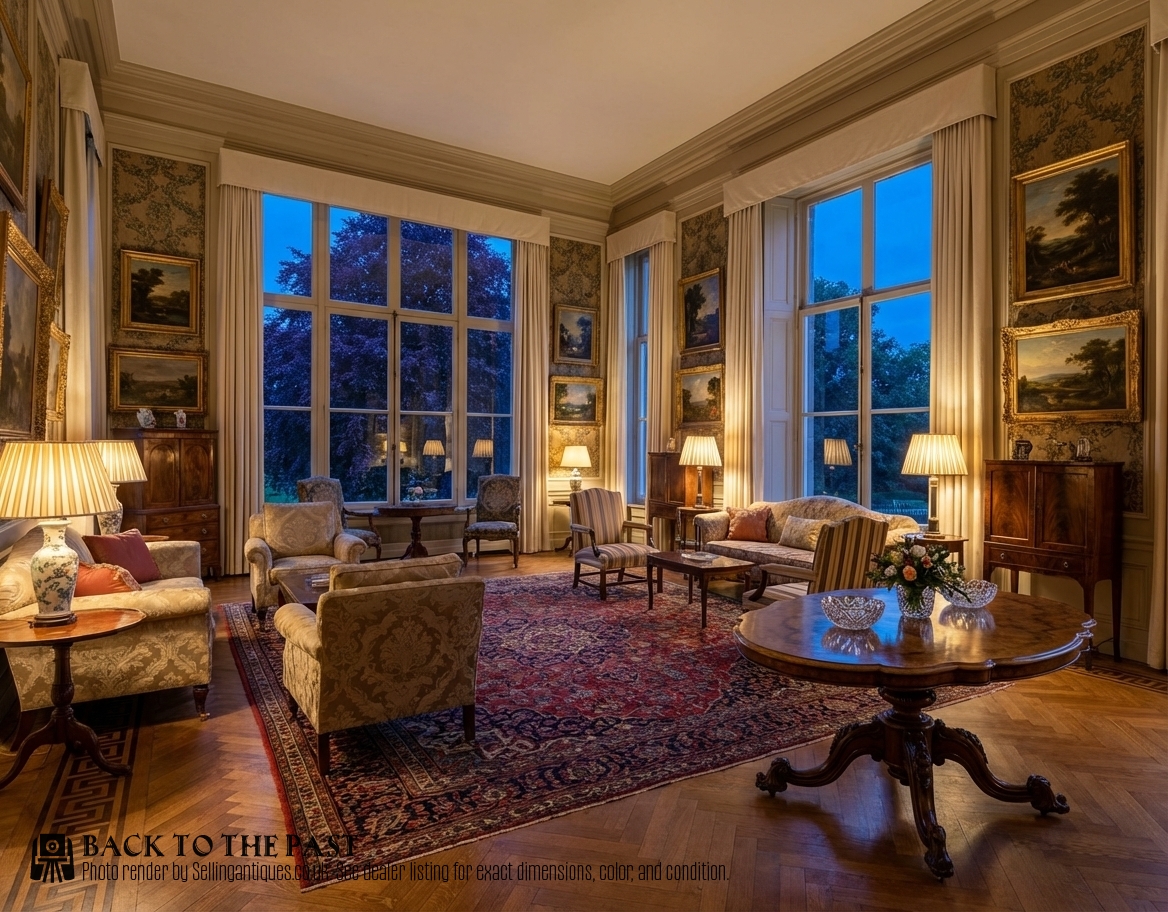
What these walnut living room table pieces are
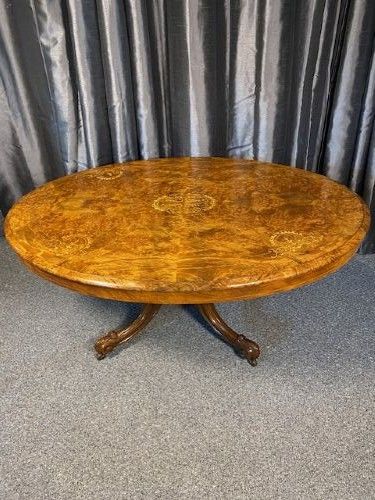
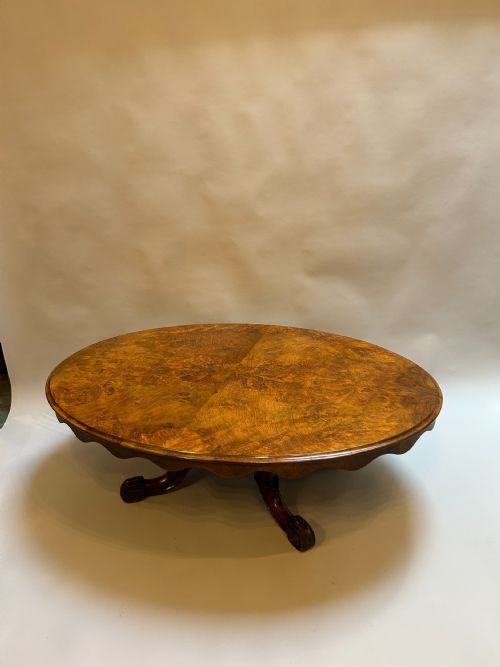
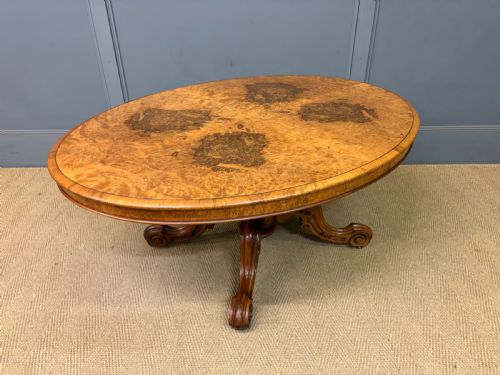
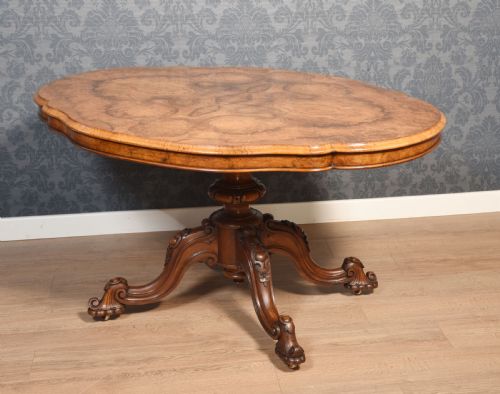
A walnut living room table bridges practical surface space and period furnishing, appearing in forms designed for everyday gathering. The selection spans distinct eras, offering coffee tables and larger centre tables for the home.
The nineteenth century examples provide traditional centre tables, whilst twentieth century pieces lean towards coffee tables. Revival and art deco movements shape the later designs alongside traditional English aesthetics.
Burr walnut and figured veneer finishes dominate the surfaces, occasionally paired with glass and brass details. Buyers encounter everything from pedestal coffee tables to low occasional designs.
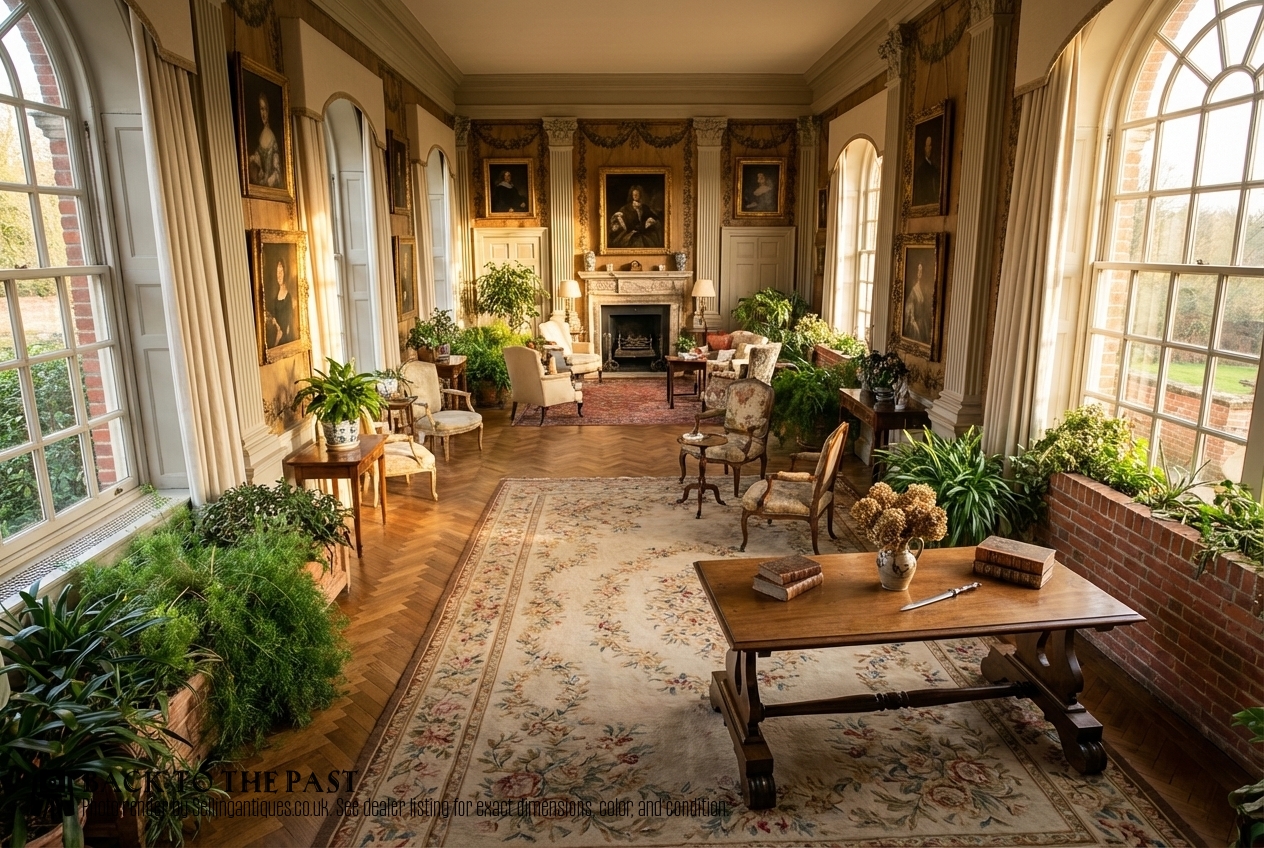
How they were made
Cabinet makers utilised solid walnut and decorative walnut veneer over secondary timbers to achieve rich figured patterns on the table tops. Burr walnut sections were selected for their intricate swirling grain formations.
Selected pieces incorporate brass elements alongside glass inserts, combining timber construction with contrasting metal or transparent surfaces. Pedestal supports and traditional leg structures provide stable foundations for the heavy timber tops.
Retail Price Guide 2026
Typical UK retail prices for walnut living room table, calculated from the Sellingantiques database of over a million retail prices indexed since 2003. This retail price guide relies exclusively on Sellingantiques data; no external sources or auction records are used, so the figures do not describe the wider market.
Listings feature items from the nineteenth century through to the nineteen thirties, utilising walnut, burr walnut, brass, and glass.
What varies in quality
The choice of timber veneer dictates visual impact, with burr walnut selections offering more complex grain patterns than plain timber. Finishes range from simple protective coatings to deep polished surfaces that enhance the natural colour of the wood.
Construction methods and stylistic coherence separate standard examples from finer pieces, particularly in revival and deco designs. The integration of brass fittings and glass panels reflects the precision of the original workshop.
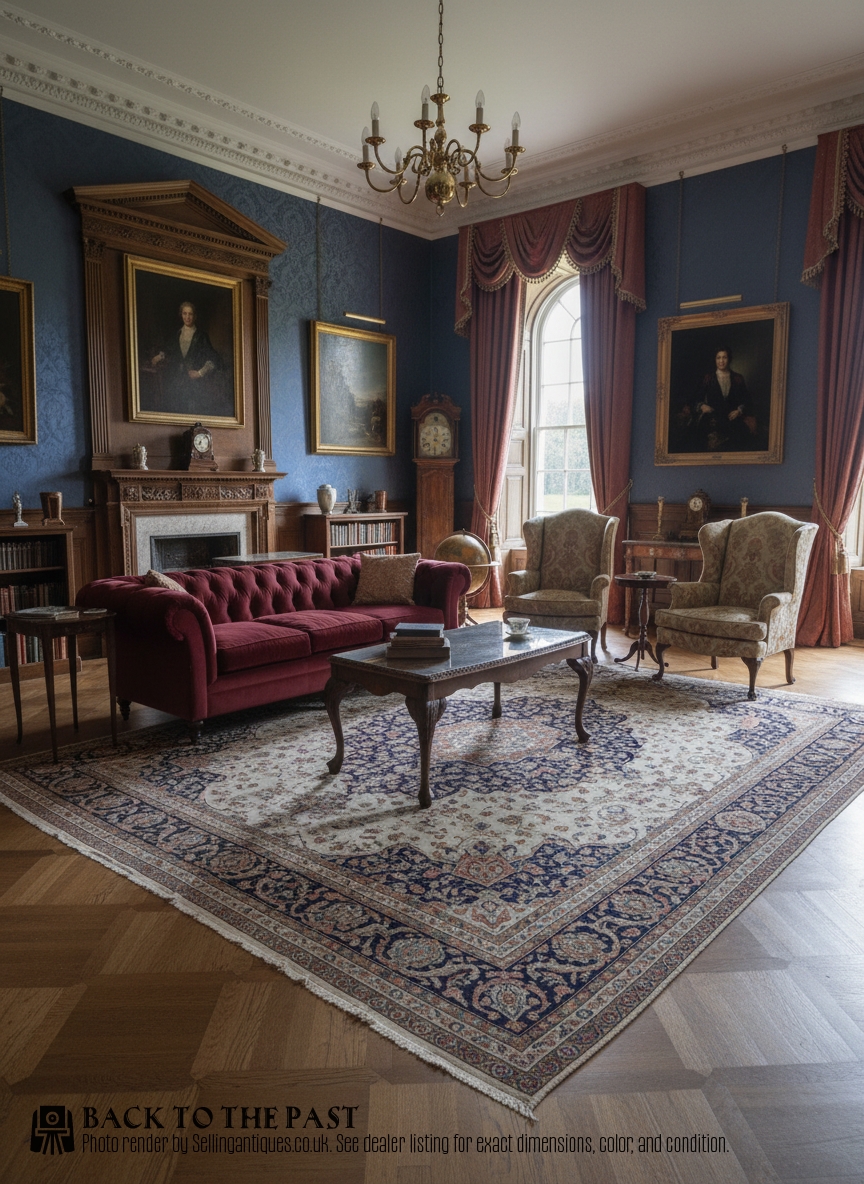
The Walnut Living Room Table Glossary
- Burr walnut
- A prized timber harvested from tree growths that produces complex, swirling grain patterns. Cabinet makers used veneer slices of this wood on prominent table surfaces.
- Centre table
- A freestanding table intended to be viewed from all sides, traditionally placed in the middle of a room. These nineteenth century pieces offer generous proportions.
- Walnut veneer
- Thin slices of walnut timber applied over a stable base wood to create decorative surfaces without excessive weight. This technique allows for symmetrical grain matching.
- Pedestal table
- A table supported by a single central column rather than four corner legs. Art deco examples frequently utilise this configuration for coffee tables.
Frequently Asked Questions
How do I clean a walnut table?
Dust regularly with a soft, dry cloth to protect the polished surface from abrasive particles. Avoid excess moisture and harsh chemical sprays that can damage the timber finish.
Apply a quality beeswax periodically to nourish the walnut and maintain its natural lustre. Keep the table away from direct heat sources to prevent the wood from drying out.
Are these tables sturdy enough for daily use?
Solid timber and quality veneer construction provide durable surfaces for everyday living room requirements. Centre tables and coffee tables are built to handle books, cups, and general items.
Care should be taken with hot drinks and liquids by using coasters to protect the polish. Regular placement away from damp areas ensures the structural integrity remains sound.
How do I identify the period of a table?
Examine the overall silhouette and decorative details to match them against known historical styles. Nineteenth century pieces often show traditional English joinery, whilst nineteen thirties items display geometric art deco influences.
Material combinations such as walnut veneer with brass or glass point towards specific manufacturing decades. Comparing leg shapes and edge profiles clarifies the era of production.
What is the difference between a coffee table and a centre table?
Coffee tables are lower in height, specifically proportioned to sit in front of sofas and seating groups. Centre tables stand taller and are traditionally designed to occupy the middle of a room.
Nineteenth century examples lean towards the taller centre table format, whereas twentieth century production focused heavily on low coffee tables. Both forms showcase decorative walnut timber.