
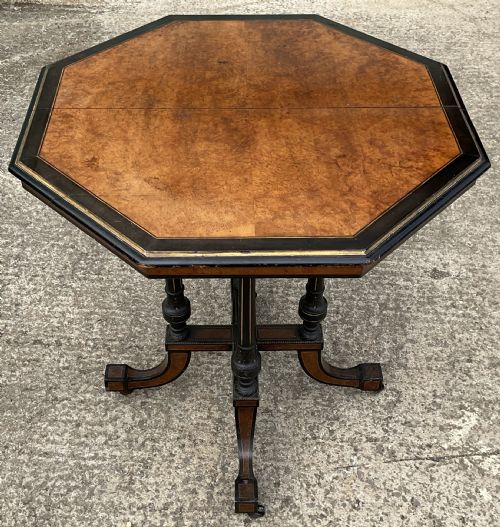
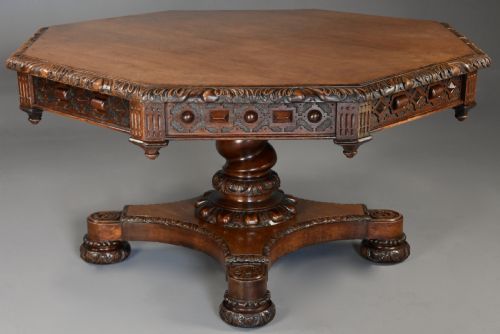

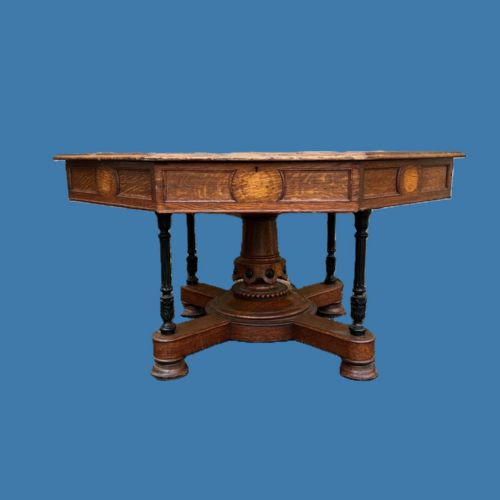
Octagonal Hall Table
An octagonal hall table brings a sharp geometric edge to an entrance space, pairing eight-sided tops with the warmth of period timber.
Octagonal Hall Table
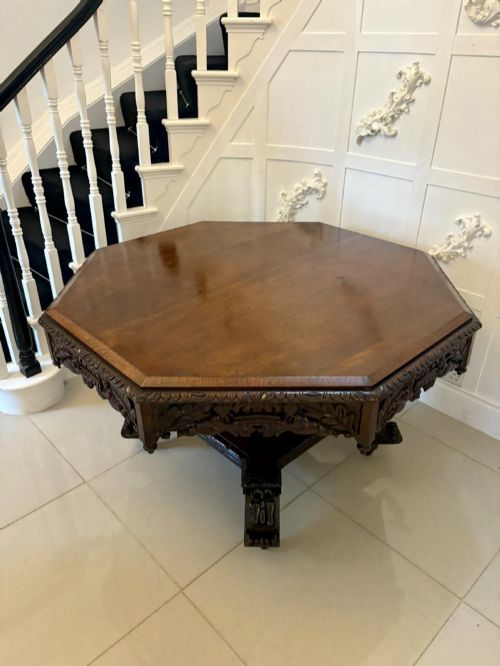
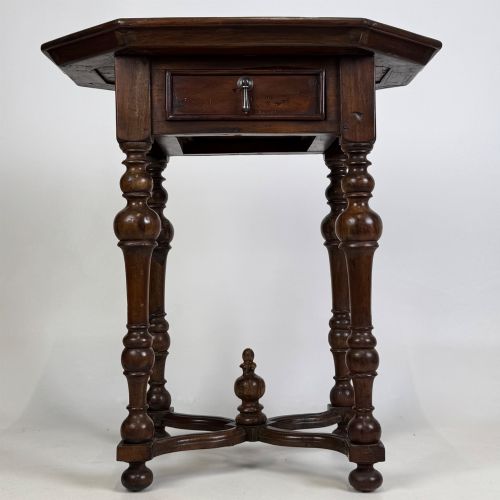
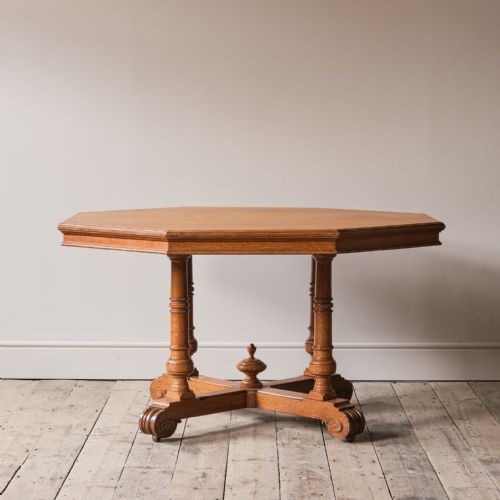
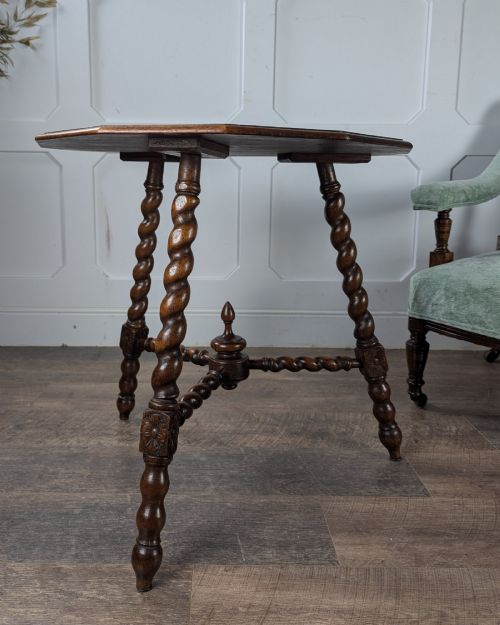
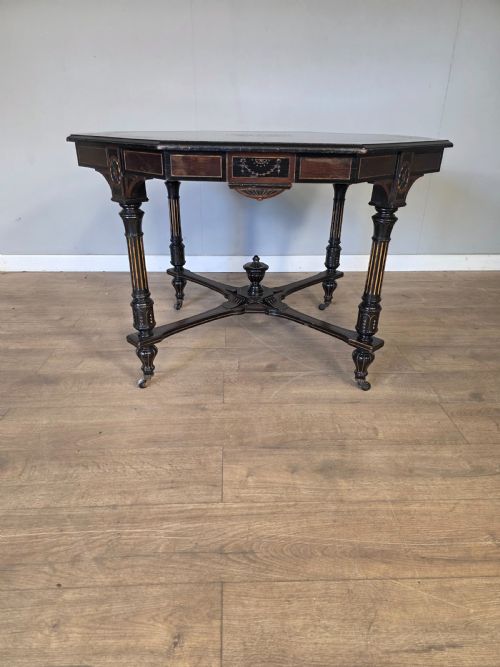
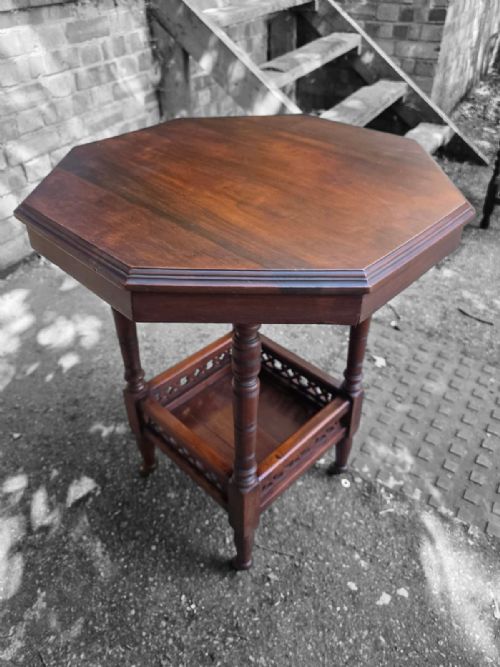
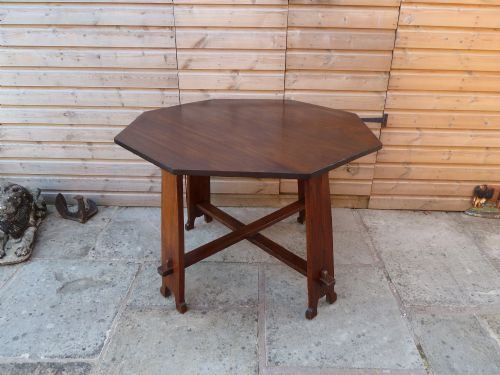
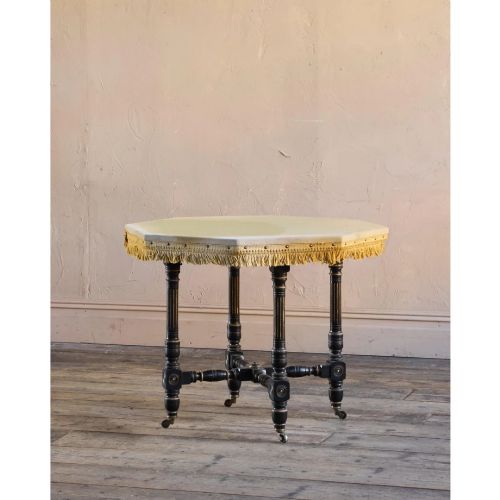
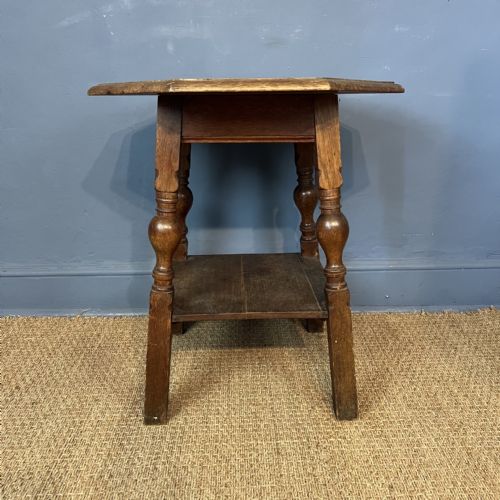
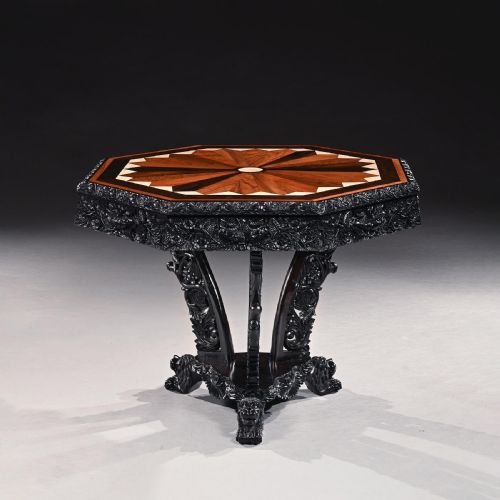
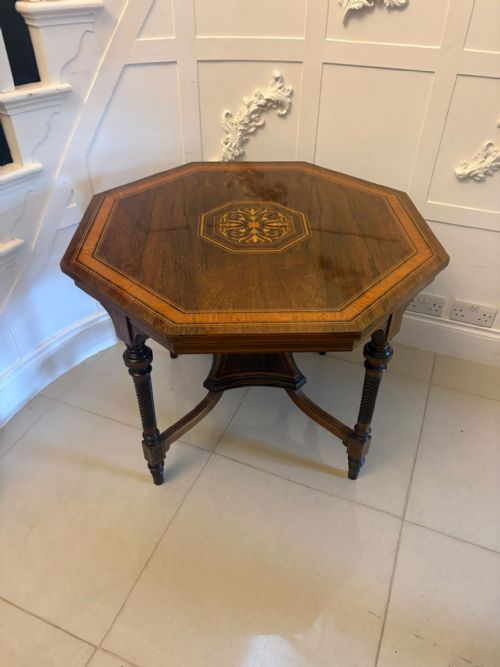
An octagonal hall table is a distinct piece of furniture designed to anchor a central space or sit neatly against a wall. The pieces seen here span the Victorian era, the Edwardian period, and the early twentieth century, taking forms such as occasional tables, side tables, and library tables.
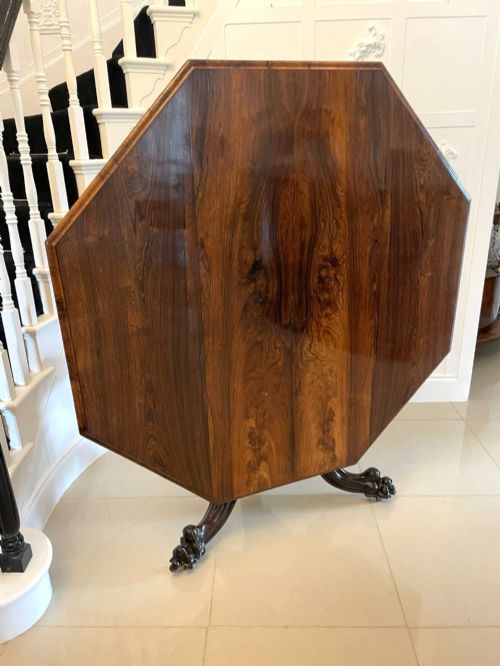
The octagonal top is the defining feature, often supported by a central pedestal or four sturdy legs. Oak and mahogany appear frequently, alongside walnut, burr walnut, and rosewood, reflecting the preferences of nineteenth-century cabinet makers.
Makers drew on diverse styles, ranging from Jacobean Revival and Arts and Crafts to Gothic Reform and Aesthetic Movement designs. These pieces served as functional surfaces for lamps, clocks, or callers' cards while setting a formal tone in domestic halls.
How they were made
Cabinet makers utilised solid hardwoods like oak, mahogany, and walnut for structural integrity, often applying veneers of burr walnut, rosewood, or tulipwood to create striking grain patterns on the eight-sided tops. Marquetry and parquetry inlays introduced geometric and floral motifs using contrasting timbers.
Construction techniques included intricate joinery for pedestals and frames, sometimes incorporating turned barley twist legs or carved detailing associated with Gothic and Jacobean influences. Leather inserts, such as tooled Moroccan leather, were frequently bedded into the centre of the top surface for writing or reading.
Ebonising wood became a favoured method to simulate more costly exotic materials, while other surfaces received elaborate carving or polishing to highlight the natural figure of the timber.
Octagonal Hall Table Retail Price Guide 2026
Typical asking prices for octagonal hall table among the pieces listed under this phrase on Sellingantiques today, from the lower quarter to the upper quarter. They describe what is for sale here now, not the wider market.
The archive and active stock reveal diverse design movements, uniting Victorian Gothic Revival with Edwardian and Arts and Crafts aesthetics.
What varies in quality
The sophistication of the timber selection and inlay work marks the divide between standard production and exceptional workshop output. Tables featuring complex marquetry, specimen woods, or finely figured burr walnut demand a higher level of cabinet-making skill than plain, utilitarian versions.
The execution of carving and structural turning, such as crisp barley twists or detailed edge moulding, distinguishes ambitious pieces from simpler designs. Hardware, original tooled leather inserts, and the integration of maker attributions further elevate a table's standing.
Proportion and stability in the pedestal or leg assembly ensure the piece holds its visual balance across all eight sides without appearing clumsy.
Gillows·Hindley and Sons·Liberty and Co·James Winter·Walker and Hall
The Octagonal Hall Table Glossary
- Marquetry
- Decorative veneer work forming pictures or geometric patterns using various coloured woods. It requires immense precision to fit the pieces together seamlessly.
- Barley twist
- A spiral turning resembling a twisted rope, carved into table legs or central columns. This technique was especially popular during the Victorian and Jacobean Revival periods.
- Pedestal table
- A table supported by a single central column resting on a tripod or platform base. This design allows maximum legroom around the octagonal top.
- Parquetry
- Geometric mosaic woodwork used for flooring or tabletops, constructed from small blocks of timber. It creates a repeating pattern that catches the light from different angles.
- Ebonised
- Wood stained or painted black to imitate ebony. This finish was widely utilised in nineteenth-century furniture to achieve a striking contrast with inlaid brass or light veneers.
Octagonal Hall Table: Frequently Asked Questions
Where should an octagonal hall table go?
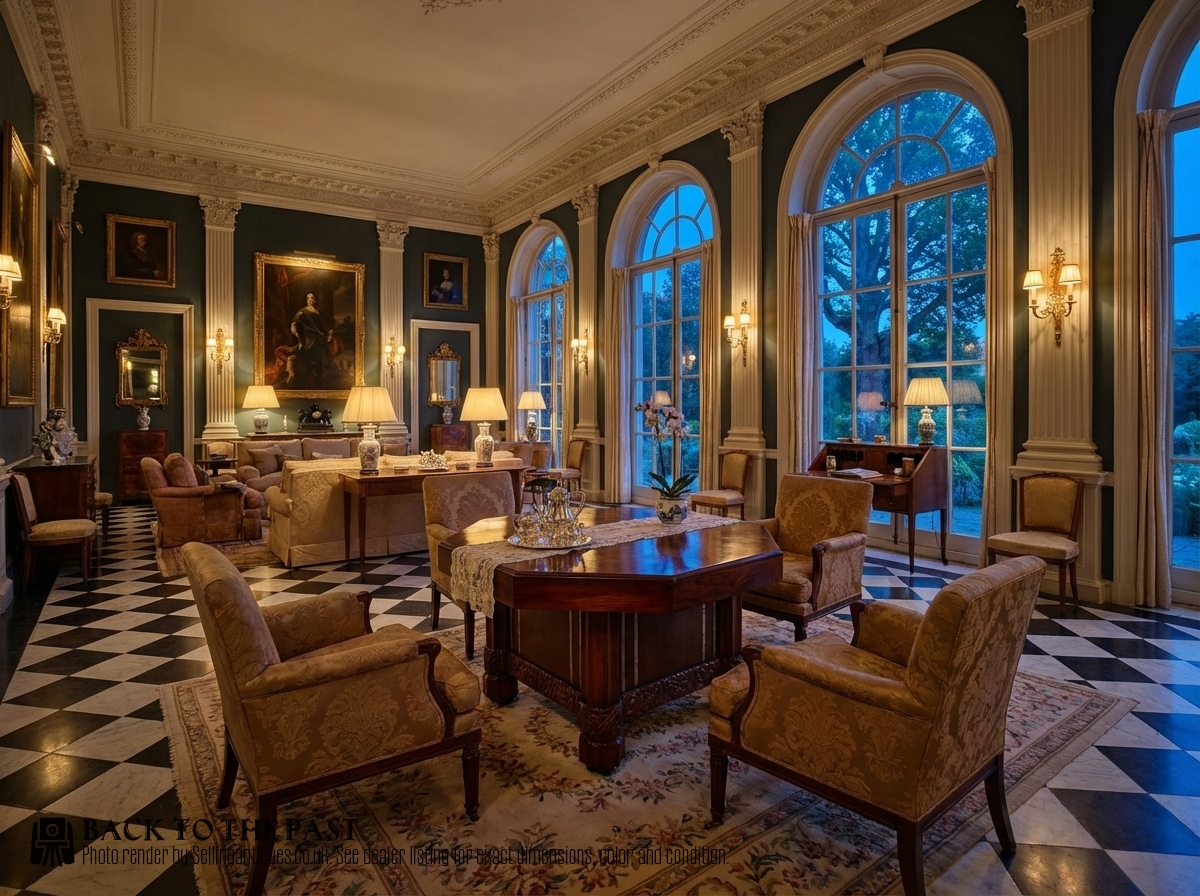
An octagonal hall table works best where its eight-sided geometry can be admired from multiple angles, such as the middle of a spacious entrance hall or as a freestanding accent piece. It provides a convenient surface for daily items without blocking natural walkways.
Because the shape breaks away from traditional rectangular furniture, it softens linear hallways and creates a deliberate focal point upon entering the home.
How do I care for period wood?
Regular dusting with a dry, soft cloth protects the polished surface of nineteenth-century timber from microscopic abrasion. Natural wax feeds the wood periodically and preserves the depth of the grain without building up heavy chemical residues.
Keep these tables away from direct heat sources and strong sunlight to prevent the timber from drying out, splitting, or fading over time.
What is a centre table?
A centre table is designed to stand freestanding in the middle of a room rather than pushed flat against a wall. Because they are finished on all sides, they allow access from every direction.
Historically, these tables held lamps, books, or decorative objects, serving both a functional and a formal display purpose in reception rooms and large halls.
How do I identify Arts and Crafts pieces?
Arts and Crafts pieces emphasise visible handcraftsmanship, simple structural honesty, and the natural grain of solid oak rather than heavy applied decoration. They reject mass-produced ornamentation in favour of robust, straightforward construction.
Look for plain surfaces, exposed joinery, and a quiet utility that prioritises material integrity over excessive stylistic flourish.