
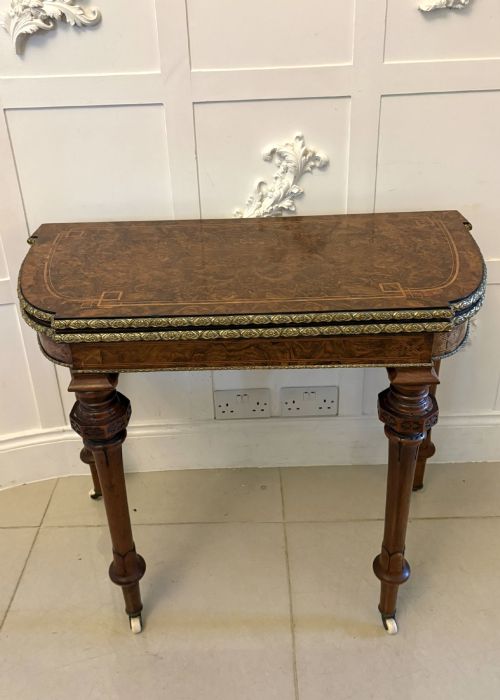
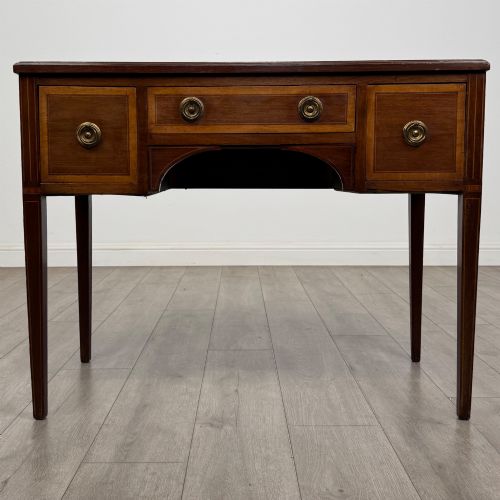
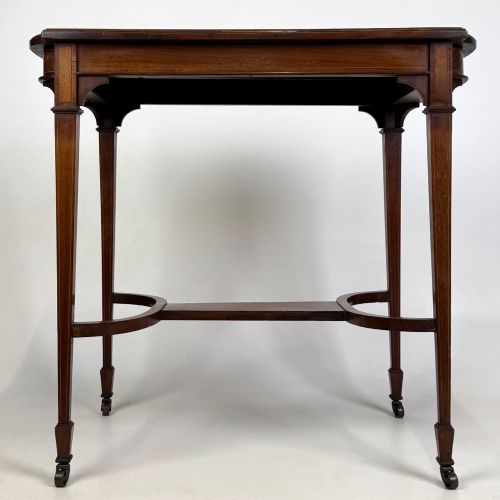
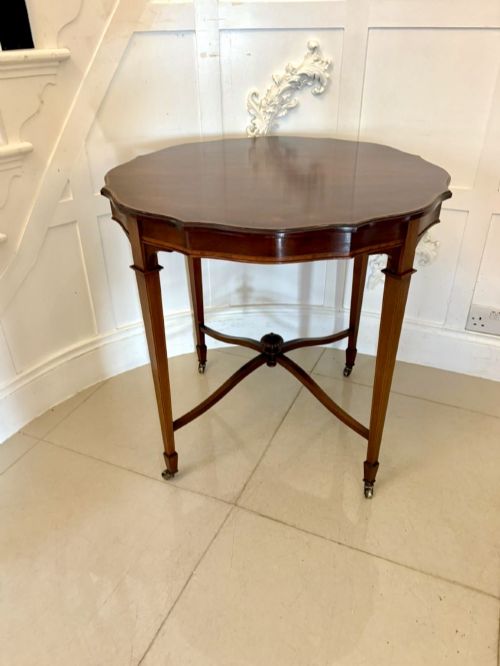

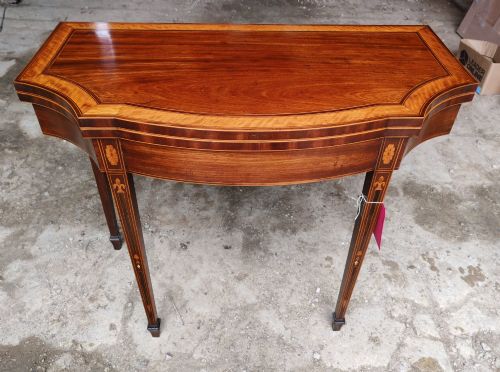


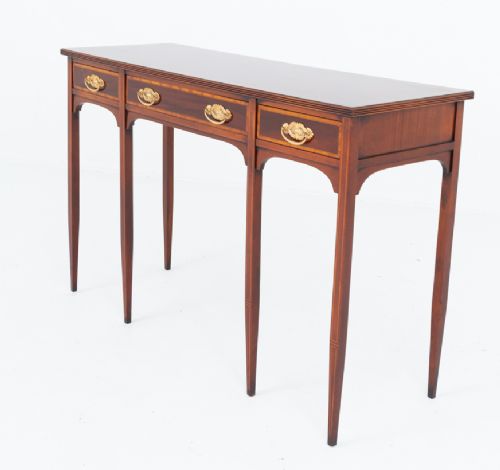


Edwardian Inlaid Hall Table
An edwardian inlaid hall table brings lightness and refined timber contrast to an entryway, offering a practical surface with decorative marquetry.
Edwardian Inlaid Hall Table
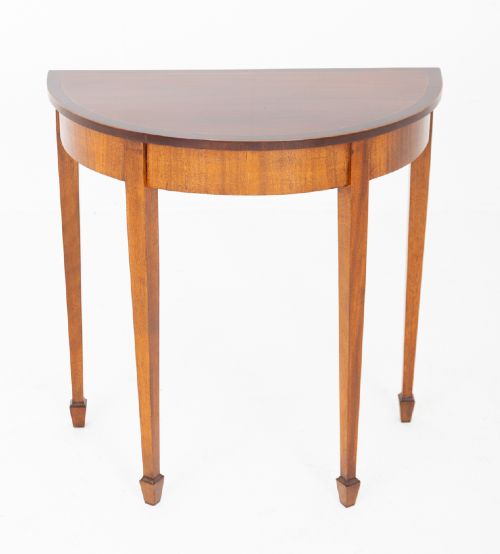
An edwardian inlaid hall table typically appears as a slender side or occasional piece designed for narrow spaces, drawing upon earlier stylistic revivals. The listings show these domestic items constructed primarily during the Edwardian period and around nineteen hundred, alongside related Victorian and nineteenth-century examples.
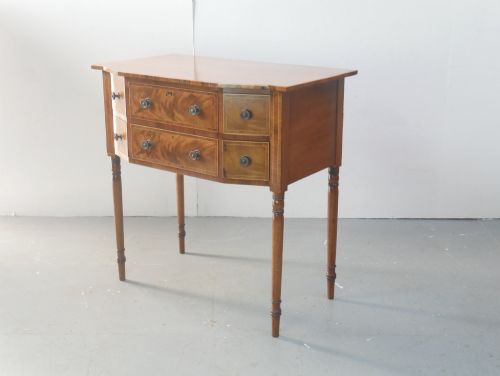
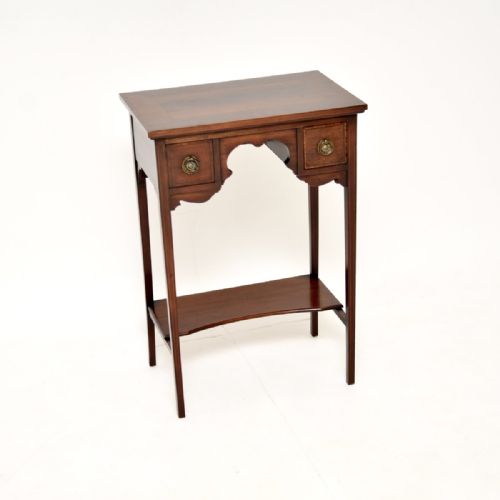
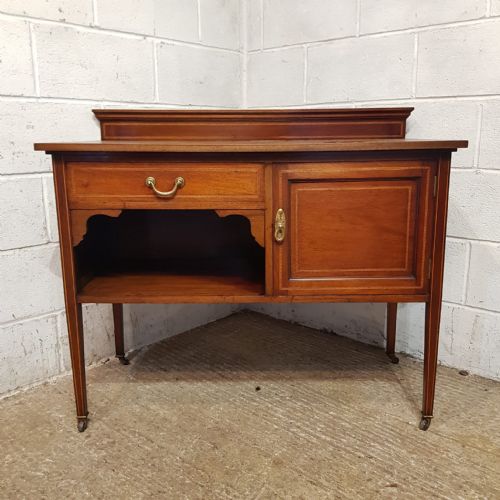
Most pieces take the form of compact side tables, console tables, and occasional tables shaped to fit against a passage wall without obstructing foot traffic. Makers also produced variations including lowboys, washstands, and small writing tables sharing the same decorative vocabulary.
Materials and Techniques
Workshops relied heavily on mahogany as a stable primary timber, frequently pairing it with contrasting light woods such as satinwood and boxwood for decorative impact. Craftsmen utilised precise wood inlay and marquetry techniques to form geometric borders, swags, and classical motifs across the tops and drawer fronts.
Secondary framing elements often incorporated walnut, rosewood, and burr walnut, while brass fixtures appeared on drawer pulls and mounts for functional accent. Surfaces received hand-applied polishes to highlight the grain variation between the dark primary wood and the pale inlay.
Some hall tables feature hidden drawers sized precisely for calling cards and visiting notes.
Craftsmanship and Proportion
The distinction between standard domestic items and finer pieces lies in the crispness of the inlay work and the selection of figured timbers. Superior examples display tightly fitted marquetry with minimal filler, where contrasting boxwood and satinwood lines remain sharp and intact.
Proportion and structural integrity also separate grades, as better workshops maintained balanced leg dimensions and stable joints despite slender forms. The presence of secondary details, such as cross-banding and well-figured mahogany grain, indicates higher production standards.
Edwards & Roberts
The Edwardian Inlaid Hall Table Glossary
- Inlay
- The technique of inserting pieces of contrasting wood into a recessed surface to form a decorative pattern. This method defines the primary ornamentation on these tables.
- Marquetry
- An elaborate form of inlay assembling various wood veneers into pictorial or geometric designs. Artisans used this to create ornate floral or classical panels on table tops.
- Satinwood
- A durable, lustrous yellowish timber native to India and Ceylon. It serves as a pale contrast to darker woods like mahogany in table borders.
- Cross-banding
- A border strip of veneer laid around the edge of a table top with the grain running perpendicular to the centre. This frames the primary panel.
- Demi-lune
- A half-moon shape characteristic of console tables designed to sit flat against a wall. This profile saves floor space in narrow hallways.
Edwardian Inlaid Hall Table: Frequently Asked Questions
Where did these tables stand?
These tables stood in entrance halls, corridors, and reception rooms to hold callers' cards, letters, or lamps.
Their shallow depth allowed them to fit into narrow circulation spaces without blocking doorways.
How do I identify Edwardian pieces?
Edwardian furniture typically dates from the early twentieth century and draws inspiration from eighteenth-century Sheraton and Hepplewhite designs.
Look for lighter framing timbers, subtle boxwood stringing, and machine-assisted precision in the joinery compared to heavier Victorian predecessors.
What is satinwood inlay?
Satinwood inlay involves setting pale, reflective wood veneers into darker primary surfaces like mahogany to create borders and motifs.
This technique provided high visual contrast while maintaining a smooth, flush surface.
How should I care for the wood?
Keep these pieces away from direct sunlight and steady heat sources to prevent the veneers and delicate inlay from drying out and lifting.
Dust regularly with a dry cloth and apply a traditional wax polish sparingly to maintain the finish.