



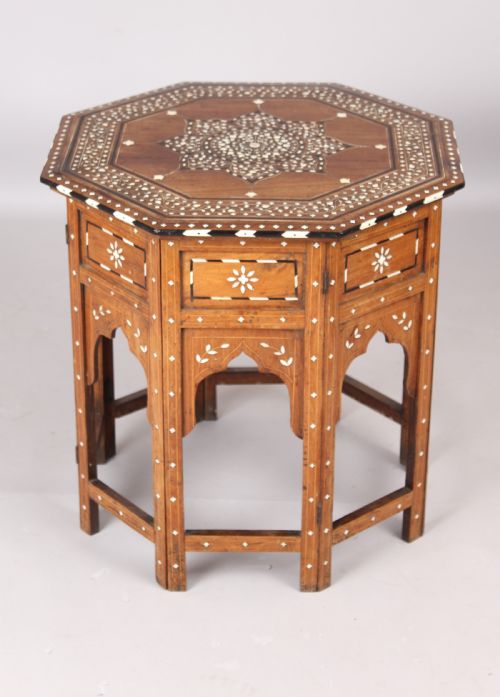


Octagonal Bone Inlay Table
An octagonal bone inlay table brings geometric Moorish design and intricate craftsmanship into a room.
Octagonal Bone Inlay Table
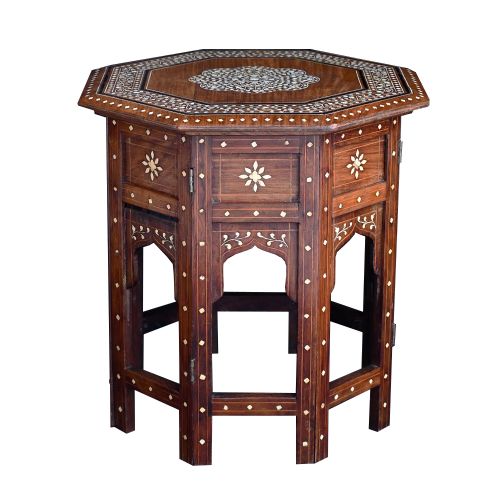
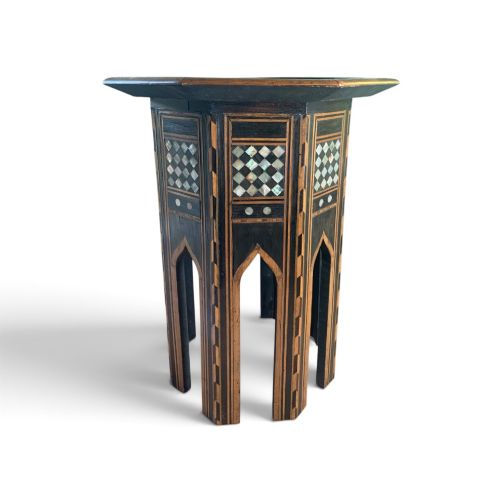
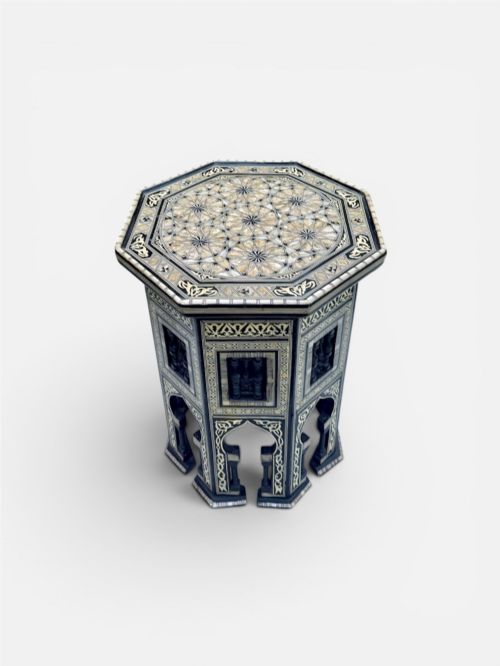
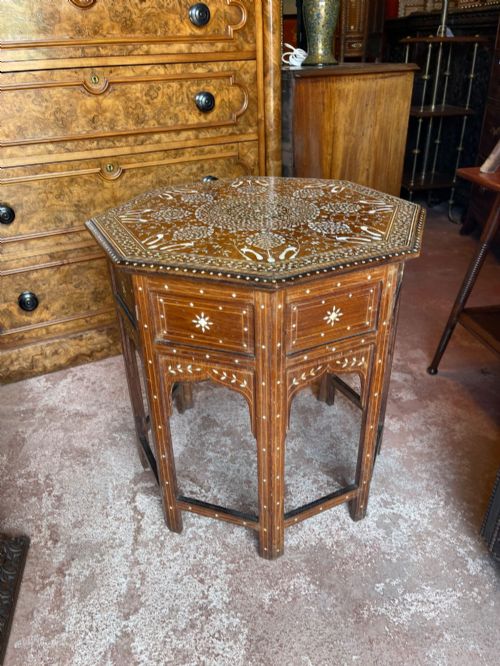
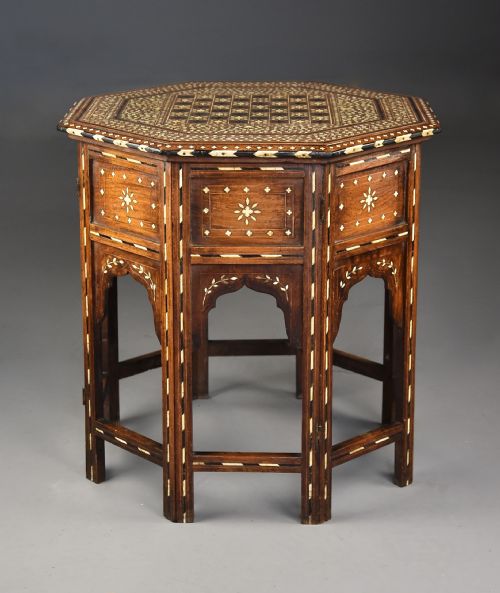
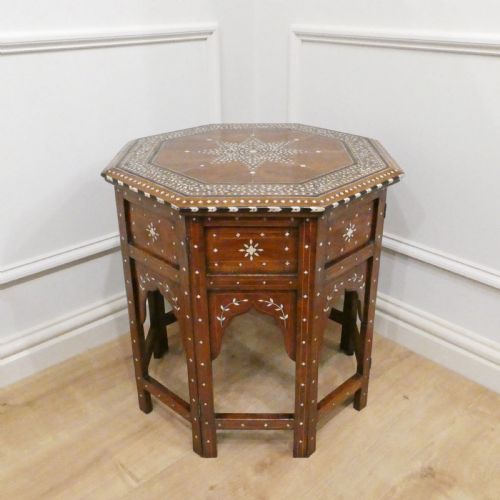
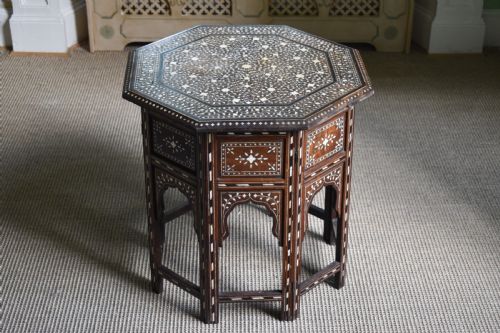
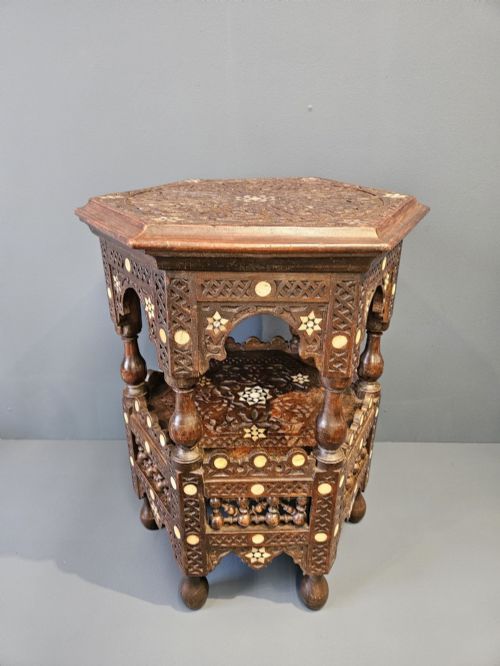
An octagonal bone inlay table is a low occasional, side or coffee table defined by its eight-sided top and intricate surface decoration. These pieces bridge several cultural traditions, drawing on Anglo-Indian, Moorish Revival, Ottoman and Syrian designs from the nineteenth and early twentieth centuries.
The version most commonly met on this page is the Hoshiarpur folding table, which collapses easily on a scissor action frame. They range from small occasional stands to larger lamp and coffee tables.
Makers in the Punjab town of Hoshiarpur and British retailers such as Liberty and Co. produced these pieces for Western drawing rooms during the height of the Victorian and Edwardian periods.
How they were made
Artisans carved dense hardwoods such as teak, sheesham, sandalwood, padauk and rosewood to form the rigid folding bases and panelled tops. Ebonised finishes appear alongside natural timber tones.
Individual pieces of animal bone and mother-of-pearl were shaped by hand and set into precise channels cut into the wood. Craftsmen then engraved fine floral and geometric details directly into the bone surface with dark resin highlights.
The primary styles recorded are Anglo-Indian, Moorish Revival, Ottoman and Syrian or Islamic Revival.
What varies in quality
The precision and density of the inlay separate exceptional examples from standard production pieces. Superior tables feature tightly fitted bone segments with minimal filler and deeply carved foliage across every surface.
The quality of the underlying timber and the complexity of the folding mechanism also dictate the tier of the piece. Tables incorporating mother-of-pearl alongside bone represent the more ambitious end of the range.
Liberty and Co
The Octagonal Bone Inlay Table Glossary
- Hoshiarpur
- A town in the Punjab region of India renowned for producing intricate inlaid woodwork exported to Britain during the nineteenth century. Tables from this centre often feature dense floral patterns.
- Moorish Revival
- An architectural and decorative style popular in the nineteenth century that reinterpreted Islamic design elements. It heavily influenced the geometric arches and star motifs seen on these tables.
- Bone inlay
- A technique where small pieces of animal bone are embedded into wooden surfaces to create contrasting patterns. It forms the primary decorative element of these tables.
- Occasional table
- A small, movable table designed for specific, intermittent use in a principal room. These pieces function well beside seating or as lamp stands.
- Scissor action
- A folding frame design where intersecting wooden legs pivot to allow the table top to be removed and stored flat. This ingenious construction made them popular for flexible interior spaces.
Octagonal Bone Inlay Table: Frequently Asked Questions
How do I fold an octagonal bone inlay table?
Most of these tables feature a collapsible wooden base constructed with intersecting legs that lock into the underside of the top. Lift the top slightly from its frame to release the interlocking wooden pivot.
Fold the scissor action legs flat once the top is removed for easy storage or transport.
What is the best way to clean bone inlay?
Dust the surface regularly with a soft, dry cloth to prevent dirt from settling into the engraved lines of the bone. Avoid using liquid cleaners, chemical polishes or water, which can discolour the timber and loosen the inlay.
Apply a tiny amount of microcrystalline wax occasionally if the wood requires nourishment, buffering it off gently.
Where should I place an octagonal table?
These tables suit placement beside low armchairs or as central lamp stands where their decorative tops can be seen from above. Their compact footprints allow them to fit into corners or awkward spaces.
Keep them away from direct sunlight and strong heat sources to protect the natural bone and dry timbers.
How can I tell a nineteenth-century table from a later one?
Nineteenth-century examples often exhibit hand-cut bone pieces with slight irregularities and rich, oxidised hardwoods underneath. Later twentieth-century versions may show more uniform machine-cut elements and lighter timbers.
Examine the underside and the joinery of the folding frame for hand-carved tool marks characteristic of earlier production.