



Ochre Paper Watercolour Landscape
Ochre paper watercolour landscape pieces capture atmospheric vistas on tinted grounds, offering buyers a direct connection to historic British and European sketching traditions.
Ochre Paper Watercolour Landscape
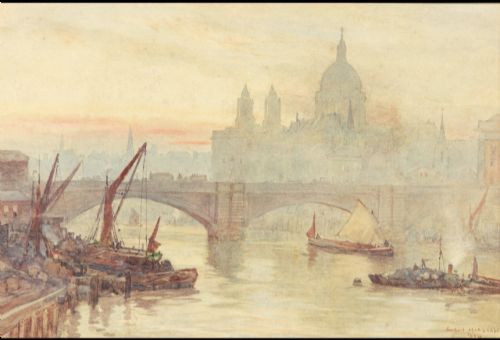
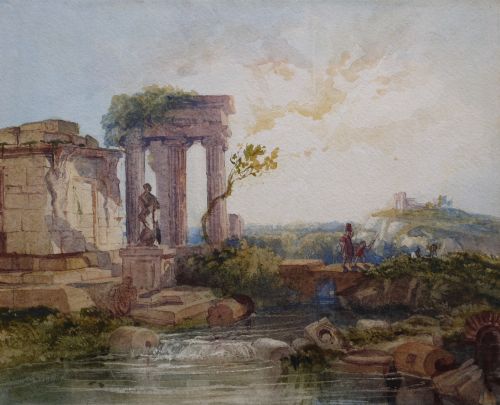
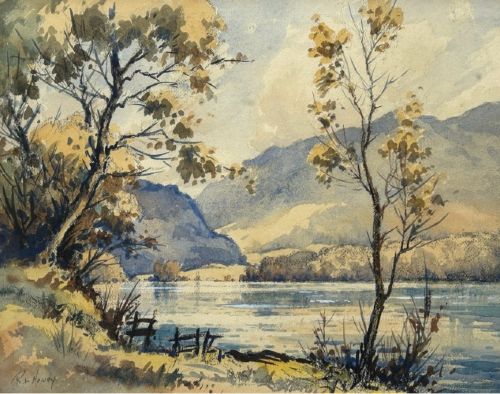
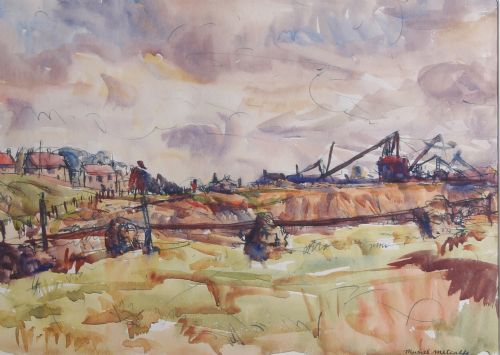
An ochre paper watercolour landscape presents a scene painted on tinted support, using the warm tone of the paper as a mid-tone for the composition. These works range from late Victorian topographical views to mid-century British school scenes.
The version most commonly met on this page is a framed landscape or townscape on paper, executed in watercolour pigment with occasional ink detailing. Such pieces typically date from the nineteenth century up through the mid-twentieth century.
Makers and artists utilised the natural warmth of the paper to unify the palette, allowing unpainted areas to serve as highlights or middle distances. This technique grants the works a characteristic tonal harmony distinct from paintings on pure white sheets.
Materials and construction
Artists painted these landscapes using water-soluble pigments and watercolour paint applied to tinted paper sheets, often supported by wood framing and protected beneath glass. Ink was occasionally added for fine linear definition.
The choice of an ochre or tinted ground required a specific handling of light, where the artist would reserve the paper itself to represent luminous areas while building darker tones with layered washes.
The listings span the Victorian era, Edwardian period, and the mid-twentieth century, employing paper, watercolour, ink, wood, and glass.
Gradations of quality
Quality in these watercolours depends upon the sureness of the brushwork and the preservation of the paper's original tone against environmental fading. Superior examples retain crisp detail in architectural or natural elements without heavy, overworked pigment.
Compositional balance also distinguishes finer works, where the interaction between the ochre ground and the applied washes creates genuine atmospheric depth rather than a flat, opaque appearance.
Richard Principal Leitch·Thomas Ellison·Robert Leslie Howey·Muriel Metcalfe·Edwin Lord Weeks·Arthur Tucker·Charles James Lauder·Rowland Henry Hill·Clara Montalba·Benedetto Salviati·Joseph W Milliken·Frederick Mayor·Fred Stead·William Lucas·Arthur Claude Strachan·George Hamilton Constantine·George Sykes·John J Hamer·Fred Lawson·Yves Brayer·Tom Dudley·Arthur Severn·Joseph West·Charles Ashmore
The Ochre Paper Watercolour Landscape Glossary
- Watercolour
- A paint consisting of pigment suspended in a water-based solution. It is traditionally applied to paper supports in transparent washes.
- Ochre
- An earthy pigment containing hydrated iron oxide, which yields a yellow to deep brown colour. In these works, it describes the tinted paper stock used by the artist.
- Topographical
- Pertaining to the accurate depiction of a particular place or locality. Many nineteenth-century works focus on specific towns, rivers, and historical sites.
- Wash
- A thin, fluid layer of watercolour spread evenly across the paper. It establishes broad areas of tone or sky.
Ochre Paper Watercolour Landscape: Frequently Asked Questions
What is an ochre paper watercolour landscape?
It is an original painting created with watercolour pigments upon tinted paper, capturing natural or urban scenery from the nineteenth and twentieth centuries.
The warm background tone acts as an integral part of the colour scheme, giving the landscape a unified, atmospheric quality.
How should I frame and display these watercolours?
These works require framing behind glass with acid-free mounts to prevent the paper and pigments from degrading over time.
Keep them away from direct sunlight to protect the delicate watercolour washes and the ochre tint of the paper.
How do I identify the period of a landscape?
Period identification relies upon the stylistic conventions of the painting, the framing materials, and any artist signatures or inscribed titles on the reverse.
Victorian and Edwardian works often feature specific topographical subjects and traditional mounting styles distinct from mid-century modernist pieces.
Were these paintings made outdoors or in studios?
Artists frequently produced initial sketches or finished watercolours on location during travels, Grand Tours, or local excursions.
Many sheets bear inscriptions naming specific towns, valleys, or landmarks recorded directly from the artist's viewpoint.