




Edwardian Cottage Garden Art
Edwardian cottage garden art captures the charm of rural life through delicate watercolours and oils depicting flower-filled pathways, rustic houses and quiet afternoon scenes.
Edwardian Cottage Garden Art
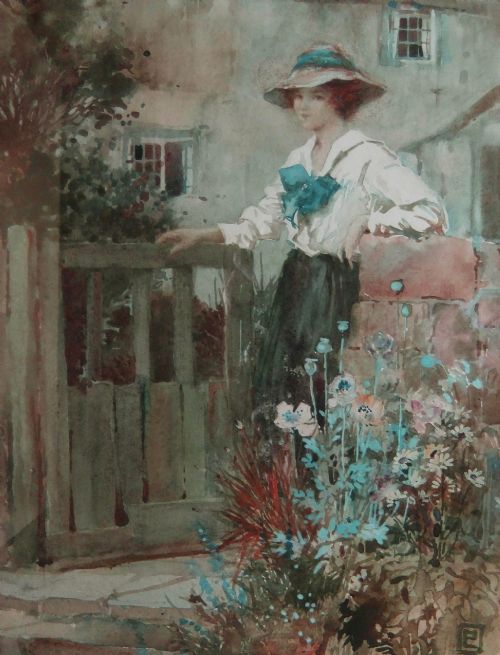
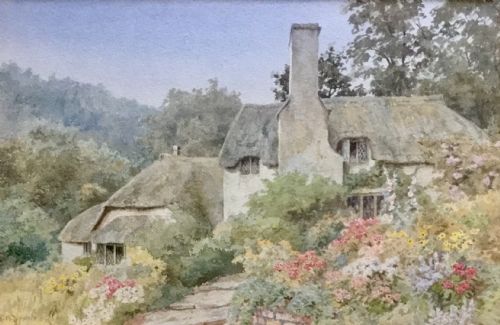
Edwardian cottage garden art represents a specific visual record of early twentieth-century rural life, focusing on domestic routines and floral landscapes. When exploring edwardian cottage garden art, buyers encounter works that celebrate pastoral subjects such as feeding hens, children playing outside, and quiet country homes.
The pieces on this page span from the late nineteenth century through to the 1930s, encompassing styles from British Impressionism to Edwardian Pastoral and Victorian Rural Genre. Watercolours dominate the selection, accompanied by traditional oil paintings on canvas.
Common scenes feature half-timbered coastal homes, walled gardens in summer, and figures engaged in leisurely or domestic pursuits. These paintings offer a window into a romanticised yet culturally significant era of British artistic expression.
Materials and Techniques
Artists working within this genre relied primarily on watercolour pigment on paper and oil paint applied to canvas. Watercolours allowed for translucent washes that captured the bright, natural light of summer gardens.
Oil paintings provided richer textures and deeper colour saturation for depictions of rustic architecture and dense foliage. Both mediums utilised traditional application techniques common to British Impressionism and pastoral painting of the period.
The listings span works created between the late nineteenth century and 1930, utilising paper, canvas, watercolour, and oil paint.
Distinctions in Quality
Quality in these works rests upon the artist's ability to render light, atmosphere, and natural detail with convincing precision. Finer pieces demonstrate skilful handling of watercolour washes or oil brushwork that brings the foliage and rustic structures to life.
The strength of the composition and the vibrancy of the pigment preservation further separate standard works from the finest examples. Provenance and the clarity of the artist's hand also elevate the standing of individual paintings within the genre.
Percy Lancaster·Theresa Stannard·Ernest Higgins Rigg·Kershaw Schofield·Lilian Stannard·David Woodlock·Arthur Claude Strachan·John Abernethy Lynas-Gray·Thomas Nicholson Tyndale·Henry John Sylvester Stannard·Benjamin D. Sigmund·George Frederick Nicholls·Arthur H Buckland·Minnie Smythe
The Edwardian Cottage Garden Art Glossary
- Watercolour painting
- A work executed with pigments suspended in a water-based solution on paper. This medium allows for luminous, transparent effects favoured by garden painters.
- British Impressionism
- An art movement focusing on everyday subjects and natural light, influenced by French techniques but rooted in British landscapes. Painters in this style sought to capture transient atmospheric moments.
- Edwardian Pastoral
- A thematic style celebrating idealized rural and domestic scenes from the Edwardian era. It frequently depicts cottages, gardens, and quiet countryside occupations.
- Oil paint
- A slow-drying medium made by mixing pigments with oils, typically linseed. It offers rich colour depth and textural flexibility on canvas supports.
Edwardian Cottage Garden Art: Frequently Asked Questions
What subjects appear in these paintings?
These artworks predominantly feature country cottages, walled gardens in summer, and domestic rural scenes such as feeding hens or knitting outside.
Figures engaged in quiet daily activities frequently share space with floral pathways and half-timbered homes.
Which materials were used by artists?
Painters of this genre worked primarily with watercolour pigment on paper and oil paint on canvas.
Watercolours provide a luminous, transparent quality, while oils offer richer texture and deeper colour.
How do I date these artworks?
Dates typically span from the late nineteenth century through the Edwardian period and into the 1930s.
Stylistic elements, signatures, and framing often provide reliable clues to the exact decade of creation.
How should I display them at home?
Watercolours require framing behind glass with acid-free mounts to protect the paper from ultraviolet light and humidity.
Positioning them away from direct sunlight preserves the delicate pigments characteristic of the genre.