




Oak Weather Station
An oak weather station brings together atmospheric measurement and sturdy timber casing, offering both practical utility and period character for your interior.

Oak Weather Station
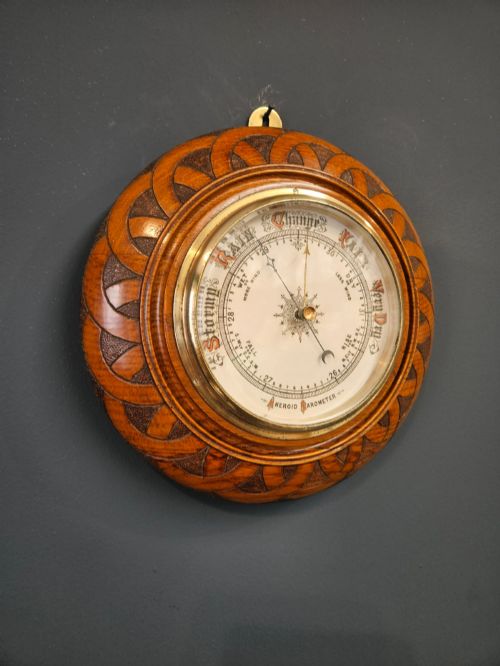
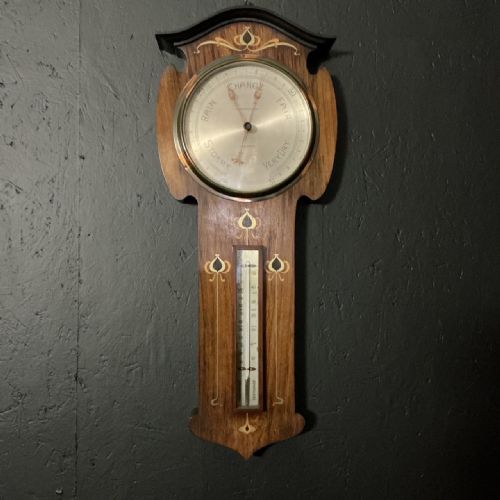
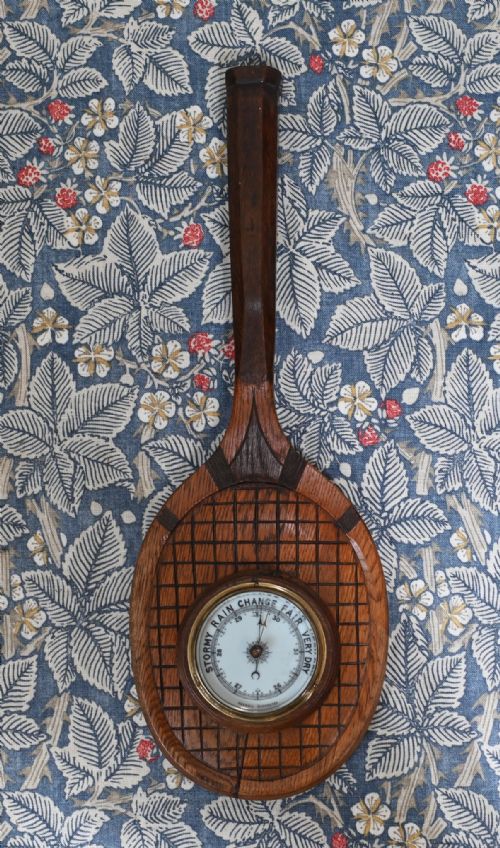
An oak weather station gathers instruments such as barometers, thermometers, and barographs into a single timber housing designed for wall mounting or desktop placement. When you explore this selection, you encounter pieces that date predominantly from the Victorian and Edwardian eras, alongside examples reaching into the nineteen-thirties.
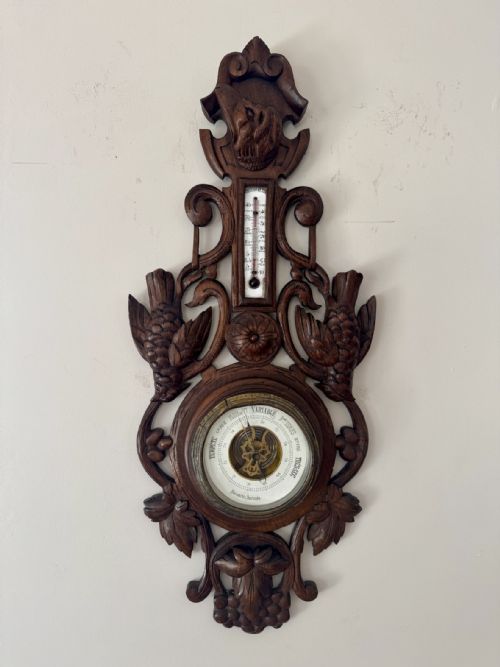
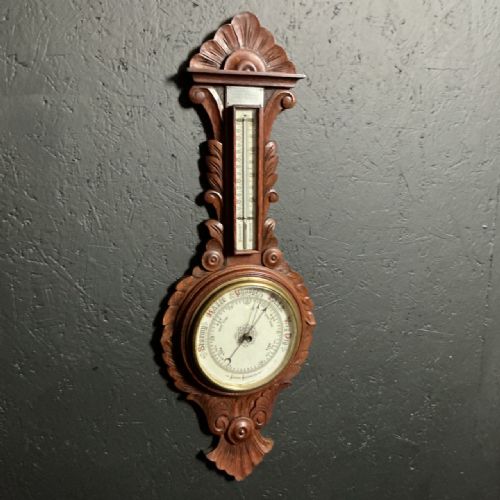
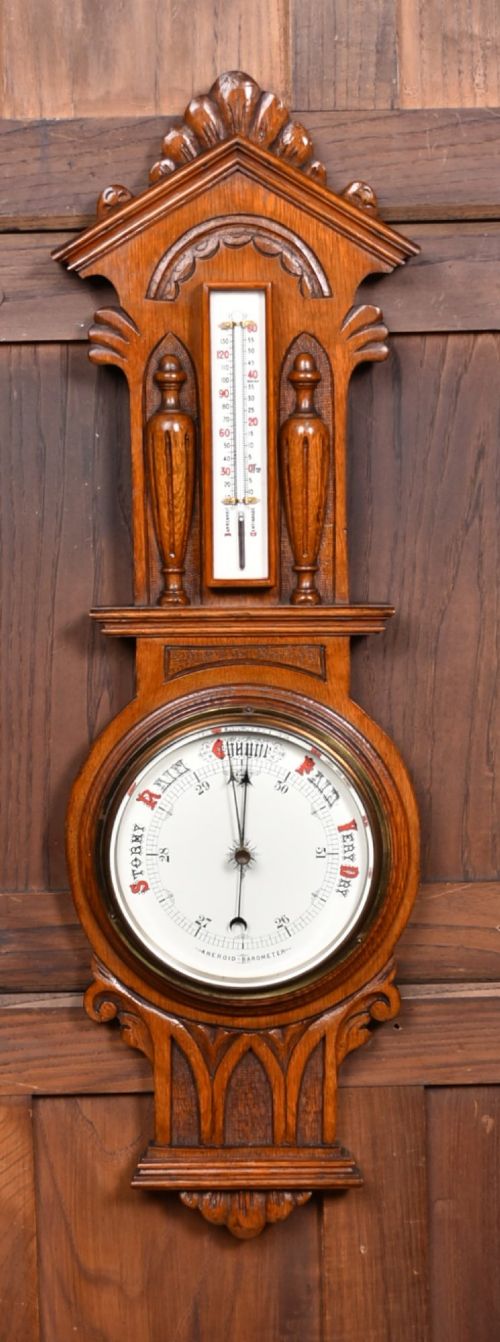
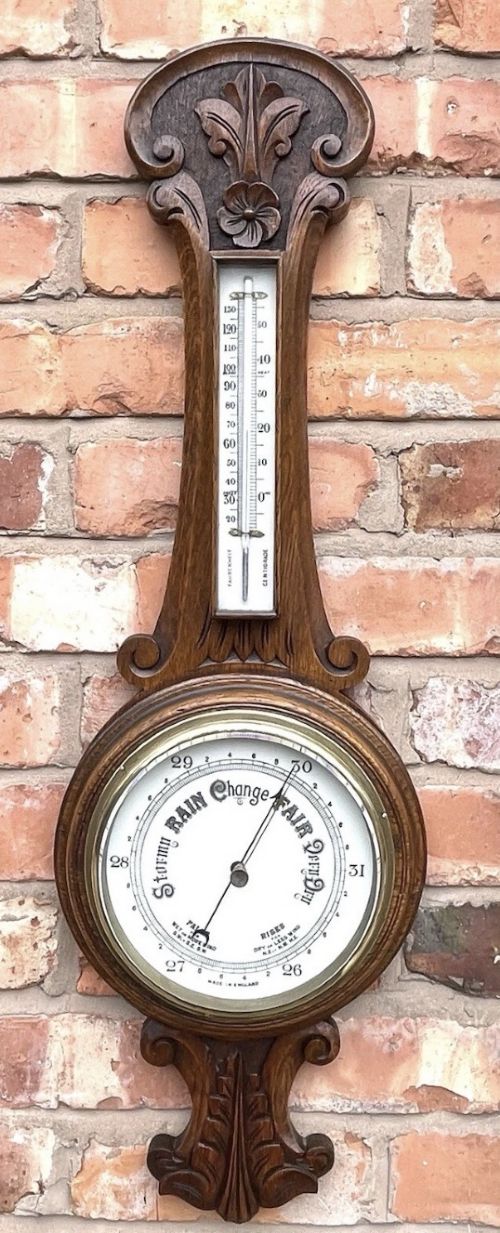
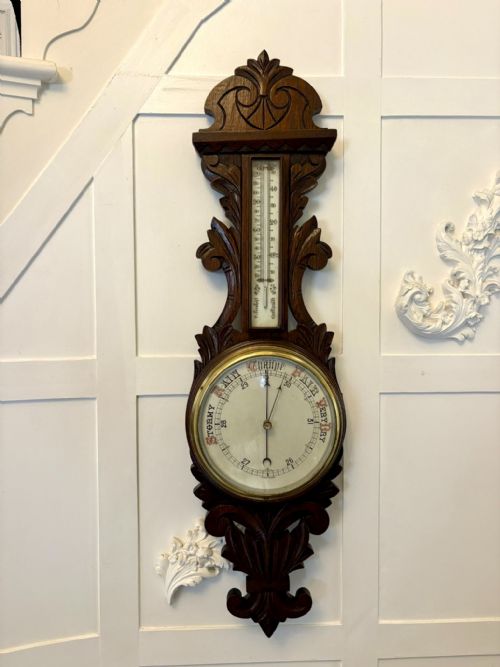
The form ranges from compact wall panels and banjo barometers to combined clock and barometer sets and architectural desk instruments. You meet turned cases, banjo shapes with integrated thermometers, and detailed carvings associated with Black Forest and Arts and Crafts traditions.
Makers and retailers such as Negretti & Zambra, James Pitkin, and Maple & Co contributed to this category, providing precision movements housed in robust timber frames. The typical piece reflects the domestic and scientific interests of nineteenth and early twentieth century households.
What varies in quality
The standard of a piece depends on the depth and crispness of the wood carving, the quality of the timber selection, and the reputation of the instrument maker named on the dial. Pieces produced by established scientific makers or prominent retailers generally display superior movement finish and more harmonious proportions.
Simpler turned cases sit at the accessible end of the scale, while deeply carved Black Forest panels, architectural desk sets, and multi-instrument weather stations represent more ambitious design and craftsmanship. The integration of auxiliary instruments like thermometers and clocks alters the complexity and presence of the object.
Listings feature oak weather stations spanning the Victorian, Edwardian, and nineteen-thirties periods, incorporating brass, glass, and ceramic elements.
W Watson & Sons·J Hughes London·Negretti & Zambra·Maple & Co·James Pitkin London·Dobbie son and Hutton London
The Oak Weather Station Glossary
- Aneroid barometer
- An instrument that measures atmospheric pressure without liquids, using an expanding and contracting metal chamber connected to an indicator needle. This mechanism allowed barometers to be built into compact wall hanging and desk formats.
- Barograph
- A recording barometer that traces atmospheric pressure fluctuations onto a rotating paper chart over a weekly or daily period. These self-registering instruments are typically housed in polished oak or mahogany cases with glazed brass covers.
- Banjo barometer
- A wall barometer featuring a rounded top dial above a tapered vertical body that frequently incorporates a thermometer and humidity indicator. The shape became a standard format for domestic weather instruments during the nineteenth century.
- Mercurial barometer
- A traditional design utilising a column of mercury in a glass tube to measure atmospheric pressure changes. These instruments require careful handling and vertical mounting to function accurately.
- Bulkhead clock
- A marine-style timepiece designed for wall mounting, often featuring a heavy brass bezel and waterproof housing. They appear paired with matching barometers in maritime settings.
Oak Weather Station: Frequently Asked Questions
How do I hang a wall barometer?
Secure a strong screw or hook directly into a wall stud or use an appropriate heavy-duty wall anchor to support the weight of the timber case.
Hang the instrument securely from its rear bracket, ensuring it rests flat against the surface and away from direct heat sources or drafts.
Are these old barometers still accurate?
Many aneroid and mercurial instruments retain their mechanical sensitivity, though older movements may require professional calibration against a known standard.
Changes in atmospheric pressure will generally prompt a response from the needle, even if absolute sea-level readings need minor adjustment.
What is the difference between an aneroid and mercurial barometer?
Aneroid barometers use a sealed metal capsule that flexes with pressure changes, making them safe and stable for domestic wall mounting.
Mercurial barometers rely on liquid metal in a glass tube, offering a traditional scientific appearance but requiring careful transport and installation.
How do I care for the oak case?
Dust the timber regularly with a soft, dry cloth to prevent the accumulation of dirt in carved recesses and turned details.
Apply a traditional beeswax polish occasionally to nourish the oak and maintain its surface sheen, avoiding silicone sprays and excessive moisture.