

Oak Two Over Three Chest
An oak two over three chest offers robust storage and honest grain, bringing centuries of English craftsmanship directly into the modern bedroom.
Oak Two Over Three Chest
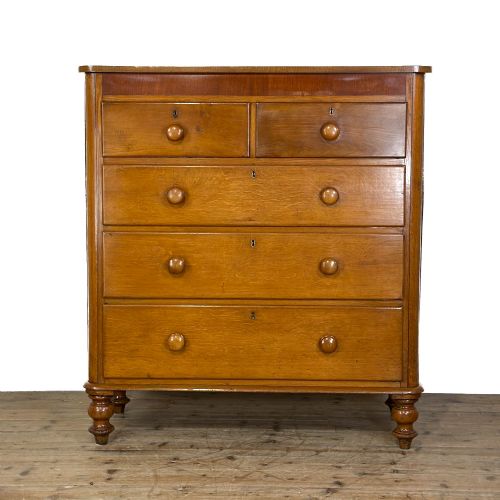
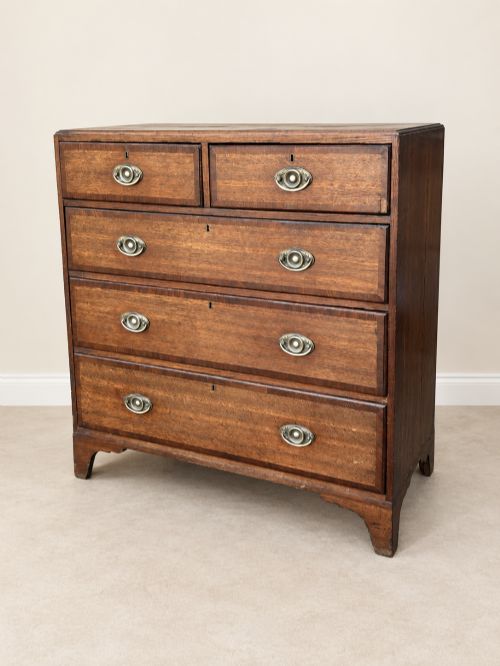
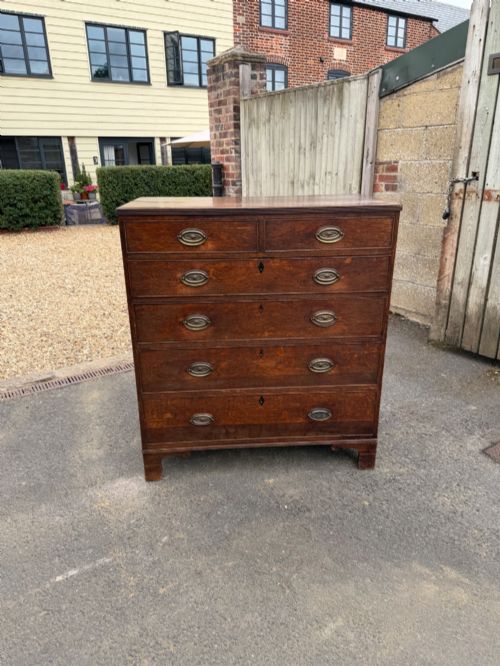
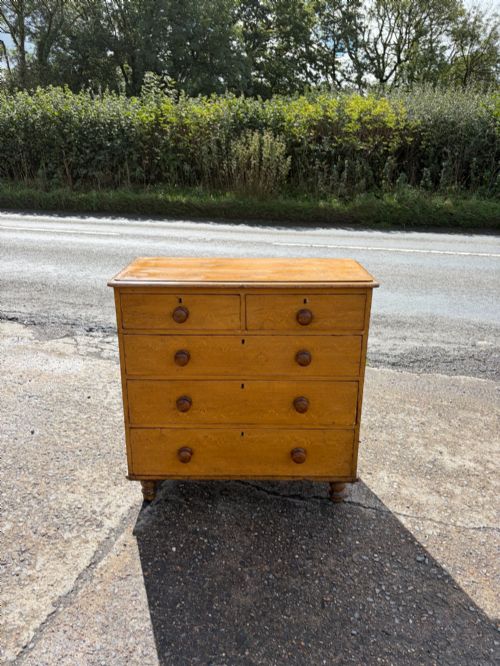
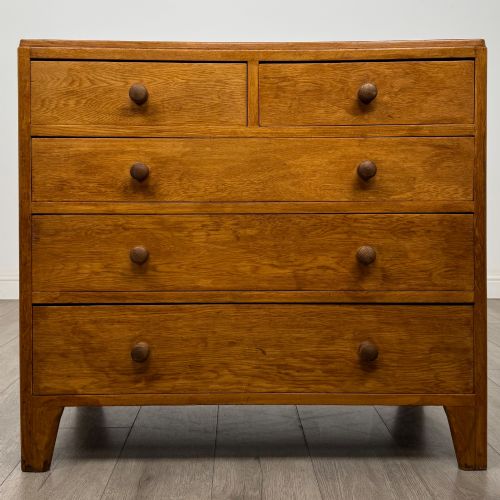
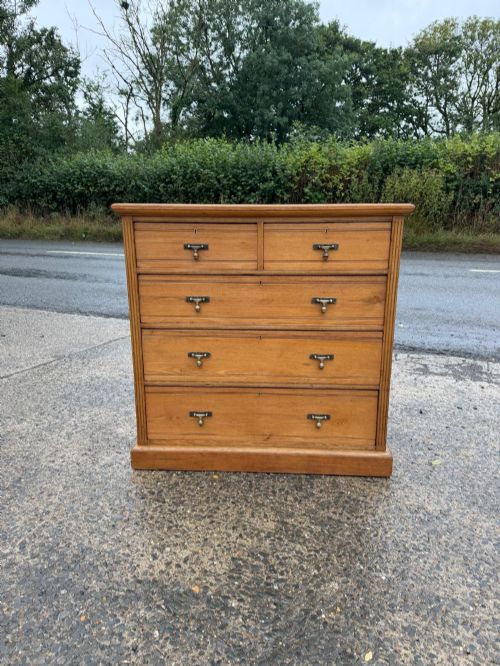
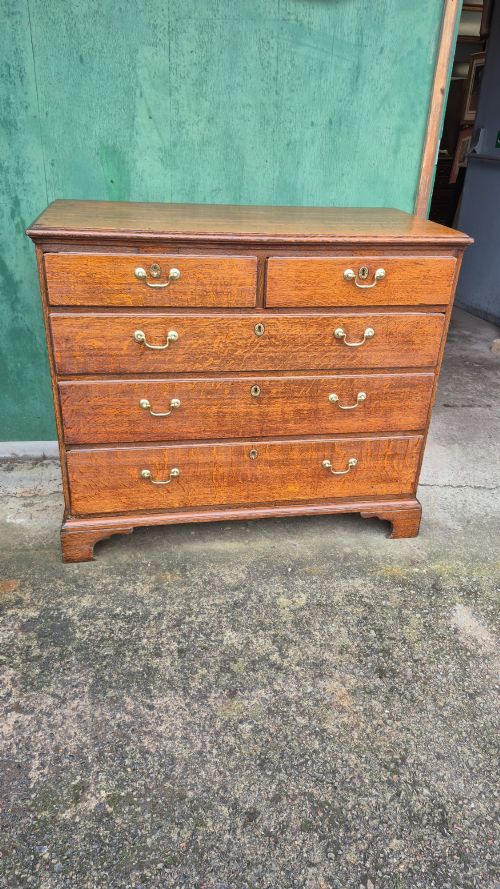
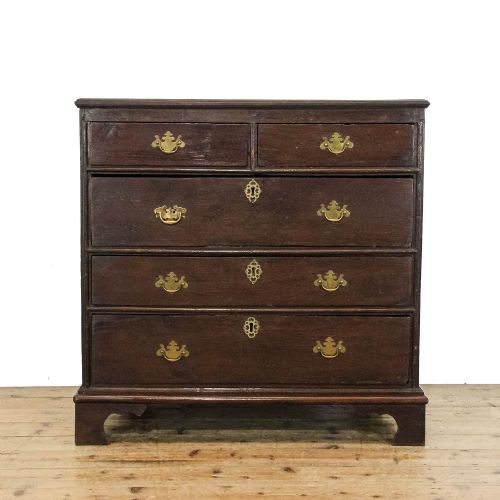
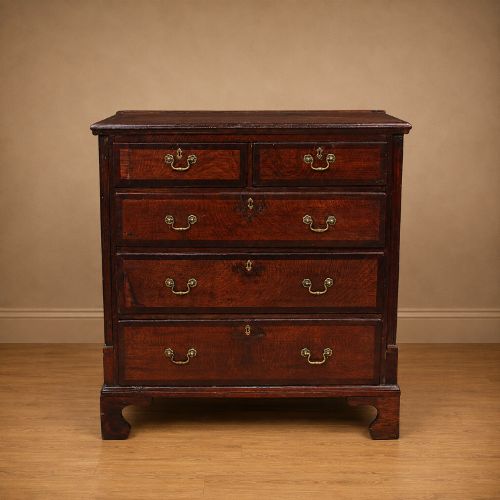
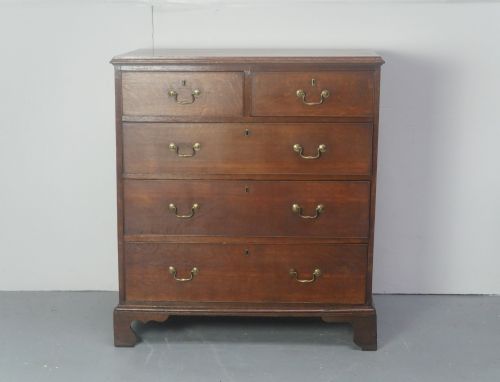
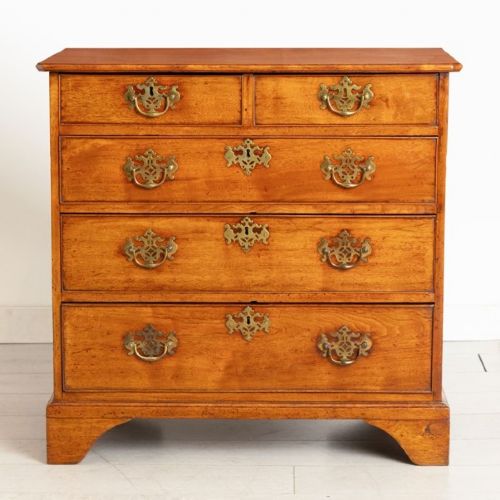
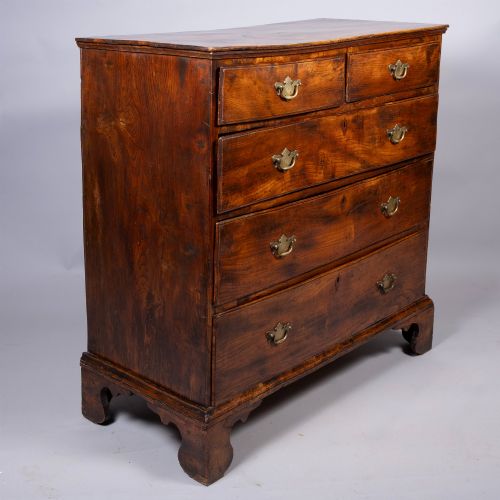
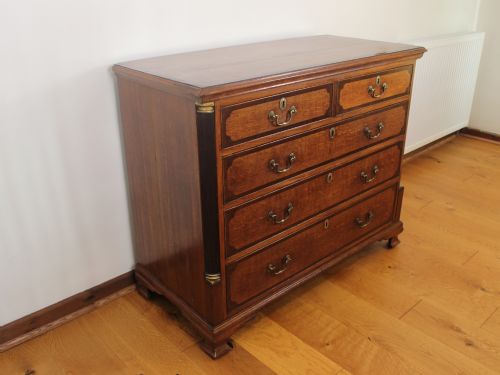
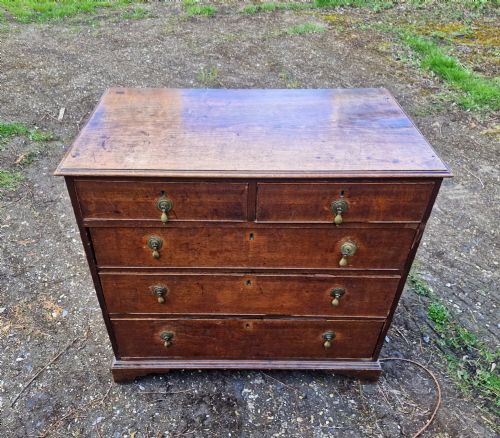
When you search for an oak two over three chest, you are looking at a classic form of storage comprising two smaller drawers above three larger graduated drawers below. The pieces appearing here span from the 17th century through the Georgian and Regency periods, representing several generations of cabinet making.
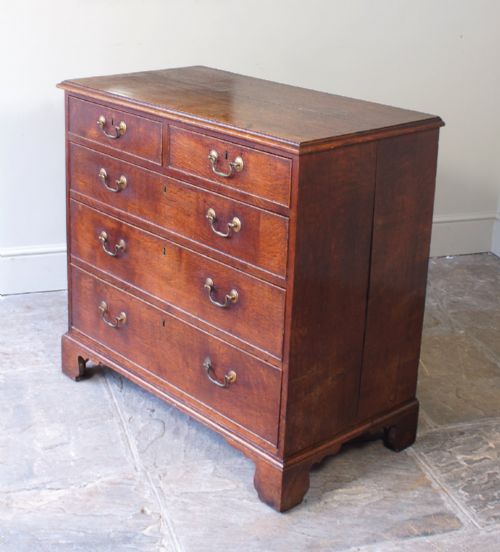
The version you are most likely to meet on this page is a Georgian or 18th-century example constructed primarily in solid oak, often featuring period brass handles and bracket feet. Regional English country pieces sit alongside more polished metropolitan items.
Makers utilised timber available locally, resulting in variations where secondary woods such as elm, walnut or fruitwood appear within drawer linings or decorative banding. The fundamental proportion remains remarkably consistent across the eras represented.
Materials and construction methods
Makers built these carcases using thick planks of solid oak, jointed together with traditional techniques that allowed the timber to breathe and move naturally over centuries. Backboards and drawer bases typically consist of native timbers like elm or pine, held together with hand-cut dovetails.
Surface decoration relies heavily on the natural grain of the wood, sometimes enhanced through mahogany crossbanding, fruitwood inlay or applied walnut veneers depending on the period. Finishing involved waxing or oiling rather than modern varnishes, protecting the surface while preserving the texture of the oak.
Some chests retain hidden compartments behind small top drawers, once used for storing secret love letters or household currency.
Discerning quality in regional furniture
The distinction between standard examples and finer items rests in the selection of timber and the crispness of the cabinet work. Figured grain, careful matching of drawer veneers and original brass hardware elevate a piece above utilitarian storage.
Structural integrity and the survival of original feet, handles and locks determine the desirability of a chest. Pieces displaying harmonious proportions, untouched patination and clean drawer construction represent the pinnacle of the maker's art.
The Oak Two Over Three Chest Glossary
- Crossbanding
- A decorative border technique where thin strips of veneer are laid across the grain of the primary wood. This creates a contrasting frame around the drawer fronts.
- Bracket feet
- Small, foot supports shaped like a bracket, often moulding into the base corners of the chest. They lift the carcase cleanly off the floor.
- Dovetail
- A joint formed by interlocking wedge-shaped fingers, used extensively in drawer construction. Hand-cut dovetails indicate older, traditional craftsmanship.
- Graduated drawers
- A design where drawers decrease in depth from bottom to top. This creates pleasing visual proportions and practical storage.
- Patina
- The surface sheen and colour developed by wood through age, handling and polishing. A rich patina signals decades of careful maintenance.
Oak Two Over Three Chest: Frequently Asked Questions
How do I date an oak chest?
Dating relies on examining construction methods, timber choices and hardware styles. Hand-cut dovetails, original brasses and the type of secondary wood all offer clues to the decade of manufacture.
Earlier pieces from the 17th century often display heavier framing and pegged joints, whilst Georgian examples showcase cleaner lines and refined bracket feet.
What does two over three mean?
This describes the internal arrangement of the drawers viewed from the front. Two small drawers sit side by side at the top, positioned directly above three wider drawers spanning the full width.
This configuration became standard during the 18th century, providing convenient storage for smaller garments above bulkier items.
Can I use these chests daily?
These pieces were built for everyday domestic utility and remain entirely functional today. Solid oak construction ensures durability, provided the drawers are not overloaded.
Maintaining a stable room temperature protects the timber from splitting, ensuring the drawers continue to slide smoothly in modern settings.
Are replacement handles common?
Many surviving chests have undergone repairs or handle replacements over centuries of use. Original brass hardware adds significant interest, but period-appropriate replacements remain acceptable.
Inspecting the interior of the drawer front reveals filled screw holes if handles were changed at a later date.