




Oak Tripod Tea Table
An oak tripod tea table is a sturdy domestic staple of the eighteenth and nineteenth centuries, built to hold porcelain without wobble.
Oak Tripod Tea Table
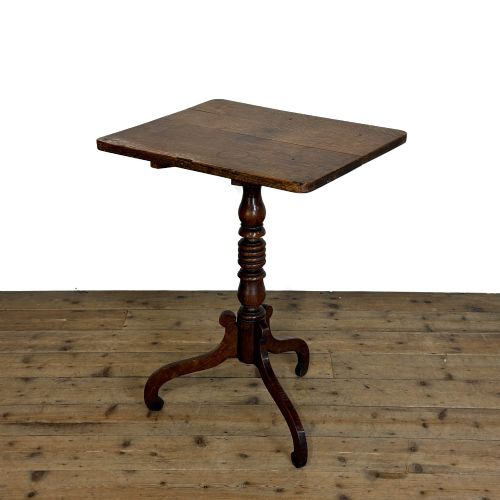
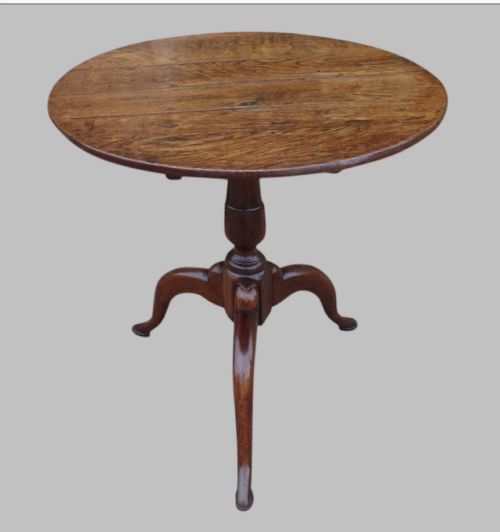
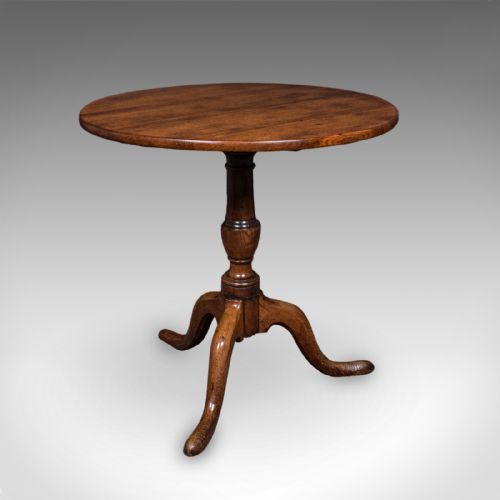
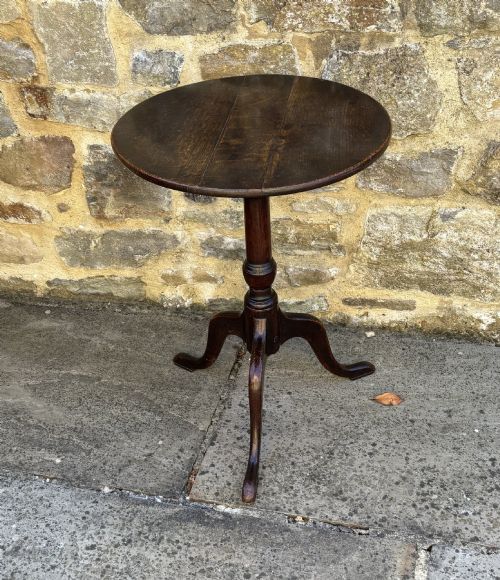
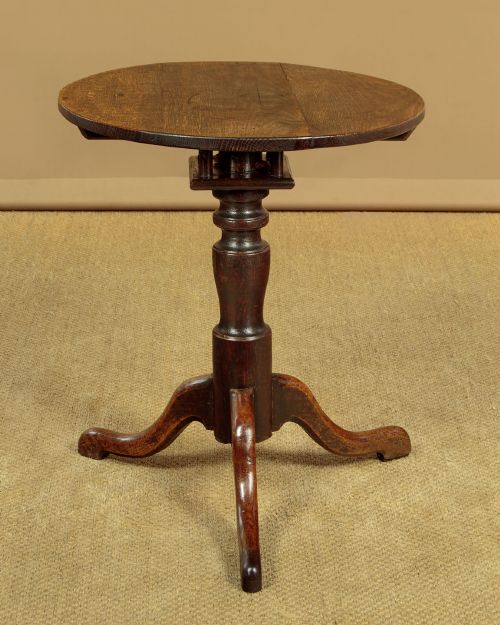
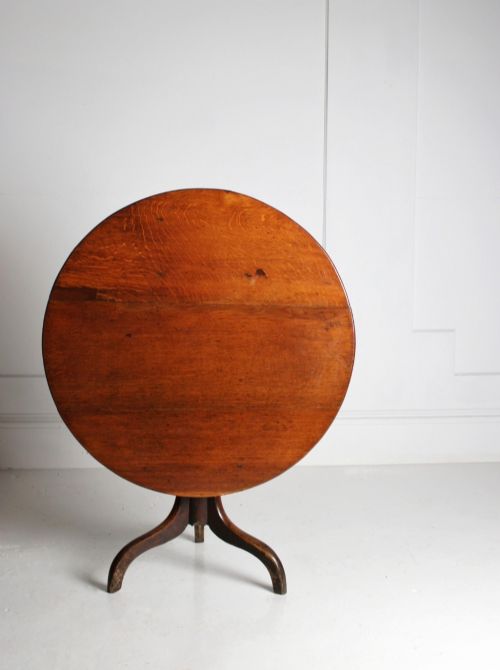
An oak tripod tea table stands on three legs supporting a central pillar, designed for evening service in domestic parlours. The form emerged strongly in the eighteenth century alongside the growing popularity of tea and porcelain.
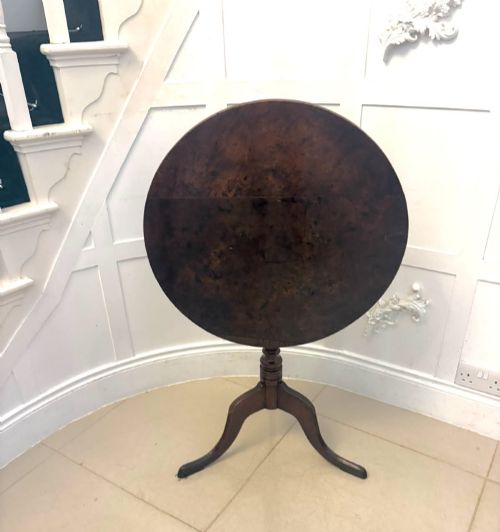
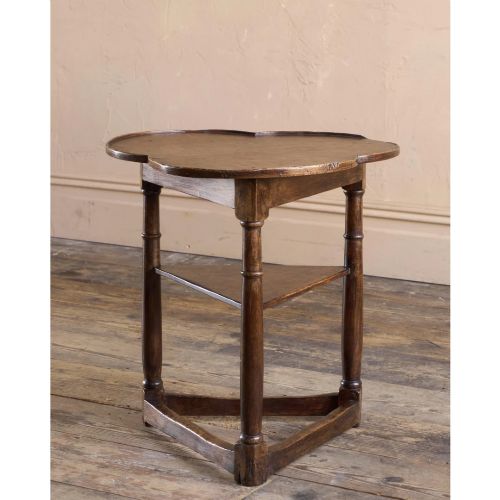
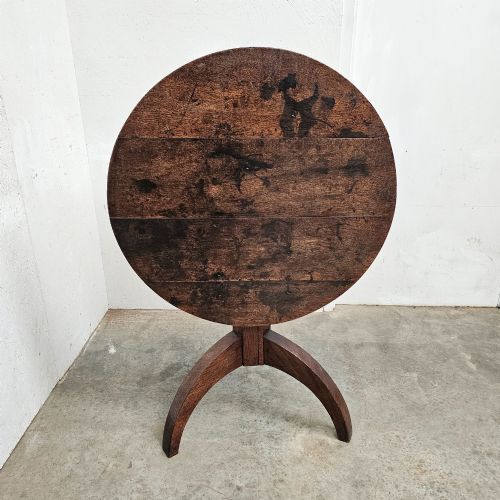
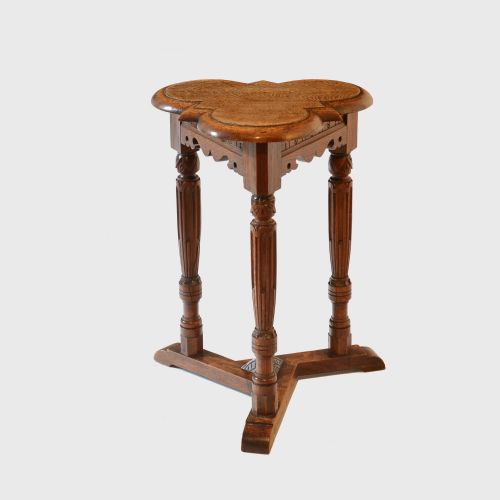
Examples on this page span the Georgian and Victorian eras, taking the form of occasional tables, side tables and centre tables. Many pieces feature tilt-top or snap-top mechanisms that allow the surface to flip vertically when not in use.
Makers ranged from country workshops to urban cabinet makers, producing both plain vernacular items and refined Georgian pieces. Timber selection varies from standard oak to figured varieties like pollard and burr oak.
How they were made
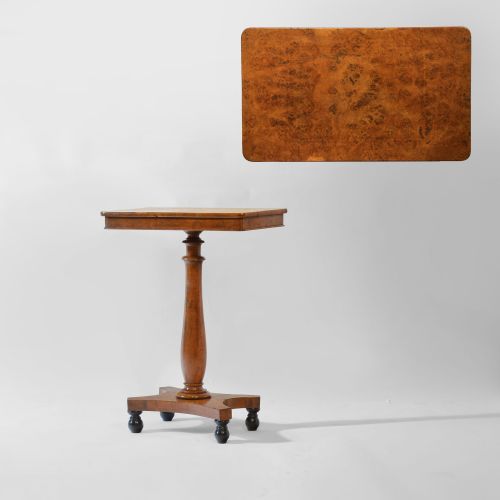
Cabinet makers constructed these tables primarily from solid timber, utilising oak alongside secondary woods such as beech and fruitwood for internal components. Specialised variants incorporated burr oak or pollard oak for decorative tabletops.
Turning lathes shaped the central pedestals and legs, while joiners formed the tripartite bases using traditional jointing methods. Tilt-top variants relied on wooden catches and brass mechanisms to secure the top in a horizontal position.
Secret tarot tables await discovery, carved with zodiac symbols for Victorian parlor divination.
What varies in quality
The sophistication of the timber figure defines the upper tier of these tables, particularly where burr oak or pollard oak creates rich grain patterns. Plain vernacular pieces from country workshops display simpler execution compared to urban cabinet work.
Proportion and stability in the three-legged base separate finer examples from utilitarian pieces. The precision of the tilt mechanism and the integrity of the pedestal turning further distinguish standard domestic furniture from superior items.
The Oak Tripod Tea Table Glossary
- Tilt top
- A tabletop mounted on a hinge mechanism that allows the surface to pivot upright. This function saved space in smaller rooms when the table rested against a wall.
- Birdcage
- A revolving wooden framework beneath the tabletop that permits the surface to rotate as well as tilt. This construction is typical of finer Georgian pedestal tables.
- Tripod base
- A support structure comprising three legs radiating from a central pillar. The design ensures firm placement on uneven floorboards.
- Vernacular
- Furniture produced by regional makers for local use rather than following strict urban fashion. These pieces often display robust construction and simple decorative choices.
- Snaptop
- An alternative term for a tilt-top table, referencing the catch that locks the surface into position. The mechanism prevents accidental tipping during use.
Oak Tripod Tea Table: Frequently Asked Questions
What was an oak tripod tea table used for?
These tables served primarily in parlours and drawing rooms to hold tea service equipment, cups and teapots during evening gatherings. Their movable tops allowed servants to tuck them against walls when the room required more floor space.
Later Victorian examples also functioned as lamp tables, tarot tables or general occasional surfaces for reading materials. Their compact footprint made them adaptable for placement beside seating.
How do I identify a Georgian oak tripod table?
Georgian examples typically exhibit pegged joinery, turned central pillars and tripod bases with pad or snake feet. The timber often shows deep patination developed through centuries of domestic use.
Many of these pieces incorporate tilt-top actions with simple wooden or brass latches. The proportions generally remain balanced, reflecting the classical design standards of the eighteenth century.
Why do some tables have tilting tops?
Tilting tops were a practical invention for domestic spaces where rooms served multiple functions throughout the day. By flipping the surface vertical, households could store the bulky tables against the perimeter of the room.
This mechanism also protected the polished wooden surface from accidental damage when the furniture was idle. The design represents an efficient use of space in historical homes.
What is the difference between oak and pollard oak?
Standard oak comes from the main trunk of the tree, displaying a straight grain and familiar medullary rays. It provides structural strength and a uniform appearance suited to vernacular and formal furniture alike.
Pollard oak derives from trees that were pruned close to the trunk, creating dense, swirling growth patterns known as burr or pollard figure. Cabinet makers reserved these highly decorative sections for prominent tabletops.