


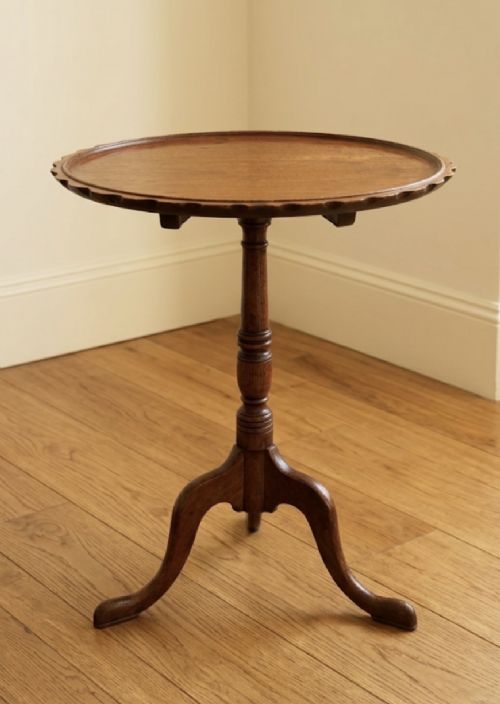


Oak Tilt Top Side Table
An oak tilt top side table combines clever folding mechanics with sturdy timber, serving as a versatile display piece or supper stand that tucks away easily when not in use.
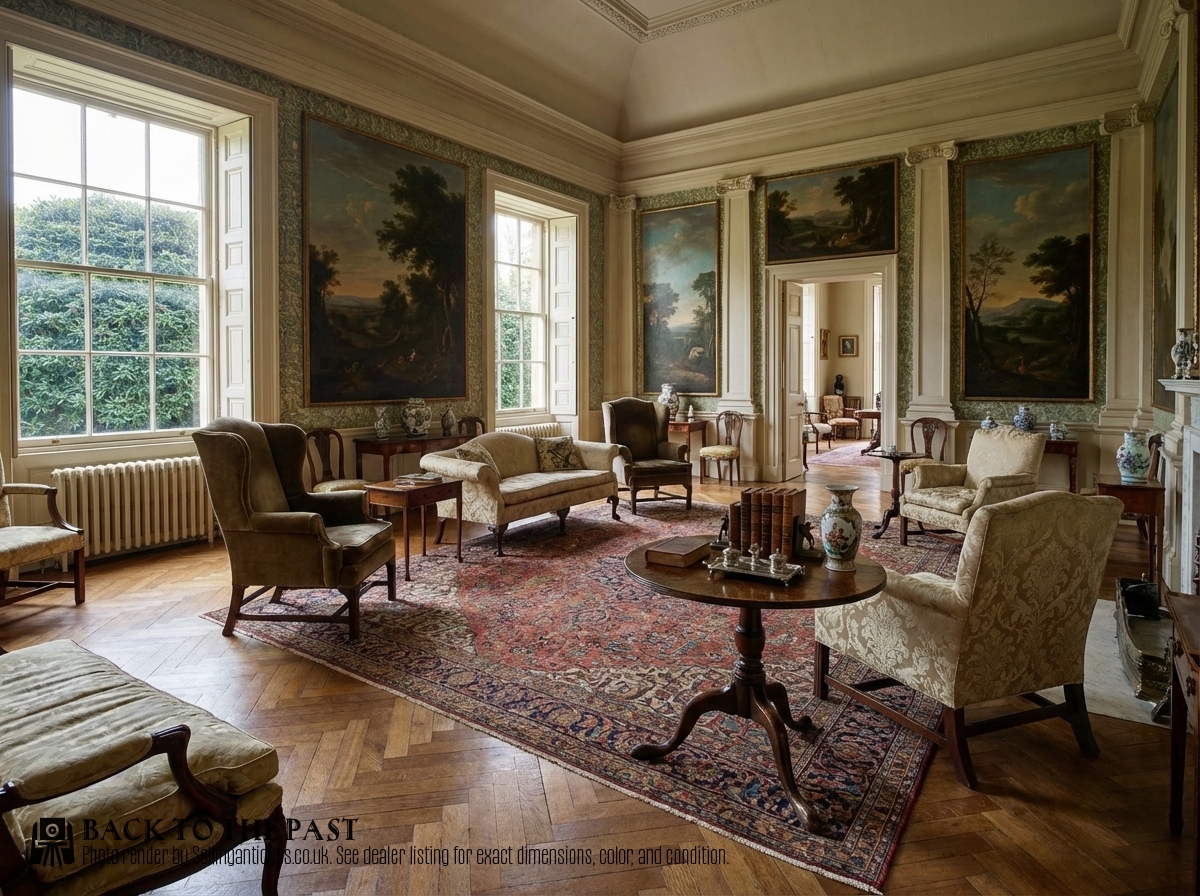
Oak Tilt Top Side Table
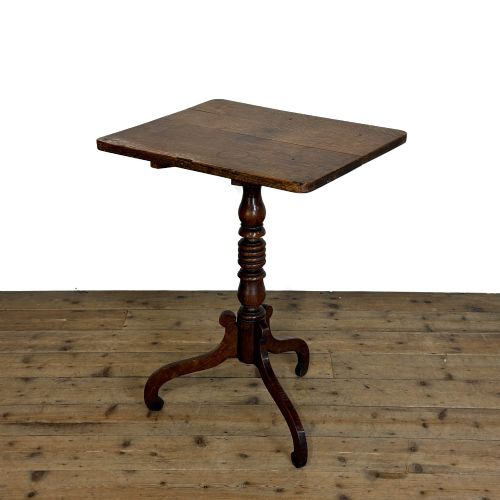
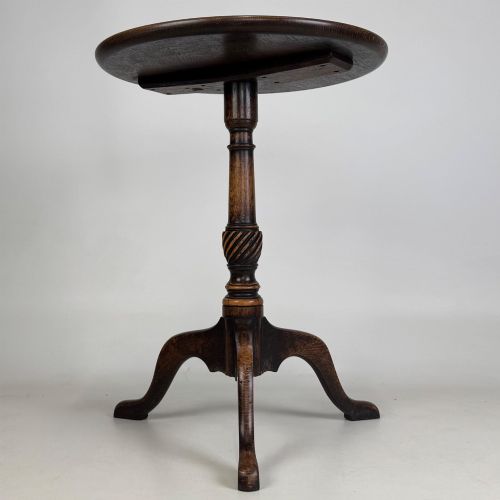
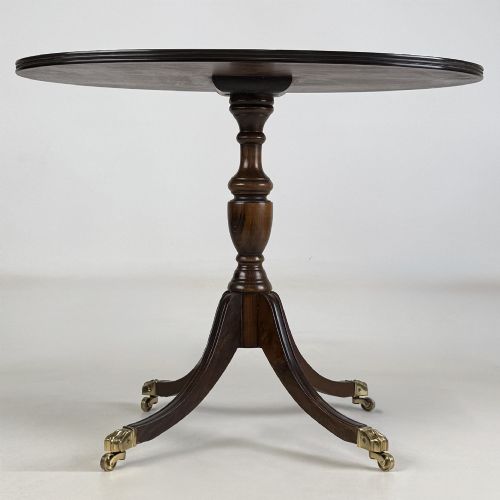
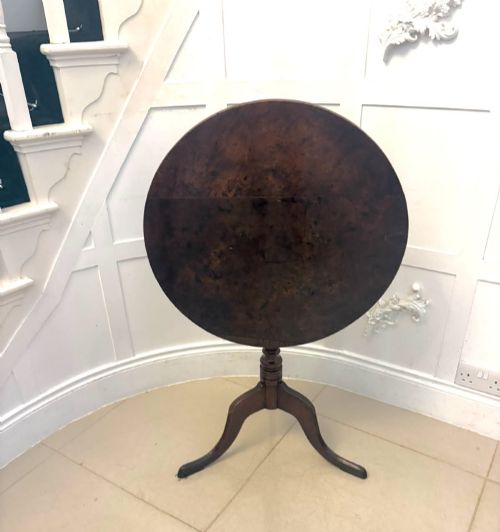
An oak tilt top side table represents a practical staple of British domestic interiors, designed with a pivoting mechanism that allows the surface to stand vertically against a wall when space is needed. These versatile pieces frequently appear as tripod tables, wine tables, and occasional stands originating from the eighteenth and nineteenth centuries.
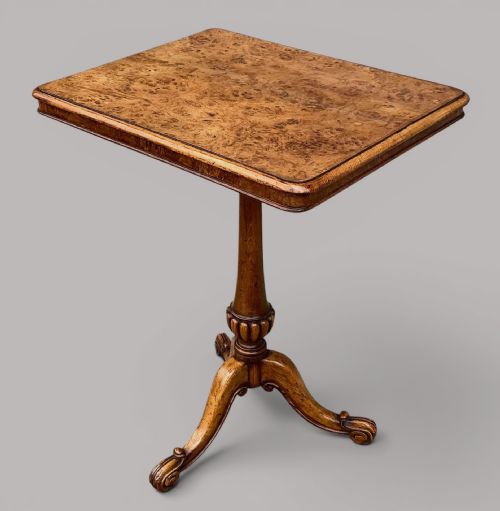
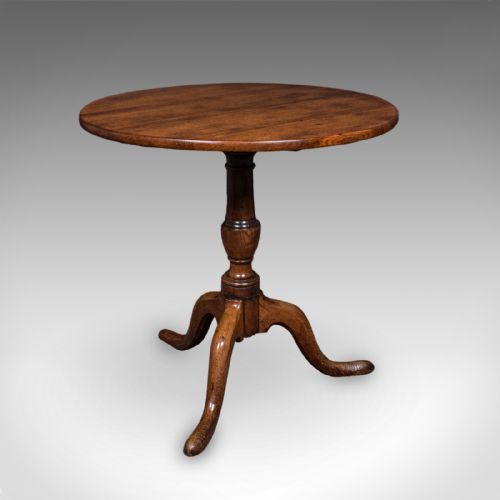
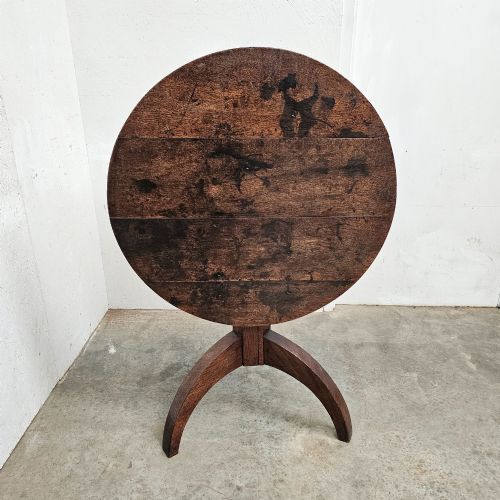
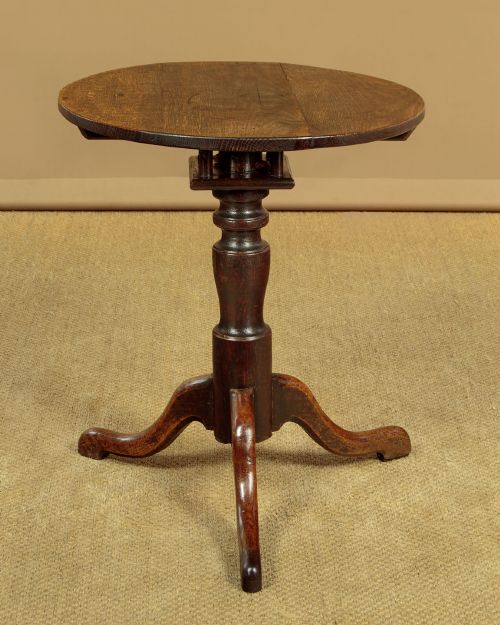
The selection on this page leans heavily toward Georgian country furniture alongside Victorian and Regency variations. Buyers encounter round plank tops, birdcage mechanisms, and occasional rectangular surfaces supported by pedestals with three splayed legs.
Materials and construction
Cabinet makers relied primarily on solid oak, frequently supplemented by burr oak, fruitwood, beech, and yew for contrasting grain patterns and durability. Brass components often appear in the tilting catches, hinges, and small fittings.
The pedestal construction typically joins a turned column to three splayed legs using traditional joinery, while the top pivots on a wooden or brass catch. Surfaces range from plain boards to parquetry and inlaid details.
Some Victorian variations include zodiac carvings and parlour drinking boards, proving our ancestors enjoyed an occasional mystical game with their wine.
Judging the standards
Quality rests heavily on the crispness of the turning on the central column and the stability of the tripod base when locked flat. Superior examples exhibit tightly fitted tilt mechanisms that do not wobble or sag with age.
The choice of timber also dictates the tier, with figured burr oak or select quarter-sawn boards commanding attention over plain utility planks. Original patination and minimal structural repairs elevate the standing of any piece.
The Oak Tilt Top Side Table Glossary
- Tilt top
- A table top hinged to the pedestal so it can pivot to a vertical position when not in use. This clever space-saving design allowed the furniture to line the walls of parlours and dining rooms.
- Tripod table
- A small freestanding table supported by a central pillar resting on three legs. This arrangement prevents the table from rocking on uneven floorboards.
- Birdcage
- A timber framework beneath the table top that incorporates a revolving collar and a catch. It allows the surface to both tilt and rotate independently.
- Plank top
- A table surface constructed from solid wooden boards joined edge to edge. Country pieces often utilise this straightforward method rather than veneered panels.
- Snaptop
- An alternative term for a tilt top table, referencing the spring catch or latch that snaps the surface securely into its horizontal position.
Oak Tilt Top Side Table: Frequently Asked Questions
What was an oak tilt top side table used for?
These tables served multiple domestic functions throughout the eighteenth and nineteenth centuries, acting as temporary surfaces for tea, wine, or reading material.
Because the tops could tilt vertically, the furniture functioned as a space-saving device, standing flat against a parlour or drawing-room wall when the room needed to be cleared.
How do I spot an 18th century oak tilt top table?
Eighteenth-century examples typically display pegged tenon joints, hand-turned pedestals with distinct tool marks, and rich, dark patination built up over generations of polishing.
Inspect beneath the top to check for handmade iron or brass catches and simple, honest construction methods common in Georgian country workshops.
How do I maintain the tilt mechanism?
Keep the moving pivot points clean and free of dust, and apply a very light application of appropriate wax or oil if the wooden catches begin to stick.
Avoid forcing the pivot if it feels stiff, ensuring the locking pin or catch is fully disengaged before attempting to tilt the surface.
Will a tripod tilt top table wobble on modern floors?
Tripod bases naturally distribute weight across three points, which actually helps them remain stable on uneven historic floorboards compared to four-legged furniture.
If a slight rock occurs on modern flat flooring, check that the central column is securely fastened to the leg assembly without loose joints.