
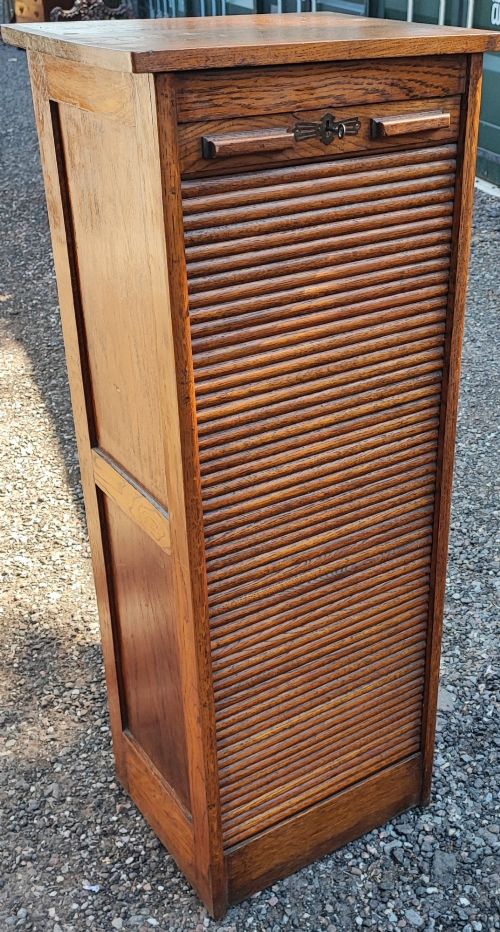
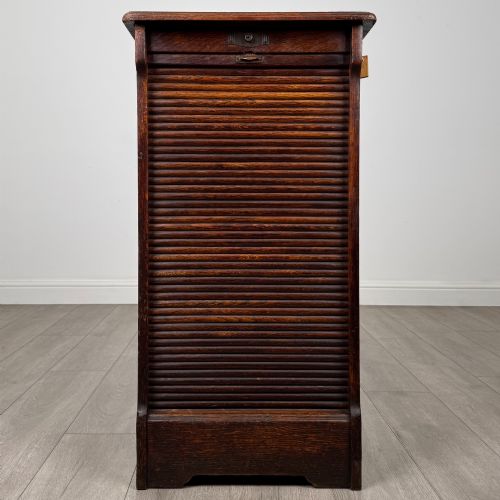
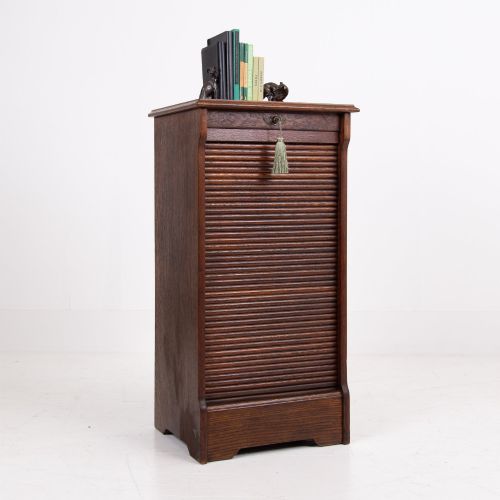
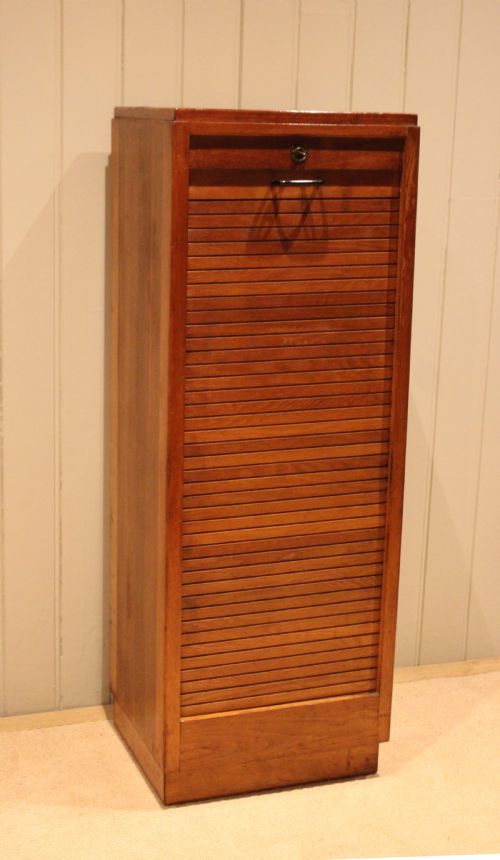
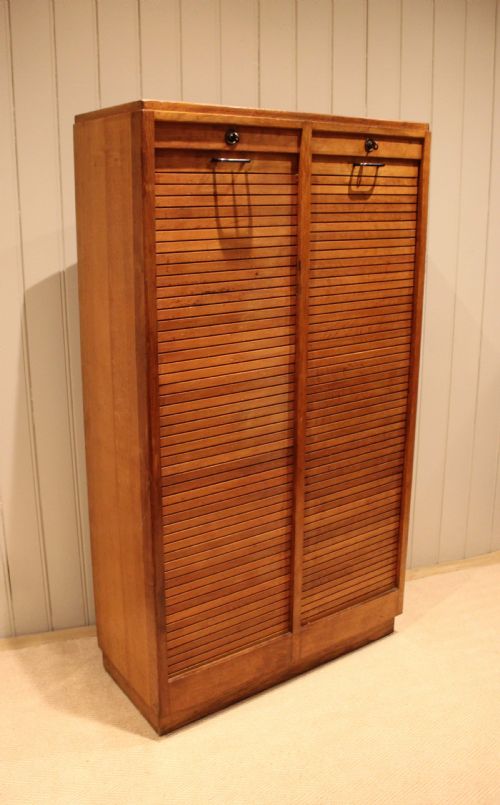


Oak Tambour Filing Cabinet
An oak tambour filing cabinet brings sliding wooden shutter doors and generous compartmentalisation to a workspace, combining practical document storage with period character.
Oak Tambour Filing Cabinet
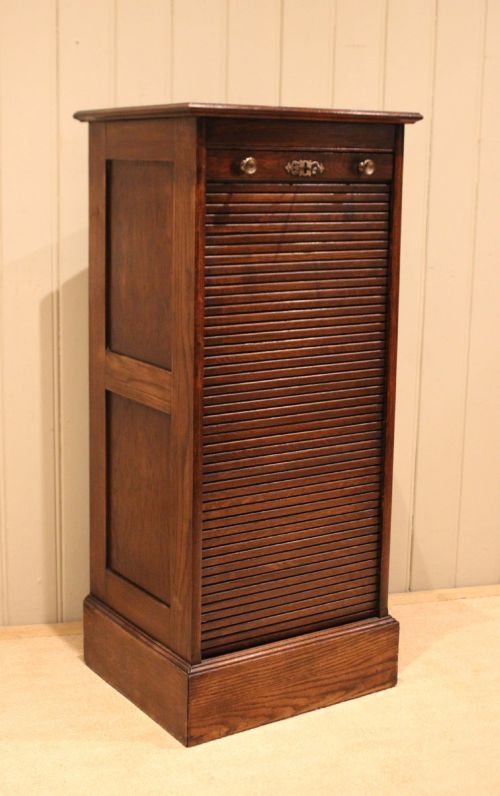
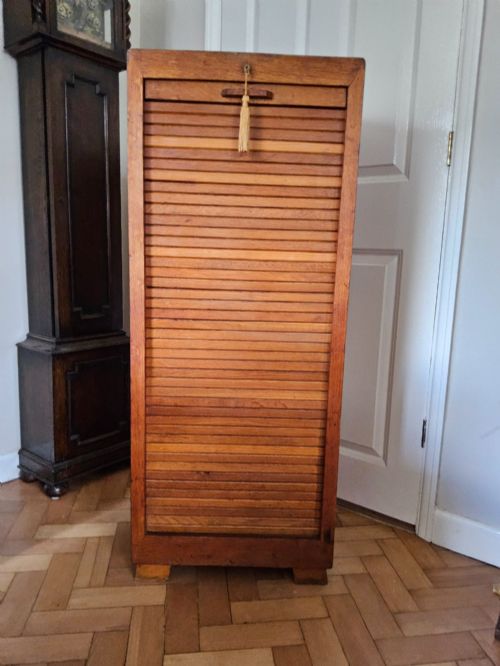
An oak tambour filing cabinet is a functional office storage piece characterised by slatted wooden shutters that slide smoothly around a track to reveal internal document shelves. These cabinets appear primarily in Edwardian and early twentieth century pieces, extending through the nineteen-thirties and nineteen-forties.
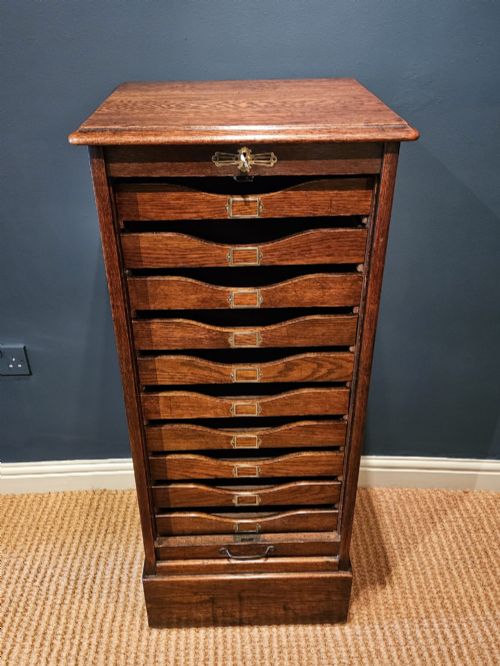
Most examples found here take the form of single or double tambour front filing cabinets, constructed in English or French workshops. The internal configuration typically consists of multiple open letter trays designed to keep commercial correspondence organised.
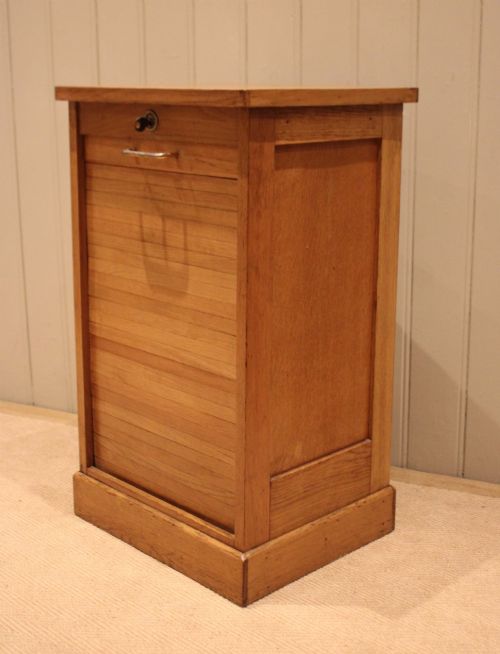
Proportions range from small, light oak filing cabinets suited for domestic studies to substantial double and triple door office cabinets built for heavy administrative use. Buyers often encounter pieces reflecting Edwardian practicality alongside later Art Deco and French Utility designs.
Materials and construction
The primary material across these pieces is solid or veneered oak, paired with brass handles, escutcheons, and label holders. Interior mechanisms often rely on steel springs, canvas backing tapes, or metal tracks to ensure the flexible wooden slats roll seamlessly.
The tambour door itself is constructed from numerous narrow slats of oak glued or pinned to a flexible canvas backing, allowing the shutter to curve around the sides of the cabinet carcase. Cabinet makers joined the main structure using durable housing and dovetail joints to withstand daily office opening and closing.
Listings span from nineteen-ten Edwardian designs through nineteen-forties French Utility models, predominantly constructed in oak.
Distinctions in craftsmanship
Quality in an oak tambour filing cabinet rests upon the smoothness of the shutter mechanism and the precision of the slatted tracks. Superior examples operate without sticking, while lesser pieces suffer from warped slats or worn internal canvas guides that jam during travel.
The selection of timber grain and the crispness of the oak moulding distinguish standard commercial office furniture from finer examples commissioned for executive spaces. Original brass hardware and intact internal wooden shelving also elevate the integrity of a piece.
The Oak Tambour Filing Cabinet Glossary
- Tambour
- A flexible door made of narrow wooden slats attached to a fabric backing that slides in a recessed track. This clever mechanism allows the door to disappear into the sides of the cabinet.
- Escutcheon
- A protective metal plate surrounding a keyhole. It secures the wood around the lock from splitting during frequent use.
- Edwardian
- A period spanning the early twentieth century defined by lighter, more refined furniture forms than the preceding Victorian era. Pieces from this time often utilise bright English oak.
- Art Deco
- A design style emerging in the nineteen-twenties and nineteen-thirties characterised by geometric lines and streamlined forms. Cabinets from this movement introduce modern styling to traditional storage.
- French Utility
- A utilitarian design movement arising from mid-century regulations and material shortages. Pieces from this origin focus on straightforward construction and functional purpose.
Oak Tambour Filing Cabinet: Frequently Asked Questions
How do tambour doors work?
Tambour doors operate through a series of narrow wooden slats glued to a canvas backing, which runs along a curved groove cut into the cabinet carcase. This design lets the shutter roll around the side of the unit to save workspace.
Smooth operation depends on clean tracks and intact backing fabric, allowing the door to glide open effortlessly.
Can these cabinets hold standard paper?
Most historical filing cabinets were built for nineteenth and early twentieth century stationery sizes rather than modern paper formats. Internal letter trays suit smaller documents, notes, and correspondence.
Buyers often adapt the internal shelving to accommodate modern folders while preserving the exterior period appearance.
How do I date an oak cabinet?
Dating relies on stylistic clues, hardware choices, and construction details such as drawer joints and timber selection. Edwardian examples often display traditional bracket feet and light oak finishes, while nineteen-thirties pieces show Art Deco influences.
French variations frequently utilise distinct panel proportions and locking mechanisms characteristic of continental cabinet makers.
Where were these cabinets used?
These units served as essential administrative furniture in Edwardian offices, solicitors' chambers, and merchant banks. Their secure locking doors kept confidential ledgers and correspondence safe throughout the working day.
Today, they transition easily into domestic studies and living rooms as practical storage for modern paperwork.