




Art Deco Oak Storage
Art deco oak storage combines geometric lines with honest timber, offering practical organisation and period character for modern interiors.
Art Deco Oak Storage
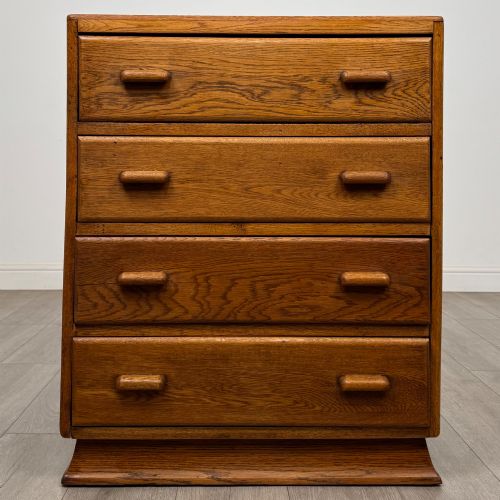
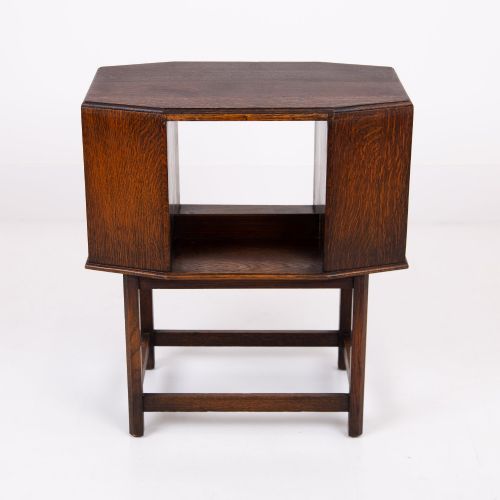
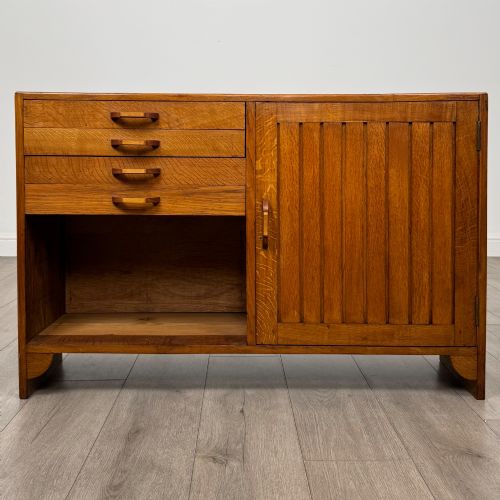
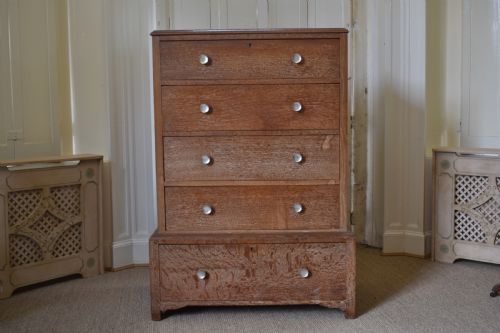
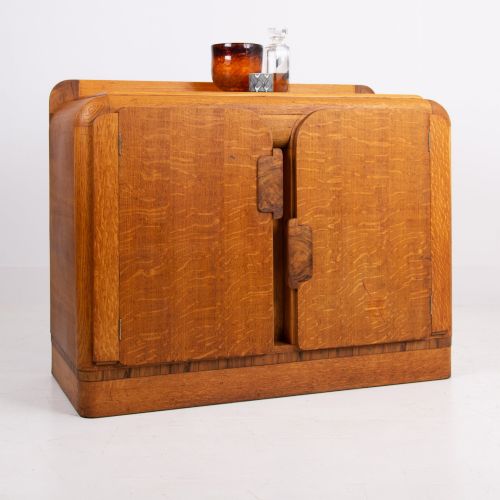
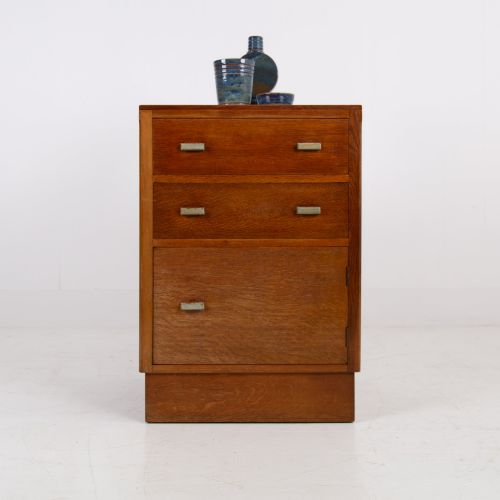
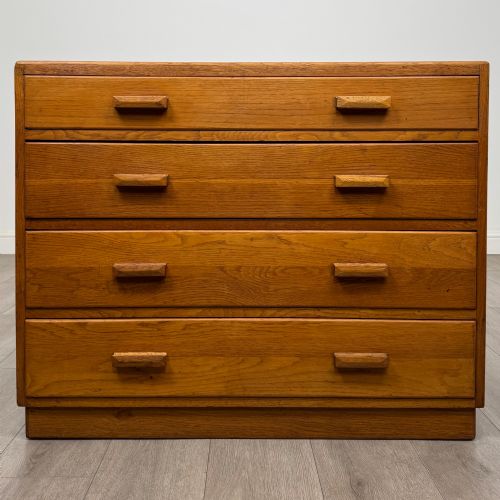
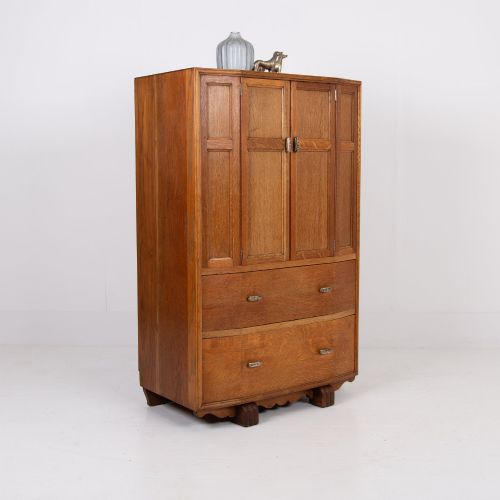
Art deco oak storage encompasses furniture designed to keep rooms orderly, spanning cabinets, chests of drawers, bookcases, sideboards, and tallboys. These forms emerge from periods including the 1930s, 1920s, and Edwardian eras, displaying the robust utility typical of early twentieth-century design.
Buyers meet variations ranging from compact side tables with storage to expansive sideboards, haberdashery cabinets, and tambour-fronted filing units. Solid oak and limed oak dominate the available forms, frequently paired with metal, brass, or glass elements to accent the geometric silhouettes.
What varies in quality
Quality separates through the integrity of the timber selection, such as the choice between standard solid oak and decorative burr oak veneers or specialised limed finishes. Superior pieces demonstrate crisp execution in geometric mouldings, stepped details, and integrated storage mechanisms.
The sophistication of hardware, including original brass handles and smooth-running tambour fronts or drawers, distinguishes finer workshops and branded pieces from standard production. Construction depth, seen in specialised items like haberdashery cabinets or fitted canteens, also defines the upper tier.
Listings feature oak, limed oak, and walnut timbers across decades spanning from 1910 through the Edwardian period and the 1930s to 1940.
Gomme·Charles Dudouyt·Betty Joel·Heals of London
The Art Deco Oak Storage Glossary
- Limed oak
- Timber treated with a special finish that leaves a white pigment in the open grain, creating a pale, frosted appearance popular in twentieth-century furniture design.
- Tambour
- A flexible shutter made of narrow wooden slats attached to a canvas backing, allowing doors to slide smoothly around curves on cabinets and filing units.
- Tallboy
- A tall chest of drawers, often combining cupboard space above with drawer storage below, designed to maximise vertical capacity in compact rooms.
- Haberdashery cabinet
- A multi-drawer display unit originally utilised in shops for small goods, prized today for sorting domestic items with numerous shallow glass-fronted or wooden drawers.
- Canteen
- A fitted wooden box or chest specifically designed to store a matching set of cutlery securely in individual slots and compartments.
Art Deco Oak Storage: Frequently Asked Questions
How do I date art deco oak storage?
Dating relies on stylistic markers such as stepped silhouettes, geometric carvings, and specific finishes like limed oak typical of the interwar decades. Construction methods and hardware materials also offer clues to whether a piece belongs to the Edwardian era or the 1930s.
Comparing handles, hinges, and internal drawer construction against known period examples helps narrow down the decade of manufacture. Documentation or maker signatures, where present, provide definitive chronological reference.
Where were these storage pieces used?
These items served functional roles across domestic and commercial spaces, from bedroom tallboys and living room bookcases to shop display haberdashery units. Sideboards and cocktail cabinets equipped dining rooms and reception areas for entertaining guests.
Smaller side tables and drum-shaped stools provided discreet storage in hallways and tight corners. Office environments utilised tambour-fronted filing cabinets to keep paperwork organised.
How do I care for limed oak furniture?
Limed oak requires gentle dusting with a soft, dry cloth to prevent dirt accumulation within the recessed white grain. Avoid harsh chemical cleaners or silicone polishes that can discolour the pale finish over time.
Keep pieces away from direct sunlight and heat sources to prevent the oak timber from warping or splitting. Occasional application of appropriate wax preserves the surface sheen without masking the distinctive grain texture.
What is a tambour front?
A tambour front consists of narrow slats of oak glued to a flexible canvas backing, allowing the door to track smoothly around a curved cabinet corner. This mechanism conceals interior shelving or drawers while saving the clearance space required by swinging doors.
Originating in practical office and shop furniture, the design was adopted by modernists for its clean, uninterrupted lines. Maintaining smooth operation involves keeping the internal tracks free of dust and debris.