
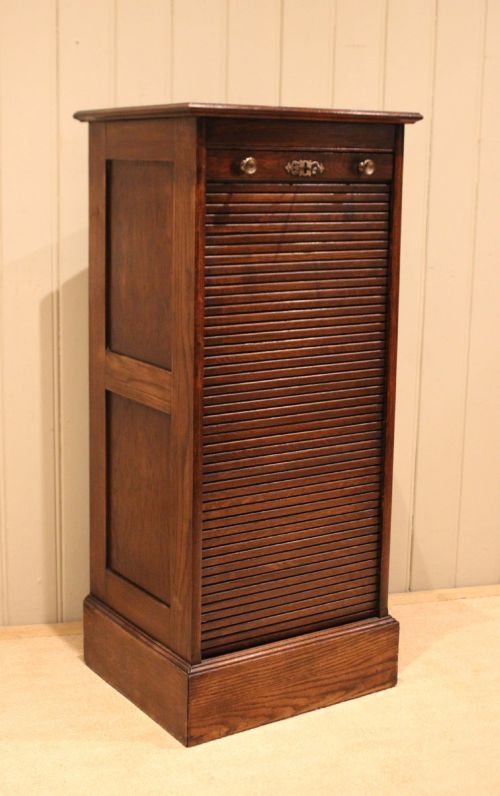
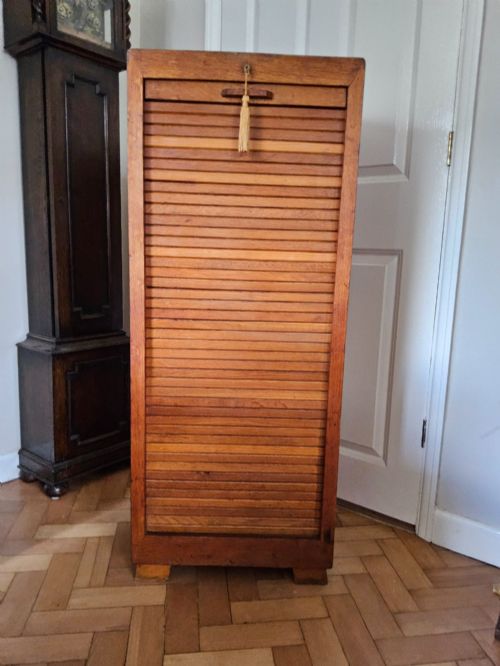
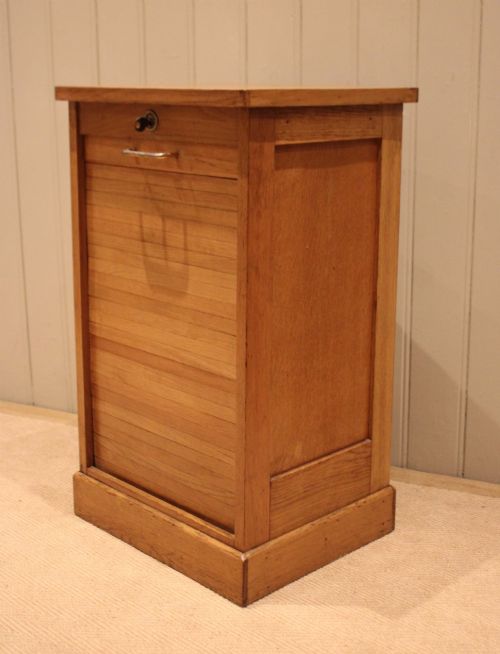
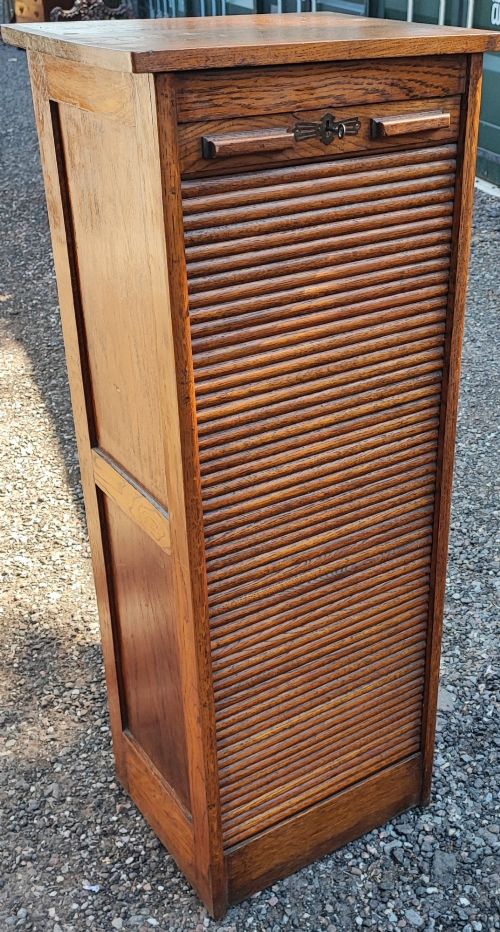


Shutter Front Office Cabinet
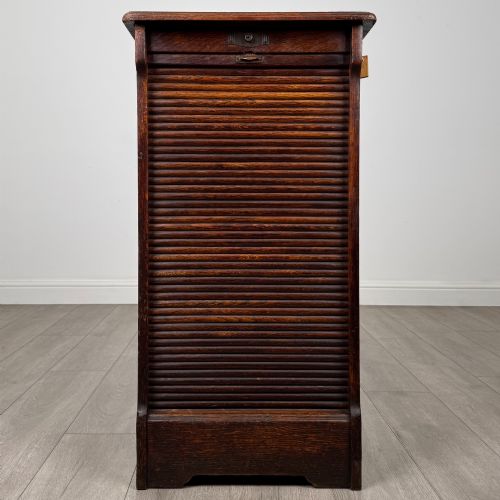
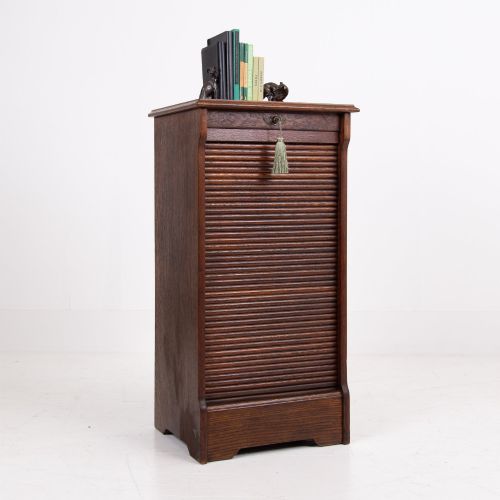
A shutter front office cabinet brings practical organisation and rich period character to a workspace, offering clever slatted doors that slide away to save precious floor space.
Shutter Front Office Cabinet
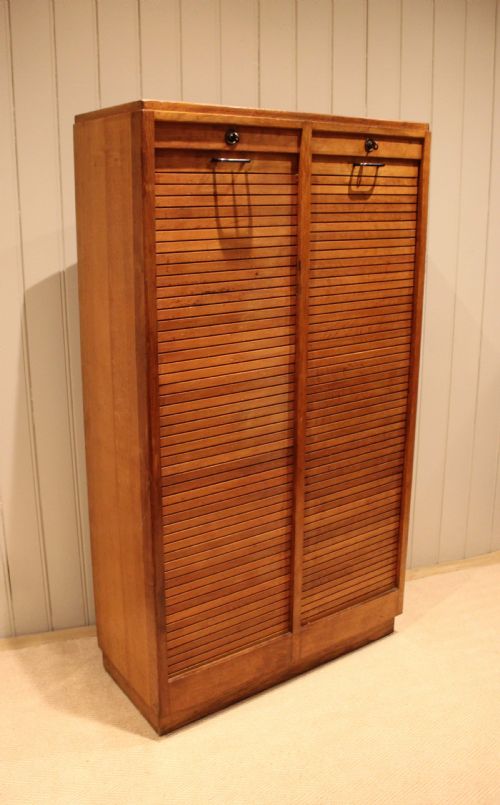
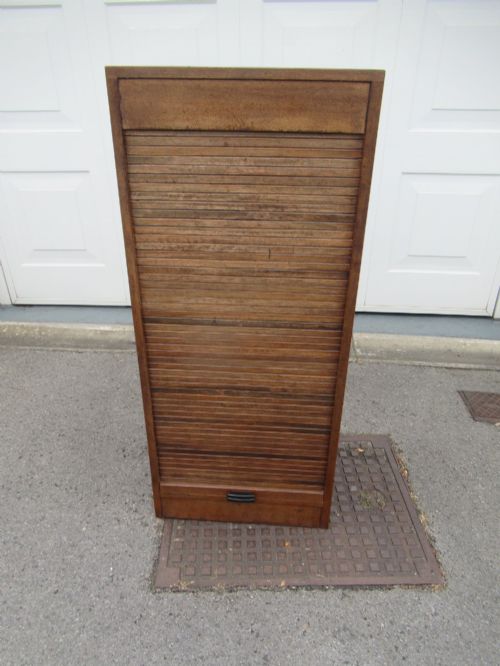
A shutter front office cabinet represents a clever piece of functional workspace furniture designed to keep documents and ledgers neatly stored out of sight. When you search for a shutter front office cabinet, you are looking at practical storage pieces built during the early twentieth century, spanning the Edwardian era through the nineteen-forties. These units generally take the form of dedicated filing cabinets equipped with slatted sliding doors, which glide smoothly along internal tracks rather than swinging outward on hinges.
The versions most frequently met on this page are constructed from oak, reflecting the dominant material choices of the Edwardian period and nineteen-thirties workshops. You will encounter both single and double door configurations, ranging from small, neatly proportioned examples to larger office filing units. While most adhere to utilitarian British or continental office designs, occasional pieces lean towards Art Deco or French Utility aesthetics.
How they were made
Makers built these cabinets primarily using solid timber frameworks, with oak and mahogany appearing most often alongside occasional pine structures. The defining technical feature is the tambour door, constructed from many narrow wooden slats glued to a flexible canvas or fabric backing. This assembly allows the shutter to bend around tight internal curves as it slides open.
Hardware played a functional role, utilising brass for handles, label holders and locking mechanisms that secured the contents of the office. Metal and steel components occasionally reinforced the internal framework or sliding tracks, ensuring the slatted shutters operated smoothly with daily workplace use.
Listings feature pieces spanning the Edwardian period through to the nineteen-forties, constructed primarily in oak with mahogany and pine examples.
What varies in quality
The division between standard utility office furniture and finer examples rests largely on the selection of timber and the precision of the joinery. Superior pieces display carefully chosen oak or mahogany grain across the exterior, whilst lesser examples rely on plainer pine or utility grade timber. The smoothness of the tambour mechanism itself reveals the underlying craftsmanship, as well-made shutters glide effortlessly without catching on the internal canvas backing.
Proportion and detailing further distinguish the range, with smaller, finely proportioned cabinets commanding greater attention than purely utilitarian bulk storage. Original brass hardware, intact locking mechanisms and clean interior partitions indicate an office cabinet that received careful maintenance throughout its working life.
The Shutter Front Office Cabinet Glossary
- Tambour
- A flexible door made of narrow wooden slats attached to a fabric backing. This construction allows the shutter to slide around a curved track.
- Edwardian
- The period spanning the reign of King Edward VII, noted for furniture that combined traditional craftsmanship with practical office utility.
- Art Deco
- A design style emphasising geometric forms and streamlined shapes, appearing on select office cabinets from the interwar years.
- French Utility
- A functional design movement born from mid-century restrictions, producing honest, unadorned office furniture built for straightforward purpose.
Shutter Front Office Cabinet: Frequently Asked Questions
How do tambour doors work?
Tambour doors operate by sliding along hidden vertical or horizontal tracks built into the cabinet sides. The individual wooden slats are secured to a flexible canvas backing, which allows the entire shutter to bend and disappear into the body of the unit when opened.
This ingenious mechanism means the doors require no clearance space in front of the cabinet, making them ideal for tight office corners.
What were these cabinets used for?
These cabinets served primarily in commercial offices, solicitors' practices and administrative rooms for storing paper files, ledgers and stationery. The lockable shutter fronts kept sensitive documents secure and protected from dust during the working day.
Today, they translate easily into domestic settings as filing storage, hallway tidy units or living room sideboards.
How do I date an office cabinet?
Dating relies on examining the timber, hardware, construction methods and stylistic clues present in the piece. Edwardian examples often feature rich oak with traditional brass drop handles, whilst nineteen-thirties and nineteen-forties versions may show simpler lines or French Utility influences.
Makers frequently incorporated subtle design shifts that reflect the changing manufacturing standards of their respective decades.
Are these cabinets heavy?
Solid oak and mahogany construction makes these office cabinets substantial, heavy pieces of furniture. The dense timber frames combined with internal wooden shelving and canvas-backed doors add considerable weight to the overall structure.
Two people are usually required to lift and position them safely within a room.