


Oak Office File Storage
These oak office file storage pieces bring robust practicality and period character to a workspace, offering sturdy timber construction and clever sliding doors.
Oak Office File Storage
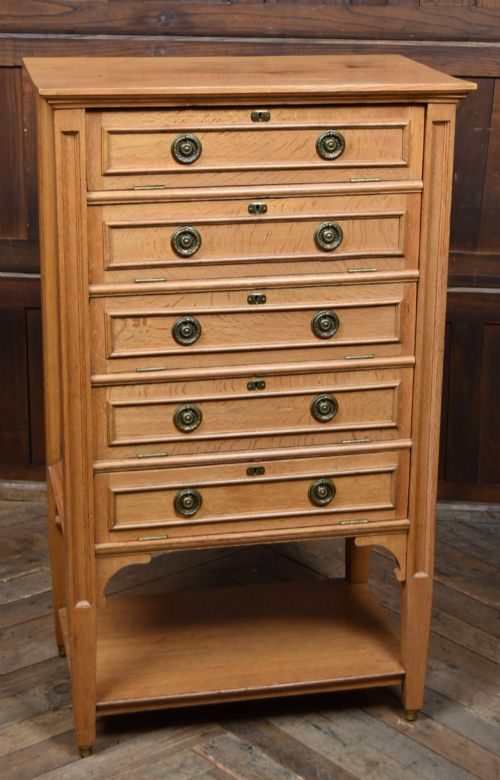
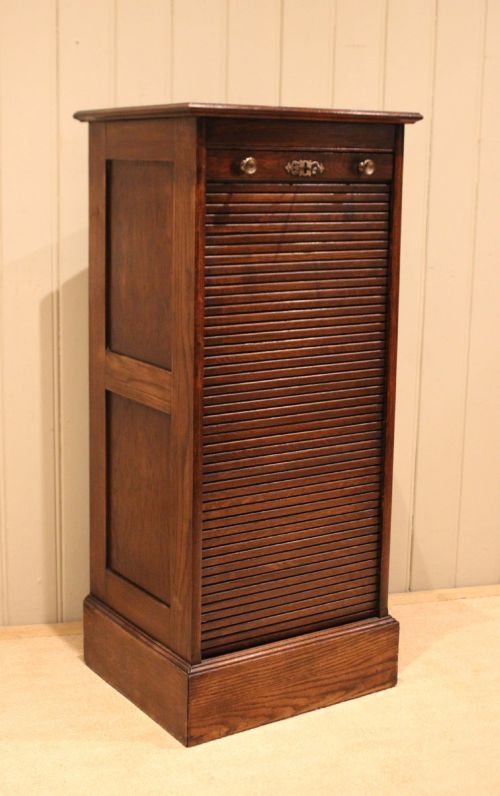
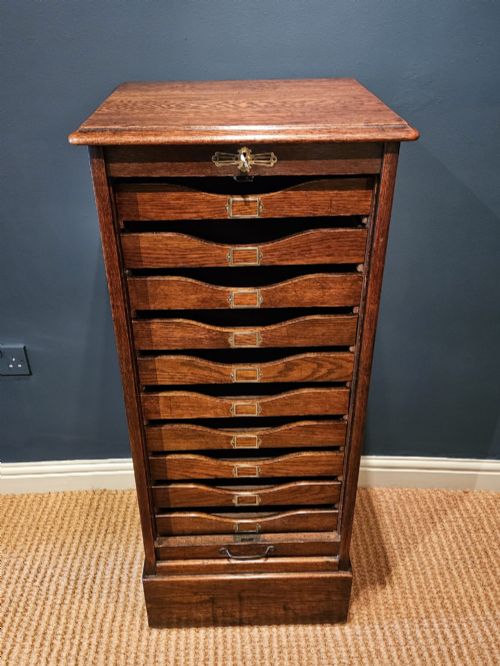
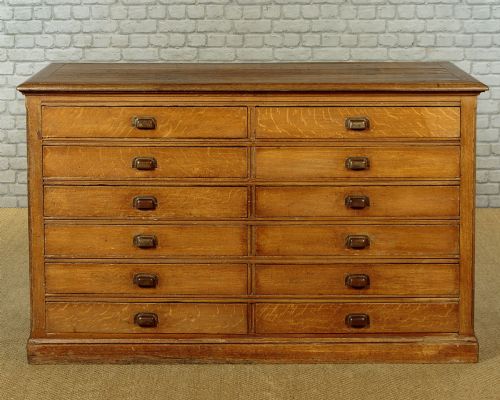
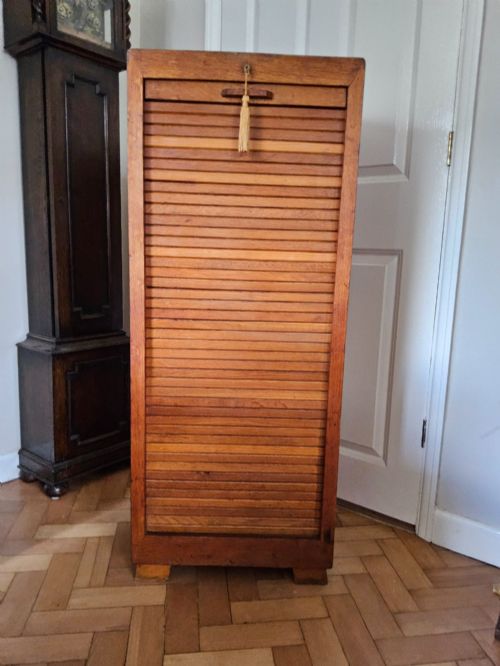
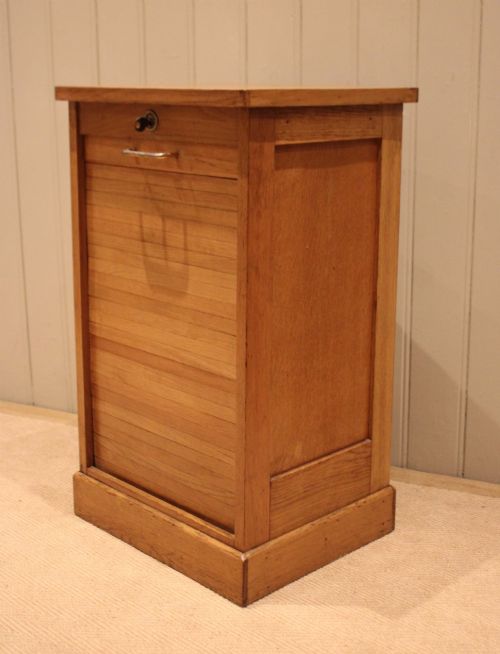
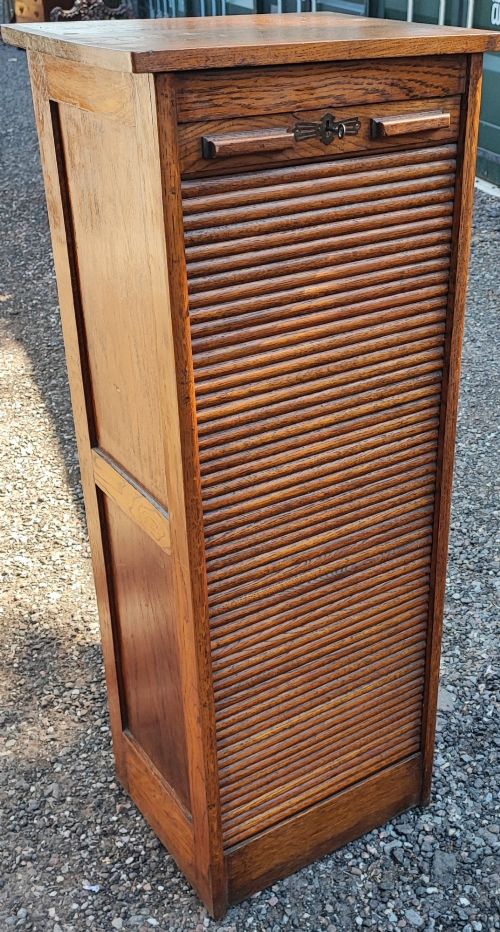
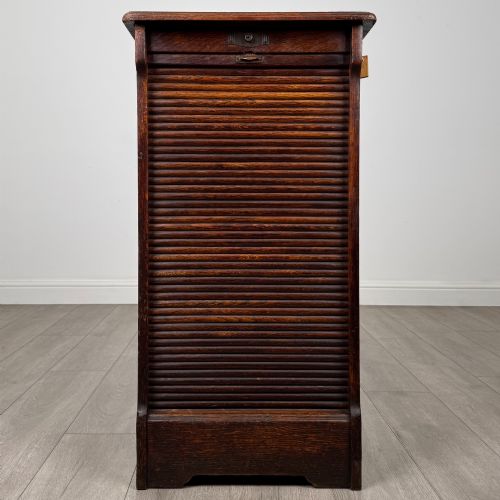
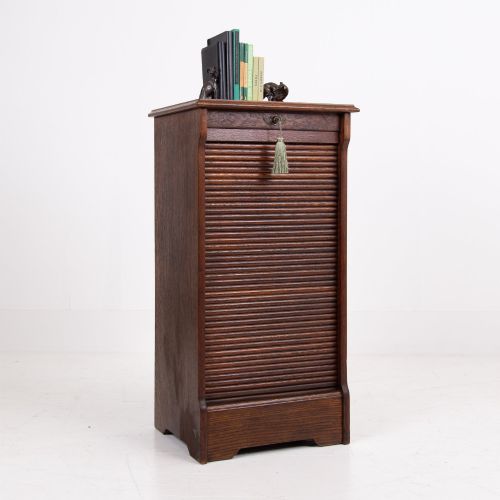
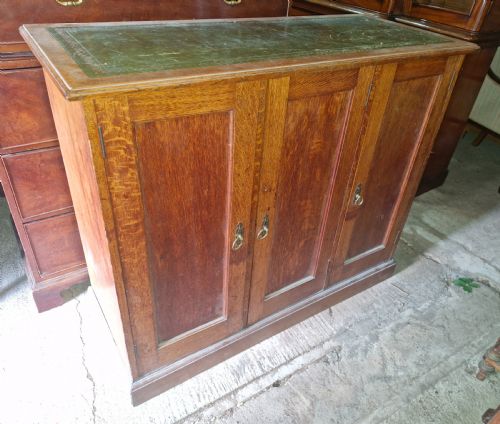
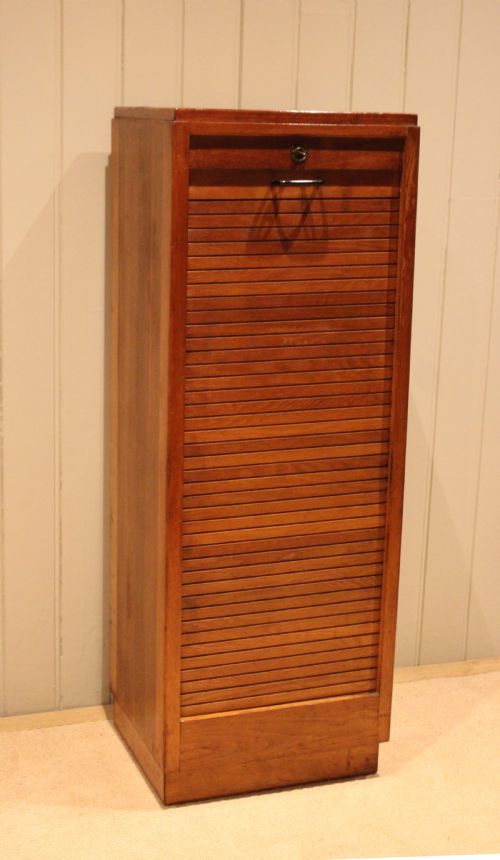
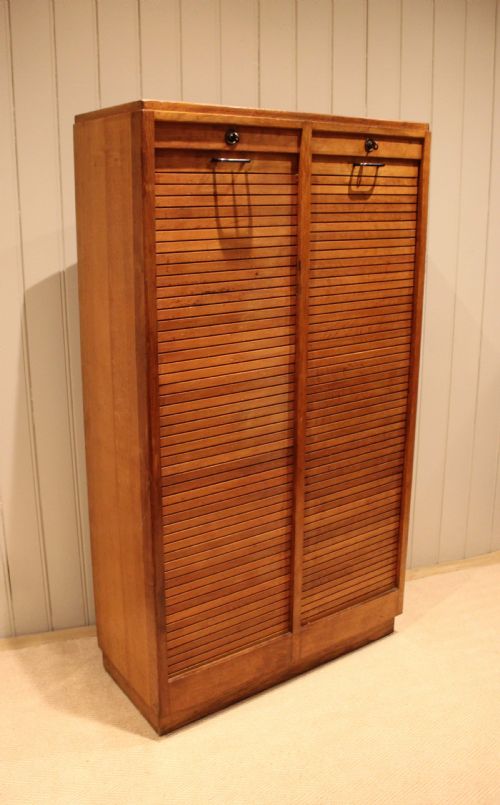
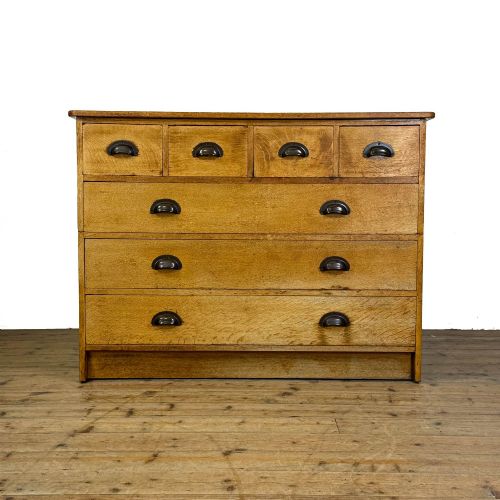
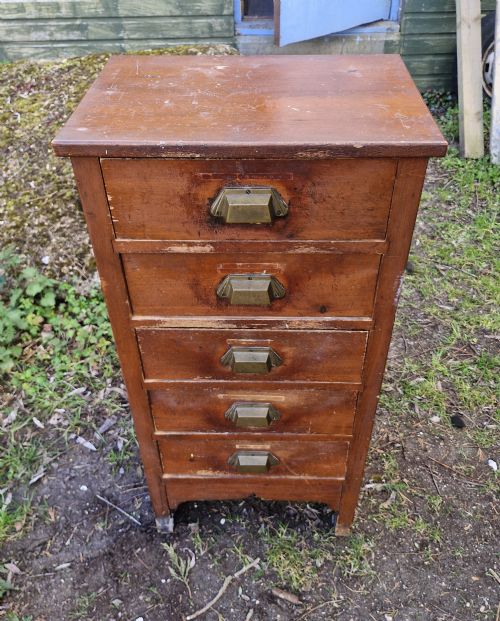
The most common formats you will meet on this page are tambour front filing cabinets and multi-drawer banks from the early twentieth century and the 1930s. These pieces range from small proportioned single-door cupboards to large multi-drawer arrangements in dark or light oak.
Assessing quality in office storage
Quality in these pieces rests upon the execution of the tambour mechanism and the integrity of the drawer construction. Smooth operation of the slatted wooden tracks distinguishes superior examples from those with binding or stiff doors.
Cabinet proportion and the selection of timber figure also divide the standard. Finer examples display carefully matched oak grain, robust dovetailed joints in the drawers, and original brass or metal hardware of the period.
Some nineteenth-century filing cabinets feature patented letter systems sturdy enough to outlive the filing clerks who used them.
The Oak Office File Storage Glossary
- Tambour
- A flexible door constructed from narrow strips of wood glued to a canvas or fabric backing, allowing it to slide smoothly around a curved track. This clever mechanism saves valuable space in a busy office.
- Plan chest
- A large, shallow chest of drawers designed originally to store architectural drawings, maps, and large sheets of paper. They offer exceptional surface area and wide, shallow storage.
- Haberdashery cabinet
- A shop display or storage unit featuring numerous small glass-fronted or wooden drawers used historically for small items. Collectors prize them today for household organisation.
- Edwardian
- A stylistic period spanning the reign of King Edward VII from 1901 to 1910. Furniture from this era often lighter in scale than Victorian pieces while retaining traditional craftsmanship.
Oak Office File Storage: Frequently Asked Questions
How do tambour doors work?
Tambour doors consist of many narrow wooden slats fastened to a flexible fabric backing that slides along routed channels in the cabinet frame. This allows the door to retract completely around the side or back of the interior.
Opening the cabinet requires no external swing space, making these units ideal for compact studies and crowded offices where traditional doors would obstruct movement.
What is an Amberg's patent file?
An Amberg's patent file is a specialised nineteenth or early twentieth century letter filing system incorporating mechanical index boards and spring clips. These mechanisms held documents securely in alphabetical or chronological order.
Cabinets housing these systems often feature maker-stamped hardware and specialised interior compartments designed specifically for commercial correspondence of the era.
How do I date an oak filing cabinet?
Dating relies on observing construction details, hardware materials, and stylistic cues such as panel design and overall proportions. Edwardian and 1910 examples often display rich dark oak and traditional brass label pulls.
Later pieces from the 1930s and 1940s frequently present lighter oak finishes and simpler, more utilitarian lines reflecting the changing tastes of mid-century office design.
Are these cabinets suitable for modern paper sizes?
Many vintage filing cabinets and drawer banks accommodate modern standard paper sizes, though historical filing systems occasionally featured specialised dimensions. Collectors and users frequently adapt the interior spaces for contemporary stationery and storage.
Checking internal drawer measurements ensures the cabinet suits your specific filing requirements before placing it into daily service in a home or office.