


Office Shutter Door Storage
Office shutter door storage units combine practical workspace utility with sliding tambour fronts, offering compact organisation for documents.
Office Shutter Door Storage
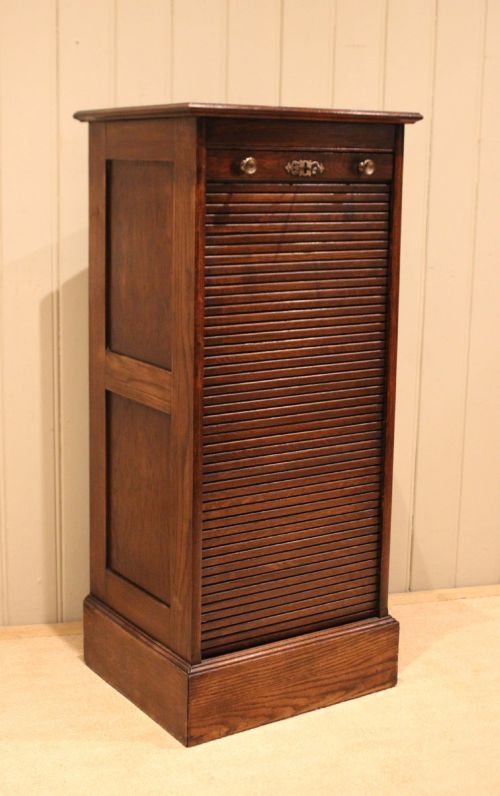
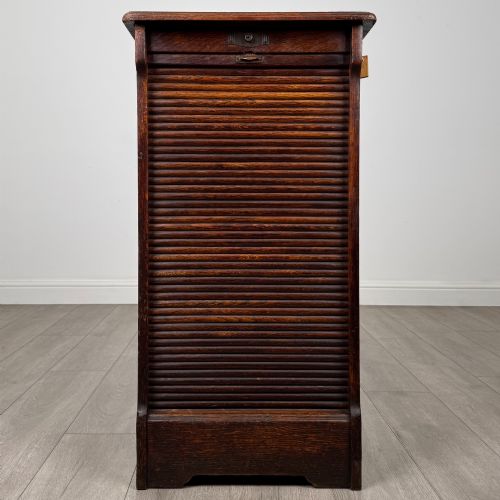
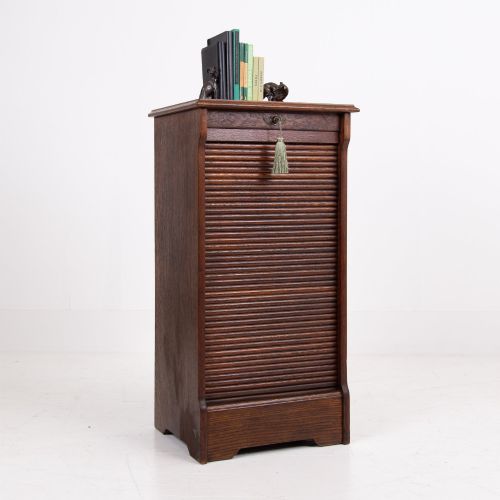
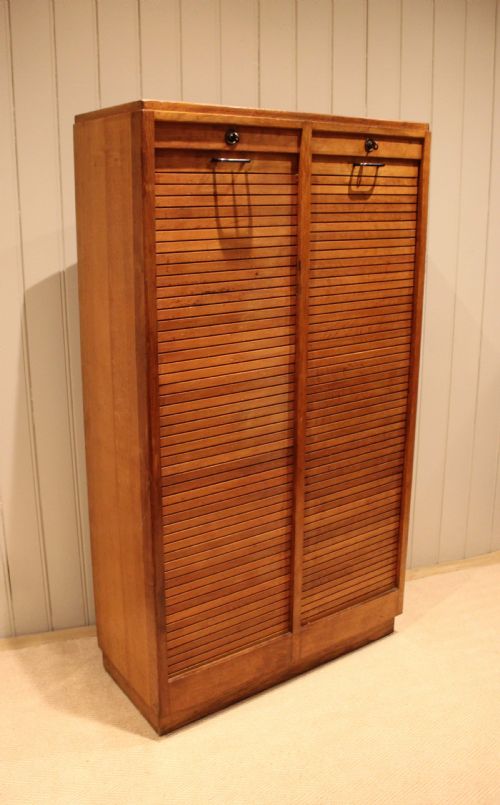
Office shutter door storage units primarily comprise single and double tambour front filing cabinets and small-proportioned office storage. These pieces originate from periods such as the Edwardian era, 1900, 1910, 1920, 1930, and 1940.
The majority of items encountered on this page are constructed from oak, alongside examples in pine and various metals. Styles range across Edwardian, French Utility, Art Deco, and early 20th-century designs.
Buyers most frequently meet oak filing cabinets featuring slatted wooden shutters that slide smoothly around tracks to conceal interior document storage. Forms span compact single-door cupboards to substantial double-door office cabinets.
Construction and materials
Makers built these cabinets predominantly using solid oak and pine timbers for the main bodies and internal pigeonholes. Individual wooden slats, or tambour strips, were typically affixed to a flexible canvas backing to enable the curved sliding action.
Listings for office shutter door storage span the Edwardian era through the 1940s, utilising oak, pine, brass, canvas, and steel.
Quality differences in storage units
The sophistication of the timber selection and the precision of the slatted shutter mechanism distinguish finer examples from standard utility pieces. Tighter joinery in the individual tambour strips ensures smoother operation along the guiding tracks without binding.
Proportion and wood figure elevate certain cabinets, particularly light or dark oak examples with deliberate grain patterning. More utilitarian pine or industrial metal versions prioritize robust daily service over decorative cabinetwork.
The Office Shutter Door Storage Glossary
- Tambour
- A flexible shutter door constructed from narrow strips of wood attached to canvas or fabric backing. This mechanism slides along recessed tracks to open and close without requiring clearance space for hinged doors.
- Escutcheon
- A protective brass plate surrounding a keyhole. It reinforces the surrounding wood and often incorporates a small pull handle.
- Filing cabinet
- An office furniture form designed to hold documents, letters, or files. These units typically utilise internal vertical dividers or pull-out trays.
- French Utility
- A styling category emerging from mid-century France focusing on functional, unpretentious design. Pieces from this aesthetic emphasise sturdy construction and honest materials.
Office Shutter Door Storage: Frequently Asked Questions
How do tambour doors work?
Tambour doors consist of many narrow wooden slats glued to a canvas backing sheet. This flexible construction allows the entire shutter to glide along curved tracks inside the cabinet carcass.
When pushed open, the door disappears neatly into the sides or back of the unit. This design saves valuable floor space in cramped office environments.
How can I date an office cabinet?
Dating relies on stylistic clues and construction methods visible across different eras like the Edwardian period or the 1930s. Edwardian pieces often display traditional craftsmanship and rich oak grain, while later pieces adopt French Utility or Art Deco lines.
Hardware styles and the presence of specific metal or canvas components further help narrow the decade of manufacture.
Are these cabinets suitable for modern home offices?
These vintage filing cabinets offer practical document storage with a compact footprint suited to contemporary workspaces. Their sliding doors require zero clearance, making them ideal for tight rooms.
Placing one in a modern study introduces warm oak textures and early twentieth-century character. The internal compartments easily adapt to modern paperwork and folders.