


Oak Tallboy Chest Drawers
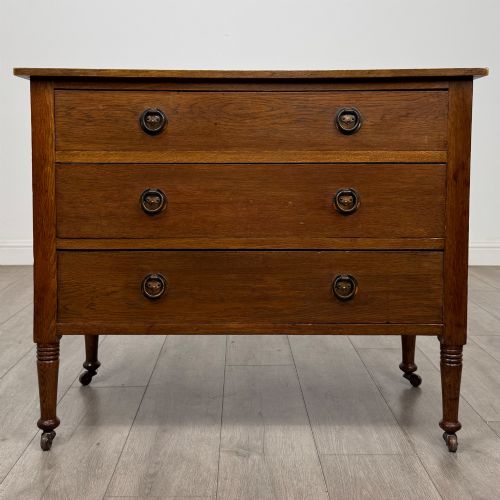
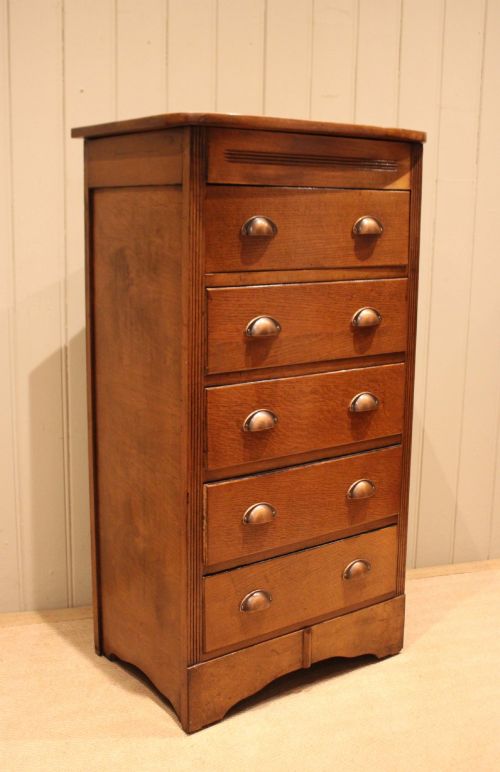
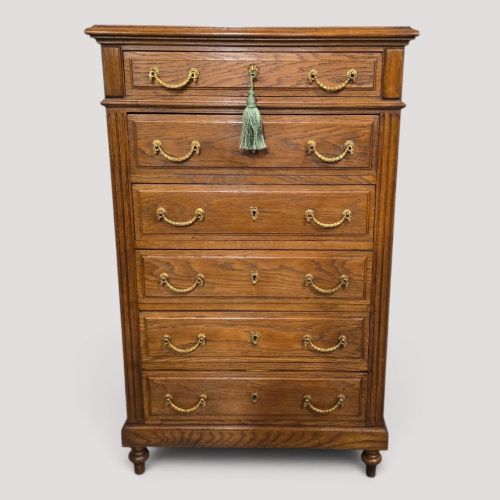
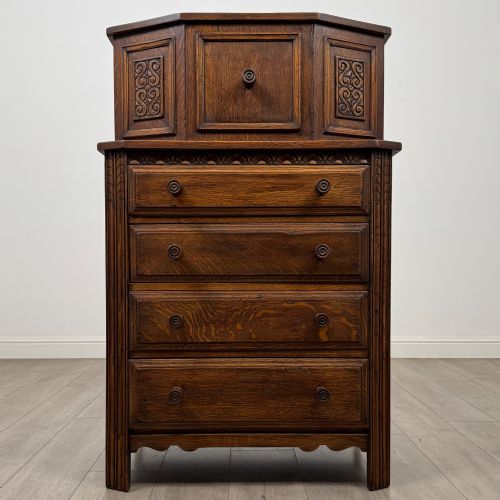
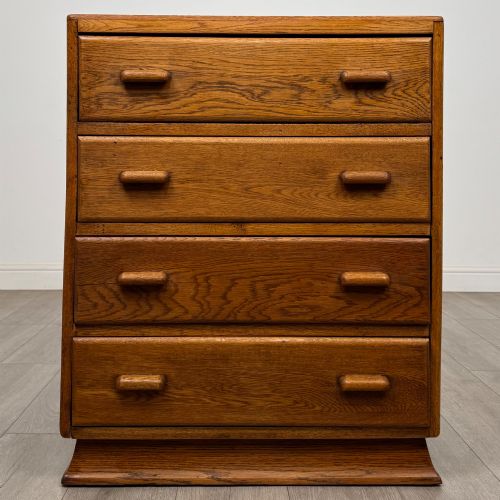
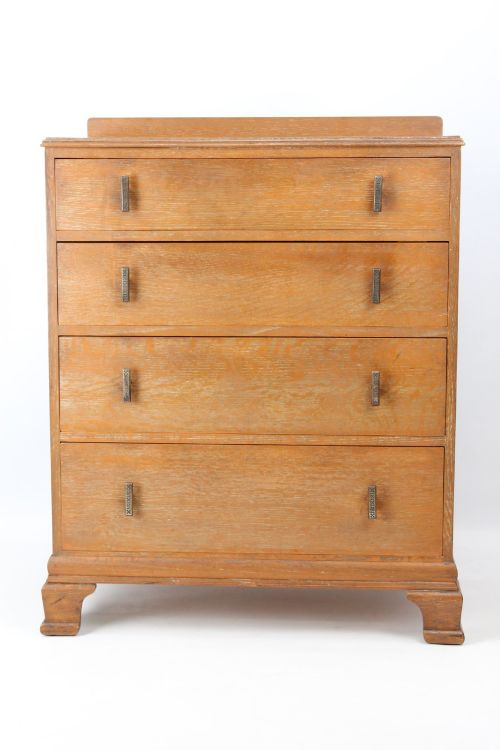
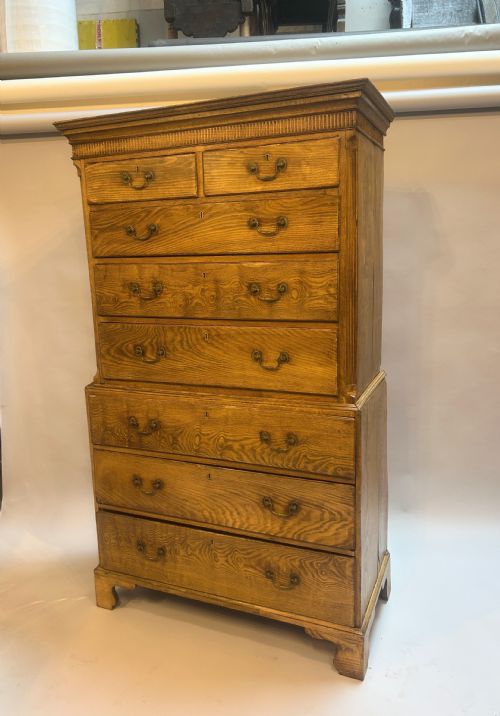
An oak tallboy chest drawers stands high against a wall, offering generous vertical storage combined with the warm grain of hard timber.
Oak Tallboy Chest Drawers
An oak tallboy chest drawers combines the vertical capacity of a chest-on-chest with the sturdy timber characteristic of domestic furniture across multiple centuries. Buyers encounter examples stretching from the 17th century through the Georgian period and into Edwardian and later 1930s interpretations.
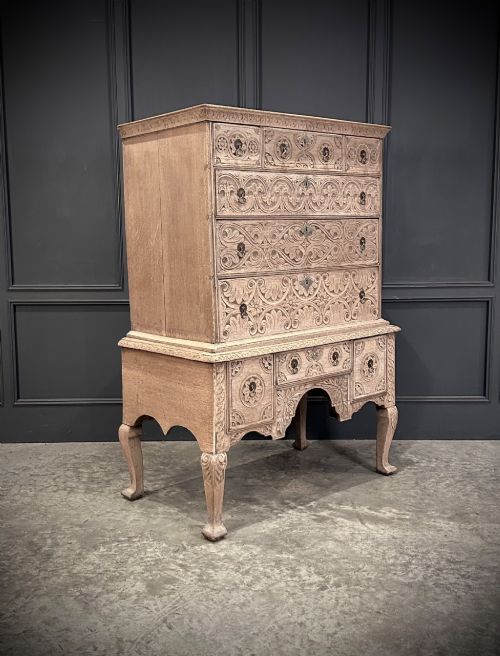
The primary forms include tall chests, chests on stands, and substantial two-part chest-on-chest configurations designed to maximise bedroom storage. Pieces frequently integrate secondary woods and crossbanding such as mahogany or walnut alongside the dominant oak carcase.
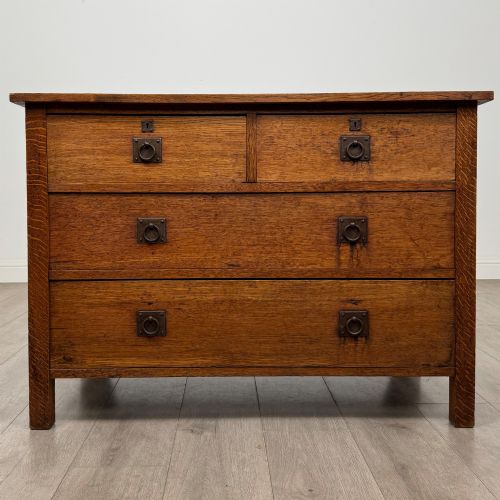
Origins span English country workshops to French provincial makers, alongside pieces reflecting Arts and Crafts or Art Deco design principles. This variety ensures buyers find everything from austere geometric moulded fronts to golden oak finishes with original brass handles.
How They Were Made
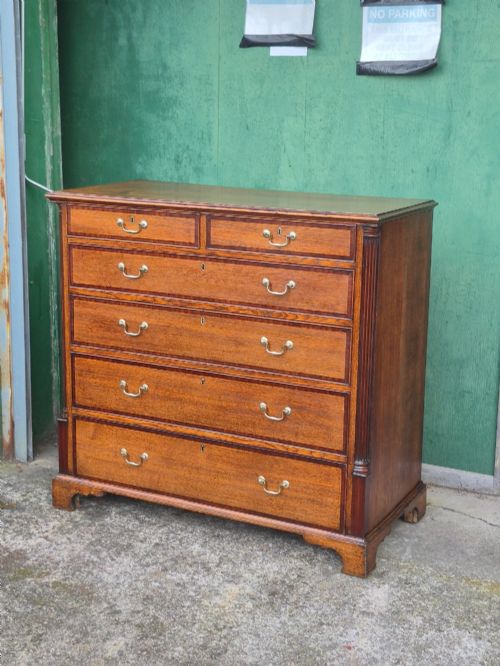
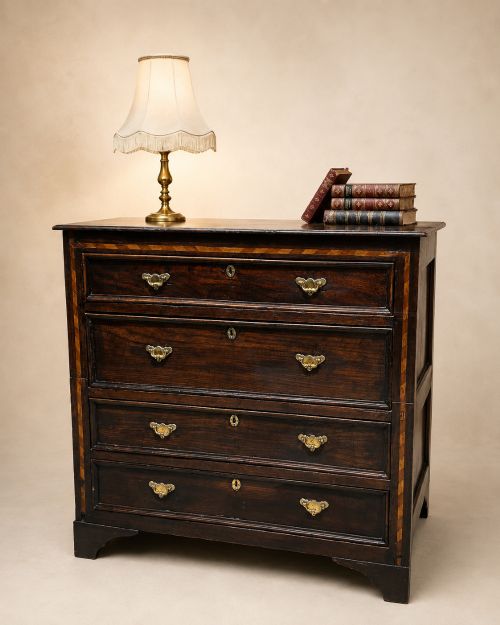
Cabinet makers constructed these carcases primarily from solid oak, frequently employing fruitwood inlay, walnut, or mahogany crossbanding to frame drawer fronts and top surfaces. Timber selection governed both the structural integrity and the decorative impact of each tallboy.
Joinery methods relied on traditional techniques visible in early geometric mouldings, linenfold panels, and tightly fitted drawer dividers. Metal hardware, including brass handles and escutcheons, completed the construction and secured operational longevity.
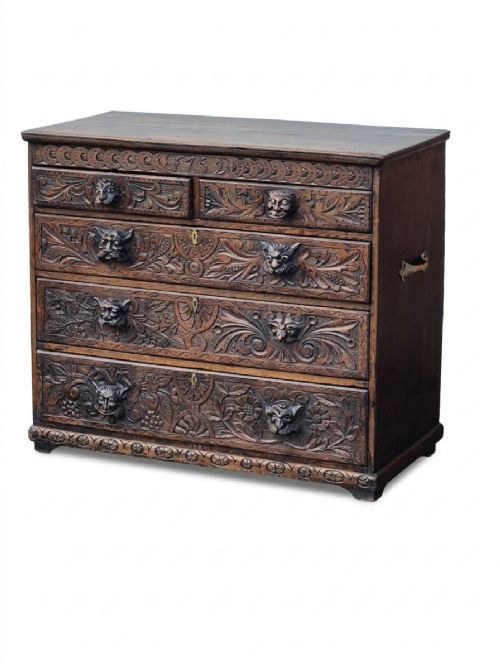
Green Man grotesque carvings stare out silently from Victorian drawers, watching over centuries of folded linens.
What Varies in Quality
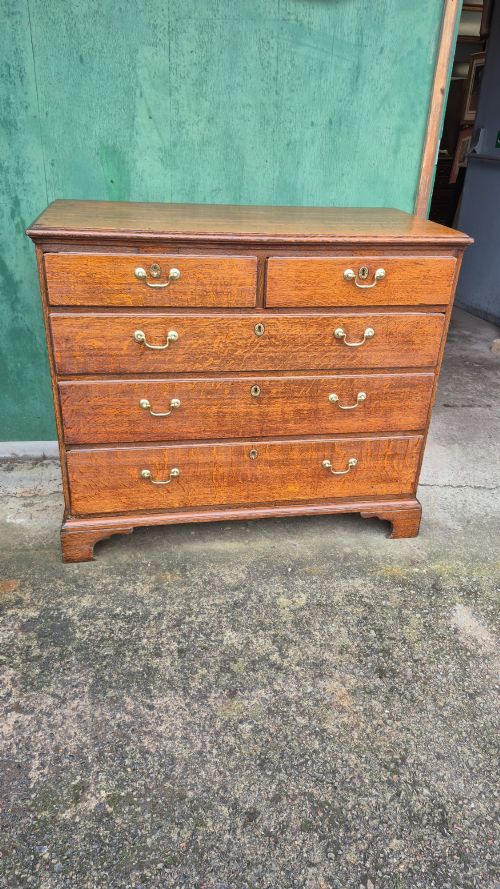
Construction standards separate standard utilitarian storage from exceptional cabinet work through the precision of drawer linings, dovetailing, and timber matching. Superior pieces maintain original brass handles and uncompromised structural frames without excessive replacement wood.
Surface finishing dictates visual appeal, distinguishing dry, honest patination and clean bleached oak from over-restored or heavily stripped surfaces. Proportions also define the tier, with small-proportioned or squat tallboys commanding distinct architectural balance.
The Oak Tallboy Chest Drawers Glossary
- Tallboy
- A tall chest of drawers, often built as one section stacked upon another such as a chest on chest.
- Crossbanding
- A decorative border of veneer laid with the grain running perpendicular to the surrounding wood.
- Chest on Stand
- A drawer section elevated upon a separate frame with legs, common in earlier periods.
- Geometric Moulding
- Raised rectangular or shaped wooden mouldings applied to drawer fronts for surface texture.
- Linenfold
- A carved wooden panel motif imitating folded fabric, seen on regional and period panels.
Oak Tallboy Chest Drawers: Frequently Asked Questions
Where should I place a tallboy?
These tall pieces suit bedrooms, dressing rooms, or hallways where floor space is limited but vertical storage is required. Their height allows them to anchor an empty wall without dominating the room's footprint.
Ensure the tallboy is secured to the wall if positioned on uneven historic flooring to maintain stability and safety during daily use.
How do I date an oak tallboy?
Dating relies on observing construction methods, handle types, moulding styles, and timber characteristics. Pieces from the seventeenth century often show geometric mouldings and heavier framing, while eighteenth-century Georgian examples utilise cleaner lines and crossbanding.
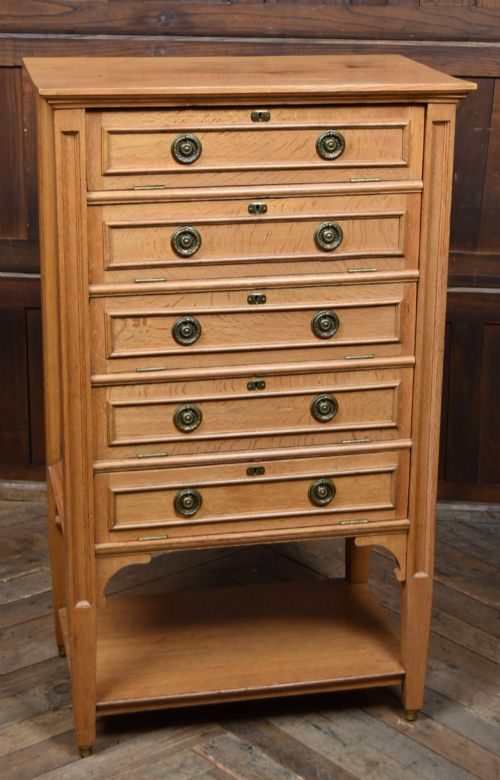
Later Edwardian and 1930s reinterpretations often incorporate lighter limed finishes or stylistic nods to earlier eras while retaining machine-assisted joinery elements.
How do I care for antique oak?
Maintain oak furniture by dusting regularly with a dry cloth and avoiding placement near direct heat sources or strong sunlight. Excessive temperature fluctuations cause timber to dry out and split.
Apply a traditional beeswax polish occasionally to nourish the grain and protect the surface patination built up over centuries of use.
What is a chest on chest?
A chest on chest consists of a larger lower chest supporting a slightly smaller upper chest, forming a tall storage unit. This design provides numerous drawer compartments within a unified vertical carcase.
They frequently feature graduated drawers, decreasing in depth toward the top, which creates a balanced aesthetic proportion.