
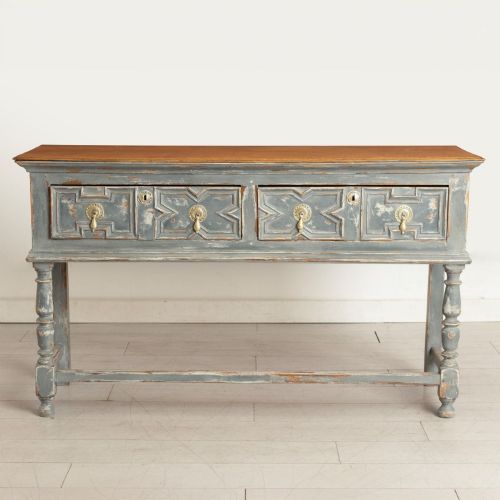
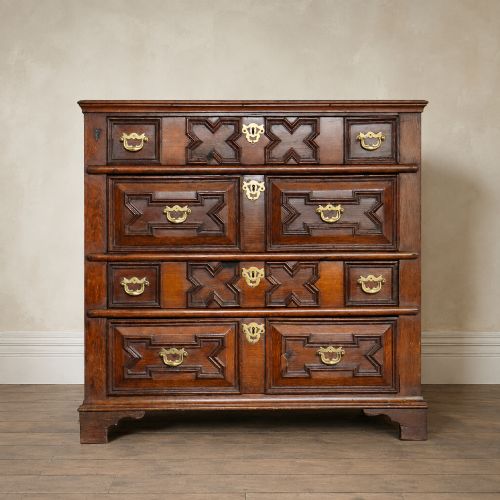
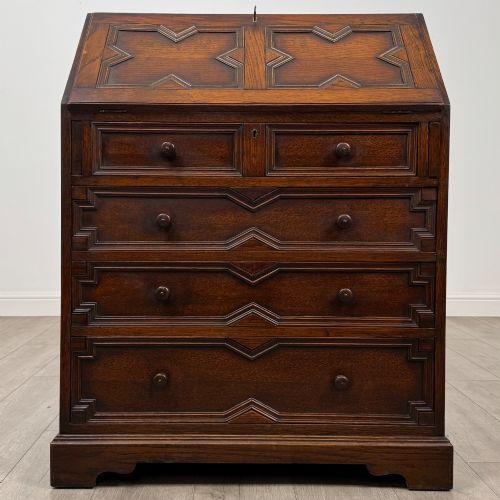
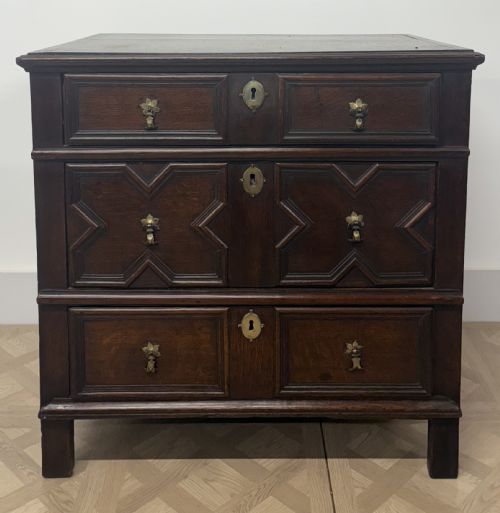
Oak Geometric Chest Drawers
An oak geometric chest drawers brings seventeenth-century architectural moulding and robust native timber straight into a modern interior.
Oak Geometric Chest Drawers
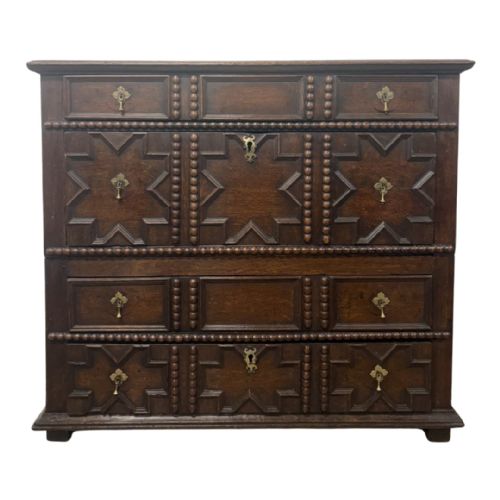
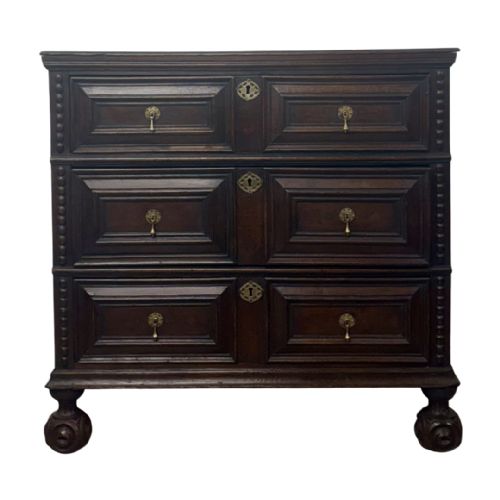
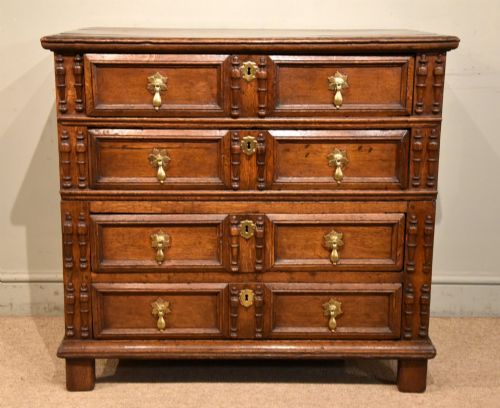
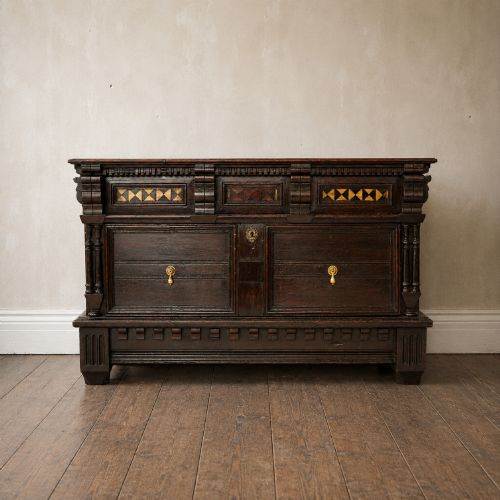
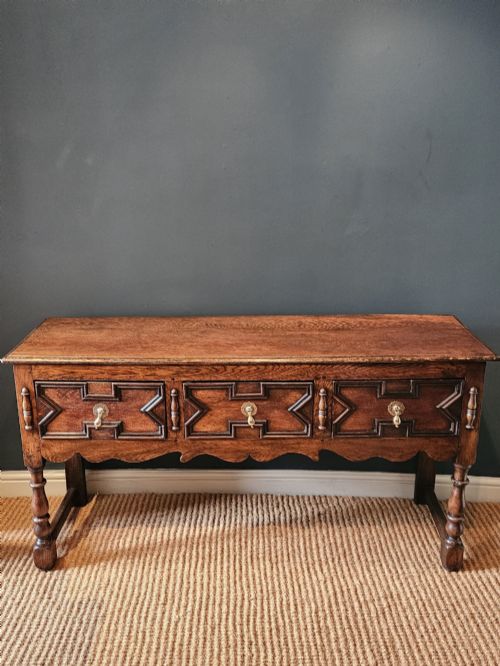
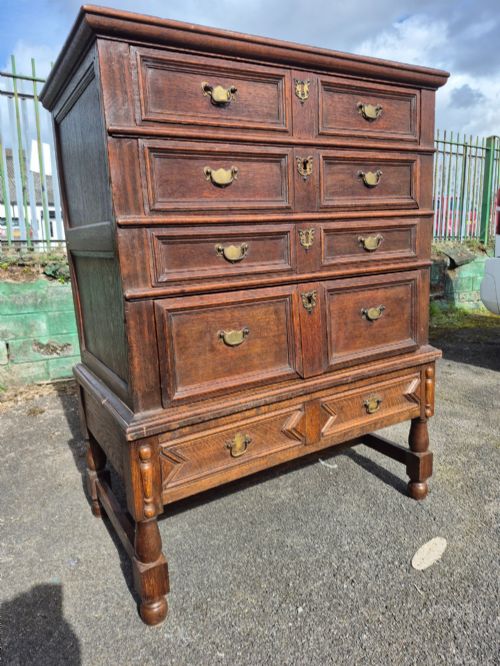
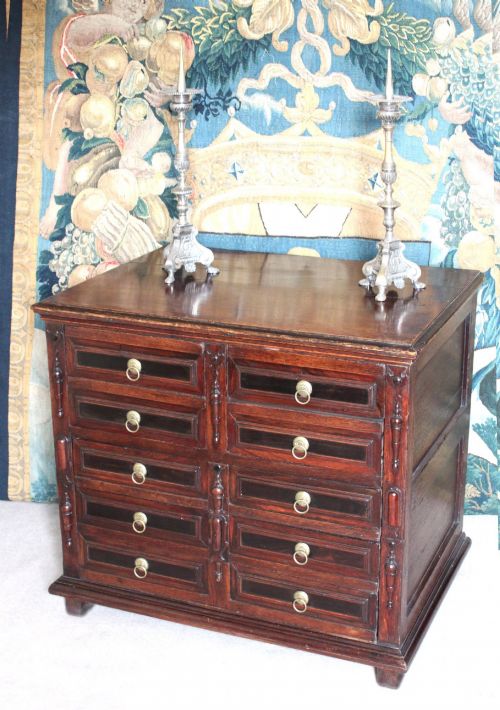
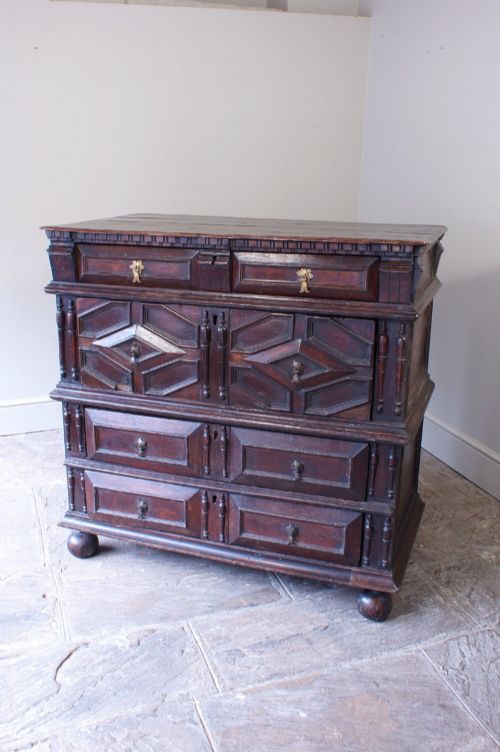
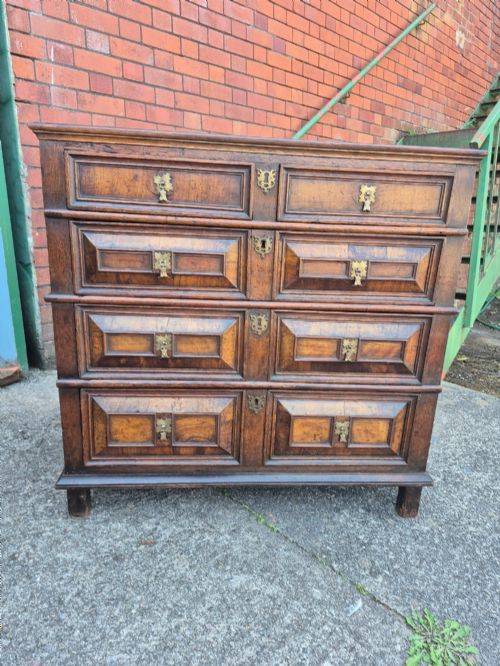
An oak geometric chest drawers represents a pinnacle of seventeenth-century case furniture design, characterised by applied mouldings that form intricate geometric patterns across the drawer fronts. These pieces typically present as two-part or single chests, occasionally appearing on stands or integrated into dresser bases.
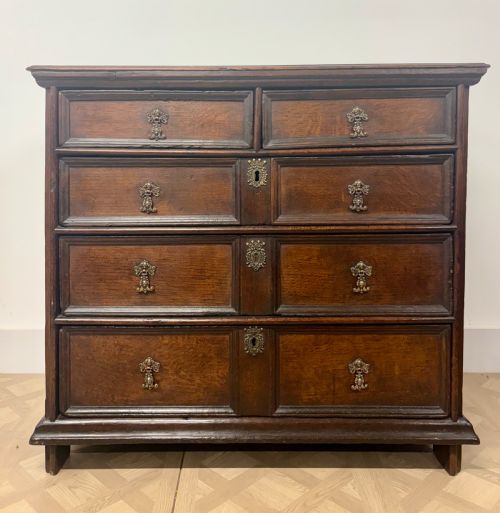
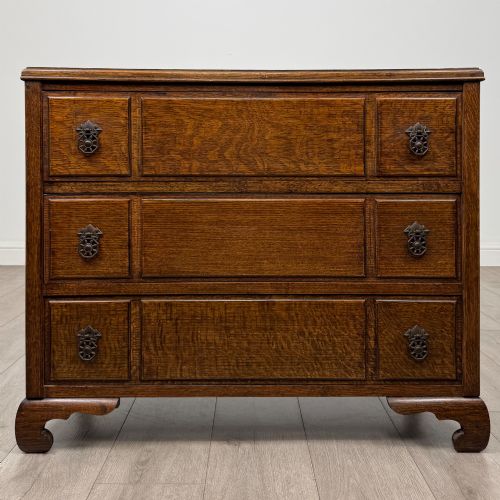
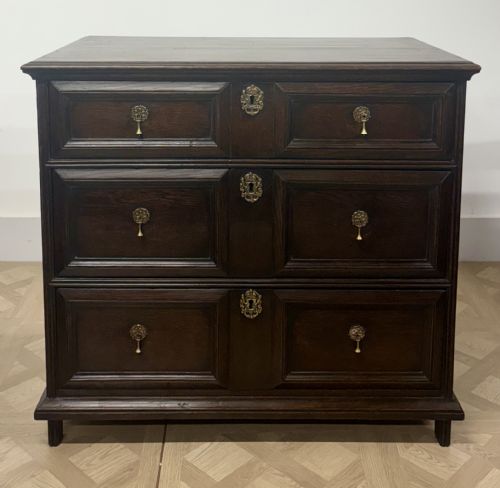
The versions most frequently met on this page date from the Charles II, William and Mary, and Jacobean periods, constructed primarily from native British timber. Later revivals from around nineteen hundred also surface, mirroring the robust proportions and panelled construction of earlier centuries.
What Varies in Quality
The sophistication of the moulded geometric patterns dictates the upper tier of the range, where complex mitred intersections show exceptional precision. Finer examples retain their original surface patination, exhibiting the soft, faded warmth of centuries of handling.
Proportion and structural integrity separate robust survivals from heavily altered pieces. Smaller dimensions and intact original brasses or feet elevate a chest, whereas excessive replacement timbers diminish the integrity of the piece.
The Oak Geometric Chest Drawers Glossary
- Geometric moulding
- Applied strips of wood arranged in repeating patterns such as squares, octagons, and strapwork across drawer fronts. This technique defined case furniture during the late seventeenth century.
- Two-part chest
- A form constructed as two separate stacked carcases designed to ease transportation. This configuration is frequently seen in seventeenth-century and William and Mary examples.
- Oyster veneering
- Slices cut transversely from small branches to produce circular or oval patterns resembling oyster shells. This decorative technique appears on select seventeenth-century carcases alongside solid timbers.
- Mule chest
- A storage chest featuring one or more functioning drawers at the base beneath the main compartment. These hybrid forms bridge the gap between traditional coffers and full chests of drawers.
Oak Geometric Chest Drawers: Frequently Asked Questions
What is a geometric chest?
A geometric chest is a storage piece defined by raised wooden mouldings arranged in repeating patterns across the drawer fronts. These designs created striking architectural depth on otherwise plain timber surfaces.
Most surviving examples date from the seventeenth century and reflect the prevailing styles of the Jacobean and Charles II eras. They rely on solid oak construction paired with meticulous joinery.
How do I date an oak chest?
Dating relies on examining the construction methods, such as hand-sawn timber, pegged joinery, and the style of the drawer linings. Hand-cut dovetails and the specific configuration of the mouldings offer further chronological clues.
Earlier pieces from the seventeen hundreds show distinct tool marks and patination that later revival pieces from nineteen hundred simply cannot replicate. Comparing hardware attachments also helps clarify the period.
Are these chests made of solid oak?
The primary carcases and drawer frames are constructed from solid native oak. Cabinetmakers frequently incorporated secondary woods like walnut or fruitwood for decorative veneers and applied mouldings.
Backboards and drawer bottoms may consist of secondary native timbers such as pine or elm. This mixed-wood construction is entirely typical of seventeenth-century English cabinetmaking.
How do I live with a historic chest?
Living with these pieces involves placing them away from direct heat sources and sudden humidity shifts to protect the antique timber. Maintaining stable room conditions preserves the stability of the applied mouldings and joints.
Regular gentle dusting with a dry cloth keeps the surface clean without stripping the historic patina. They function effectively as storage furniture while anchoring a room with seventeenth-century character.