


Oak Spindle Back Carvers
Oak spindle back carvers bring sturdy country comfort and honest vernacular design directly to your dining table or kitchen.
Oak Spindle Back Carvers
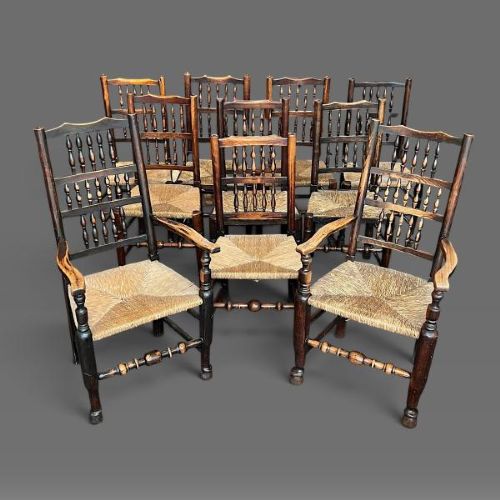
When you search for oak spindle back carvers, you encounter robust seating shaped by English and regional country traditions over multiple centuries. The selection spans 18th century Lancashire and Georgian examples down to Victorian, Regency, and early 20th century farmhouse interpretations.
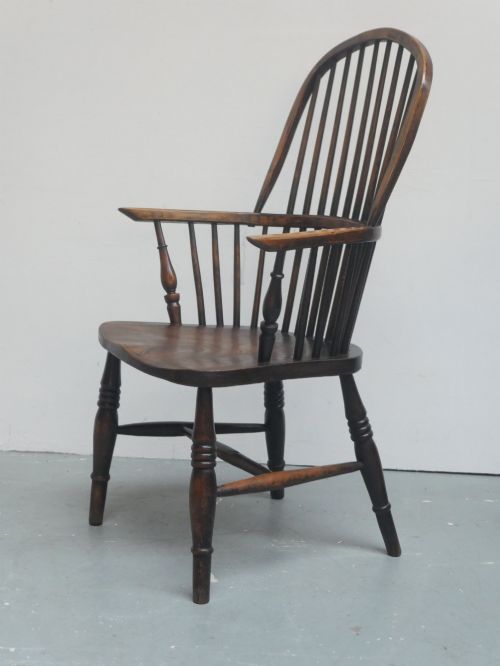
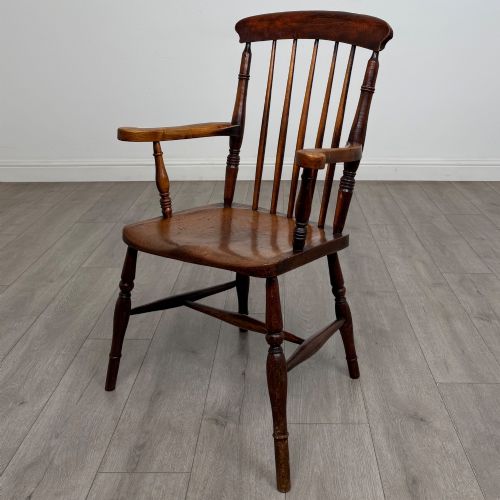
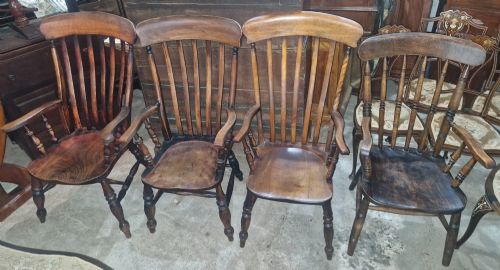
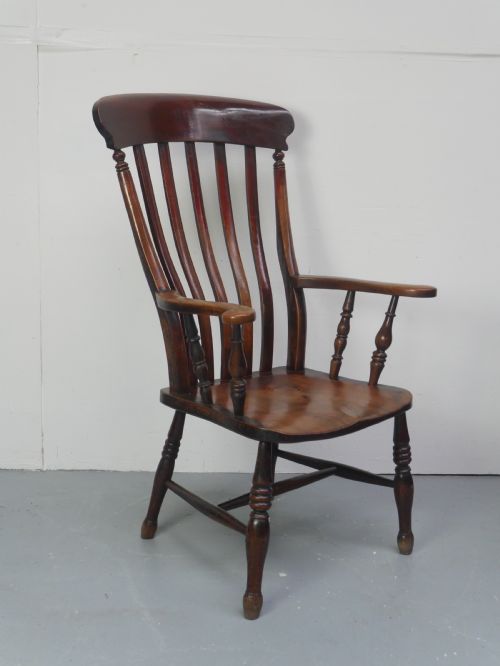
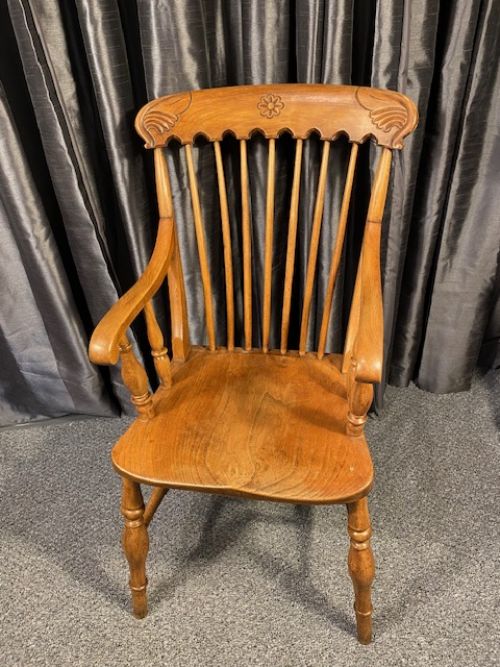
Most pieces function as sturdy armchairs or kitchen elbow seats, often appearing alongside larger dining sets or as standalone farmhouse chairs. You will find regional variations such as Westmoreland lawn chairs, East Anglia dish seat models, and Yorkshire armchairs.
Makers utilised practical forms combining timber frames with shaped armrests and turned spindle supports. These chairs served utility in country houses and rural kitchens before finding appreciation in modern interiors.
How they were made
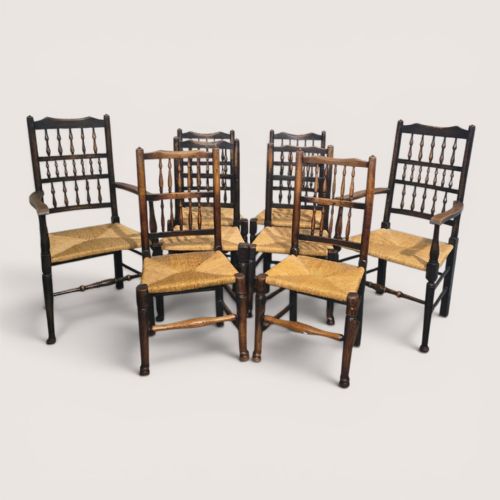
Craftsmen built these chairs using solid native timbers, predominantly oak and elm, often pairing them with ash, beech, and yew for turned spindles and structural components. Rush also appears as a traditional seating material alongside timber panels.
Construction relied on traditional joinery methods, including steam bending for bentwood elements and precise turning for spindles and legs. Regional workshops utilised local woods available to them, resulting in varied combinations within a single piece.
Listings demonstrate a broad vernacular range, spanning 18th century Lancashire workshop chairs to 1920s kitchen armchairs in oak, elm, ash, and beech.
What varies in quality
Quality rests in the balance of timber selection, the crispness of the spindle turning, and the integrity of the structural joints. Pieces constructed entirely from dense oak and elm exhibit superior weight and permanence compared to lighter regional equivalents.
The sophistication of the arm design and the harmony of the proportions separate standard utility seating from finer vernacular examples. Grain movement and the survival of original surface patination further define the standing of individual chairs.
The Oak Spindle Back Carvers Glossary
- Spindle back
- A chair back constructed from vertical turned wooden rods or spindles. This design provides lightweight strength and visual rhythm.
- Windsor
- A chair style featuring a solid wooden seat into which the legs and back spindles are directly socketed. It often includes a bentwood bow or comb piece.
- Vernacular
- Regional architecture and furniture built by local craftsmen to satisfy practical domestic needs rather than following strict high-style academic rules.
- Rush
- A traditional seating material woven from dried marsh plants. It creates a resilient, textured surface frequently used in country dining chairs.
Oak Spindle Back Carvers: Frequently Asked Questions
How do I spot a genuine 18th century carver?
Examine the timber shrinkage, hand tool marks, and construction methods used in the joints. Older pieces display distinct pegging and timber movement consistent with age.
Compare the form to regional styles such as Lancashire or Westmoreland traditions. Genuine examples show wear patterns aligned with centuries of domestic use.
Can I mix different periods around a table?
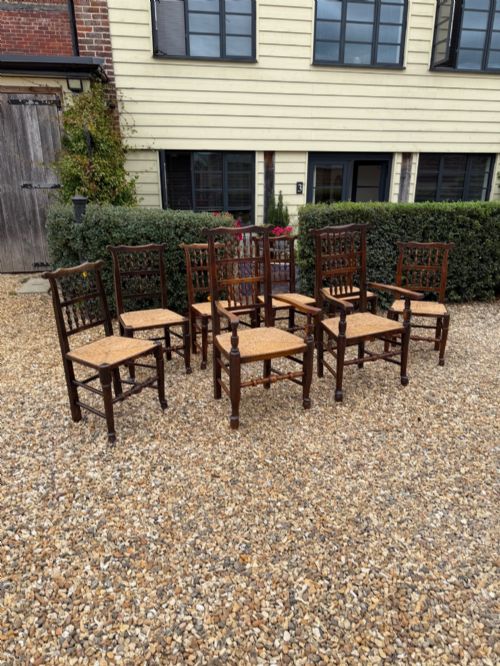
Mixing periods is common because many sets evolved over time as harlequin collections. Country vernacular furniture shares a visual language that bridges centuries smoothly.
Pay attention to seat heights and arm clearances to ensure comfort around the dining table. Similar timber tones help unify disparate chairs into a cohesive group.
How do I care for rush seats?
Keep rush seats away from excessive moisture and direct sunlight to prevent the natural fibres from becoming brittle. Regular gentle dusting preserves the woven material.
Avoid heavy liquid cleaners which can rot the dried marsh plants. Proper indoor humidity keeps the rush flexible and strong.
What is the difference between elm and oak parts?
Oak provides exceptional structural stability and straight grain, making it ideal for primary frames and legs. Elm offers interlocking grain with high resistance to splitting, suiting solid carved seats.
Craftsmen combined these timbers purposefully based on their mechanical properties. Recognising the wood species helps identify regional building habits.