
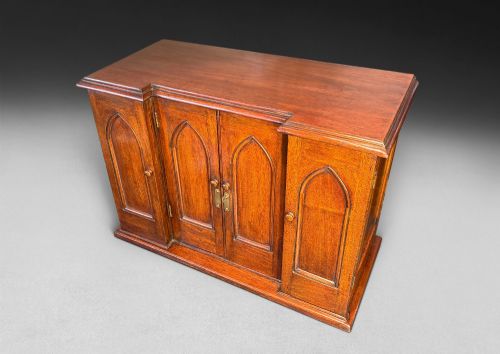
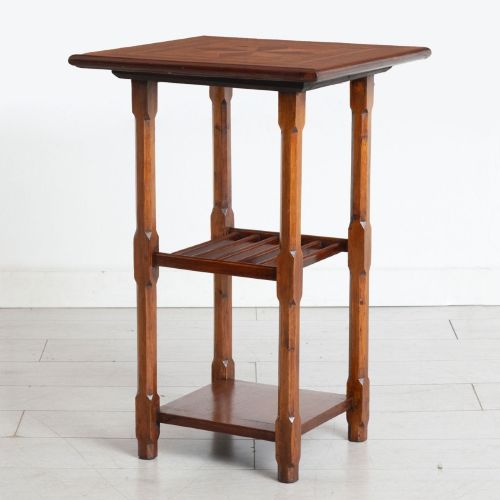
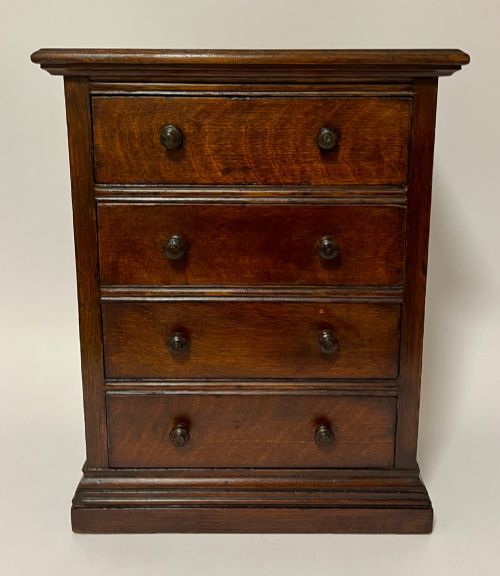


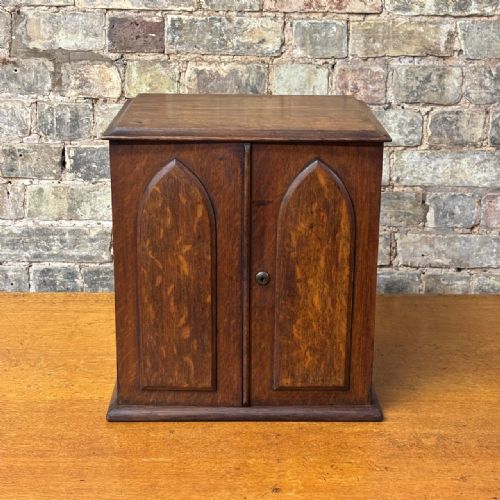
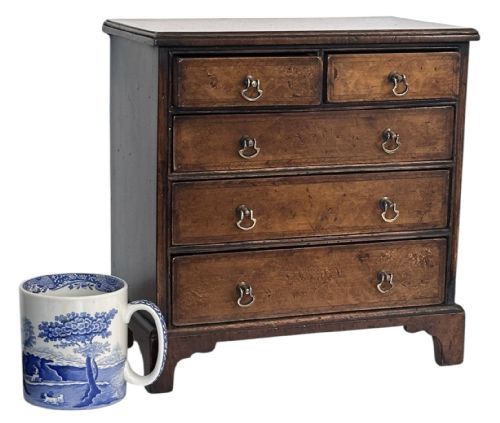


Oak Specimen Cabinet
An oak specimen cabinet is a compact wooden chest designed to organise and protect natural history items, medals, or small collectables.
Oak Specimen Cabinet
An oak specimen cabinet brings together sturdy regional timbers and specialised interior drawer layouts designed for organising small scientific or natural history collections. These pieces primarily date from the Georgian and Victorian eras through to the early twentieth century, spanning styles such as Gothic Revival and Arts and Crafts. When searching for an oak specimen cabinet, buyers encounter forms ranging from table-top chests of drawers and Wellington chests to miniature furniture and wall-mounted display cases.
The practical function of these items dictated their construction, often featuring multiple shallow drawers scaled for butterflies, eggs, minerals, or coins. Many examples utilise durable oak combined with brass hardware, glass panels, and occasionally inlaid timber or pollard oak for decorative surfaces. These cabinets served scholars and collectors who required secure, dust-tight storage for delicate items.
Assessing Quality
Quality in these cabinets rests upon the precision of the drawer construction and the selection of timber used for the exterior and internal partitions. Superior examples display carefully matched grain patterns, such as figured oak or pollard oak, paired with robust internal runners that allow shallow drawers to glide smoothly without binding.
Listings feature oak specimen cabinets spanning the Georgian, Victorian, and Edwardian periods, utilising materials such as brass, glass, pollard oak, and inlaid timber.
The Oak Specimen Cabinet Glossary
- Wellington chest
- A tall, narrow chest of drawers secured by a locking hinged side flap that fastens over the drawer edges. This specific form became popular during the Victorian period for securely housing small collections of papers or specimens.
- Pollard oak
- Timber taken from trees that have been pollarded, producing a dense, highly figured grain pattern with clustered knots. Makers utilised this decorative wood on the facades of finer Victorian cabinets.
- Specimen wood
- Various contrasting timbers collated and inlaid to create geometric patterns or decorative banding on furniture surfaces. This technique highlights the natural colour variations found across different tree species.
- Gothic Revival
- An architectural and decorative style drawing inspiration from medieval forms, featuring pointed arches, tracery, and heavy paneling. This aesthetic appears frequently on nineteenth-century cabinets and sideboards.
Oak Specimen Cabinet: Frequently Asked Questions
What were oak specimen cabinets originally used for?
These cabinets were built to store and protect delicate collections such as insects, botanical specimens, eggs, minerals, and coins. The shallow drawers kept items organised and shielded from light and dust.
Collectors and naturalists utilised them in studies and libraries for systematic classification and safe handling.
How do I date an antique oak specimen cabinet?
Dating relies on observing construction methods, timber selection, hardware, and stylistic indicators such as Gothic Revival or Arts and Crafts details. Georgian and early Victorian pieces often show hand-cut joinery and simpler hardware.
Later Victorian and Edwardian examples frequently incorporate machine-sawn elements, standardised brass locks, and specific locking mechanisms like side stiles on Wellington chests.
Are the drawers inside usually glass-topped?
Drawer construction varies considerably depending on the specific collecting purpose of the original owner. Some cabinets feature solid wooden bases within shallow drawers suited for coins, medals, or small curiosities.
Others contain glazed frames or removable glass-topped lids designed specifically for entomological or botanical preservation.
Can these cabinets be used for modern storage?
The multiple shallow drawers make these cabinets well-suited for organising modern small items such as jewellery, stationery, art supplies, or contemporary collections. Their compact footprints allow them to sit comfortably on tabletops, side tables, or desks.
Placing them in rooms away from direct heat sources helps preserve the antique oak and internal wooden runners.