



Oak Slant Top Desk
An oak slant top desk offers a solid writing surface that folds down to reveal fitted interiors, suiting studies and living spaces alike.
Oak Slant Top Desk
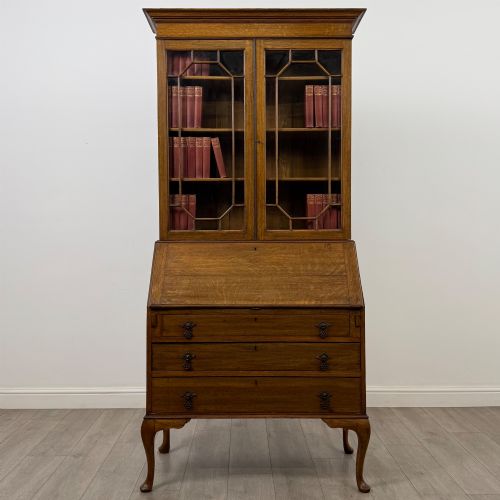
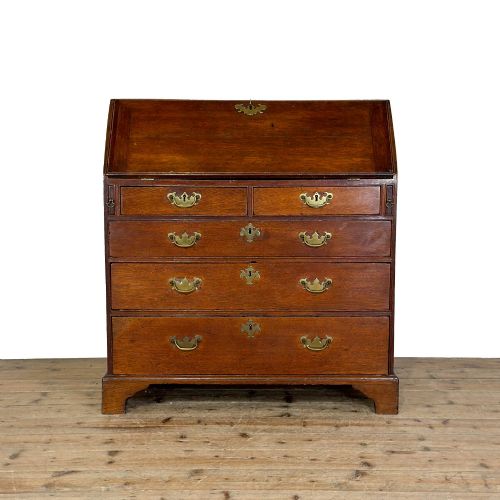
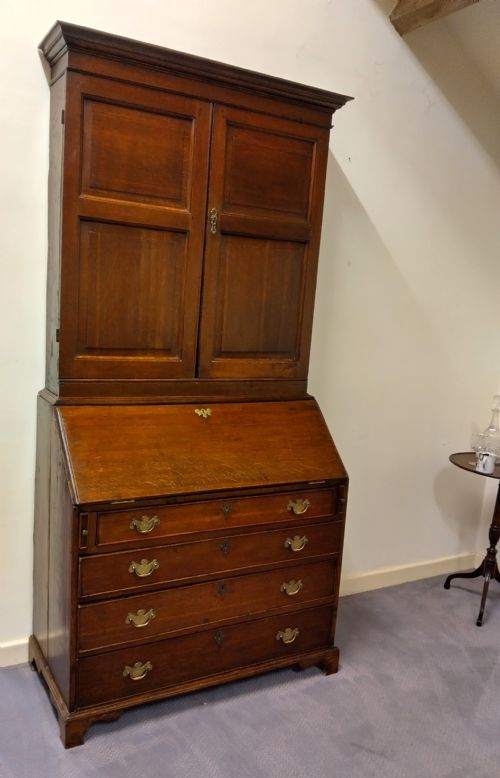
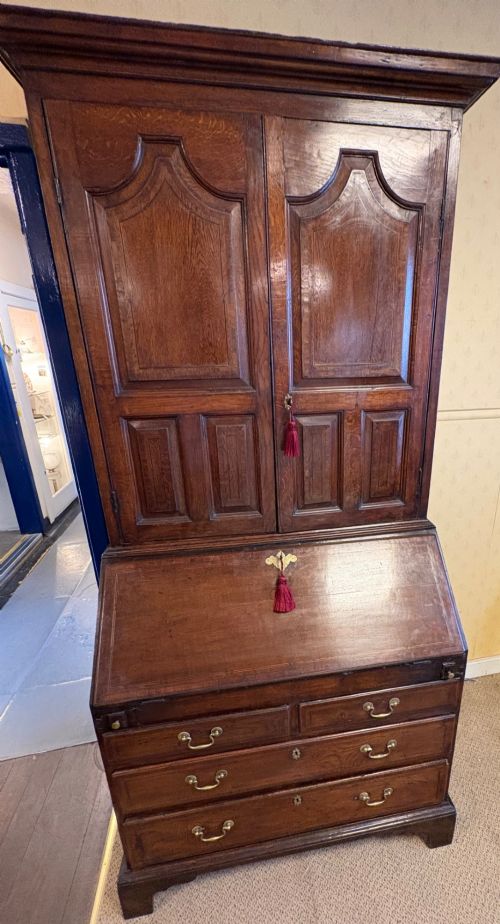
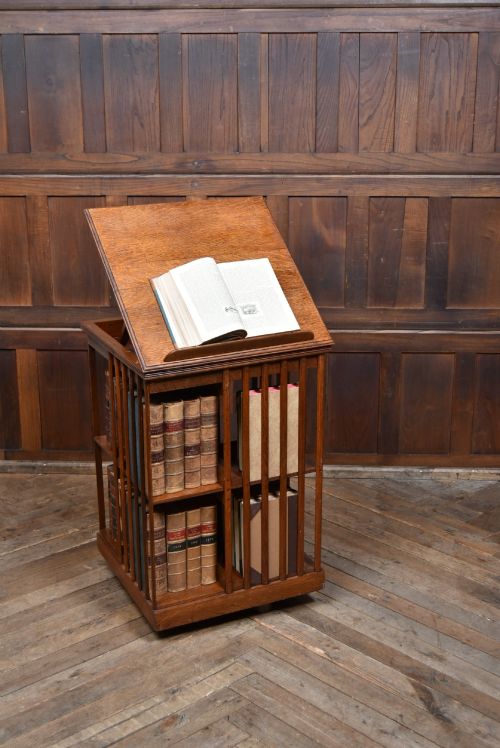
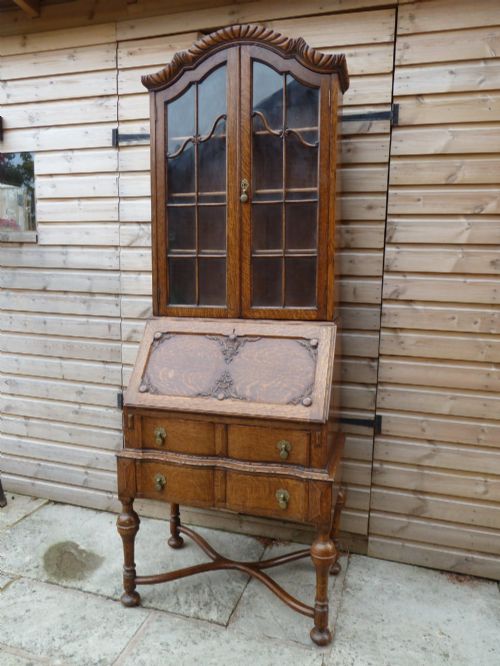
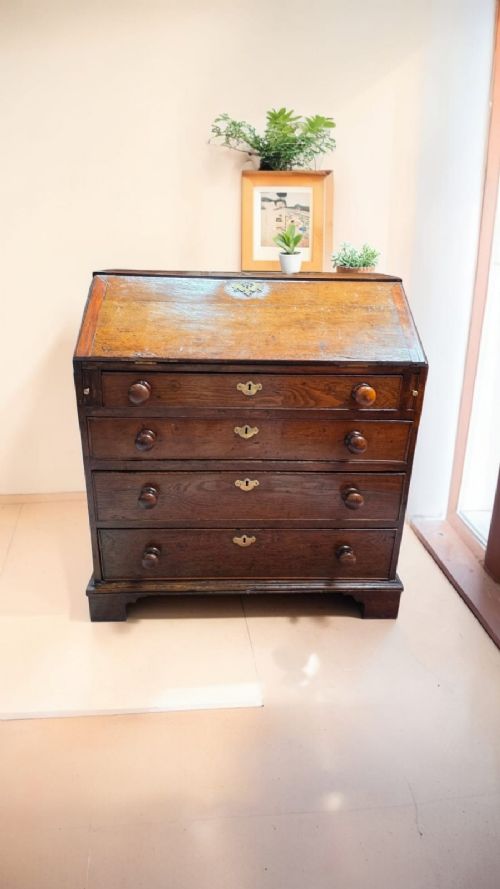
When you search for an oak slant top desk, you encounter pieces that function primarily for writing and storage, spanning forms from simple table-top bureaux to tall bureau bookcases. The selection ranges from early examples dating to the seventeenth century and the Georgian period through to Victorian, Edwardian, and later twentieth-century interpretations.
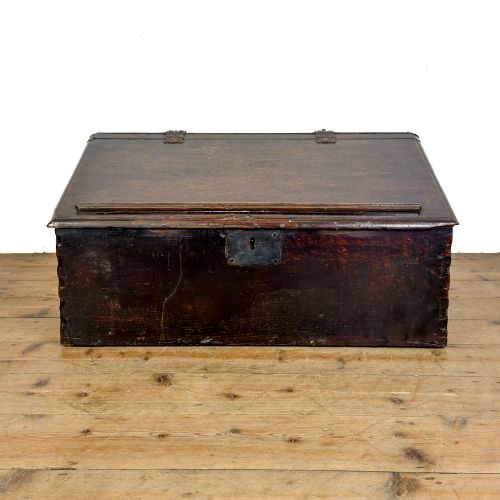
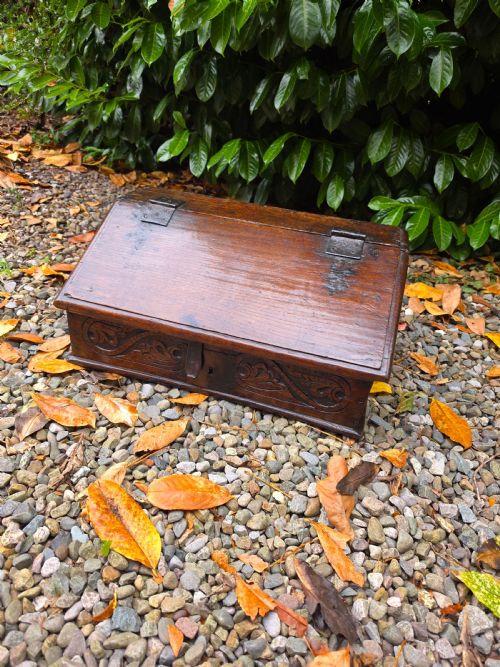
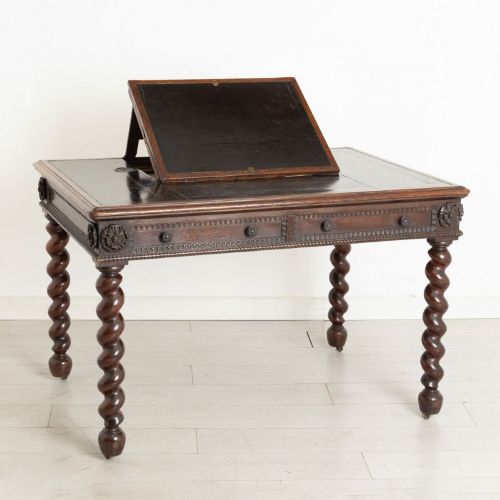
Most pieces you meet on this page take the form of bureaux with hinged writing flaps, alongside related items such as clerks' desks, bible boxes, and Davenport desks. These objects emerge in various regional and revival styles, including Jacobean Revival and George III designs, reflecting practical domestic and commercial use over centuries.
What varies in quality
The degree of craftsmanship shows in the selection of timber figures, particularly when pollard oak or crossbanded veneers are applied to the writing surfaces. Finer pieces demonstrate meticulous attention in the arrangement of stepped interior compartments and secret drawers.
Structural integrity and alterations distinguish examples within the range, as certain older pieces retain their original stands or backboards while others incorporate later adaptations. The finesse of the carving, such as Green Man motifs or vernacular detailing, marks the distinction between standard utilitarian items and superior commissions.
Materials appearing across these desks include solid oak, pollard oak, brass, leather, and occasional mahogany crossbanding.
The Oak Slant Top Desk Glossary
- Bureau
- A writing desk featuring a sloping hinged lid that opens to reveal compartments and drawers. This form serves as the primary shape associated with slant top desks.
- Stepped interior
- An arrangement of internal drawers and pigeonholes arranged in ascending tiers within the desk. This feature adds complexity to the writing compartment.
- Bible box
- A small wooden box with a sloping lid used originally for holding books and writing materials. These boxes frequently form the precursor or companion to full-sized desk furniture.
- Crossbanding
- A border of veneer laid around the edges of a panel, with the grain running at right angles to the centre. Cabinet makers utilised this technique to frame writing flaps.
- Pollard oak
- Timber taken from trees that have been pollarded, producing a heavily figured grain pattern. This material appears on high-status writing surfaces and Davenport desks.
Oak Slant Top Desk: Frequently Asked Questions
What is an oak slant top desk?
An oak slant top desk is a piece of furniture featuring an angled writing flap that conceals internal drawers and compartments when closed. These items range from compact table-top versions to large bureau bookcases.
Cabinet makers built them primarily in oak, adapting the slant front format for domestic writing, clerking, and household administration across multiple centuries.
How do you use an antique bureau?
You open the hinged flap to create a flat writing surface supported by pull-out lopers or brackets. The internal compartments organise letters, paper, and small stationery items.
When you finish writing, the flap closes to secure the contents and conceal the workspace within the room.
How can you tell the age of an oak desk?
You examine the construction methods, timber selection, and hardware styles to estimate the period of manufacture. Seventeenth and eighteenth-century pieces often display vernacular hand-cut joints and solid oak panels.
Later Victorian and Edwardian examples incorporate machine-sawn elements, revival styles, and different brassware conventions that reflect their specific eras.
Where were these desks used historically?
People placed these desks in studies, libraries, country houses, and administrative offices for correspondence and record keeping. Clerks and professionals utilised them daily for writing.
Larger bureau bookcases also served to display books behind glass doors while keeping working papers stored safely below.