
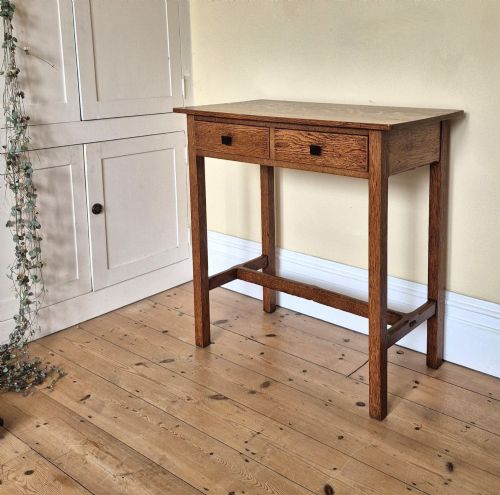
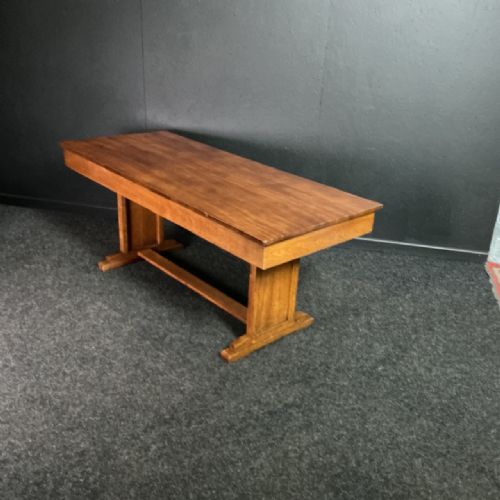

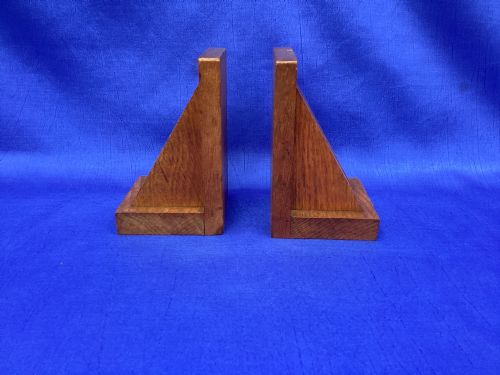


Oak School Desk
When you handle an oak school desk, you touch solid timber built to withstand generations of heavy classroom use.
Oak School Desk
An oak school desk brings utilitarian history straight into a domestic interior, spanning simple double-seater benches and single writing desks with hinged lids. You encounter pieces originating from Victorian classrooms, Edwardian institutions, and twentieth-century foundations.
The material selection prioritises resilience, combining solid oak with secondary timbers like elm, pitch pine, or iron framework. Surviving examples range from robust children's dual seaters to substantial teachers' pedestals.
Many items display the straightforward construction methods characteristic of educational furniture, while workshop-made pieces from the Cotswold School era introduce finer craftsmanship. Every surviving desk bears the ink stains, scuffs, and carved initials left by former pupils.
Evaluating quality and origin
Quality reveals itself through the integrity of the timber and the honesty of the construction, distinguishing standard institutional issue from named workshop production. Desks linked to specific makers or schools through stamps, receipts, or distinct regional design carry greater historical weight.
The balance between original patina and over-restoration dictates the character of each piece. Surviving inkwells, operational sliding mechanisms, and untouched surface wear preserve the authentic identity of the desk.
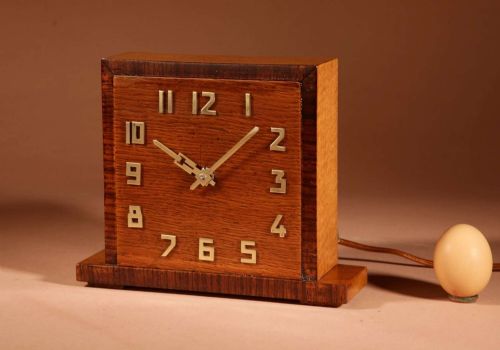
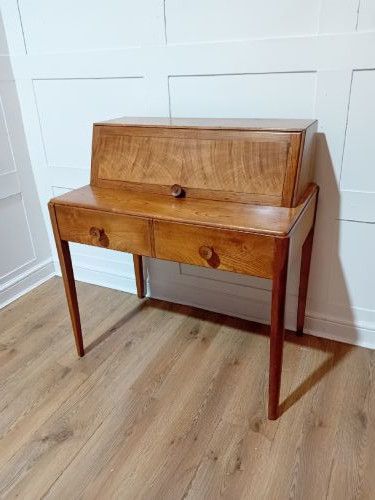
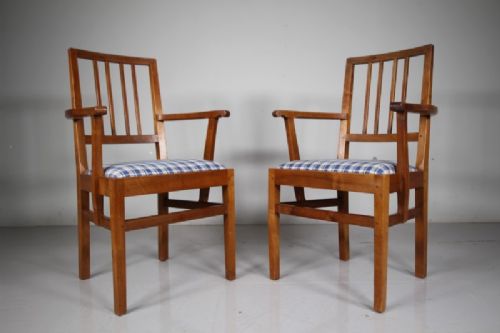
Objects span desks, mantel clocks, armchairs, side tables, library tables, bookends, and dressing tables.
Arthur Basil Reynolds·Edward Barnsley·Stanley Webb Davies·Hubert Simpson of Kendal·Robert Mouseman Thompson·Pairs MFG Co
The Oak School Desk Glossary
- Cotswold School
- A twentieth-century design movement focusing on honest construction and traditional hand-tool methods. Pieces from this tradition show visible joinery and high-grade oak.
- Pitch pine
- A resinous softwood often used alongside oak in nineteenth-century school furniture. It provides dense structural support for heavy-use classroom benches.
- Mortise and tenon
- A traditional joint where a projecting tenon fits tightly into a matching slot. This method secures the frame against constant movement and weight.
- Patina
- The surface sheen and colour developed through decades of handling, cleaning, and exposure. Genuine classroom wear creates a tactile depth that chemical finishes cannot replicate.
Oak School Desk: Frequently Asked Questions
How do I date an oak school desk?
Dating relies on construction methods, ironwork details, and stylistic clues. Victorian examples often feature cast iron frames paired with pitch pine, whereas twentieth-century pieces incorporate simplified Arts and Crafts or Cotswold School joinery.
Stamped maker marks, original receipts, or institutional provenance help narrow the timeline further. Wear patterns and timber selection also offer reliable context for the period of manufacture.
Were these desks used by children or teachers?
Survival rates include both double-seater pupil benches and larger single pedestals designed for schoolmasters. Children's desks frequently feature integrated seating, inkwell cutouts, and sloping hinged lids for storage.
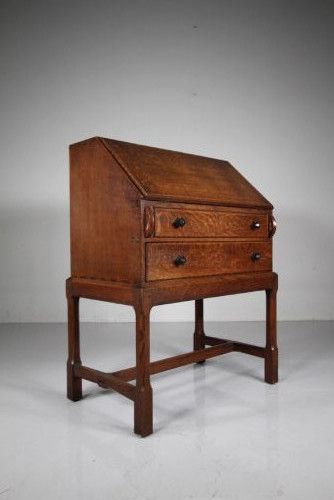
Teacher desks resemble smaller library tables or bureau forms with multiple drawers. Their construction tends to be heavier and more refined than the pupil equivalents.
How do I care for an antique oak desk?
Maintain the wood by applying natural beeswax sparingly to nourish the dry oak. Avoid placing the desk near direct heat sources or strong sunlight, which can cause timber to split.
Clean surfaces with a soft, dry cloth rather than wet solutions. Preserving the historical patina means embracing minor surface marks rather than aggressively sanding them away.
What is the difference between institutional and workshop desks?
Institutional desks were mass-produced for schools with a focus purely on utility and durability. They often combine oak tops with heavy iron frames designed for severe classroom conditions.
Workshop-produced desks originate from known designers and arts movements, prioritising exposed joinery and hand-finished timber. These pieces function as fine furniture rather than purely functional school equipment.